Appreciation or Appropriation? A K-Pop Conundrum
A Black novice stan’s take
Appreciation or Appropriation? A K-Pop Conundrum
A Black novice stan’s take

RAIN and JYP — celebration or appropriation? (YouTube)
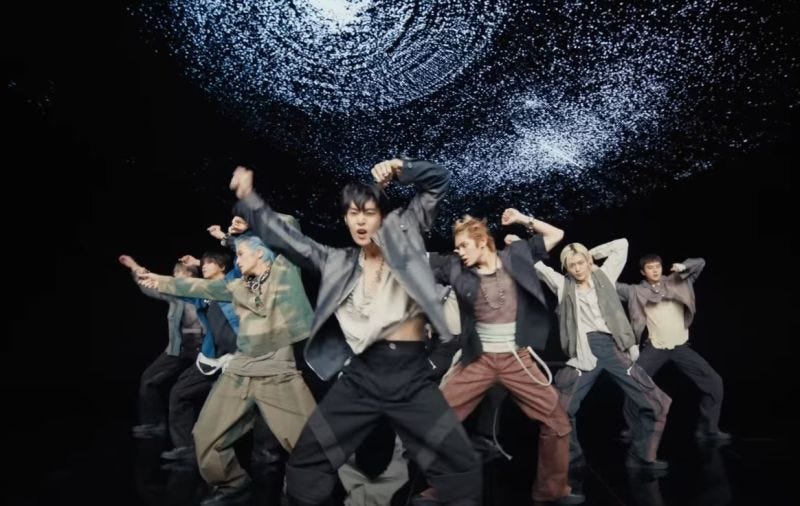
This recent Stevie Wonder tribute is one of the reasons I love K-Pop:
[embed]
It features iconic riffs from many of Wonder’s most beloved songs and a haunting harmonica solo that reminded me of seeing “Little” Stevie Wonder at the Regal Theater in Chicago, where he and all the best R & B performers rocked the house back when I was a kid.
They mention “Stevie” in the lyrics too, after an opening rap about their old friends “soul and R&B.” And while those simple name checks may seem insignificant to most K-Pop fans, I breathed a heavy sigh of relief when I heard them.
Because whether by design or just out of a heartfelt love of the music and musicians they celebrate so often, the funkiest band in the business had done what too many artists starting ‘way back with Elvis have forgotten or downright refused to do: give props to the source of the sound.
I shouldn’t have been too worried. There’s footage of Mark Lee gleefully celebrating the diversity of the audiences at 127 concerts. And their company, SM Entertainment Group, one of the most powerful in K-Pop, is also one of the most openly R&B driven.
So, I’m also sure they’re acutely aware of a continuing controversy of which I myself have become…let’s say more and more “intuitively” and troublingly aware as a novice “stan.”
As a former rock critic myself, I’ve been absolutely thrilled to find so many Black K-Pop reviewers with huge followings on YouTube, Twitter and Instagram.
Their engaging and extremely energetic video reactions also showcase their deep knowledge of the genre. I loved how many were men of all ages, too. Upending the widespread belief that most K-Pop fans are squealy young girls.
Here are a few I never miss when a new joint drops — I even watch them watch the “behind the scenes” and other crazy content NCT127 posts almost daily:
[embed]
[embed]
[embed]
I was thrilled to find the K-Pop world so apparently inclusive. Back when I was a kid, I was ostracized for loving the Beatles and rock music “too much.” Its origins notwithstanding, I was told rock wasn’t “our” music.
Still happens. In fact, I’ve recently been interviewed for two wonderful books about Black rock pioneers written by young women trying to break free from those old but annoyingly persistent boundaries. Things haven’t changed as much as you might think.
And all is not entirely well in K-Popland, either. Got a very serious reality check a while ago while perusing reactions to one of my favorite RAIN songs — here’s the full music video:
[embed]
I bet you bounced to it just a little bit, too, didn’t you? Yep. It has everything we loved about New Jack Swing, from the “fits” to the footwork.
And that is precisely why some Black K-Pop fans went ballistic when it received such vociferous critical acclaim a couple of years ago. RAIN’s Bobby Brown/MC Hammer “fit” and JYP’s Janet Jackson “uniform” had, to some, gone past appreciation to full-on appropriation.
None of my favorite reactors seemed bothered. In fact, they were definitely down, seeing it more as an homage than a hijack.
But a few were perturbed. One stopped the music video the minute the beat dropped, launching into a loud rant. I tried to find that one, but he may have taken it down.
And if so, it may be because it can be literally dangerous to criticize K-Pop stars. In *Essence Magazine, Bashirat Oladele *chronicled the “doxxing” and outright harassment of Black fans who took artists to task online for wearing cornrows or seeming to mouth the “N-word” or snub Black fans at concerts.
According to Oladele, Black fans have created K-pop podcasts such as *106 & Seoul, [It’s the Melanin For Me](https://open.spotify.com/show/0xE5khG33bUBGxUCFhJizi) and [HallyuAtYou](https://podcasts.apple.com/us/podcast/hallyu-at-you/id1522701712), where “*Black fans are able to dive into their love for K-pop and the complexities within the larger community and most importantly, create a conversation.”
They need these safe havens. Tiwa Omolade of *Refinery29 explained how the harassment of one Black fan quickly took a very* toxic turn:
Once someone is branded as an anti of a hugely popular Korean group like BTS or TWICE, anonymous accounts will specifically target them for harassment. M is known online only by her username, but one of her many doxxers posted her government name in 2020. Now, she’s constantly fearful that her location is trackable and her safety compromised. Other Black women have had similar experiences. Once identified as someone to target, these women had their identities stolen, their online reputations ruined within their communities, and have been threatened with physical harassment, stalking, and swatting.
Accounts like the now-shuttered @friendandfoe1 have threatened to leak naked pictures of Black K-pop fans, post information about people’s parents and siblings, release their government information along with their location, and much more. Afterwards, victims’ lives are never the same.
“The Struggles of being a Black K-Pop Fan,” is a passionate first person account:
Black K-pop fans often find themselves at war with being followers of the genre. We risk waking up one morning and seeing our favorite group member doing something deemed “problematic” on one hand and the hate of other fans for defending our right to be upset on the other. The toxicity of fans is another added bonus of being a Black K-pop fan due to the high levels of targeted racism many endure.
Calling “bullshit” on the argument that Korea is a homogeneous society that may not “know any better,” the writer, identified solely as “Arts and Life Editor” possibly for safety’s sake, makes a final point worth pondering:
I hope that fans — Black or not — can continue to educate idols on why whatever they’re doing is wrong because accountability is the key to progression.
I’ve just joined a few Black K-pop accounts on Reddit and Twitter not only to keep up with controversies as they arise but also to be alerted to special events like BlackOutBTS, a monthly gathering designed, as one Tumblr fan explained to Essence, “for the fans who get the most silenced within the army.”
I’m proud to note that the same Essense article singled out NCT127 for doing something else right:
In March 2020, three Black NCTzens (NCT fans) created a viral TikTok dance, called the “Kick It” challenge based on NCT’s song of the same name. The Chicago natives got noticed by NCT themselves when they created their own video.
Pretty sure Johnny Suh, a band member who hails from Chicago himself, might have had something to do with that.
However it happened, I’ll be watching to see how many others take the time to at least acknowledge both the strong Black shoulders upon which they stand and the strong Black voices that will continue to reprimand and remind them despite the danger.
메타데이터
- post_id
- 8ecfb2dfcd2c
- slug
- appreciation-or-appropriation-a-k-pop-conundrum-8ecfb2dfcd2c
- url
- https://medium.com/fan-gran/appreciation-or-appropriation-a-k-pop-conundrum-8ecfb2dfcd2c
- canonical_url
- https://medium.com/fan-gran/appreciation-or-appropriation-a-k-pop-conundrum-8ecfb2dfcd2c
- author_url
- https://medium.com/@bioko
- status
- ok
- fetched_at
- 2026-06-10 08:17:25