The Samoan Way
In the center of the South Pacific exists a culture that is as vibrant and enduring as the nearby ocean, the culture of Samoa. The Samoan…
The Samoan Way
In the center of the South Pacific exists a culture that is as vibrant and enduring as the nearby ocean, the culture of Samoa. The Samoan lifestyle, referred to as Fa’a Samoa, includes not only traditions but also embodies a lively philosophy that influences daily living. Even with the impacts of colonization, globalization, and migration, fa’a Samoa remains essential in shaping the identity of Samoans both in the Islands and within the global diaspora. This aspect explores the core of Samoan Culture, emphasizing its common values, rituals, language, artistry, and lasting significance in a contemporary world that frequently favors individualism over communal ties.
The Samoan Islands have been inhabited for over 3,000 years, making them some of the earliest Polynesian cultures. Oral traditions, archeological discoveries, and linguistic proof link Samoa to a broader Polynesian triangle that includes Tonga, Hawaii, Aotearoa(New Zealand), and Easter Island. Throughout this long history, Samoa has maintained a leadership framework known as the matai system. Chiefs, also known as matai, represent extended families and serve as the decision-makers, mediators, and protectors of family land and cultural heritage. These titles are not inherited in the Western Tradition. Instead, they are bestowed based on merit, respect, service, and leadership. Colonial influences appeared in the 19th century, first through missionaries and later through the German and New Zealand governments. Despite these external challenges, Samoans managed to preserve a considerable part of their cultural identity, primarily due to the resilience of fa’a Samoa.
Central to Samoan culture is fa’a Samoa, a system that influences social structure, spiritually, etiquette, and daily life. It is a collectivist viewpoint that emphasizes respect(fa’aaloalo), service(tautua), family(aiga), and community. The concept of aiga(family) is vital. An aiga can include extended family members and at times may cover entire villages. The family’s welfare is prioritized over individual ambitions. This is evident in the manner resources are allocated, how young people are raised, and how important decisions are made. Family duties are seen as holy. For instance, Samoan families often pool resources for important life events such as weddings, funerals(fa’alavelave), and the conferral of matai titles.
The matai, or chief structure, constitutes the basis of governance in Samoa. Each aiga is led by a matai, whose title relates to ancestral lands and responsibilities. Selecting a matai depends on leadership abilities, wisdom, and commitment to the family, instead of birth order. The matai occupies a crucial role in village councils(fono), where decisions are made collectively, and harmony is prioritized. This system ensures that power is shared and communal, sharply contrasting with Western governance models. Respect and formality, signifying respect, is an essential principle that is embedded in every interaction. This includes the ways people interact with one another, how they share communal spaces, and the method of performing rituals. Younger people exhibit respect towards older performing rituals. Younger people exhibit respect towards older generations, and this admiration is aimed at matai and spiritual leaders. The language itself reflects these hierarchies as well. Samoan includes different speech levels, like honorific and chiefly language, used in formal contexts to express respect.
In Samoa, spirituality has always been important, first expressed through indigenous beliefs tied to nature, forebears, and the universe. The arrival of Christian Missionaries in the 1830s resulted in a substantial shift of Samoan towards Christianity, a transformation that happened rapidly yet was clearly adapted to existing structures. At present, samoa is recongnized as one of the most Christian cultured countries in the world, with Sunday considered a sacred day. Churches play a crucial role in community affairs, acting as places for worship as well as centers for social and educational gatherings. Prominent religious groups consist of Congregational Christian, Catholic, Methodist, and Mormon. Nevertheless, aspects of traditional spirituality endure, especially in relation to respect for land(fanua), connections to ancestors, and sacred rituals.
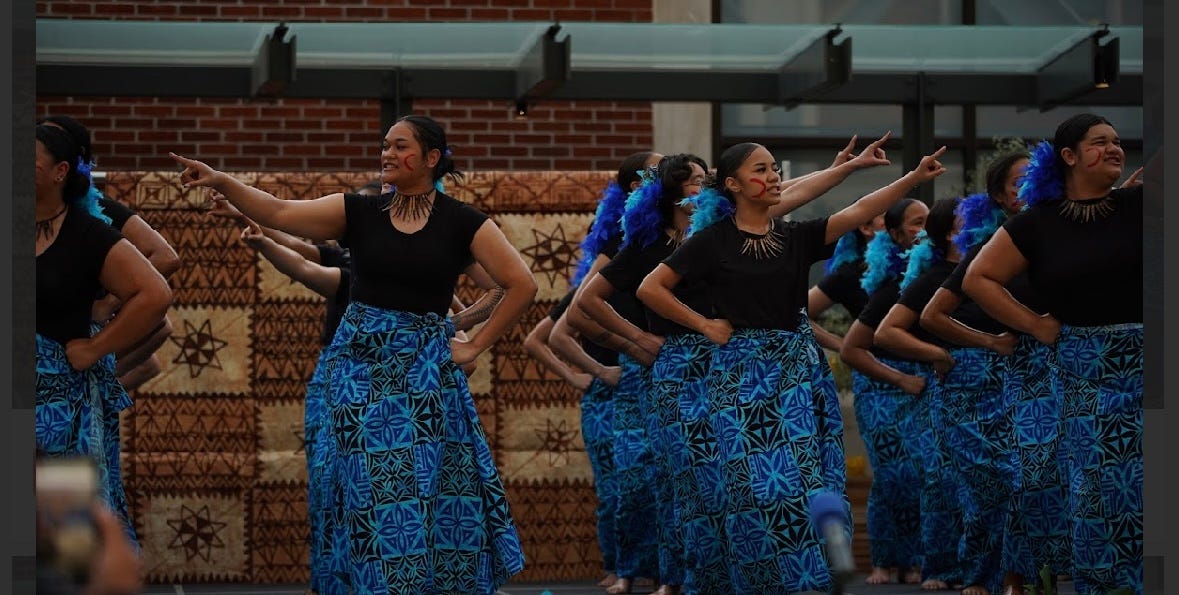
A crucial cultural emblem in Samoa is the customary tattoo, pe’a for men and malu for women. Getting a tattoo is not just a visual choice, it represents a rite of passage that embodies strength, cultural heritage, and commitment. The pe’a covers the body from the mid-torso to the knees, a process that involves several sessions and uses traditional tools. The malu is delicate, flowering over the thighs and symbolizing grace and security. The process is performed by a tufuga ta tatau, or talented tattoo artist, who often comes from lineage of artisans. Dance(siva) and music are vital components of Samoan expression. Siva dances tell stories through graceful movements, while fa’ataupatu(the slap dance) showcases strength and rhythm. Singing is equally important, as choral music has a crucial impact on both religious and community gatherings. Instruments like the pate(log drum) and fala(woven mat used as a percussion tool) support performances, connecting the culture’;s rhythm to its ancestral roots. Samoans are proficient orators. Ceremonial addresses are carefully structured, poetic, and abundant in metaphor. The speaker(tulafale) holds an important position in the community, acting as an advocate for the matai and the family. Stories also act as a way to convey history and values across generations.
Samoan culture is characterized by intricate ceremonies that honor important milestones and changes throughout life. From births and weddings to funeral and the awarding of chief titles, each event follows a distinct protocol and necessitates the collective effort of the community. Fa’alavelave is a term that denotes the individual or group coordinating the event. These occasions strengthen family bonds, community structure, and cultural continuity. Gifts of fine mats(ie toga), food, and money are exchanged, each carrying symbolic meaning. The ie toga holds significant cultural and spiritual value, often inherited through generations.
At present, millions of Samoans live outside the islands, particularly in New Zealand, Australia, and the United States, even far from home like me; however I grew up In Samoa and moved away for school. The Fa’a Samoa continues to thrive in these communities. Samoans living abroad maintain their cultural practices through churches, cultural groups, sports clubs, and language schools. Events such as Polynesian festivals and Samoan Independence celebrations provide opportunities to showcase traditional clothing, dance, and food. However, obstacles exist. Younger generations often struggle to align Western individualism with Samoan collectivism. Challenges concerning identity, language erosion, and cultural adaption are widespread, yet many young Samoans are finding innovative ways to stay connected, blending traditional customs with modern forms of expression.
In Samoa, the relationship between tradition and modernity is a continual dynamic. The country faces challenges such as climate change, economic development, and immigration. Nonetheless, the cultural tapestry remains strong. Education and technology are transforming how Samoans engage with their environment, but the matai system and community oriented ways of living stay deeply ingrained. Women, who were previously limited to household responsibilities, are progressively taking on matai roles and embracing leadership in politics and business. There is a growing dialogue about gender, sexuality, and human rights. The fa;afafine comunity, which are samoans identifying as a third gender, or as we all know the LGBTQ+ community is recongnized and esteemed in traditional culture, yet faces increasing scrutiny from conservative viewpoint shaped by Western influences.
Samoan culture is not merely a remnant history, it is a dynamic, evolving identity that actively influences and shapes the lives of Samoan individuals, both in the Islands and worldwide. Amid globilization, migration, and contemporary influences, fa’a Samoa continues to be a strong and enduring presence. It represents more than a cultural framework, it embodies a perspective that highlights family, respect, service, and spirituality. These values have endured the trials of time, colonizatio, and contemporary challenges, demonstrating their lasting significance in a rapidly evolving world. The frameworks of communal existence, the insights of the matai system, and the importance opf the aiga present a distinctive approach to governance and social structure that questions Western ideals of individualism and hierarchy. From the sacred tattoos of the pe’a and malu, to the artistic oratory of formal speeches, to the lively music and dance that accompany every festivity, Samoan culture provides a rich, expensive, and profoundly significant way of existing. Even within Samoan diaspora groups in nations such as New Zealand, Australia, and the United States, cultural traditions persist, modified yet not forsaken. Young Samoans are discovering how to navigate two realms, merging traditional knowledge with contemporary innovations to maintain their cultural legacy. Amidst an era where numerous indigenous cultures fight against extinction, Samoa exemplifies the strength of cultural perseverance. It demonstrates that traditions and innovation need to be conflicting elements, they can exist together and enhance each other. Living fa’a Samoa is more than adhering to traditions, it means embodying a vibrant heritage, respecting one’s forebears, supporting one’s community, and perpetuating a legacy that is as profound as the sea and as lasting as the mountains of SAMOA.
Little more about the Samoan culture no one talks about, is that it can be very overwhelming, and defeating. As people have high titles and expectations to live and act on, the young generation seems to suffer at times as they will be the ones to represent and act. This tends to be the overwhelming part as everyone focuses more on the young generation, judging and eyeing their every move, making it impossible to make a mistake. The way you talk, walk, eat, and sit, all the etiquettes determines how you were raised and also represents the face of your family. As these strict unspoken rules become the judge of our upbringing, a single mistake could cause a big dent in our reputation as well as our families. Our voices are singled out as “their young they don’t know what they’re talking about”, unless we have a title to our name. Silence taking over as the elders talk amongst themselves, we become still as the still waters, stay silent and do what we are told, chores after chores finally we get to have time to eat and then our names are called, dropping everything to do what we were told. Why? Because it’s our culture and it’s a form of respect. The Fa’a Samoa ways has it’s pros and cons. This is not to discriminate my culture but to also show that Samoa is beautiful in it’s culture, language, dance, and food, but we also have carried a lot of weight on our shoulders to uphold “The Perfect Reputation” that does not exist, as nobody is perfect.
O le Aganu’u Fa’a Samoa; The Culture of Samoa.
메타데이터
- post_id
- 8ed5afa3d7ff
- slug
- the-samoan-way-8ed5afa3d7ff
- url
- https://medium.com/@moligak/the-samoan-way-8ed5afa3d7ff
- canonical_url
- https://medium.com/@moligak/the-samoan-way-8ed5afa3d7ff
- author_url
- https://medium.com/@moligak
- status
- ok
- fetched_at
- 2026-08-09 21:01:59




