Smart City Software Development Solutions Singapore 2024
One cannot underestimate the influence of the Internet of Things on modern society. It has made it possible for us to communicate with our…
Smart City Software Development Solutions Singapore 2024
One cannot underestimate the influence of the Internet of Things on modern society. It has made it possible for us to communicate with our environment and our devices in one way or another. Cities are increasingly aiming to become “smart” rather than just developed thanks to the use of this technology.
IoT-based smart city solutions are concentrated on creating future cities that support economic growth, enhance the environment and infrastructure, and digitally maximize public assets. A smart city is made up of billions of smart devices arranged across the city that gather and share data via a vast network. These intelligent gadgets communicate with one another via data sharing and adjust their actions to make citizens’ lives easier.
Consult With Our Software Engineers
These days, cities are using processing power to streamline utility operations, control traffic flow, and create automated services for the general public. IoT has undoubtedly improved many city operations by using a variety of sensory devices to assist in acquiring and interpreting data.
IoT In Smart Cities Market
- As per the UN report, 3 million people relocate to cities each week; it is projected that by 2050, an astounding 68% of people will live in cities. With population increase, this figure is predicted to reach 6.3 billion by 2050.
- The market for smart cities was estimated to be worth USD 656.8 billion globally in 2022, and it is projected to increase at a compound annual growth rate CAGR of 25.8% between 2023 and 2030.
Exploring the Unmatched Popularity of Smart City Solutions in 2024!
Smart cities are intended to use data and technology to raise sustainability, improve citizen quality of life, and expedite the provision of basic services.
Here are a few reasons which justify the need for smart city solutions:
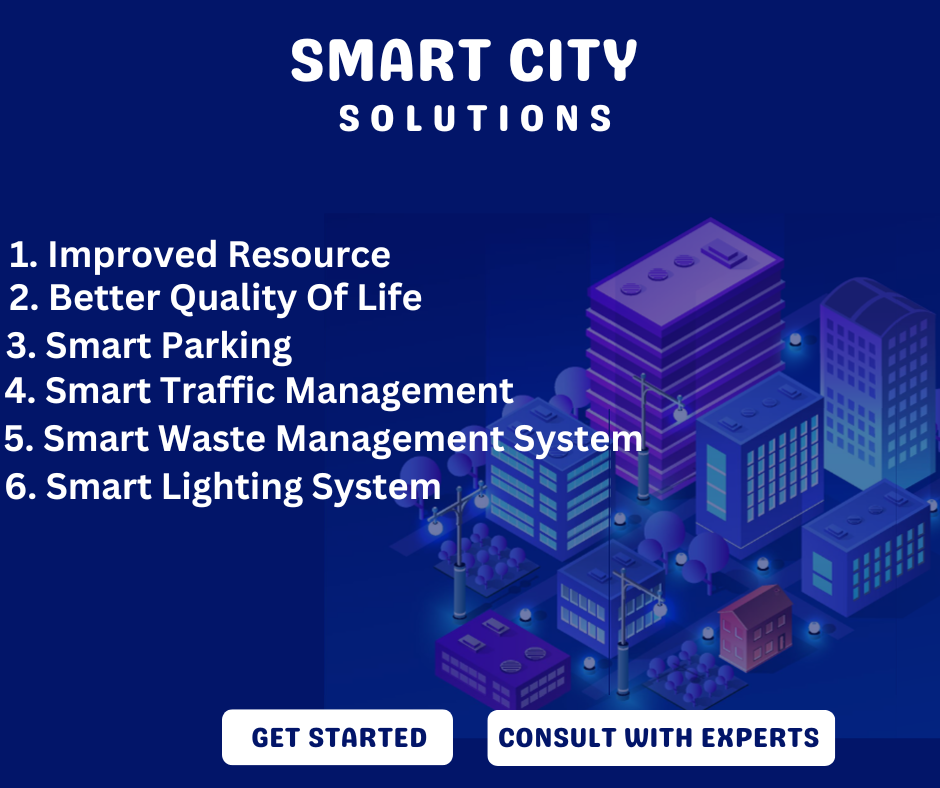
1. Improved Resource Management
They optimize resources like electricity, water, and transportation by utilizing technology like the Internet of Things (IoT), artificial intelligence (AI), and big data analytics. This may result in lower expenses, less waste, and more productivity.
2. Better Quality Of Life
Smart city solutions raise the standard of living for the populace in a number of ways. For instance, they can improve public safety, education, and healthcare services by utilizing data and technology. They may also facilitate citizens’ access to information and involvement in public life.
3. Enhanced Sustainability
Smart cities are designed to be more ecologically friendly by reducing energy consumption, increasing the use of renewable energy sources, and decreasing trash. Cities can become more resilient and the effects of climate change can be lessened as a result.
In general, smart cities are a means of developing more livable, efficient, and sustainable urban areas that can accommodate the requirements of their residents both now and in the future.
Smart city software solutions raise the living standards, lower expenses, and increase efficiency for the inhabitants. It gathers data in real-time for analysis in the future using IoT-enabled devices, like Bluetooth sensors that are connected, RFID tags, and smart meters. The communities can enhance public utilities, services, infrastructure, and more with the use of this data.
4. Smart Traffic Management
To gather information on traffic patterns, congestion, and accidents, Internet of Things (IoT) sensors can be mounted on traffic lights, roads, and automobiles. By using this data, traffic flow may be optimized, congestion can be lessened, and road safety can be raised. These systems report a vehicle’s location and speed by using sensors and GPS data from the rider’s smartphone. Furthermore, the prediction of preferred routes and the avoidance of prospective congestion issues are made possible by past data.
5. Smart Parking
Parking spots can have Internet of Things (IoT) sensors placed to track when a spot is occupied and send that data to a central server. By using this data, vehicles may find open parking spaces more quickly and with less traffic. Smart parking software transmits the data to the cloud by the built-in sensors, which alert drivers whenever a nearby parking space becomes available.
6. Smart Public Safety System
Public areas can be equipped with Internet of Things (IoT)-capable cameras and sensors to keep an eye on possible security risks like suspicious activity or left baggage unattended. Real-time tracking, analytics, and decision-making are all integrated into IoT-enabled solutions. Predicting possible crime situations involves analyzing data from social media feeds, audio sensors embedded around the city, and CCTV cameras. This can assist law enforcement organizations in reacting to possible threats swiftly and efficiently.
7. Smart Waste Management System
Waste collection operators check fuel use, waste levels, and container usage in real time by using IoT-powered solutions to optimize collection schedules and routes. Garbage cans and recycling bins can have Internet of Things (IoT) sensors placed to monitor the fill level and optimize waste collection routes, which lowers costs and has a positive environmental impact. Each container has an integrated sensor to track the amount of waste. The truck driver receives an instant alert via a mobile app when a container approaches the threshold level, warning him or her to empty a full container rather than one that is just halfway full.
8. Smart Public Transport
Traffic controllers can examine and recognize patterns in the use of public transportation by using data from sensors integrated into various sources. By reducing wait times and improving the travel experience for residents, this data contributes to the achievement of a standardized level of safety and punctuality. BLE beacons can also be installed on roads and bridges in a smart city to track deterioration and expedite repairs in the event of imminent harm.
9. Environmental Well-Being
Municipalities can monitor the environment remotely with the use of IoT-powered systems. For example, water grids have sensors installed to monitor water quality and send out alerts in the event of leaks or changes in the water’s chemical composition. The same technology is essential for providing solutions that improve air quality and is also used for measuring the quality of the air in places that are prone to pollution.
10. Utility Management
Smart IoT-enabled technologies allow residents to reduce their household utility costs by:
11. Energy Management System
By monitoring energy use and optimizing energy use, IoT sensors may be deployed in homes and businesses to lower expenses and carbon emissions.
12. Smart Lighting System
By installing Internet of Things (IoT) sensors in streetlights, illumination levels can be adjusted in response to ambient light, saving energy and pollution.
13. Smart Water Management
Internet of Things (IoT) sensors can be added to water distribution systems to track water quality, find leaks, and use water as efficiently as possible to cut costs and conserve resources.
How To Develop A Smart City Software?
A comprehensive strategy that balances technology, community needs, governance, and financial sustainability is needed to develop a smart city roadmap. There are certain steps to follow. Have a look:
1. Evaluation And Goals
Start by taking a close look at the problems, infrastructure, and growth forecasts for your city. Determine which particular fields — such as energy, healthcare, public safety, transportation, or environmental sustainability — smart technology can significantly improve. Next, specify goals precisely. Make sure these goals are in line with the overall vision and mission of your community.
2. Stakeholder Engagement
Involve important parties such as local companies, government agencies, residents, tech specialists, and community organizations. Seek feedback from a range of backgrounds and viewpoints to make sure the plan takes into account the particular needs and concerns of different population segments. Focus groups, questionnaires, public meetings, and consultations can all be used to get this feedback.
3. Technology Assessment
Look into and assess current smart technologies that support the stated goals. Think about the most recent advancements in the industry, how well they work with current systems, and how scalable they are to handle future expansion. Assess prospective vendors and partners in technology for their dependability and level of experience in providing solutions.
4. Data Management And Compliance
Create thorough guidelines and plans for gathering, storing, using, and sharing data. Address concerns about data security and privacy while making sure that all operations adhere to industry standards, best practices, and pertinent local, state, and federal requirements.
5. Financial Planning
Make a thorough budget that includes all of the expenses related to putting smart technology solutions into practice. This should cover labor, software, hardware, and any related infrastructure modifications. Investigate other funding possibilities to support the efforts, including public-private partnerships, government grants, energy savings contracts, and other financial sources.
6. Prioritize And Pilot
Set project priorities according to their potential impact, viability, and congruence with the goals. Consider implementing in stages, beginning with smaller pilot projects to test and validate the technology and proceeding to a full-scale rollout later.
7. Maintenance
Create a mechanism for collecting feedback and making adjustments on a continuous basis to make sure the roadmap stays adaptable to new developments in technology, shifting conditions, and lessons gained from pilot projects. Engage the community on a regular basis to respond to comments and issues, keeping locals informed about developments and results. Create a long-term maintenance strategy to guarantee the inventiveness and sustainability of smart technologies, maintaining the city’s position as a leader in technology.
8. Choosing A Reputable Smart City Software Development Company
Although creating a smart city development plan could seem like a difficult task, choosing an experienced partner can help. Making an informed decision about smart city infrastructure providers can help ensure a seamless and economical transition.
Top 5 Smart Cities Software Development Companies In Singapore
There is a growing need for smart ideas to improve and simplify people’s lives. Among the most well-known cities with smart city technologies implemented are Singapore and Dubai.
Here, we’ve selected the best smart city software development firms in Singapore that are leaders in artificial intelligence, the Internet of Things, cloud computing, and other fields and can create cutting-edge technology solutions for a wide range of applications.
1. Suffescom Solutions Inc.
Suffescom- a reputable smart city software development company, founded in 2013, is renowned for providing cutting-edge solutions to clients worldwide. With a global presence, Suffescom extends its smart city software development services to various regions, including Singapore, The USA, Dubai, Canada, and across the globe.
Advanced smart city software solutions, including digital screening powered by AI, smart building management systems, smart public safety systems, and smart sensors for waste overflow, can be implemented by their expertise. The organization employs more than 750 developers who deal with cutting-edge technologies like edge networking, blockchain, IoT, deep learning, and artificial intelligence.
2. RisingMac Inc.
RisingMax Inc. has been developing software for smart cities that boosts productivity, facilitates communication, and offers data-driven insights. They offer blockchain consultancy, Web3/Metaverse solutions, game creation, mobile app development, custom software development, and cryptocurrency exchange solutions in addition to smart city solutions.
Their advantage over other smart city software development service providers is their agile development methodology and proven domain experience. They are a really good choice, with five stars on Clutch and 4.7 stars on Google.
3. Ambient Systems
Ambient Systems is a Singaporean deep tech business that uses data science to improve financial analytics for smart cities.
For the commercial real estate industry, the company creates B2B software. They use machine learning and data science to solve problems in the built environment. Their main goal is to balance various domains of priorities between desired outcomes and accessible technologies by creating proprietary machine learning models.
4. Lauretta.io
For retail, security, and facility management, where knowledgeable employees are the backbone of the business and where staff members’ abilities depend heavily on their awareness and control of the surroundings, they provide specialized and machine learning solutions.
AI-as-a-service provider Lauretta.io specializes in combining camera algorithms for deep analytics with sensor data for mass surveillance. Their experience includes implementing cutting-edge deep learning algorithms in large-scale enterprise settings.
5. Les Robotique
Les Robotique is an enterprise solution architecture, solution, and consulting firm that uses technologies like artificial intelligence (AI) and the Internet of Things (IoT) to work on automation-related and smart city projects.
This company is renowned for developing specialized solutions based on key technologies. They have clients from Singapore, Malaysia, Indonesia, Taiwan, Tahiti, and the Philippines, among other countries in the region.
The Future Of Smart Cities!
With just one touch, we can now access the Internet anywhere at any time thanks to the invention of smartphones. Then came the period when people’s attention was captured by smartphone apps. Today, research is being done to determine how cell phones might work with the many high-tech IoT, communication, and IT technologies to digitize a city. Public involvement, however, is just as crucial to the successful implementation of astute ideas that are either in the works or in the works.
Cities can draw highly trained workers and help firms increase productivity and profit by providing an efficient environment. By solving several important urban issues including smart trash management, smart parking, smart traffic control, etc. The idea promoted urbanization.
Cities are becoming wealthier and healthier places to live with the advent of IoT. It creates a great deal of opportunity for income generation, cost reduction, operational efficiency, and enhancement of the general customer experience and values. However, the digital shift can’t happen quickly. Improving the capabilities of current resources and infrastructure is a major task in order to facilitate the adoption and implementation of the dynamic offerings of the Smart Cities concept.
메타데이터
- post_id
- 8eecaefef59a
- slug
- smart-city-software-development-solutions-singapore-2024-8eecaefef59a
- url
- https://mobileappcircular.com/smart-city-software-development-solutions-singapore-2024-8eecaefef59a
- canonical_url
- https://mobileappcircular.com/smart-city-software-development-solutions-singapore-2024-8eecaefef59a
- author_url
- https://medium.com/@newyorktime
- status
- ok
- fetched_at
- 2026-08-01 16:11:54