Getachew Reda and the politics of all sides
I read Getachew Reda’s latest piece in The Africa Report, “Ethiopia: Tigray is being led back to the brink,” with great interest. This…
Getachew Reda and the politics of all sides

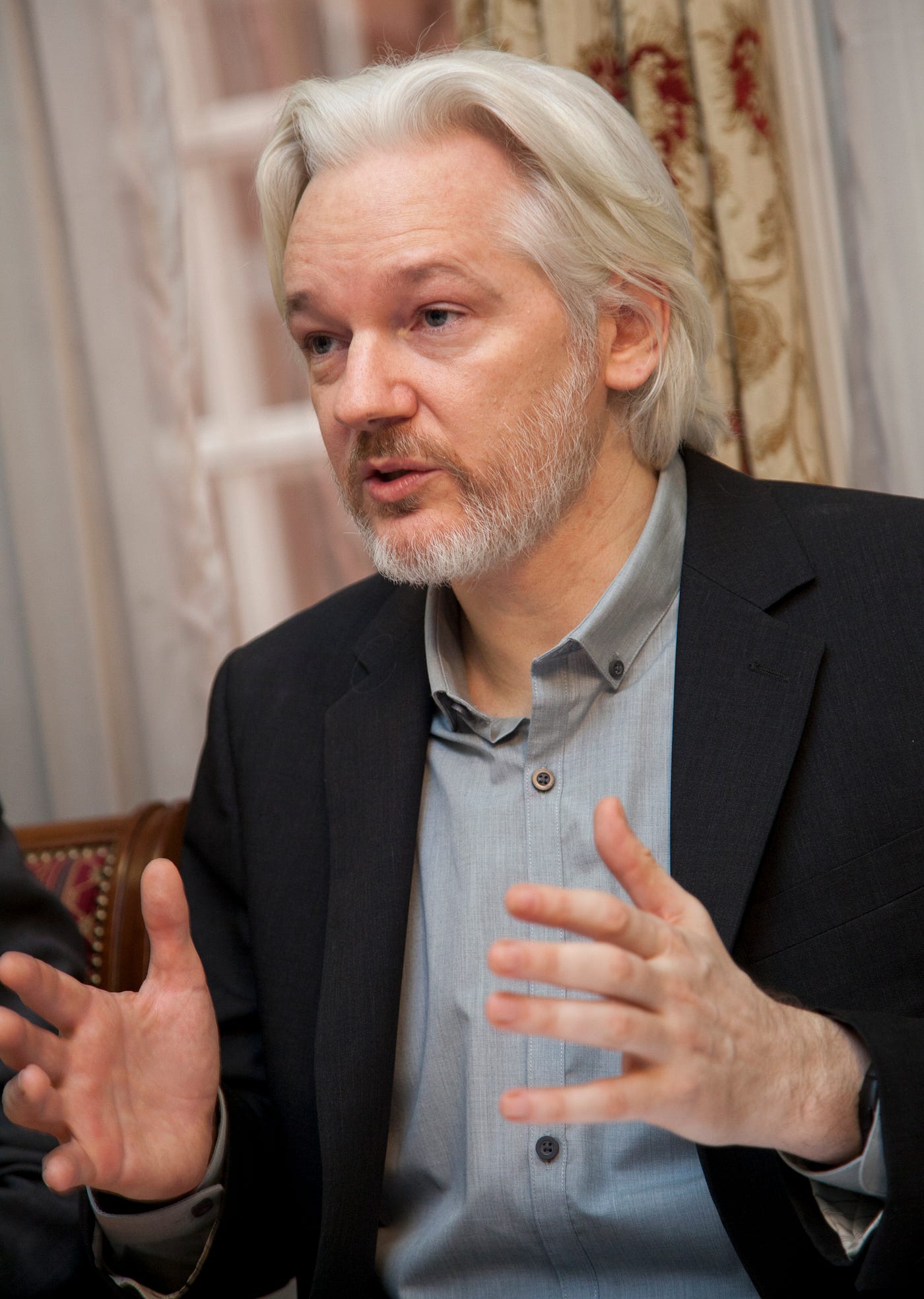
(Image courtesy of Yan Boechat/VOA — https://www.voanews.com/africa/children-shot-bombed-and-knifed-tigray-war, public domain.)
I read Getachew Reda’s latest piece in The Africa Report, “Ethiopia: Tigray is being led back to the brink,” with great interest. This time, unlike his previous appearance in the magazine, the byline is right. The title is not.
Getachew Reda’s article should not have been titled “Tigray is being led back to the brink.” That title gives the piece the dignity of warning. It presents its author as a man standing at some grave historical distance, watching others repeat the fatal errors of the past. A more honest title would have been “Mea Culpa.” And yet even that would now be too generous. For the article does contain a mea culpa, but only as a fleeting gesture. Getachew writes that, as a former senior TPLF official and interim president, he shares responsibility for what brought Tigray to this point. Then he moves on.
That is the problem. The admission is real, but it bears no argumentative burden. It does not structure the piece. It does not discipline its accusations. It does not require him to examine his own decisions, his own factional commitments, his own role in the post-Pretoria order, or his present incorporation into the federal government. It is a sentence of self-protection, not an act of self-reckoning.
Much of what Getachew says about Debretsion Gebremichael and the pro-Debretsion TPLF faction is not implausible. The restoration of the pre-war regional council and Debretsion’s election as regional president have indeed created rival political authorities in Tigray. Reuters reports that the TPLF’s move directly challenges the Pretoria framework and has raised fears of renewed conflict. The Pretoria Agreement was meant to silence the guns, restore constitutional order in Tigray, enable political dialogue, and lay the foundation for sustainable peace. On that narrow point, Getachew’s alarm is not theatrical. There is a real danger.
But political danger does not confer innocence on the person describing it. Getachew’s article is powerful precisely because it is compromised. It is not merely a diagnosis of Tigray’s crisis; it is itself a symptom of that crisis.
The central evasion lies in the discrepancy between his posture and his position. He writes as though he were a civilian democrat warning against militarized adventurism. But his byline says something else. He is adviser-minister to the Ethiopian prime minister on Eastern African affairs. In April 2025, after being replaced by General Tadesse Werede as head of the Tigray Interim Administration, Getachew entered the federal government as Abiy Ahmed’s adviser for East Africa, with ministerial rank. That fact is not incidental. It cannot be placed in the margin of the argument. It is one of the conditions under which the argument is being made.
Leaving aside his former role as a senior TPLF leader, federal minister, wartime spokesman, Pretoria negotiator, and president of the Tigray Interim Administration, his present position alone is enough to compromise the voice of detached warning. He is not standing outside the confrontation between the federal government and the TPLF. He is now inside one pole of that confrontation.
This is why the article’s most interesting line is also its most inadequate one: “I share responsibility.” Share how? For which decisions? For the original miscalculation that led to war? For the conduct of the war? For the terms under which Pretoria was signed? For the interim administration’s failure to restore a credible political order? For the factionalization of postwar Tigray? For entering the federal government after losing power in Mekelle? For helping create, or at least benefiting from, a political alignment in which opposition to Debretsion appears increasingly dependent on federal protection?
The article answers none of these questions. It names responsibility only in order to move quickly past it.
The result is a self-exculpating prophecy. Getachew warns that Tigray is being led back to the brink, but the warning quietly absolves him of his own place on the road to the brink. He indicts Debretsion’s faction for confusing organizational survival with the public interest. The criticism is devastating, and in many respects deserved. But it also rebounds on the author. For what is Getachew’s own position if not another version of the same confusion: a factional claim dressed up as public reason, a struggle for political survival presented as sober statesmanship?
This is the tragedy of the piece. Getachew wants too many incompatible roles at once. He wants the moral authority of a civilian oppositionist, the institutional protection of a federal adviser, the coercive leverage of an armed faction, and the public prominence of a political analyst. But these roles do not converge into statesmanship. They expose the incoherence of a man trying to speak from every side of a conflict at once.
A peaceful opposition requires independence. A rebel movement requires responsibility for force. A political analyst requires distance. A federal adviser requires proximity to power. Getachew wants the advantages of all four positions while accepting the costs of none. He wishes to condemn militarized politics without fully clarifying his own relation to armed anti-TPLF leverage. He wishes to speak for Tigray while serving the prime minister whose government is locked in confrontation with the TPLF. He wishes to appear as a detached interpreter while intervening as a factional actor.
This does not mean his criticisms of the pro-Debretsion faction are false. It means they are incomplete in precisely the way most factional truths are incomplete. They illuminate the sins of the rival camp while darkening the author’s own. Getachew is right that the old TPLF leadership has shown a remarkable capacity to survive its own disasters. He is right that revolutionary organizations often mistake their institutional survival for the survival of the people. He is right that bravado, strategic miscalculation, and the cult of organizational indispensability helped bring catastrophe to Tigray.
But he writes as though those pathologies belong only to others.
That is not credible. Getachew was not a spectator to the TPLF’s long political career. He was not an accidental passerby in the post-Pretoria settlement. He was one of its principal custodians. He led the interim administration whose failure he now narrates. He participated in the political order whose collapse he now describes. He cannot treat the catastrophe as if it were merely Debretsion’s biography.
Nor can he treat Pretoria simply as the path away from destruction without acknowledging what sort of path it was. Pretoria stopped the war, but it did not settle the political question. It did not resolve Western Tigray. It did not fully answer the question of Tigray’s representation in the Ethiopian federation. It did not establish a legitimate, durable political order in the region. It did not create accountability adequate to the scale of the war. It did not remove Eritrea from the strategic equation. It did not demobilize insurgency. It postponed the hardest questions and called that postponement peace.
The AU, in announcing the agreement, described it as a foundation for the cessation of hostilities, humanitarian access, restoration of services, healing, and reconciliation. But a foundation is not a house. The post-Pretoria order required political imagination, institutional restraint, and public accountability. Instead, it produced a brittle interim arrangement vulnerable to factional capture, federal manipulation, military pressure, and unresolved grievance.
Getachew knows this. That is why his article is so revealing. Its force comes from proximity, but so does its weakness. He knows the inside of the machine. He also helped operate it.
The fair judgment is therefore severe but narrow. Getachew’s warning should not be dismissed. The danger he identifies is real. The restoration of pre-war TPLF institutions is a reckless escalation. Debretsion’s return does carry the stench of a political class unable to reckon with catastrophe. Tigray cannot afford another round of revolutionary bravado followed by civilian ruin.
But Getachew has not earned the innocence from which he writes. His mea culpa is too small for the history he invokes. His indictment is too clean for the position he occupies. His warning is too self-exonerating to be accepted as statesmanship.
The piece is therefore not merely a prophecy of Tigray’s possible return to war. It is a document of the post-Pretoria disorder itself: accusatory, intelligent, wounded, factional, evasive. It sees much, but not enough of itself.
메타데이터
- post_id
- 8ef6dcf93db6
- slug
- getachew-reda-and-the-politics-of-all-sides-8ef6dcf93db6
- url
- https://medium.com/@andreasalemayehu/getachew-reda-and-the-politics-of-all-sides-8ef6dcf93db6
- canonical_url
- https://medium.com/@andreasalemayehu/getachew-reda-and-the-politics-of-all-sides-8ef6dcf93db6
- author_url
- https://medium.com/@andreasalemayehu
- status
- ok
- fetched_at
- 2026-07-14 22:12:21