BREAKING NEWS: CVE Doesn’t Care About Your Feels
And your favorite npm package’s maintainer would like to eat this month
BREAKING NEWS: CVE Doesn’t Care About Your Feels
And your favorite npm package’s maintainer would like to eat this month
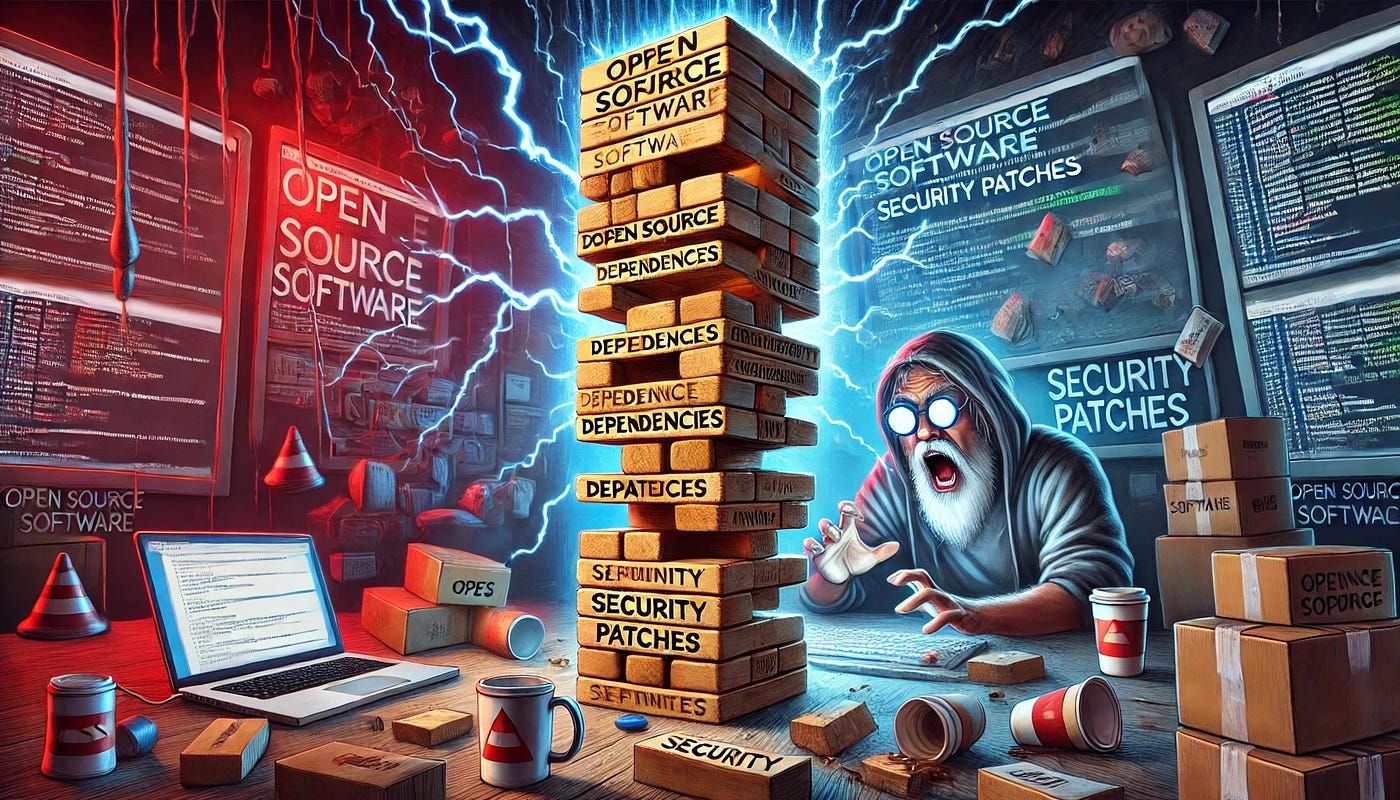
CVEs are like the honey badgers of code… they simply don’t care.
Listen up, folks. We need to have a talk about your relationship with CVEs and open source software. You know, that awkward “it’s complicated” status you’ve been rocking since you began your fledging journey into the deviverse.
First, let me paint you a picture. It’s 2:43 AM, and somewhere in the world, a developer is angrily typing away on Twitter (X? Whatever.) about how “THIS ISN’T A REAL CVE!” Meanwhile, their production server is quietly humming away, running on code that’s being maintained by someone who hasn’t slept in 72 hours and is sustained purely by energy drinks and spite.
The “Not My CVE” Syndrome
You know that moment when someone announces a new CVE and the comments section becomes a battlefield of “Well, actually…” responses? It’s like watching people argue about whether a paper cut counts as an injury while they’re bleeding on the keyboard.
Here’s the thing: CVEs are like your weird uncle at Thanksgiving — they might not always make sense, but they’re here to stay and serve a purpose. When security researchers identify vulnerabilities, they’re not sitting there thinking “Hmm, how can I specifically ruin Dave from DevOps’ day?”
The “Free Forever” Fallacy
Now, let’s talk about that other elephant in the room: the audacity of open source maintainers wanting to (checks notes) eat food and pay rent.
Picture this: You’ve been getting free ice cream from a local shop for years. The owner has been funding it out of pocket while you build a successful ice cream reselling business. Then one day, they put up a tip jar, and suddenly you’re firing off emails about how they’re “running a scam.”
Fun fact from the Census III report: 40% of the top non-npm projects had only one or two developers accounting for more than 80% of commits. That’s right — your entire infrastructure might be depending on someone’s hobby project that they work on between Netflix episodes.
The Real Cost of Free
Let’s do some math:
- Average developer salary: $120k/year
- Time spent tracking dependencies: “Just a few minutes a day”
- Actual time spent dealing with breaking changes: hysterical laughter
- Cost of major security incident: “We don’t talk about that”
What you’re actually paying for with commercial support:
- Security monitoring and rapid response
- Guaranteed maintenance windows
- Someone to actually answer your 3 AM panicked Slack messages
- The peace of mind that comes with having someone else to blame
- If you go with someone like HeroDevs (the company I work for) you are also funding the future of these open source projects
Suddenly that enterprise support package doesn’t look so expensive, does it?
The Technical Debt You Signed Up For
Remember when left-pad disappeared and broke half the internet? Or when faker.js’s maintainer deliberately broke their own package? These aren’t bugs, they’re features of the OSS ecosystem. Each new dependency is like adopting a cat… sure it’s cute now, but eventually it’s going to knock something off your proverbial shelf.
When you introduce open source software into your stack, you’re not just getting free code, you’re entering into an unwritten contract with chaos itself. Each npm install is essentially you saying, “Yes, I would like to inherit the following:
- Someone else’s coding decisions
- Their architectural choices
- Their update schedule (or lack thereof)
- Their eventual burnout (I wish this wasn’t the case)
- Their potential career change to become a yoga instructor in Bali”
Your Options: Choose Your Own Adventure™
So what happens when that critical OSS package in your stack starts showing its age or gets that spicy new CVE? Let’s explore your options, ranked from “actually reasonable” to “hold my keyboard”:
Option 1: Actually Migrate
- Pros: Proper solution, better long-term maintainability
- Cons: Time, money, resources, and having to explain to management why you need three sprints to replace “just a library”
- Reality Check: This is like flossing… we all know we should do it, but let’s be honest about how often it actually happens
Option 2: Fork It Yourself
- Pros: Complete control, can fix issues immediately
- Cons: Congratulations, you now maintain an OSS project
- Plot Twist: You’ve become the very thing you swore to destroy — an overworked OSS maintainer
Option 3: The YOLO Approach (Ignore and Roll the Dice)
- Pros: No immediate work required
- Cons: gestures broadly at everything
Management Favorite: “Can’t we just accept the risk?”
Narrator: They could not, in fact, just accept the risk
The Wake-Up Call
Every time you see a new CVE announcement or an OSS maintainer burning out, you’re witnessing the real cost of “free” software. It’s like technical karma… you can either pay now or pay later, but eventually, those bills come due.
Remember Log4Shell? That was fun, wasn’t it? Nothing like a zero-day in a ubiquitous logging library to make you question all your life choices. And let’s not forget the recent XZ Utils incident… where a single maintainer got social engineered into adding a second maintainer who then added a backdoor. That’s the world we live in now.
So What Now?
If you’re reading this and feeling a bit called out, good. Here’s what you can do:
- Actually budget for OSS support in your next planning cycle
- Contribute back when you can (yes, even if it’s just good bug reports)
- Stop treating CVEs like Yelp reviews you disagree with
- Maybe, just maybe, buy an OSS maintainer a coffee (or better yet, a support contract)
In Conclusion
The next time you’re about to fire off that angry email about having to actually pay for something your entire business depends on, or you’re about to tweet about how a CVE isn’t “real enough,” remember:
Your tech stack is basically a Jenga tower made of other people’s kindness and caffeine-fueled coding sessions. Maybe, just maybe, it’s worth investing in its stability.
P.S. To all OSS maintainers out there: We see you, we appreciate you, and yes, we should probably be paying you more (or at all…)
메타데이터
- post_id
- 8f0e7b44d370
- slug
- breaking-news-cve-doesnt-care-about-your-feels-8f0e7b44d370
- url
- https://medium.com/@haydengpt/breaking-news-cve-doesnt-care-about-your-feels-8f0e7b44d370
- canonical_url
- https://medium.com/@haydengpt/breaking-news-cve-doesnt-care-about-your-feels-8f0e7b44d370
- author_url
- https://medium.com/@haydengpt
- status
- ok
- fetched_at
- 2026-07-31 02:45:27