From Geometry to Biology: How SE(3) and Deep Learning Are Advancing Protein Engineering
Protein engineering, once the realm of trial and error, has been radically transformed by deep learning. Recent advancements in integrating…
From Geometry to Biology: How SE(3) and Deep Learning Are Advancing Protein Engineering
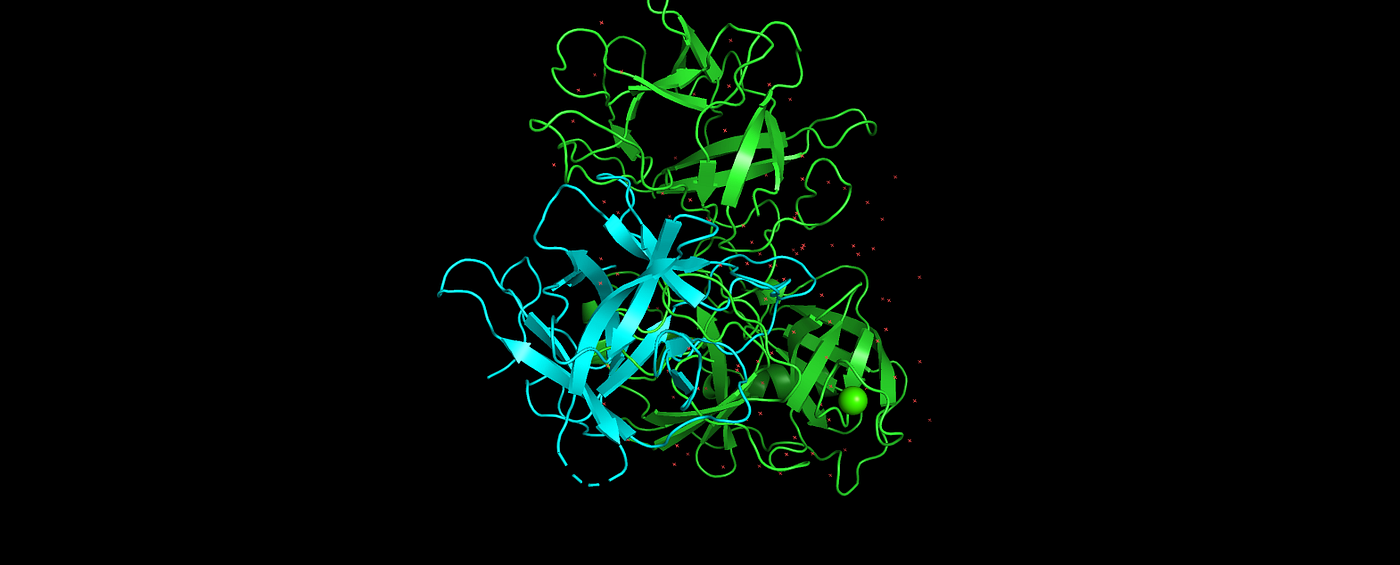
Source(Link)
Protein engineering, once the realm of trial and error, has been radically transformed by deep learning. Recent advancements in integrating geometric principles with neural networks have pushed the boundaries of how we predict, design, and manipulate proteins. Central to this breakthrough is SE(3) the group of three-dimensional rigid transformations that combine rotations and translations. This blog explores the math behind SE(3) and how SE(3) and deep learning have bridged geometry and biology, unlocking new possibilities in protein engineering.
Understanding SE(3)
SE(3) is a Lie group, a mathematical structure that combines a group with a smooth manifold. In simpler terms, it represents a set of transformations that preserve distances and angles in 3D space. These transformations consist of:
- Rotations: Changes in orientation without altering the shape or size of an object.
- Translations: Movements of an object from one position to another without changing its orientation.
Mathematical Representation
To represent SE(3) mathematically, we use homogeneous coordinates, which employ special 4x4 matrices to encode both position and orientation of an object. In these matrices, the top-left 3x3 block represents the rotation, while the top-right 3x1 vector encodes the position. The bottom row is typically set to [0, 0, 0, 1] to maintain consistency and ensure proper transformation behavior.
The Intersection of SE(3) and Deep Learning
Traditional deep learning models, like convolutional neural networks (CNNs), were initially designed to handle 2D image data and are not well-suited to the complex 3D structures of proteins. The emergence of Geometric Deep Learning has brought in models that account for the unique properties of 3D data, including symmetry, rotation, and scale. Among these innovations, SE(3)-equivariant networks stand out for their ability to encode 3D geometric information explicitly.
How SE(3)-Equivariant Networks Work
An SE(3)-equivariant neural network respects the symmetries of the input data by ensuring that transformations like rotations and translations are reflected in the model’s predictions. This is achieved by designing the layers of the network to be equivariant to the SE(3) group.
- Equivariance: If the input is transformed (e.g., rotated), the output will undergo a corresponding transformation. This ensures the model’s internal understanding of the protein’s structure remains consistent, regardless of how it is oriented in space.
- Invariance: The final task, such as classification or regression, remains invariant to these transformations. For example, the biological function of a protein doesn’t change if the protein is rotated or translated in space.
This capability allows deep learning models to better understand the structural relationships within and between proteins, which is vital for accurate predictions in protein engineering.
SE(3) in Protein Design and Mutational Analysis
Beyond prediction, SE(3)-equivariant networks also enable more efficient protein design. In protein engineering, researchers often aim to design new proteins with specific properties, such as increased stability or novel functionalities. The design process requires understanding how mutations or modifications in a protein sequence will affect its structure and function.
SE(3)-equivariant models help by:
- Providing a framework to simulate mutational effects on protein structure.
- Enabling more precise design of proteins with desired geometries and functions.
- Predicting the stability of new protein configurations based on geometric constraints.
For example, when engineering enzymes for industrial or therapeutic applications, SE(3)-equivariant models can predict how sequence changes will affect the enzyme’s active site, enabling the design of proteins with improved catalytic efficiency or substrate specificity.
Existing Applications of SE(3) in Protein Engineering
An exciting application of SE(3)-equivariant models in protein engineering is in fast protein backbone generation. Recent works, such as the paper “Fast Protein Backbone Generation with SE(3) Flow Matching,” showcases how SE(3) symmetries can be applied to generate protein structures more efficiently and accurately. In this approach, protein backbone structures are generated by matching the flow of 3D rigid transformations (rotations and translations) with SE(3) symmetries, rather than relying on traditional sequence-based methods. This flow-based model learns the distribution of protein backbone configurations, respecting the geometric constraints of SE(3). The model predicts the relative positions and orientations of amino acids, ensuring that the resulting backbone structures are biologically valid and conform to the spatial relationships found in nature. By operating within the SE(3) framework, this method allows for rapid generation of protein backbones, making it highly suitable for applications like de novo protein design, where speed and accuracy are paramount.
Conclusion
The incorporation of SE(3) symmetries in deep learning models has fundamentally changed the way we approach 3D biological data. By respecting the geometric properties inherent to proteins, SE(3)-equivariant models enable more accurate predictions, better generalization, and faster design of new proteins with desired properties.
From predicting the 3D structures of proteins to modeling protein-protein interactions and guiding drug discovery, SE(3) combined with deep learning is revolutionizing the field of protein engineering. As models continue to evolve, we can expect even greater breakthroughs at the intersection of geometry and biology
Reference
- Fast protein backbone generation with SE(3) flow matching (https://doi.org/10.48550/arXiv.2310.05297)
- SE(3) diffusion model with application to protein backbone generation (https://doi.org/10.48550/arXiv.2302.02277)
메타데이터
- post_id
- 8f42e560ec69
- slug
- from-geometry-to-biology-how-se-3-and-deep-learning-are-advancing-protein-engineering-8f42e560ec69
- url
- https://medium.com/@pavan_allu/from-geometry-to-biology-how-se-3-and-deep-learning-are-advancing-protein-engineering-8f42e560ec69
- canonical_url
- https://medium.com/@pavan_allu/from-geometry-to-biology-how-se-3-and-deep-learning-are-advancing-protein-engineering-8f42e560ec69
- author_url
- https://medium.com/@pavan_allu
- status
- ok
- fetched_at
- 2026-07-07 17:16:07