Valdobbiadene: The Sparkling Finale of Our Wine Journey
Valdobbiadene — a name that rings like a toast among wine lovers. As the final stop of our Italian wine adventure, this Prosecco paradise…
Valdobbiadene: The Sparkling Finale of Our Wine Journey
Valdobbiadene — a name that rings like a toast among wine lovers. As the final stop of our Italian wine adventure, this Prosecco paradise gave us a grand sparkling finale. Our mission: visit Mionetto, one of the world’s most iconic Prosecco producers, and soak in everything this region has to offer.
In the Land of Prosecco (and the Birthplace of the Spritz)
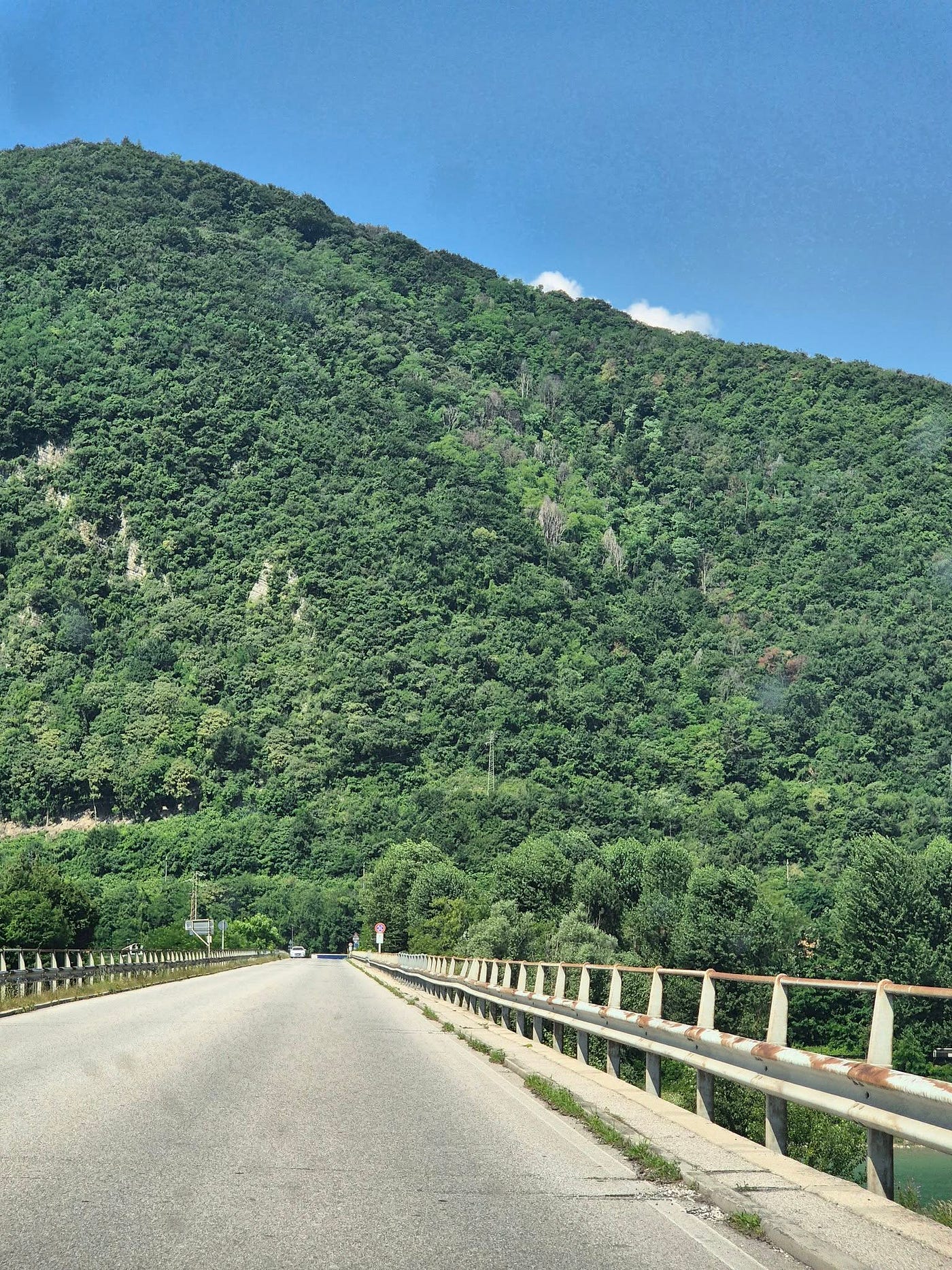
Valdobbiadene is synonymous with Prosecco, those lively Italian bubbles that have taken the world by storm. Driving into this hilly, green landscape feels like entering a postcard — steep vineyards on every slope, charming farmhouses, and the air of celebration that only a wine region can have. It’s hard not to smile knowing that this is where the magic of Prosecco begins.

Before diving into our Mionetto visit, our local guide shared a fascinating story about another Italian icon: the Spritz cocktail. You’ve probably sipped an Aperol Spritz on a summer evening — that bright orange, bubbly cocktail. I certainly have, without pondering its origin. As it turns out, the Spritz was born right here in the Veneto region, with a history as fizzy as the drink itself.
History of the Spritz: Back in the 19th century, Austrian soldiers stationed in Veneto found the local Italian wines a bit too strong for their taste. Their solution? Add a splash of water. The German word spritzen means “to spray” or “to splash”, which gave this diluted wine drink its name: Spritz. For decades, Spritz remained a humble local habit — essentially watered-down wine to make it lighter and more affordable (a favorite among students for its low cost!). Over time, people started jazzing it up by adding a bitter liqueur for flavor and color. Fast forward to about 30 years ago: the makers of Aperol (an Italian bitter orange aperitivo) launched a big campaign promoting the Aperol Spritz — mixing Aperol, Prosecco, and a splash of soda. And boom — a legend was reborn. The once-modest Spritz transformed into the chic summer cocktail we know today.
So next time you clink glasses over a bright Aperol Spritz, remember it started as a clever hack by soldiers looking to stretch their wine. In fact, for a fun experiment, offer your friends an “original” Spritz — just still white wine with a splash of water — and watch their faces. (Reactions guaranteed! 😉)
Visiting Mionetto — Prosecco’s Powerhouse with No Vineyards

History lesson aside, we were eager to meet Mionetto, the Prosecco producer people love most back home in Estonia. In many gatherings, Mionetto is practically a household name — the go-to Prosecco at many gatherings. We knew they were a big player, but we didn’t realize just how big until we arrived at their facility in Valdobbiadene.

Mionetto proudly considers itself the world’s most popular Prosecco brand, aiming for the day when “Prosecco” instantly brings “Mionetto” to mind. Judging by their global presence (and how often I see that distinctive orange label in shops), they’re well on their way.

An interesting fact we learned: Mionetto doesn’t own a single vineyard. That’s right — not one. In over 130 years of existence (the winery was founded in 1887 by Francesco Mionetto, right here in Valdobbiadene), they’ve never had estate vineyards. Instead, all their grapes are purchased from local growers. Over a century, Mionetto has built strong, long-term relationships with families farming the hills of Valdobbiadene and surrounding areas. Many of these growers have essentially grown up with Mionetto, evolving alongside the winery through generations.

Why no vineyards? Partly because in this prized Valdobbiadene DOCG zone (the highest quality designation for Prosecco), land is fragmented and precious. The average plot size is only about 1 hectare (imagine a single large football field). A few fortunate families might own 2 hectares at most. That means even the top-quality Prosecco grapes come from many tiny family plots dotted around the hills. No single producer — not even Prosecco’s biggest name — can source all their needs from one grand estate as some French Champagne houses do. In fact, we heard some wineries do buy a small vineyard parcel in Valdobbiadene just for show, to say they have one, but in practice they still rely on the network of growers for fruit. The same is true for the especially renowned Cartizze hill — a sub-zone in Valdobbiadene known for the very best grapes — where landholdings are so small and expensive that producers collaborate rather than consolidate.

Walking through Mionetto’s production facility was a jaw-dropping experience. The scale at which they operate is something to behold. Our guide walked us through the process:
- First, they receive the freshly harvested Glera grapes (Glera is the primary grape for Prosecco) from all those growers. The grapes are pressed and fermented into a still white wine (essentially a base wine) in large stainless steel tanks.
- Then comes a crucial Mionetto technique: they chill the wine to near freezing and hold it. Why? Chilling pauses the fermentation and preserves the wine in a sort of hibernation. This way, the base wine doesn’t fully ferment to bubbles on its own, and it can be stored until they’re ready for the next step.
- Instead of continuously making fizz, Mionetto schedules the second fermentation (the one that creates the bubbles) on demand. This is the famous Charmat method (or “Metodo Martinotti” if you prefer the Italian name), where the still wine is re-fermented in big pressurized tanks to add the sparkle. At Mionetto, they only start this process when they anticipate more Prosecco will be needed. As our guide explained, “If the warehouse signals that stock will run out in a month, we fire up a new batch.” This just-in-time production ensures absolute freshness — the wine is bottled as Prosecco shortly after its second fermentation, capturing all those delicate floral aromas and fruity flavors at their peak.

When we entered the bottling hall, our eyes went wide. Imagine a high-tech assembly line straight out of a Willy Wonka factory — but instead of chocolate bars, it’s thousands of bottles of Prosecco zipping along conveyor belts. The machinery hums and clinks, robotic arms flash in blurs, filling, corking, labeling, boxing — a mesmerizing ballet of automation. We weren’t allowed to take photos or video (trade secrets, presumably), but the numbers speak for themselves: this single line can bottle and pack around 24,000 bottles per hour. Yes, 24,000 bottles in one hour. That’s about 400 bottles each minute, or roughly 6–7 bottles every second being sealed and sent on their merry way. Standing there, watching green bottles whirl by faster than the eye can focus, I truly grasped how Mionetto supplies the world’s Prosecco parties. Just thinking about 24,000 people popping a bottle at the same time, all filled in one hour at this place, gave me chills (and a thirst for a celebratory toast).

Despite the industrial scale, Mionetto’s team impressed us with their clear vision. They know exactly what style of wine they want to make (fresh, pure Prosecco true to its varietal character) and how to sell it (with smart branding and consistency). This synergy of tradition and modern efficiency is seriously something many wineries could learn from.
Prosecco Philosophy: Drink It Young (A Chat with Our Guide)
During our tour, we had the chance for a short Q&A with our Mionetto guide — a passionate local who clearly lives and breathes Prosecco. We were curious about some trends we’d heard of, such as experimental Proseccos aged longer or even aged in wooden barrels (a bit of a novelty in the Prosecco world). His answers were candid and memorable:
Q: “How do you feel about those other producers experimenting with aging Prosecco longer, or even doing barrel-aging to make a ‘serious’ Prosecco?”
A: He shrugged and didn’t mince words. “Honestly? That’s all nonsense.” In his view, Prosecco’s beauty is in its youthful, fresh charm — the flower aromas, the lightness, the green apple and citrus notes. “Aging, especially in oak barrels, only mutes those natural aromas,” he explained. “All the unique glera grape character — the floral and fruity notes we love — would fade away.” To him, the formula is simple: “Prosecco should be made and enjoyed young. Ideally within a year, no more.” In other words, drink that Prosecco as young and as fresh as possible. It’s not a wine meant to collect dust in a cellar. Mionetto practices what they preach: they release wines promptly and encourage you to pop the cork sooner rather than later.

We also had a lighter question:
Q: “What do you do with any wine that’s left over from the previous harvest when the new grapes start coming in?”
He grinned and gave a hearty laugh. “We drink it!” 🍾 he replied, with a wink. (Somehow, I have no doubt that is true — though I suspect any leftover base wine might also be redirected into vermouths or other products, but hey, drinking it is much more fun to imagine.)

His answers reinforced something that we felt throughout the visit: Mionetto knows its identity. They are not chasing trends like barrel-aged Prosecco or trying to make it something it’s not. They’re proud to deliver exactly what Prosecco should be: fresh, joyful, uncomplicated, and deliciously drinkable.
Tasting the Wines of Mionetto (with Personal Scores)
Of course, no winery visit is complete without a tasting! After touring the facilities, we were led to a modern tasting room overlooking the hills, where several chilled bottles awaited us. We got to sample three different wines from Mionetto’s range, each giving a facet of what Prosecco can be:
- Mionetto Valdobbiadene Prosecco Superiore Extra Dry — This is a DOCG Prosecco Superiore made from the heart of Valdobbiadene. Extra Dry on the label can be a bit misleading to newcomers — it actually means the wine has a touch of sweetness (more than a Brut, but still quite crisp). In the glass, it was pale straw yellow with a fine, persistent perlage (those tiny bubbles that keep streaming upwards). The aroma burst with ripe green apple, acacia blossoms, and a hint of tropical fruit. On the palate, it was smooth and velvety, with that gentle sweetness giving it a lovely roundness before a clean, crisp finish. I loved the balance here — fruity and fragrant, yet refreshing and not cloying. My personal rating: 3.7 out of 5. In other words, a very solid Prosecco in my book, one I’d happily enjoy anytime with appetizers or just on its own to celebrate the everyday.
- Mionetto Valdobbiadene Prosecco Superiore (Brut) — This was a slightly drier style, likely from their Luxury Collection line, made with the same high-quality DOCG grapes but fermented to Brut, meaning less residual sugar (around 9–12 g/L). The Brut had a more delicate nose, still showing apple and pear notes but also some subtle white flowers and a whisper of honey. On the palate, it was light, zesty, and extra crisp, with flavors of golden apple and a touch of almond on the finish. The lower sweetness gave it a tighter, more focused profile — super refreshing, though a tad more austere compared to the Extra Dry. I could see this pairing wonderfully with light seafood or a salad. While I personally missed a bit of the fruity generosity of the Extra Dry, I appreciated its elegance. My rating: 3.6 out of 5. A good Prosecco Superiore, especially if you prefer the drier Brut style for something a bit more refined and food-friendly.
- Mionetto MO Sergio 2015 — This one piqued our curiosity the most. The “MO” Collection is Mionetto’s special selection line, and “Sergio” is named after Sergio Mionetto, a nod to one of the founding family members. It’s essentially a special cuvée, and the 2015 we tasted either refers to its vintage or release year. In any case, this was a distinct wine compared to the classic Prosecco Superiores above. The MO Sergio poured a lovely straw-yellow hue and had an intriguing bouquet: wild apple, a touch of honey, and spring blossoms, very much in line with the description our guide had given earlier. There was also a richer fruit tone — I scribbled down melon and ripe apricot from the aroma. It’s labeled Extra Dry, but it felt a bit more complex, possibly because it’s a blend of various white grapes (not solely Glera). On tasting, it had a creamy mousse and medium body — still lively, but with a bit more weight on the mid-palate. Flavors of apple and pear were joined by a soft almondy note and a pleasant hint of bitterness in the finish (the kind that makes your mouth water for another sip). It’s a Prosecco to savor slowly, with layers that unfolded as it sat in the glass. My rating: 3.7 out of 5, tying with the Valdobbiadene Extra Dry. In truth, they are different styles so it’s hard to compare directly — the Sergio impressed with its nuance and would be a fantastic aperitif or dinner opener, while the straightforward Extra Dry delighted with sheer joyful drinkability. Both winners in their own ways.
By the end of the tasting, we had happy smiles and perhaps a slight Prosecco-induced glow. Mionetto’s wines delivered exactly what we’d hoped: freshness, flavor, and a sense of place. There’s something special about enjoying Prosecco in Prosecco, looking at the very hills where the grapes came from. Each sip carries a bit of that Italian sunshine and heritage.
Final Impressions: A Bubbly Success and Arrivederci
Our visit to Mionetto in Valdobbiadene was the perfect capstone to our journey. We left impressed by the blend of tradition and modernity — a winery that respects what Prosecco should be (young, floral, fun) while mastering the technology and logistics to share that joy with the entire world. It’s no easy feat to maintain quality at such scale, yet Mionetto seems to manage it with aplomb.
Would we recommend a visit? Wholeheartedly, yes. If you ever find yourself in the Veneto region or wandering the Prosecco Road, add Valdobbiadene to your itinerary — and if you can arrange a tour at Mionetto (or any local Prosecco house), do it. Not only will you gain a deeper appreciation for what goes into that bottle of bubbly, but you’ll also get to see some stunning countryside. The area around Valdobbiadene is breathtakingly beautiful: rolling green hills striped with vines, winding roads leading to quaint villages, and panoramic views at every turn. It’s a UNESCO World Heritage site for its unique steep vineyard landscape, and trust me, you feel that special aura when you’re there. We also enjoyed fantastic local food — from fresh pasta with wild herbs to the creamiest gelato — in small trattorias with views that make you pinch yourself.
As we drove away from Valdobbiadene, our trunk clinking with a few souvenir bottles, we felt a mix of contentment and wistfulness. This was the last chapter of our Italian wine trip, and it ended on a high, effervescent note. We had collected not just bottles, but stories — of history, of winemaking philosophies, of personal encounters (and yes, a new party trick involving the original Spritz recipe).

With one last gaze at those Prosecco hills in the rearview mirror, we said arrivederci to Italy’s wine country. It was time to head back home, to the Baltic shores of Estonia. But we weren’t leaving the spirit of Valdobbiadene behind. We carried it with us — in our memories, in our palates, and soon, in our glasses at home when we uncork that Mionetto Prosecco and reminisce about the trip of a lifetime.
Cin cin! 🍾 Cheers to Prosecco, to travels that educate and inspire, and to the beautiful places and people that make the wines we love. Our journey might have ended, but the stories (and the wines) will surely live on — each bubbly pour a little celebration of what we experienced in Valdobbiadene.
메타데이터
- post_id
- 8f4cd9a0de7e
- slug
- valdobbiadene-the-sparkling-finale-of-our-wine-journey-8f4cd9a0de7e
- url
- https://medium.com/@kirill.linnik/valdobbiadene-the-sparkling-finale-of-our-wine-journey-8f4cd9a0de7e
- canonical_url
- https://medium.com/@kirill.linnik/valdobbiadene-the-sparkling-finale-of-our-wine-journey-8f4cd9a0de7e
- author_url
- https://medium.com/@kirill.linnik
- status
- ok
- fetched_at
- 2026-06-24 04:09:36