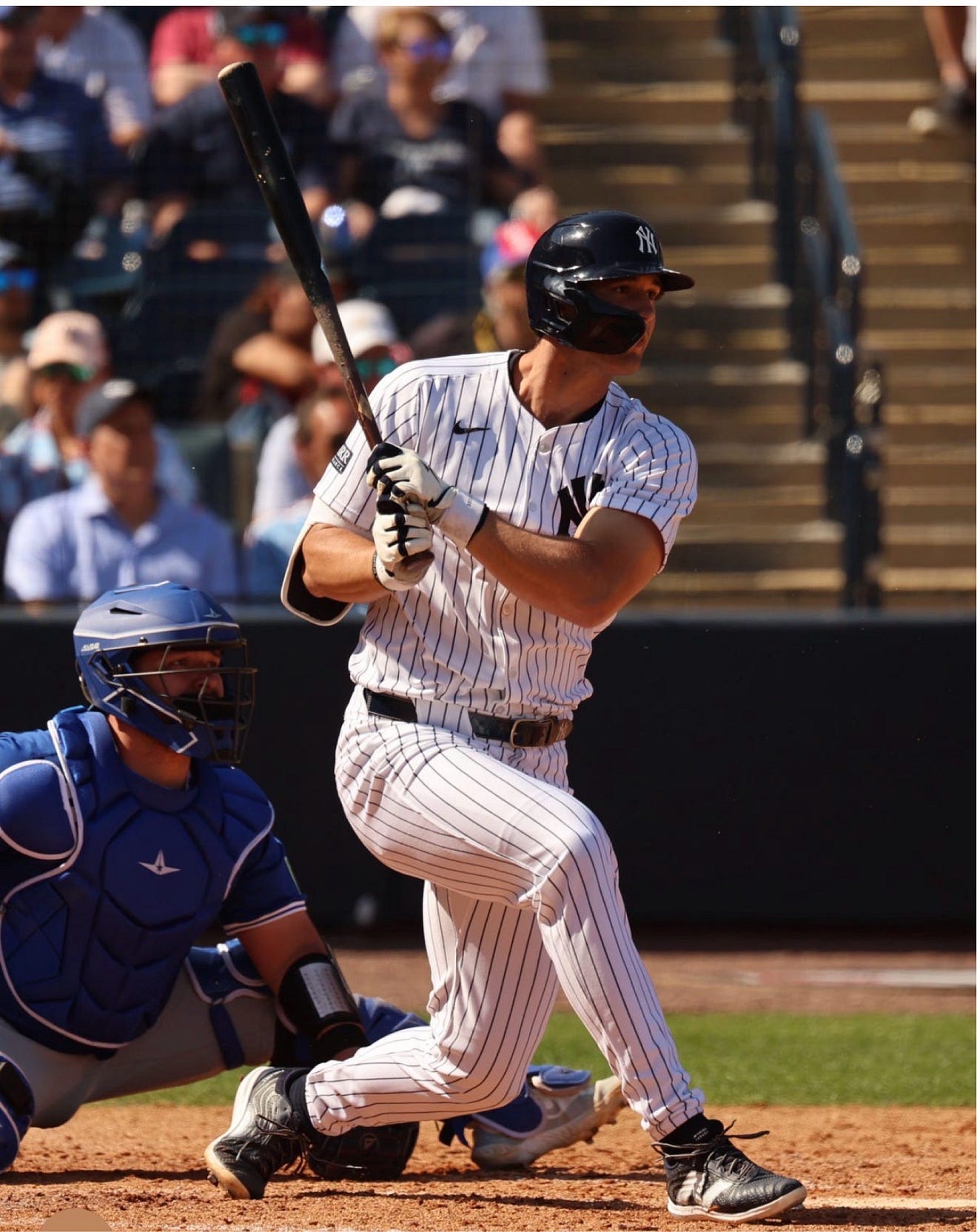
200 Is the New 300
These pitchers did not quite get there (and why they didn’t)
200 Is the New 300
These pitchers did not quite get there (and why they didn’t)
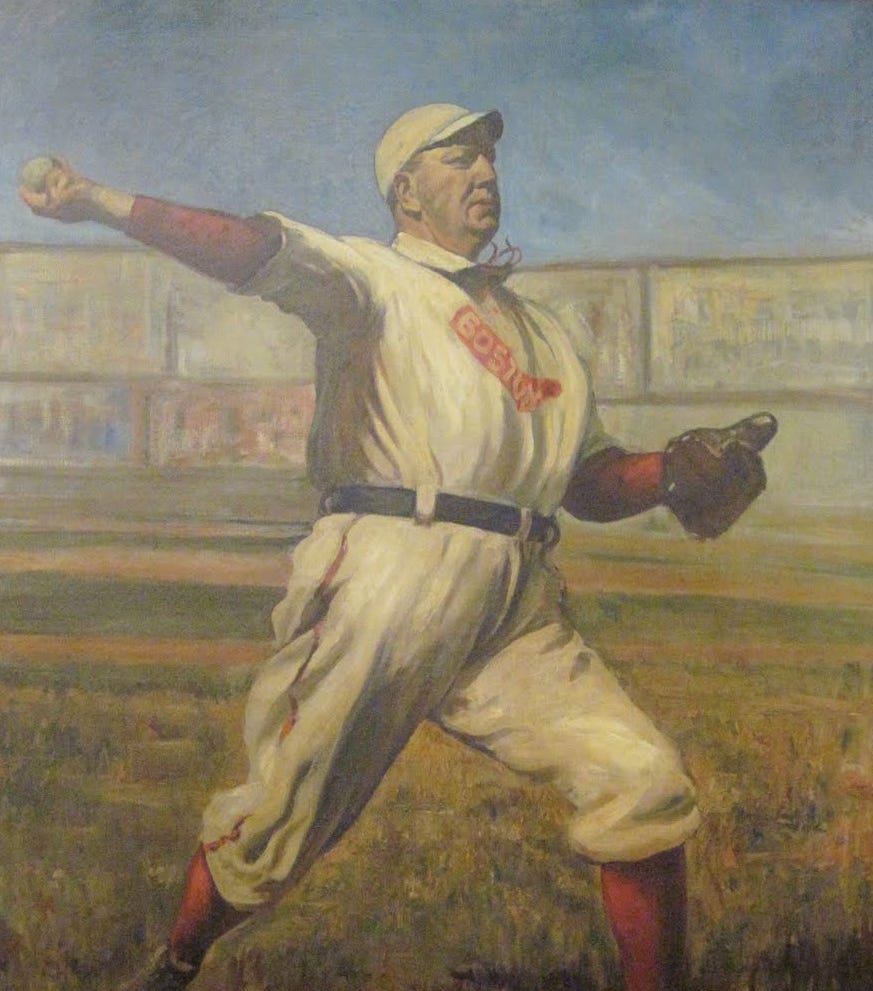
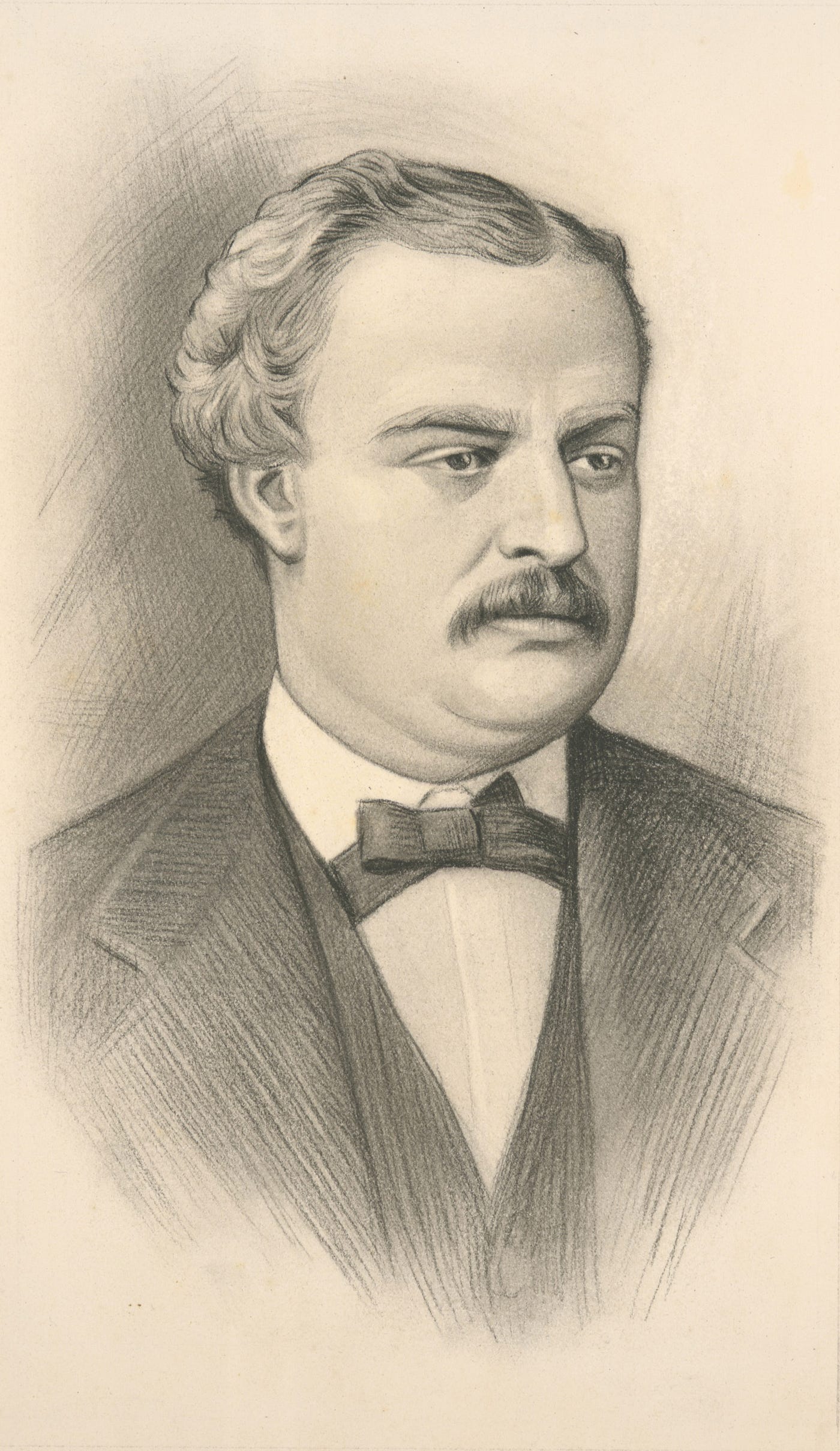
Fat and forty-one in 1908, Cy Young earned 21 of his 511 victories
200 is the new 300, we all agree, for pitchers and fortunetellers. This extract from a book in progress is by my friend Jamie Selko, who wrote to me, “There is only a single pitcher today who has not already won 200 games that even has an outside chance to reach 200, G. Cole, but injuries might put paid to that. There is a day coming when 150 wins might be the next 300 and 100 the next 200.”
In 2023, Adam Wainwright’s struggle to notch his 200th win grabbed the attention of even non-Cardinal fans. He started the season only five wins away from that mark of pitching prowess after a more-than-decent 2022, a season in which he had double-figure wins and finished eighth in innings pitched, the seventh time he placed in the top ten in that category. What’s more, as recently as 2020 and 2021 he had been Top Ten in ERA as well. But man, did he struggle in his last campaign.
Even though he was 2–0 after his first four starts, he had been pounded to the tune of a 6.33 ERA, and it went south from there, as over his next fifteen starts his ERA was an astounding 8.76. During that span, enemy batters hit .371 against him and compiled an OPS line of .428/.629/1.047, which would have been terrific for a hitter but is obviously disastrous for a pitcher. Despite his woes, the Cards honored their eighteen-year mainstay by continuing to put him out there, trying to get their now ancient-for-baseball 42-year-old former stalwart across the line.
(It must here be stated that none of the drama of his quest would have taken place — and the Cardinals would not have kept throwing him out there — had he not already suffered two potentially career-ending surgeries which had in effect already cost him two entire seasons: 2011 when he underwent Tommy John surgery and 2015 when he tore his Achilles tendon. Without those setbacks, he would certainly have entered his final season with 220 wins already in the tank.)
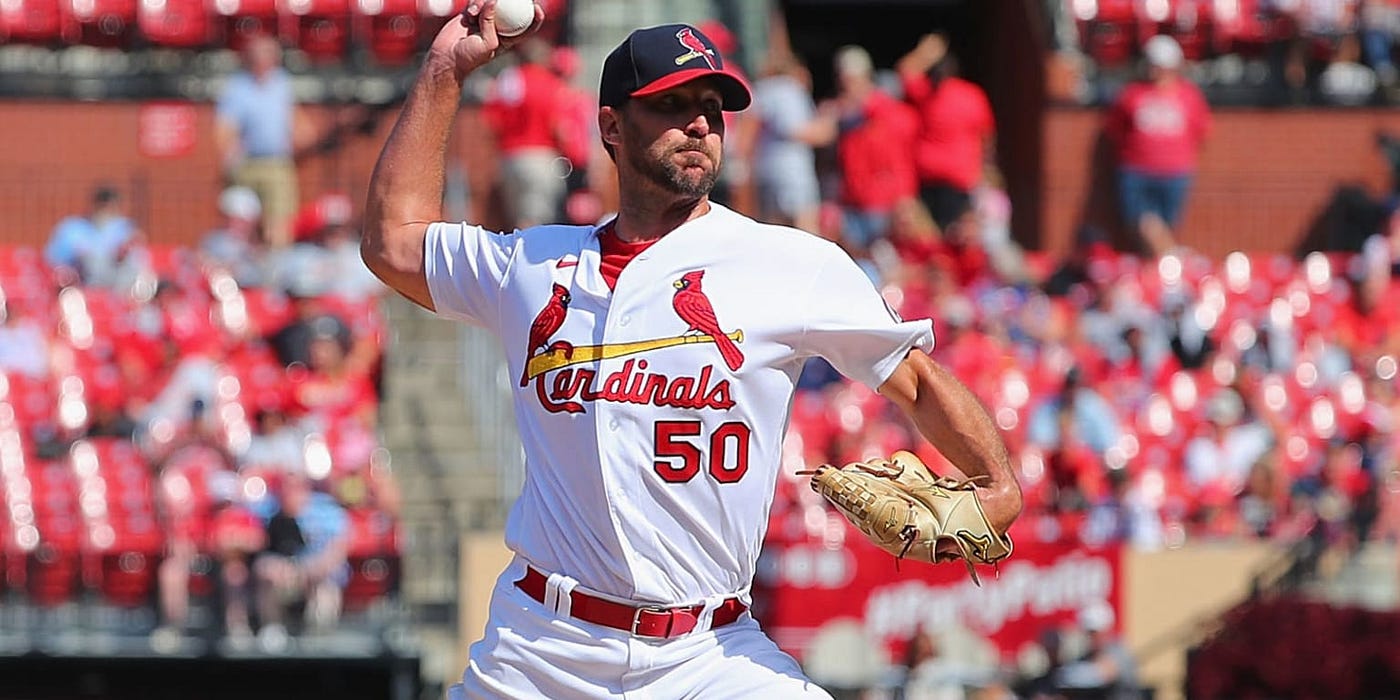
Adam Wainwright
After ten straight losses, on September 12, he finally won his 199th game (and got his season ERA under 8.00) by turning in his second-best game of the season in a 5–2 win over the Orioles. He had pitched well against the Padres on August 28, giving up one run in six innings but taking the loss as his teammates couldn’t help him out in a 1–4 defeat. Then, in his next start on September 1 — in what would be his last appearance on the mound in Cardinal red — he threw seven scoreless innings at Milwaukee for win 200 in a 1–0 game. (The Cardinals gave him two final curtain calls by using him as a pinch hitter on September 29 and October 1, a rare show of class.)
So, anyways, Mr. Wainwright’s struggles to get to 200 got me to thinking about other pitchers, pitchers who got close to that mark without reaching it, so I did a little digging. It turns out that twenty-six pitchers in MLB history have won between one hundred and ninety and two hundred games. These are their stories.
“Grasshopper” Jim Whitney (191 wins) pitched 552 innings as a twenty-three-year-old rookie in 1881 and was, for all intents and purposes, done at thirty, going 4–9 with a 6.22 ERA after reaching that less than superannuated age. He averaged 443 innings pitched per season from his rookie year until 1886. Overwork is most surely what left him nine wins short of two hundred.
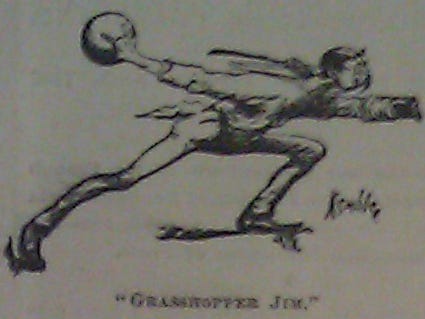
Grasshopper Jim Whitney by Kemble in the Boston Referee, 1886
Emil “Dutch” Leonard (191 wins) last pitched at age 44 in 1953. The long story made short about the (very) probable reason he didn’t make it to two hundred wins? In the twenty years he pitched in the majors, only four times did his team finish above .500. That, coupled with the fact that his first team, the Dodgers, didn’t have a catcher capable of handling a knuckleball, which resulted in his being sent down to the minors for most of 1936 and all of ’37 put another possible nine wins out of reach. Had he played for teams that even finished as high as third once in a while and played within five games of .500 either way every other year or so, 200 would have been a certainty.
Lon Warneke (192 wins) last pitched in 1945. He got an early start (340 IP before his 24th birthday) and lasted a long time (fifteen years), had eight years with over fifteen wins (including six in a row) and pitched for good teams (in the ten years from 1932 until 1941, his team finished in the top three eight times and had only one season under .500 (compare that to Dutch Leonard immediately above). It seems like he should have been a cinch for 200 wins, and it would also seem that the reason he didn’t get there is the fact that he spent the 1944 season in the service. However, nine wins in ’44 were not writ in stone and he just as easily could have wound up a scant victory or two away from glory. (Note: Lon’s eventual failure to reach the 200-win plateau is the most puzzling of the twenty-six pitchers in this survey. He had every single thing most of the other players lacked — longevity, numerous high-win seasons, and he played for good teams his entire career. In short, his absence from the Hall of the Vaunted is the biggest mystery of the bunch.)
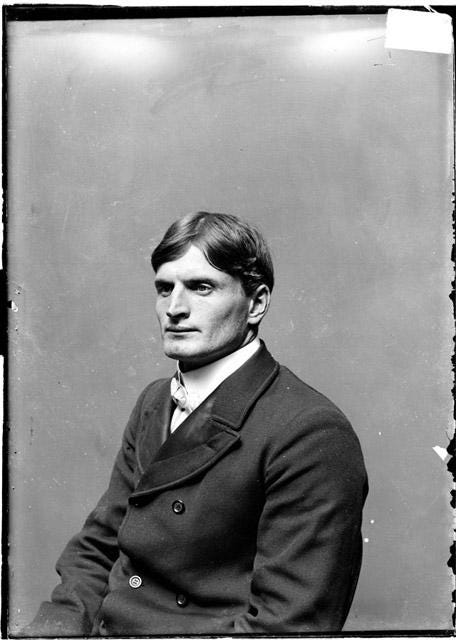
Rube Waddell of Chicago Orphans, Sept 18, 1901
Rube Waddell (193 wins) last pitched in the majors in 1910. Even though he first pitched in the big league at twenty, Rube had a relatively short career with only ten years of at least a hundred innings pitched (granting the fact that in all ten seasons he pitched over 200 innings and averaged 284 per). I think that most readers will agree that the reason Rube didn’t make it to 200 wins was due to his “eccentricities.”
Wes Ferrell (193 wins) last pitched in 1941. He had six twenty-win seasons and is now only one of only eleven pitchers to reach that total without being named to the Hall of Fame — and the only pitcher sine 1900 with six such seasons who is not enshrined (apart from Roger Clemens). He basically had a ten-year career (1929–1938), accruing only fifty-five innings (and three wins) in the other five years he appeared in the bigs. His tenth and final year as a mainline starter was flukey to say the least — a quite good 15–10 season coupled with a horrid 6.28 ERA. That year, his teammates supported his starts with nineteen games in which they scored at least five runs, including six with nine or more. He pitched in ten games in which the opposition scored at least ten runs (not all of them off of him) and managed to win two of them. What ended his quest for 200 was bone chips in his elbow. After his operation late in 1938, he would win only three more games. (One more note on Mr. Ferrell: In 1948, at age forty, he managed the Marion club in the Western Carolina League; in 104 games, he hit .425 with a .517/.766/1.283 OPS line, 78 EBH, 99 runs, and 119 RBIs.)
Curt Simmons (193 wins) last pitched in 1967. He spent 1951 in the Army. Case solved.
Sam Leever (194 wins) didn’t get his second big-league win until he was already 27 years old in 1899; he last pitched in 1910. He was still effective after 35 (43–22, 2.15), but his workload diminished from 255 innings a year to 148. Leever left after a salary dispute at 38 and retired to his farm. Could he have accepted a lower salary and garnered six more wins? Almost certainly. However, back in Baseball’s Triassic, two hundred wins was not a big deal. Plus, turning your back on $2000 a year is not like turning down $6,000,000 in the Anthropocene.
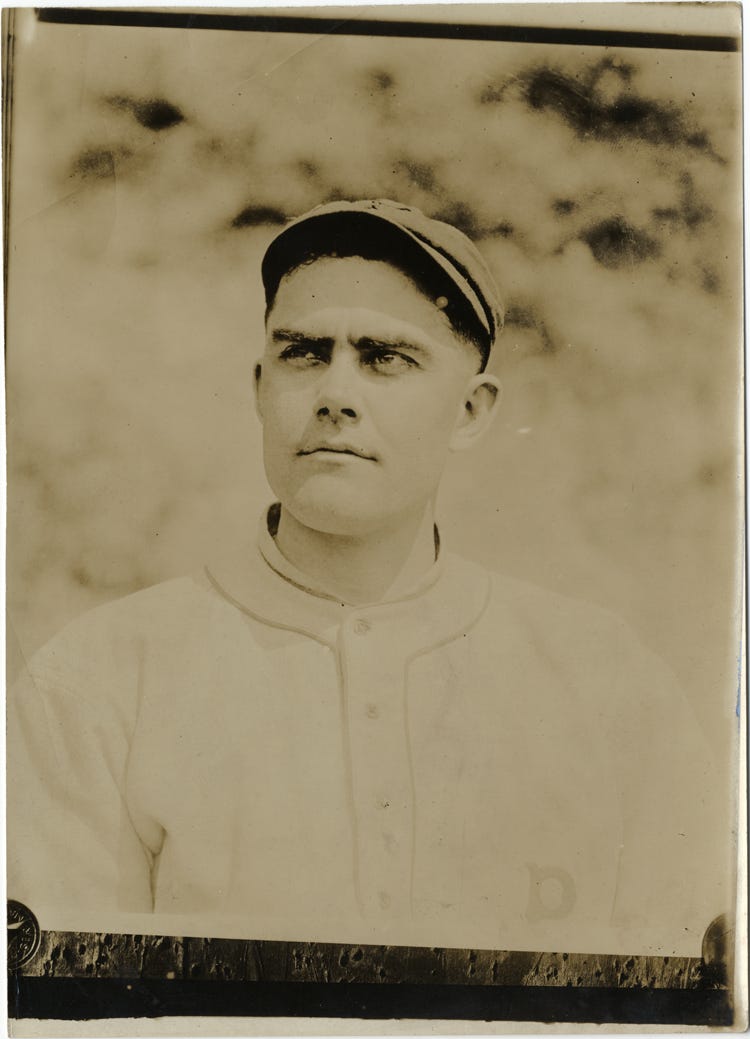
Babe Adams
Babe Adams (194 wins) last pitched in 1926 at 44 after going 8–8 with a 5.61 ERA the previous two years. Right in the middle of his career he was sidelined by a sore shoulder and he spent two years (1917–1918, except for three games in ’18) in the minors, during which he won 34 games and had a 1.72 ERA over 475 IP. That two-year gap (and the fact that he only pitched in five major-league games before he was 27) is what kept him from 200 wins. (Side note: Well known as perhaps the best post-1900 control pitcher (his 1.29 BB/9 mark was second only to Deacon Phillippe’s 1.25), it was his HB mark of one every 64 innings pitched and WP mark of one every 115 innings pitched is what separated him from the above-mentioned Leever.
Dolph Luque (194 wins) last pitched in 1935 at age 44. After getting into two games each in 1913 and 1914, he was sent back to the bushes and didn’t surface in the bigs again until midseason in 1918. He just never acquired enough wins when he was a frontline starter. He had one monster season (27 wins in 1923) but he had only two other seasons with as many as fifteen wins. He had a good year as a 39-year-old, but would go on to win only 26 games over his last five years in the majors.
Tommy Bridges (194 wins) last pitched in 1946. Heading into 1944, he was already 36 but, pitching wartime ball, had garnered twelve wins in 1943 and registered the lowest ERA of his career. He was also Top-Ten in W%, WHIP, Strikeouts, K/9 and WAR for pitchers. With 192 wins in the bag, there was no way he wasn’t going to win 200 games. Then he was drafted, and he didn’t reach 200 wins. When he came back at 38, wartime ball was gone, and thirteen games and two wins later, so was he.
Larry Jackson (194 wins) last pitched in 1968. A good and reliable journeyman pitcher, he won at least thirteen games twelve years in a row, including five with at least fifteen. In his last season, at age 37, he went 13–17 for the seventh-place Phillies with a career-best 2.77 ERA. And then he was done, full stop.
I asked Mr. Jackson why he quit when he did and if he regretted not getting those six wins he needed to reach 200, and he told me that he was tired of being away from his home and his family and wanted to get back to Idaho. He also said that he had no regrets at all about not playing one more year to get to that 200-win mark. I absolutely believed him, without a doubt. But what my question is, if he reached the same point in his career in today’s game and was getting paid twelve million dollars a year instead of thirty thousand, would he have “hung on” for at least one more year (á la every player today)? In today’s world, he would not be in this story.
Doyle Alexander (194 wins) last pitched in 1989. He pitched in the majors for nineteen years, almost exclusively as a starter the last fourteen. He reached double figures in wins ten times and won at least fifteen three times over his career. His last season, he threw 223 innings for a team that lost 106 games. Would he have reached 200 playing for a winning team? Yes. If he were playing in today’s pitcher-poor environment, would he have been signed by another team despite his 6–18 record? Yes. Did either of those situations occur in the real world? No.
David Cone (194 wins) last pitched in 2003. Does he win 200 without the frightening aneurysm in 1996? Yes. (Oh, and if you need proof of the above statement, look no further than Mr. Cone’s signing with Boston for a million dollars in January 2001 after going 4–14/6.91 for the 2000 Yankees.)
Dwight Gooden (194 wins) last pitched in 2000. Drugs.
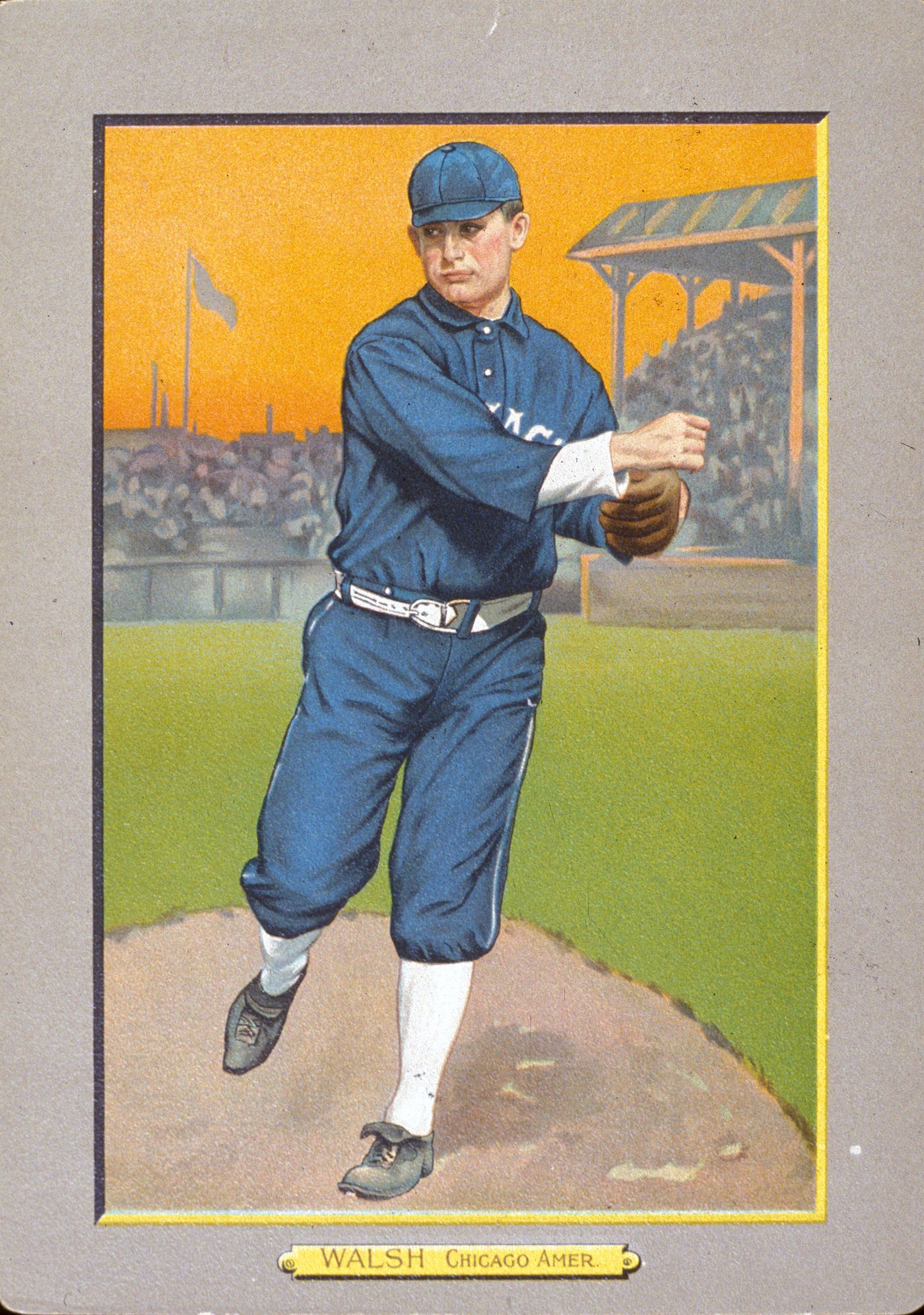
Ed Walsh
Ed Walsh (195 wins) last pitched in 1917, but after winning 168 games and averaging 361 innings pitched a year in the seven years from 1906 until 1912, he was nowhere close to the pitcher he had been. In the last five years of his career, he only pitched a total of 190 innings and won but thirteen more games. It was overwork that slowed and then stopped his march to two hundred wins when he was only 32, although he hung on in hope of a return to form for four more years. (It must be added that it was probably his team’s offense that actually cost him a chance at 200 wins, as in 1907–08 alone, he pitched in 52 games in which his team scored either one run or no runs at all as contrasted with a mere fifteen games in which they scored more than three runs.)
Bob Shawkey (195 wins) had a long career (fifteen years), but it was World War I that kept him from reaching the 200-win plateau, as he spent 1918 pitching for the Navy at the Philadelphia shipyard before being assigned to the USS Arkansas. Over his last few years he was no longer a frontline starter on a Yankee team stocked with good pitchers, and at 36 in 1927, he was done.
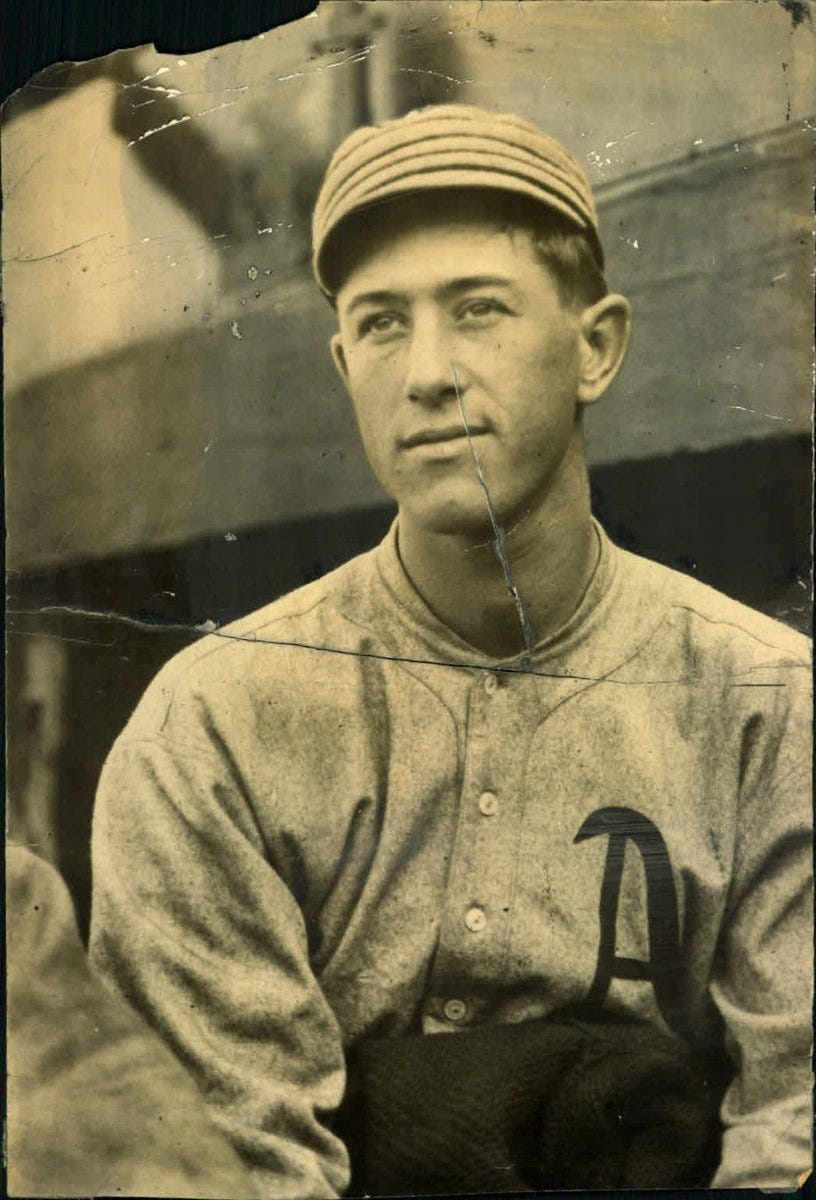
Joe Bush with 1914 A’s
“Bullet” Joe Bush (196 wins) last pitched in 1928. He started very young (200 IP at twenty) and was a frontline starter for twelve of thirteen years from 1913 to 1925. The one year he wasn’t was 1919 when he was sidelined by arm problems. One could say that Bush would have reached 200 wins had he not lost that year, and one would be correct. However, he wouldn’t have needed the 1919 season if Connie Mack had sold him off as he did most of the 1914 Athletics regulars over the next three years while Bullet Joe remained in Philadelphia. From 1915 through 1917, Joe went 31–56 (.356 but with a 2.88 ERA) for a team that went 134–316 .298 (103–260 .284 without him). Even being sold one year earlier would have been enough for Joe to get four more wins.
Claude Osteen (196 wins) pitched until 1975. Aside from the fact that in 1962 and ’63 he started 63 games for a team that lost 207 games, I believe that if Claude was pitching today he would have reached 200 wins for the same reason that I believe Doyle Alexander would have: somebody would have taken a flier on him. After all, he did pitch 204 innings his last year and clubs today are desperate for “inning eaters.”
William “Adonis” Terry (197 wins) pitched 476 innings as a nineteen- and twenty-year-old in 1884. From then on, his career was up and down. He apparently had frequent arm problems and though while he was a good pitcher when not having aches and pains, he was not what we would today call a star, finishing in the Top Ten in wins only three times in his fourteen-year career and never higher than seventh. In another era, he may have had more consistency and lasted longer (he pitched his last game when he was only thirty-two) and, under those conditions, almost certainly would have won 200 games. A decent hitter, he appeared in 227 games at a position other than pitcher, hitting .249.
Jesse Tannehill (197 wins) won 165 games in the eight years between 1898, when he was twenty-three, and 1905 when he was thirty, averaging twenty-one wins a season (he is another of the six-twenty-win-seasons-not-in-the- Hall crew), compiling a 2.58 ERA and averaging 270 innings a season over that stretch. Jesse would win only twenty-two games total over the last five years of his career with a 3.10 ERA. His arm was on a downhill trajectory, and by 1908 it was pretty much shot. (He is most famous among the cognoscenti for the fact that he was a far better hitter than his brother, third baseman Lee Tannehill. Jesse hit .255 with an OPS line of .648 over his MLB career while Lee hit .220 — pretty bad even for a third baseman of the era, I think you will agree — with a .542 line. In fewer than half his brother’s ABs, Jesse had almost as many triples as Lee [23–27] and hit more home runs [5–3], and, based on AB/RBI, was also a better run producer.)
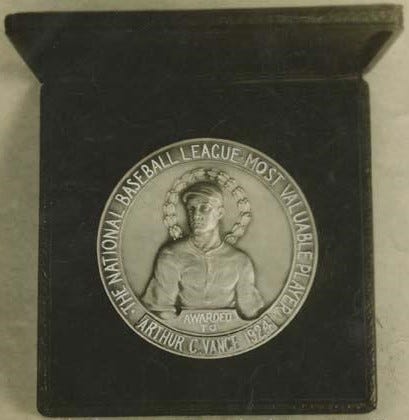
Dazzy Vance NL MVP Award, 1924
Dazzy Vance (197 wins) last pitched in 1935. Well, as many readers will know, the reason The Dazzler didn’t get to 200 victories is because he only pitched 33 innings in the majors before he was thirty-one. Winner of 117 games in the minors before catching on with the Dodgers in 1922, he was troubled by an undiagnosed arm problem for years before another accident revealed that had been undiagnosed. In today’s world, the first injury would have been discovered within a week and 200 wins would have been barely visible in his rear mirror.
Larry French (197 wins) last pitched in 1942. He was only 34 when he enlisted in the Navy in January 1943 after a 15–4, 1.83 season for the Dodgers. In his last major-league start on September 23, 1942, he pitched a one-hit shutout in which he faced only 27 batters, surrendering only a leadoff single to Nick Etten, who was erased on a double play grounder. It is the best final start in big-league history. Choosing to remain in the Navy, he never returned to the majors and served in both theaters in WWII as well as in Korea. He retired from the service in 1969 as a captain (the equivalent of a colonel in the Army).
Bob Friend (197 wins) last pitched in 1966. Nicknamed “Warrior,” he threw over 200 innings eleven years in a row. The reason he didn’t reach 200 is simple: his first four years pitching for the Pirates (out of fifteen total), they lost 407 games and Bob went 28–50. On a better team, he breeches the 200- win wall with ease. Bob only had six seasons at .500 or above, but he was a much better pitcher than that. He was a victim of circumstance.
Dennis Eckersley (197 wins) won 153 games as a starter, having one really good year — 1978, twenty victories — but only one other season with more than fourteen wins. He was 31 and going nowhere when Tony La Russa turned him into a closer. I imagine that there would have been a chance for him to have reached 200 wins as a starter, but he would either have had to switch to the knuckleball (key word: successfully) or have taken a dark, steroids laden route to get there.
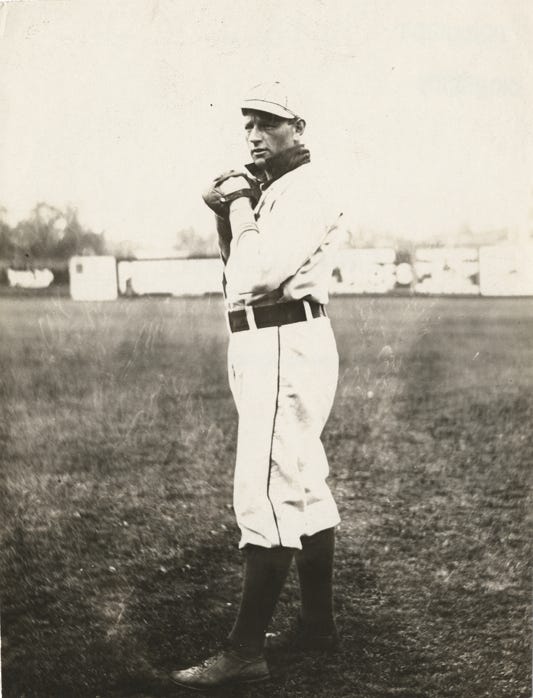
Jack Chesbro, photograph by Charles M. Conlon
Jack Chesbro (198 wins) last pitched in 1909. He had basically lost much of his former skills by 1907, and by 1909 was making a better living outside of baseball than in it. After skipping basic training that final year because of rumors that he was to be demoted, he tried a comeback late in May but, out of shape and having lost his edge, he hung up his (professional) spikes after going 0–5. In the author’s opinion, there was a more than even chance he could have reached the two hundred-win plateau if he had started the season in better shape his last year because way back then, starters would get a complete-game victory in a 13–9 game. However, Happy Jack’s heart was no longer in it.
Bucky Walters (198 wins), last pitched in 1950 (one game after not pitching at all in 1949 and appearing in only seven games in 1948). As the reader may know, Bucky started as an infielder and didn’t become a fulltime pitcher until he was 26. Had he started out as a pitcher, he would absolutely have won 200 games and possibly have threatened the 250 plateau.
And thus endeth the exposition.
메타데이터
- post_id
- 8f6311eec433
- slug
- 200-is-the-new-300-8f6311eec433
- url
- https://ourgame.mlblogs.com/200-is-the-new-300-8f6311eec433
- canonical_url
- https://ourgame.mlblogs.com/200-is-the-new-300-8f6311eec433
- author_url
- https://medium.com/@thorn_john_87223
- status
- ok
- fetched_at
- 2026-06-15 20:49:13