When Entertainment Dilutes the Mission
What SeaWorld’s changing identity reveals about pricing, institutional purpose, and the pressure to turn everything into an experience
When Entertainment Dilutes the Mission
What SeaWorld’s changing identity reveals about pricing, institutional purpose, and the pressure to turn everything into an experience
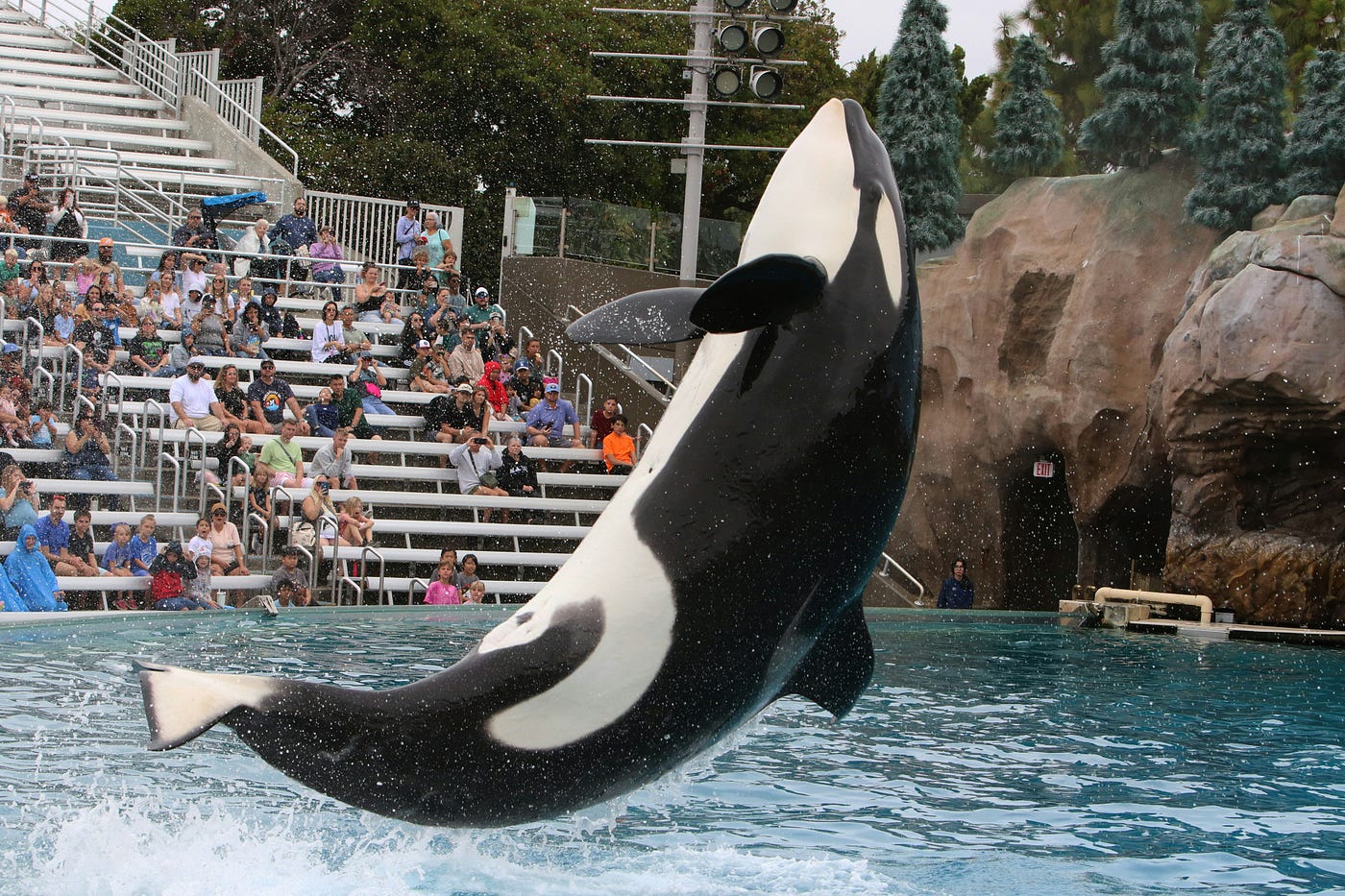
Photo by David Trinks on Unsplash.
I recently returned to SeaWorld San Diego after staying away for years. Like many people, I stopped going after the release of Blackfish and the public accounts of trainer deaths, captive breeding, and concerns about the physical and psychological effects of keeping orcas and dolphins in confined environments. SeaWorld later announced that it was ending its orca breeding program and replacing its theatrical killer whale shows with presentations it described as educational and conservation-focused. The company states that the orcas currently in its care will be the final generation kept at its parks.
I was curious to see what had changed. A great deal had changed, but not in the way I expected. SeaWorld now operates as both a marine zoological park and a broad entertainment complex. Rides, events, private functions, and premium experiences compete with the animal exhibits for visitors’ time and attention. Any one of these activities may generate needed revenue, but together they create a confusing institutional identity. The marine animals, which remain the feature separating SeaWorld from an ordinary amusement park, can begin to feel like only one offering among many.
The Experience We Came For
I have visited SeaWorld locations in Hawaii, Florida, and San Diego. My memories are centered on marine life, underwater viewing areas, educational presentations, and the opportunity to observe animals most people would otherwise encounter only in books or documentaries. I did not return for roller coasters or carnival games. Those attractions may appeal to other visitors, but they were not part of the experience I was seeking.
I would have been happier visiting a well-maintained aquarium and going to the county fair another day. Each would have offered a clear purpose. Instead, SeaWorld felt like the two had been placed on top of one another, with additional commercial activities layered around them. The animal exhibits did not seem to receive the same level of attention. Film covered portions of the glass in the shark tunnel and the Arctic penguin display, making the animals difficult to see. Some views were obstructed, and the indoor areas were so crowded that it was difficult to move comfortably or spend time observing the exhibits.
For an organization that continues to use marine life as its distinguishing feature, poorly maintained viewing glass is not a minor cosmetic issue. The glass is the visitor’s primary connection to the animals, and when that view is compromised, the institution is failing at one of the most basic parts of the experience it claims to provide.
The physical layout also made the visit difficult for my daughter, who has a disability but does not ordinarily use a wheelchair. Moving through the large, crowded park required more stamina than she could comfortably sustain. Some routes included long ramps with upward inclines, which presented their own challenge, and after approximately three hours, we were exhausted.
Accessibility is too often reduced to whether a facility has ramps, wheelchair spaces, or accessible restrooms. Those provisions are important, but disability is not limited to wheelchair use. A person may be able to walk while still struggling with distance, inclines, fatigue, balance, or crowded environments. A park can meet basic accessibility requirements and still remain difficult to navigate in practice.
SeaWorld provides an accessibility guide and a Ride Accessibility Program, but much of the guidance is centered on ride participation and wheelchair use. That information is necessary, although it does not fully address the needs of visitors who are ambulatory but have limited stamina or other mobility restrictions. Mobility devices are available for rent, but the availability of a costly rental is not the same as designing an inclusive experience. Accessibility should not become another premium service added to an already expensive day.
The Advertised Price and the Real Cost of Visiting
We decided to visit after seeing a television advertisement offering tickets for $59.99. When we arrived, however, the kiosks and ticket counter showed admission at $120 per person. The employee at the counter appeared unfamiliar with the advertised offer and could not explain how to receive it.
While we were trying to understand the difference, another family reached the counter, learned the price, and left. They appeared discouraged, and it seemed likely that they had also arrived expecting the $59.99 admission promoted on television. Their experience made the problem more visible. The advertisement had created an expectation that the lower price would be available, yet the process for obtaining it was not apparent at the kiosks or ticket counter.
I eventually found the discounted ticket online. It required selecting a reservation date, even though we were already standing at the park and chose that same day. After completing the purchase, I was told that an email would be sent for entry, but it never arrived. Fortunately, I had taken a screenshot of the payment confirmation and was able to use it to obtain a ticket at the booth.
SeaWorld’s ticket page advertises date-specific admission “as low as $59.99,” while noting that the price does not include parking, taxes, or service fees. The site also states that certain discounts are not available at the park. The lower price is therefore real, but it is not easily accessible to a visitor who arrives expecting the advertised offer to be available at the gate. In practice, it functions as an entry point into a much larger spending system rather than an accurate representation of the likely cost of the day.
Parking added another $40, and two bottled drinks cost $19. Basic food was also expensive. A hot dog was approximately $10, and popcorn was about $8. We chose not to eat in the park. More substantial meals were available at sit-down restaurants, but after seeing the prices for basic concessions, I did not expect those options to be affordable.
Once admission, parking, food, and other expenses are combined, a family can spend several hundred dollars on a single visit. For lower-income households and larger families, the total can become prohibitive before any optional experiences are added. Throughout the park, visitors are also encouraged to pay more for convenience, preferred access, or additional activities. There is nothing inherently wrong with offering optional services, but visitors may begin to feel that the admission ticket provides only the lowest tier of the experience and that comfort or fuller participation depends on continuing payments.
That feeling becomes more discouraging when the basic experience already appears neglected. Visitors may be willing to pay for a special program when the regular exhibits are clean, accessible, informative, and well maintained. They are less likely to view upgrades positively after paying substantial admission and parking costs only to encounter obstructed viewing glass, overcrowded spaces, and employees who cannot explain the advertised pricing.
The cost also raises a larger question about public access. Organizations often speak about education, community engagement, and conservation while setting prices that place the full experience beyond the reach of many lower-income families. The burden grows quickly for larger families because admission, food, drinks, and upgrades multiply with each additional person. What may be expensive for two visitors can become unrealistic for a family of four, five, or more. The family that left the ticket counter made that contradiction difficult to ignore.
I could not find a standing SeaWorld San Diego admission program for lower-income households or visitors receiving SNAP or EBT benefits. SeaWorld offers promotional prices and programs based on factors such as purchase date, age, student status, military service, or annual-pass membership, but those discounts are not based on financial need. Many museums and aquariums participate in Museums for All, which allows people receiving food assistance to pay no more than $5 per person for up to four visitors with an EBT card. SeaWorld does not appear on the program’s list of participating institutions.
A zoological park is more expensive to operate than a small museum, and SeaWorld would not necessarily be able to match the admission price offered by every Museums for All participant. Even so, a meaningful access program could provide reduced admission on selected days, family pricing, food assistance, or another pathway tied directly to financial need. Without one, SeaWorld’s educational and conservation experiences remain least accessible to many of the families who would benefit most from them.
An Expanding Business Model
SeaWorld changed after Blackfish, but it did not become primarily an aquarium or conservation center. It expanded further into the conventional theme-park business. The company now relies heavily on rides, entertainment, food sales, and special programming intended to increase attendance and guest spending. SeaWorld San Diego also promotes itself as a venue for private functions, and some spaces are marketed for catered gatherings beside animal habitats, placing the zoological setting directly within the commercial event experience.
The rides demand a substantial share of a visitor’s day. We arrived on a Monday at approximately 3:00 p.m., yet at least one attraction showed a wait approaching two hours. Long waits are common at major amusement parks, but they are more difficult to accept in a place also presenting itself as an educational and zoological institution. A family that spends hours waiting for rides has less time to observe animals, attend educational programs, or explore exhibits. The sale of line-skipping access reinforces the impression that visitors must pay again to recover time after already paying for admission.
Animal encounters raise a related question. These experiences are marketed around what visitors receive: closeness, photographs, novelty, and the feeling of forming a personal connection with another species. Much less is said about what the animal receives from the exchange.
I remember a dolphin-feeding experience during an earlier SeaWorld visit that made this concern more tangible. Visitors could purchase food and stand beside an open pool separated by a short wall. A young child next to me repeatedly slapped the top of a dolphin’s head, and I did not see a parent or trainer intervene.
That experience occurred years ago and may not reflect SeaWorld’s current practices. It nevertheless illustrates what can happen when close contact with an animal is sold as a casual visitor activity. The animal cannot control the behavior of every guest, and without continuous supervision, an encounter intended to feel educational or exciting can quickly become intrusive.
Some animals may find interaction with familiar trainers, new activities, or food rewards stimulating. Participation alone, however, does not prove enjoyment. An animal may have been trained to approach, may expect a reward, or may simply tolerate the interaction. The more important questions are whether participation is genuinely voluntary, whether the animal can withdraw at any time, and whether refusing affects access to food, attention, or other resources.
SeaWorld tells guests how memorable and educational an encounter may be for them, but it does not clearly explain how the animal’s willingness is assessed. Without a clearer explanation, the experience appears designed primarily around human enjoyment, with the animal’s experience left for visitors to assume.
These offerings are more than isolated attractions. Each one requires staffing, infrastructure, maintenance, and planning. Together, they consume resources that must also support animal care and the upkeep of the park’s zoological exhibits. They also compete for the attention of visitors who may have come primarily to see animals and learn about marine life. Entertainment may support the institution financially, but it can also become the dominant purpose while the animals continue to provide the identity and credibility that make the business distinctive.
Concerts, private functions, and nighttime fireworks also raise reasonable questions about animal welfare. Animals respond differently to noise, vibration, crowds, and sudden changes in their surroundings. Research in zoological settings has found behavioral changes among some species during loud events, although the effects vary by animal and circumstance.
Fireworks deserve particular attention because they involve abrupt explosions, flashes of light, and vibration created entirely for visitor entertainment. The animals remain inside the park and cannot choose to leave when an event becomes uncomfortable. The available research does not prove that every concert or fireworks display harms every animal, and SeaWorld may use monitoring systems or animal-specific procedures during major events. The problem is that visitors are given little clear information about those safeguards.
An organization that places animal care at the center of its public identity should explain how entertainment is evaluated and managed when it may affect the animals that give the park its purpose.
Where the Money Goes
SeaWorld’s parent company, United Parks & Resorts, is a publicly traded entertainment company that also operates Busch Gardens, Aquatica, Discovery Cove, Sesame Place, and other parks. In fiscal year 2025, the company reported approximately 21.2 million visitors, $1.7 billion in revenue, $168.4 million in net income, and $605.1 million in adjusted earnings before interest, taxes, depreciation, and amortization.
Those figures show that the company generates substantial revenue, but they do not tell visitors how their spending is divided among animal care, park operations, employees, entertainment, debt, and shareholder returns.
The language used for investors is revealing. SeaWorld’s public-facing materials emphasize animals, rescue, education, and conservation, while investor communications focus more directly on attendance, guest spending, operating costs, and financial returns. Both sets of priorities can exist within the same company, but they are not the same. The question is which priorities are protected when resources become limited or when investors expect stronger financial performance.
Executive compensation provides one of the clearest points of comparison. According to United Parks & Resorts’ 2026 proxy disclosures, CEO Marc Swanson received approximately $4.89 million in total compensation for 2025. The company identified median employee compensation of approximately $11,451, resulting in a CEO-to-median-worker pay ratio of about 427 to 1.
That comparison requires context. SeaWorld employs many seasonal and part-time workers, so the median figure does not represent the salary of a typical full-time professional or animal-care employee. Even with that qualification, the ratio is difficult to dismiss.
Frontline employees carry much of the park’s daily operation. Staffing was visible throughout the property, but it seemed concentrated around entrances, exhibits, concession areas, and retail locations. I did not see clearly identifiable security personnel or grounds staff circulating through the park, although the restroom I used was very clean and I did not see trash accumulating in public areas.
What stood out more was the general demeanor of many employees. They were not openly rude or unwilling to help, but few appeared enthusiastic or particularly engaged with visitors. Their expressions were serious, and several seemed to be moving through assigned duties without the energy normally associated with a place marketed around excitement, discovery, and family enjoyment.
One employee could not explain the television promotion that had brought us to the park. That may reflect inadequate training rather than a lack of effort. A single visit cannot establish the cause of employee morale or determine how staff are treated behind the scenes. The atmosphere may result from difficult working conditions, limited communication, insufficient support, low pay, understaffing, or the demands of operating a large and increasingly complicated entertainment business.
Whatever the cause, employees are part of the experience visitors receive. When the workforce appears strained or emotionally removed, it creates another gap between the energetic image presented through advertising and the reality encountered inside the park. When executive compensation reaches millions of dollars while visitors encounter confused or subdued employees, obstructed exhibits, high prices, and repeated upselling, it is reasonable to ask whether resources are being directed toward the people and responsibilities that sustain the institution.
SeaWorld does perform meaningful rescue, rehabilitation, veterinary, research, and conservation work. The SeaWorld & Busch Gardens Conservation Fund reports that it has awarded more than $18 million in grants to more than 1,200 organizations since its creation in 2003 and currently distributes more than $1 million each year.
Those are real contributions, but they must be viewed in relation to the scale of the parent company. More than $18 million in grants over approximately 23 years is modest when compared with annual corporate revenue of roughly $1.7 billion. That comparison is incomplete because grantmaking represents only one part of SeaWorld’s animal-related spending. Animal care, veterinary services, rescue work, habitat systems, and research may be included in broader operating expenses rather than reported as conservation grants.
The deeper problem is that visitors are not given a clear, easily understood accounting of where their money goes. SeaWorld states that admission supports animal rescue and conservation, but it does not prominently disclose what percentage of ticket revenue is allocated to those purposes. Visitors therefore see the conservation message, but not the financial breakdown behind it.
Greater financial transparency would allow the public to see how spending is divided between animal care, park operations, employee support, entertainment, and corporate priorities. Without that information, conservation can begin to feel less like an accountable institutional priority and more like part of the company’s branding.
The Cost of Mission Dilution
SeaWorld is an unusually visible example of a problem affecting museums, zoos, aquariums, historic sites, and other cultural organizations. More institutions are turning toward entertainment and special experiences as a way to increase attendance and revenue. These programs are not automatically harmful. They can introduce an institution to new audiences, provide useful income, and support work that admission revenue alone cannot cover. The danger begins when the revenue-generating activity receives more attention than the purpose it was meant to support.
In museums, this can mean investing in highly visible programming while deferring the quieter work of caring for collections, maintaining records, and supporting staff. Those responsibilities are more difficult to promote, but they are what allow the institution to preserve its collections and remain useful over time. Much of that work does not generate the same photographs or social-media attention as an immersive exhibition or special event. It preserves the institution after the novelty of the experience has passed.
The same principle applies to SeaWorld. Rides and events may attract visitors, while private functions and premium services may provide additional income. None of those activities can replace well-maintained exhibits, credible education, supported employees, meaningful accessibility, responsible conservation practices, and appropriate animal care. An organization can become so focused on attracting visitors and increasing spending that it weakens the reason people valued it in the first place.
Caring responsibly for marine animals and maintaining their habitats requires specialized staff, complex systems, and substantial funding. A serious zoological institution will never be inexpensive to operate. The concern is not simply that SeaWorld is expensive, but the growing distance between the price being charged and the purpose being delivered.
Visitors are asked to accept high admission costs, paid parking, expensive food, premium upgrades, crowded environments, and an increasingly commercial atmosphere. In return, they should see clear evidence that the institution’s defining responsibilities remain the priority. That commitment should be visible in the condition of the exhibits, the support given to employees, the accessibility of the park, the care provided to animals, and the way the company explains its decisions.
SeaWorld changed its public presentation after Blackfish. It ended orca breeding, revised its shows, and placed greater emphasis on education and conservation. Those changes were significant, but they did not resolve the larger question of institutional identity: Is SeaWorld primarily a marine zoological institution supported by entertainment revenue, or has it become an entertainment company that uses marine animals to distinguish its brand?
The public should expect more than a mission statement. Institutions that claim education, conservation, preservation, or public service should be able to show how their spending, staffing, maintenance, and programming support those responsibilities. Revenue matters, but it should sustain the mission rather than gradually replace it.
SeaWorld is not alone in facing that pressure. Cultural organizations are increasingly expected to compete through entertainment and experience. The public should continue asking what is being preserved, what is being neglected, and who benefits when more of an institution is built around spending. An institution’s priorities are revealed by where it directs its money, staff, space, maintenance, and attention. When everything becomes an experience, the mission can become just another attraction.
Sources
Clark, Fay E., et al. “A Guide to Acoustic Research in Captive Animal Environments.” Frontiers in Veterinary Science, 2022.
Fanning, Lauren, et al. “A Preliminary Study Investigating the Impact of Musical Concerts on the Behavior of Zoo Animals.” Animals, 2020.
Harley, Jessica J., et al. “Preliminary Investigation of the Effects of a Concert on the Behavior of Zoo Animals.” Animals, 2022.
Museums for All. “For Visitors” and “Participating Museums.” Accessed July 14, 2026.
San Diego Museum Council. “Free or Reduced Admission Access to San Diego County Museums.” Accessed July 14, 2026.
SeaWorld San Diego. “Accessibility and Disability Access Guide.” Accessed July 13, 2026.
SeaWorld San Diego. “Concert Series.” Accessed July 13, 2026.
SeaWorld San Diego. “Dining, Parking, Rentals, and Upgrades.” Accessed July 13, 2026.
SeaWorld San Diego. “Private and Group Events.” Accessed July 13, 2026.
SeaWorld San Diego. “Special Offers and Ticket Pricing.” Accessed July 14, 2026.
SeaWorld Parks & Entertainment. “Killer Whale Education and Conservation Program.” Accessed July 13, 2026.
SeaWorld & Busch Gardens Conservation Fund. “About Us.” Accessed July 13, 2026.
United Parks & Resorts, Inc. “2026 Proxy Statement.” U.S. Securities and Exchange Commission, filed April 30, 2026.
United Parks & Resorts, Inc. “United Parks & Resorts Reports Fourth Quarter and Fiscal 2025 Results.” February 26, 2026.
Winship, Kelley A., et al. “Acoustic Monitoring of Professionally Managed Marine Mammal Habitats.” Animals, 2023.
메타데이터
- post_id
- 8f8477d497b6
- slug
- when-entertainment-dilutes-the-mission-8f8477d497b6
- url
- https://medium.com/@kpescador/when-entertainment-dilutes-the-mission-8f8477d497b6
- canonical_url
- https://medium.com/@kpescador/when-entertainment-dilutes-the-mission-8f8477d497b6
- author_url
- https://medium.com/@kpescador
- status
- ok
- fetched_at
- 2026-07-28 11:53:03