Why Tragedy Dramas From the Early 2000s Still Haunt Us Decades Later
(Or: A Love Letter to Song Seung Heon, the Man Who Ruined My Emotional Baseline)
Why Tragedy Dramas From the Early 2000s Still Haunt Us Decades Later

(Or: A Love Letter to Song Seung Heon, the Man Who Ruined My Emotional Baseline)
There’s a meme going around that sums up my entire relationship with early 2000s K-dramas better than any thesis paper ever could: “Autumn in My Heart really said, Here's your damage; enjoy.”
I laughed. Then I sat with it for a second. Then I felt personally attacked, because it’s true. I did not ask for this damage. Nobody handed me a consent form before I hit play on a sixteen episode fever dream about switched at birth siblings, leukaemia, and a man crying in the rain so beautifully that meteorologists should have studied him. And yet here I am, twenty some years later, still emotionally recovering, still rewatching, still, if I’m being honest, a little bit in love with Song Seung Heon.
Let’s talk about that.
The Man, The Myth, The Reason I Distrust Happy Endings
If you were anywhere near a television in 2000, you know the name. If you weren’t, let me set the scene: a floppy-haired, impossibly cheekboned actor named Song Seung Heon plays Yoon Joon Suh, a photographer who falls in love with a woman who, plot twist of the century, turns out to be his sister, switched at birth in a hospital mix-up so dramatic it makes soap operas look like tax documents. Then, just when the show could have mercifully let the man be happy, it remembers it’s called Autumn in My Heart and not Autumn Where Everything Works Out Fine and introduces terminal illness.
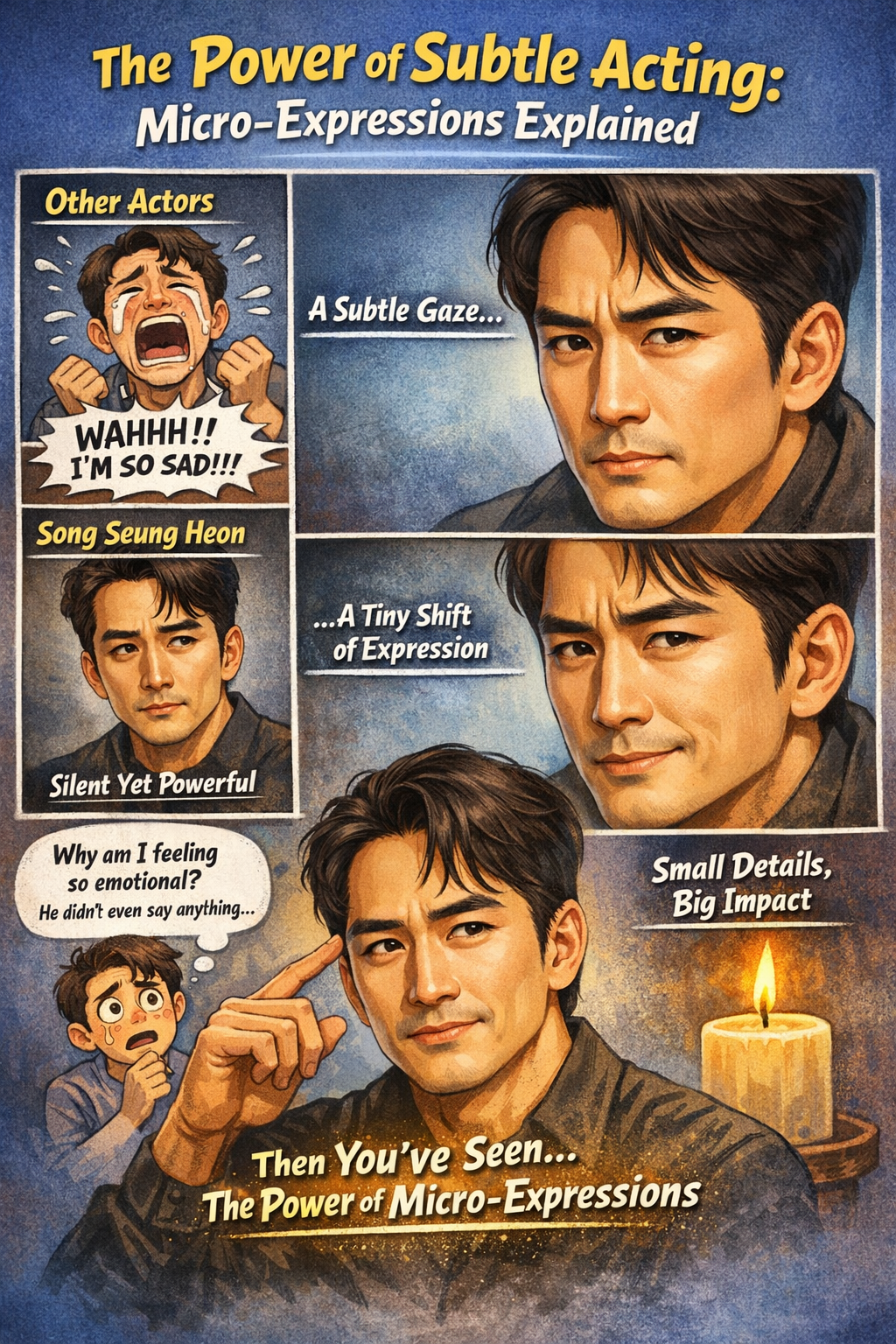
I want to be very truthful here; I did not choose this pain. Song Seung Heon’s face chose it for me. There is a very specific kind of devastation that only he seems capable of delivering. The quiet kind, the kind where he doesn’t sob so much as absorb grief directly into his bone structure and let it radiate outward. Other actors cry with their whole face. Song Seung Heon cries with his whole posture. It’s a masterclass. Directors should be legally required to cite him.
And here’s the thing that a fan-brain does to you: you start defending a fictional man’s romantic choices like he’s your cousin at Thanksgiving. “He didn’t know she was his sister, okay? He was just being a good person!” I have said this out loud, to another adult, with full conviction, as though Yoon Joon Suh needed a character witness in a court of law. He did not. He had me. Free of charge. For over two decades.
Why We Keep Doing This to Ourselves
Here’s my working theory on why these dramas happen. Autumn in My Heart, especially, has such a chokehold on people who watched it twenty years ago and, inexplicably, people discovering it for the first time on a rainy Friday via a fifteen-second clip on their phones.
1. The tragedy was never cheap. Modern melodrama sometimes reaches for shock value. You know what’s always good? A sudden death. Or maybe a random accident that occurs because of some tragedy. It can really grab your attention during an ad break.
I’m talking about Autumn in My Heart, which takes its sweet old time making us sad about things before finally coming out swinging when it comes to the whole illness plot. By then, we’re not just watching these people suffering anymore; we’ve become attached. You’re watching people you’ve had dinner with for twelve episodes.
2. The performances were sincere, not ironic. There’s no wink to the camera. You won’t realise you’re watching a melodrama until Song Seung Heon starts crying into his hands about his pain in slow motion on a beach. It’s hard for me to imagine anyone could pull off such an act if they didn’t want to. Nobody is trying to convince you this scene isn’t real. Everyone just thinks it is, and there are no tricks in the script or performance that would hint otherwise. Some actors have this amazing range, where even mundane moments seem transcendent and divine, while others don’t. He did.
3. It was, weirdly, comforting. This is for all of us who enjoy a bit of drama but have found their own lives to be more than a little unfair. For those of us who have lost someone they loved far too soon. And most especially for those of us who are tired of pretending our personal emotional bandwidth doesn’t mean much. Have a seat and stay with me. You know I’m going to tell you the truth. Sometimes things are not right, and sometimes they never will be (sigh). It’s not that comfortable-feeling “everything will be fine” stuff; this isn't. It’s comforting in a “someone finally admitted this is hard” way. Twenty years on, in a media landscape obsessed with sanitised comfort content, that honesty still hits.
4. We were all collectively unprepared, and there’s community in that. You could ask anyone over the age of 30 years old who watched Korean dramas in the early 2000s about that ending and watch their face change in real time. It’s a shared scar. A generational bruise. A meme, apparently. We survived this together, and there’s a strange bonding power in mutual trauma delivered via 480p streaming quality.
A Fan’s Unofficial, Deeply Biased Filmography Tour
Because loving Song Seung Heon in one drama was never going to be enough for me. Clearly I have no self-preservation instincts. Let's take a quick, loving tour through the man’s career, in the voice of someone who has absolutely no chill about it.
Autumn in My Heart (2000)
The origin story. The one that ruined me. The one where he plays Yoon Joon Suh and somehow makes suffering look like art direction. If there were an Olympic event for “quietly devastating a nation", it would be a gold medal, no contest.
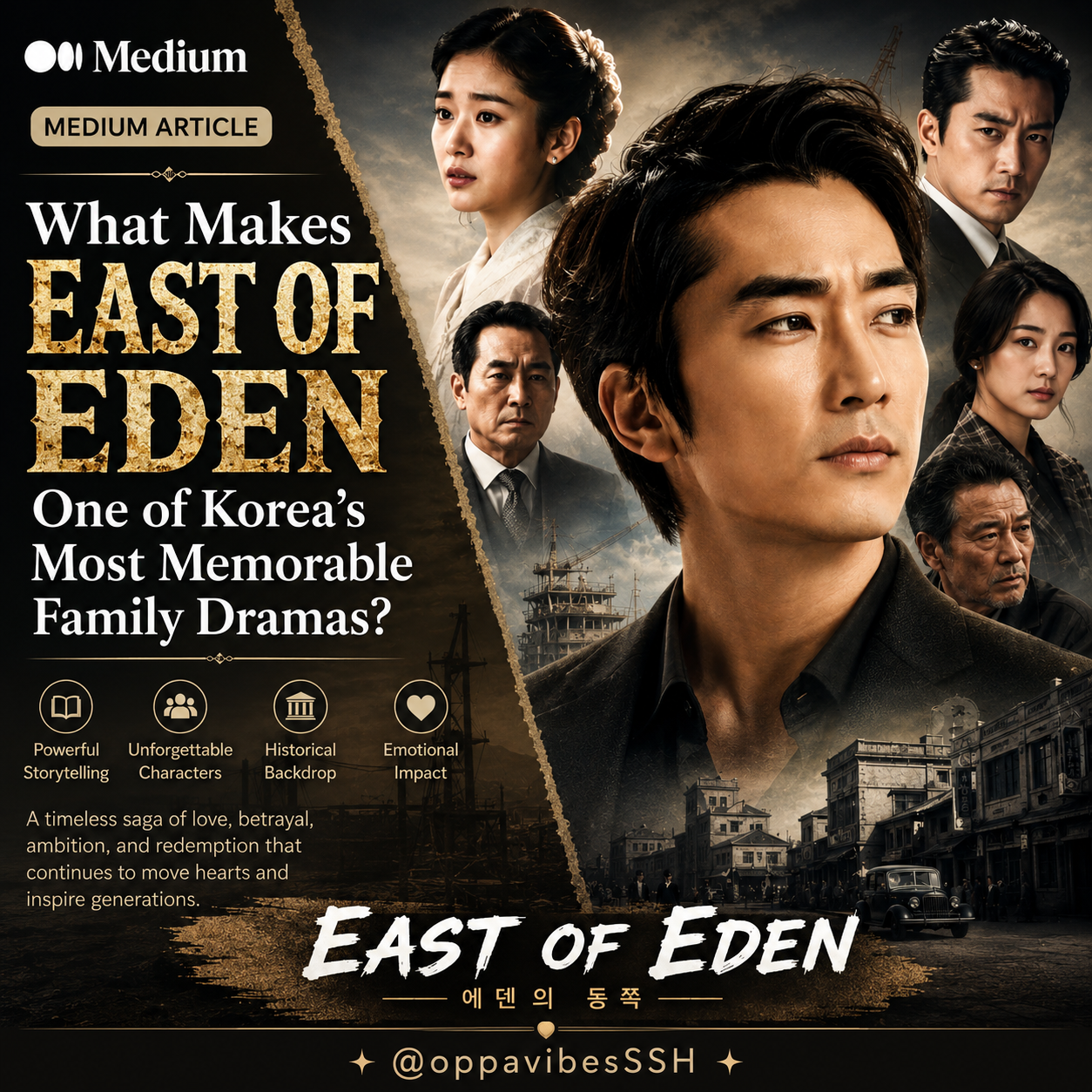
East of Eden (2008)
A sprawling revenge epic where he trades soft-spoken heartbreak for something colder and sharper. Watching him pivot from “sensitive photographer who will make you cry” to “man with a plan and possibly a grudge” was, frankly, character development I did not know I needed from my own personal parasocial relationship.
My Princess (2011)
Somebody let the man be charming and light-hearted for once, playing opposite a modern-day princess storyline, and honestly? Good for him. Good for us. We deserved a breather.
Black (2017)
He plays a genuinely unsettling antagonist here, and it is deeply funny to me that the same face that once made an entire continent sob into tissues is now the face of a guy you should probably not trust. Range. That’s the word. Range.
The Player
Slick conman energy, sunglasses indoors, the works. If teenage me watching Autumn in My Heart could see grown-up me cheering for him to successfully run a heist, she would need a moment to process.
The throughline across all of it: whatever the role, there’s a stillness to how he carries emotion. He doesn’t perform feelings on you. He seems to just quietly have them and lets you eavesdrop. That’s a rare thing, and it’s why fans stick around decades after the initial gut-punch.
The Meme Generation Meets the Melodrama Generation
What’s genuinely funny to me is watching younger viewers discover these shows now, completely unwarned, through memes exactly like the one that inspired this whole rant. They think they’re getting a nostalgic, campy watch. A little vintage KDrama tourism. Instead, they get emotionally blindsided in episode fourteen and show up online like they’ve survived a natural disaster. “Why did nobody tell me?!” Baby, we tried. We made memes about it. The information was available. You chose this, the same way we chose this, the same way humans have apparently always chosen sad television, going back to Greek tragedy and possibly cave paintings of guys crying near mammoths.
There’s something almost sweet about the meme format doing what film criticism never quite could: distilling decades of collective heartbreak into one sentence dry enough to make you laugh through the residual damage. “Here’s your damage; enjoy.” It’s basically the drama handing you a party favour on your way out, except the party favour is a lifelong distrust of hospital scenes.
An Open Letter, Should He Ever Stumble Across This
Dear Mr. Song:
If there’s any way Jesus sends you to see this letter fall into your hands (which probably won’t happen), please accept my sincere thanks for your work as an actor over the years, but allow me also to apologise to you personally for what you’ve done to my nervous system during this entire millennium.
I haven’t fully recuperated from all the trauma you subjected me to in the year 2000. And I’m beginning to suspect that maybe I don’t really want to either. Still, we can’t get enough of your dramas. Every single one of them! Why? Because they’re good at giving people emotion!
Also, genuinely, thank you for the cheekbones. They deserve their own line in this article. They have carried more narrative weight than some entire supporting casts.
The Damage
So why do these early 2000s tragedy dramas still haunt us? Because they were made by people who weren’t afraid to actually hurt us, and because actors like Song Seung Heon delivered that hurt with a sincerity that hasn’t aged a single day. The technology around the shows looks dated. The hairstyles are, generously, “of their time". But the ache? The ache still works perfectly. It’s the one part of the whole production that never needed an upgrade.
We didn’t ask for the damage. We got it anyway. And somehow, twenty-plus years later, most of us would sign up to get hurt like that all over again. As long as he’s the one doing it.
Still not over it either? Follow along for more unhinged appreciation posts, drama deep dives, and cheekbone-adjacent commentary:
📖 Medium: @oppaVibesSSH 📸 Instagram: @oppaVibesSSH
Come for the nostalgia, stay for the collective trauma bonding. See you in the comments.
메타데이터
- post_id
- 8fc03b30bae1
- slug
- why-tragedy-dramas-from-the-early-2000s-still-haunt-us-decades-later-8fc03b30bae1
- url
- https://medium.com/@oppavibessh/why-tragedy-dramas-from-the-early-2000s-still-haunt-us-decades-later-8fc03b30bae1
- canonical_url
- https://medium.com/@oppavibessh/why-tragedy-dramas-from-the-early-2000s-still-haunt-us-decades-later-8fc03b30bae1
- author_url
- https://medium.com/@oppavibessh
- status
- ok
- fetched_at
- 2026-08-04 19:47:58