Zigbee vs. Z-Wave for Beginners: Choosing the Right Smart Home Protocol
When diving into the world of smart homes, terms like Zigbee and Z-Wave pop up frequently. Both are wireless communication protocols…
Zigbee vs. Z-Wave for Beginners: Choosing the Right Smart Home Protocol
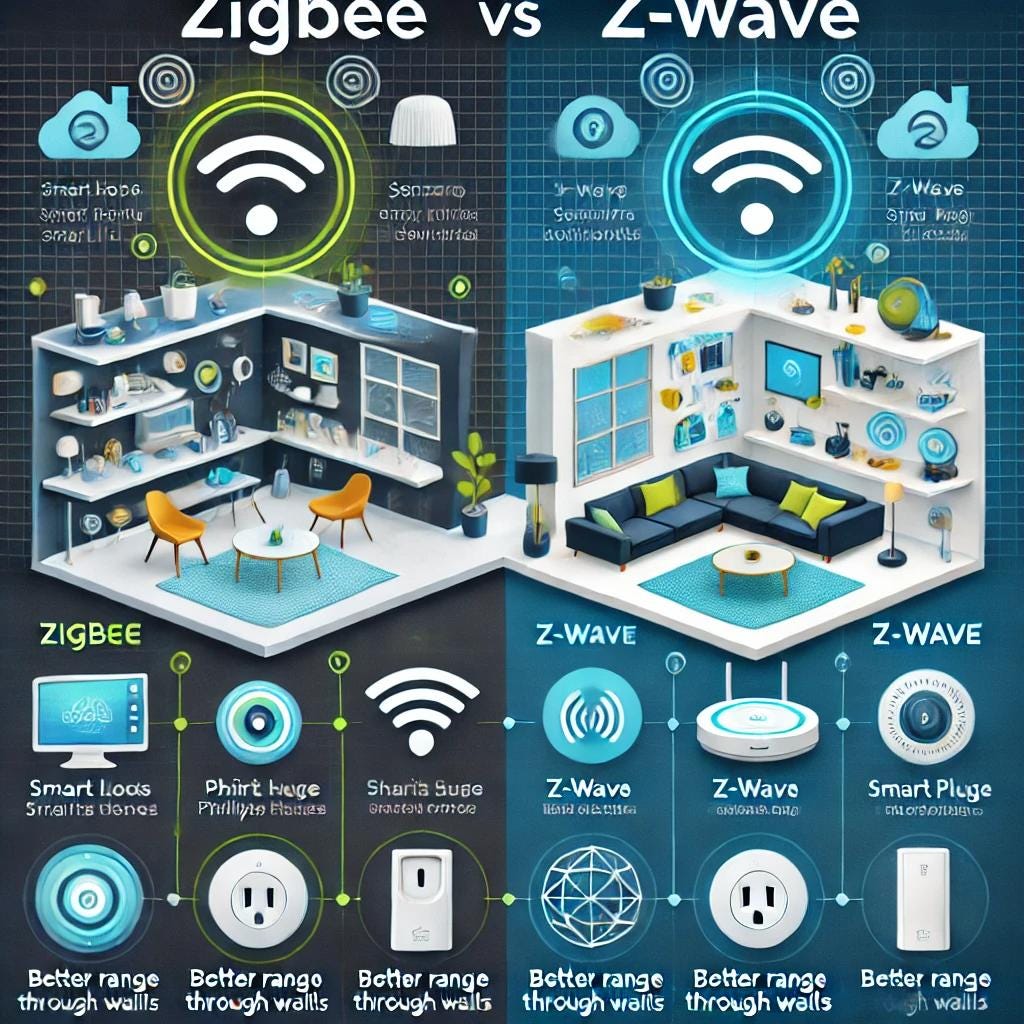
When diving into the world of smart homes, terms like Zigbee and Z-Wave pop up frequently. Both are wireless communication protocols designed to connect devices like lights, sensors, and locks — but how do they differ, and which one is right for you? Let’s break it down in simple terms.
What Are Zigbee and Z-Wave?
Both Zigbee and Z-Wave are low-power, mesh networking protocols optimized for smart homes. Unlike Wi-Fi or Bluetooth, they’re designed to handle small amounts of data (like “turn on the light”) efficiently, extending coverage through a network of connected devices.
Zigbee Basics
- Frequency: Operates on 2.4 GHz (global) but can interfere with Wi-Fi.
- Open Standard: Managed by the Zigbee Alliance (now the Connectivity Standards Alliance), so many brands use it.
- Range: ~10–20 meters per device, but mesh networking extends coverage.
- Popular Devices: Philips Hue, Amazon Echo (4th gen+), IKEA Tradfri.
Z-Wave Basics
- Frequency: Uses sub-1 GHz bands (region-specific), avoiding Wi-Fi interference.
- Proprietary Standard: Owned by Silicon Labs, ensuring strict compatibility.
- Range: ~30–100 meters per device, with better wall penetration.
- Popular Devices: Ring Alarm, Aeotec sensors, Yale smart locks.
Key Differences Compared
1. Compatibility & Ecosystems
- Zigbee:
- Pros: Wide device variety (lights, sensors, plugs) and open to many brands.
- Cons: Fragmentation — older Zigbee devices may not work with newer hubs (e.g., Zigbee 3.0).
- Z-Wave:
- Pros: All certified devices work together seamlessly.
- Cons: Smaller device selection and often pricier due to licensing fees.
2. Interference & Range
- Zigbee: Shares the crowded 2.4 GHz band with Wi-Fi and Bluetooth, which could cause interference.
- Z-Wave: Uses less congested frequencies (e.g., 908 MHz in the U.S.), offering better range through walls.
3. Power Consumption
- Both are energy-efficient, but Z-Wave is optimized for battery-powered devices (e.g., door sensors), often lasting years.
4. Network Size
- Zigbee: Supports up to 65,000 devices (theoretical).
- Z-Wave: Limited to 232 devices — still plenty for most homes.
5. Cost
- Zigbee: Generally cheaper (e.g., $15–20 for a smart plug).
- Z-Wave: Devices cost 20–30% more on average (e.g., $30–40 for a plug).
6. Security
- Both use AES-128 encryption, but Z-Wave’s closed system is often seen as more consistent. Zigbee has addressed past vulnerabilities in newer versions.
Which Should You Choose?
Pick Zigbee If…
- You want affordable devices and don’t mind checking compatibility.
- You use Amazon Echo (with a built-in Zigbee hub) or Philips Hue.
- You need a large network with dozens of devices.
Pick Z-Wave If…
- You prioritize reliability and interoperability (no compatibility headaches).
- You need longer range in a larger home.
- You’re okay with a higher upfront cost for stability.
Bonus Tip: Multi-Protocol Hubs
Hubs like Samsung SmartThings or Hubitat support both Zigbee and Z-Wave, letting you mix devices. This is ideal if you want flexibility.
The Verdict
Both protocols excel, but your choice depends on priorities:
- Budget + Flexibility = Zigbee
- Reliability + Range = Z-Wave
Whichever you choose, you’re building a smarter, more connected home! 🌟
Still unsure? Start small: Buy a hub that supports both and experiment with a few devices from each ecosystem.
메타데이터
- post_id
- 8fcbf2f3e710
- slug
- zigbee-vs-z-wave-for-beginners-choosing-the-right-smart-home-protocol-8fcbf2f3e710
- url
- https://medium.com/@faizane195/zigbee-vs-z-wave-for-beginners-choosing-the-right-smart-home-protocol-8fcbf2f3e710
- canonical_url
- https://medium.com/@faizane195/zigbee-vs-z-wave-for-beginners-choosing-the-right-smart-home-protocol-8fcbf2f3e710
- author_url
- https://medium.com/@faizane195
- status
- ok
- fetched_at
- 2026-07-20 13:40:40