Asa’ib Ahl al-Haq: Government Begins Inventory of Hidden Heavy Weapons, and We Have Nearly 10,000…
In an exclusive interview, Hussein al-Shihani, a member of the political bureau of the Al-Sadiqoun Movement — the political wing directly…
Asa’ib Ahl al-Haq: Government Begins Inventory of Hidden Heavy Weapons, and We Have Nearly 10,000 Fighters
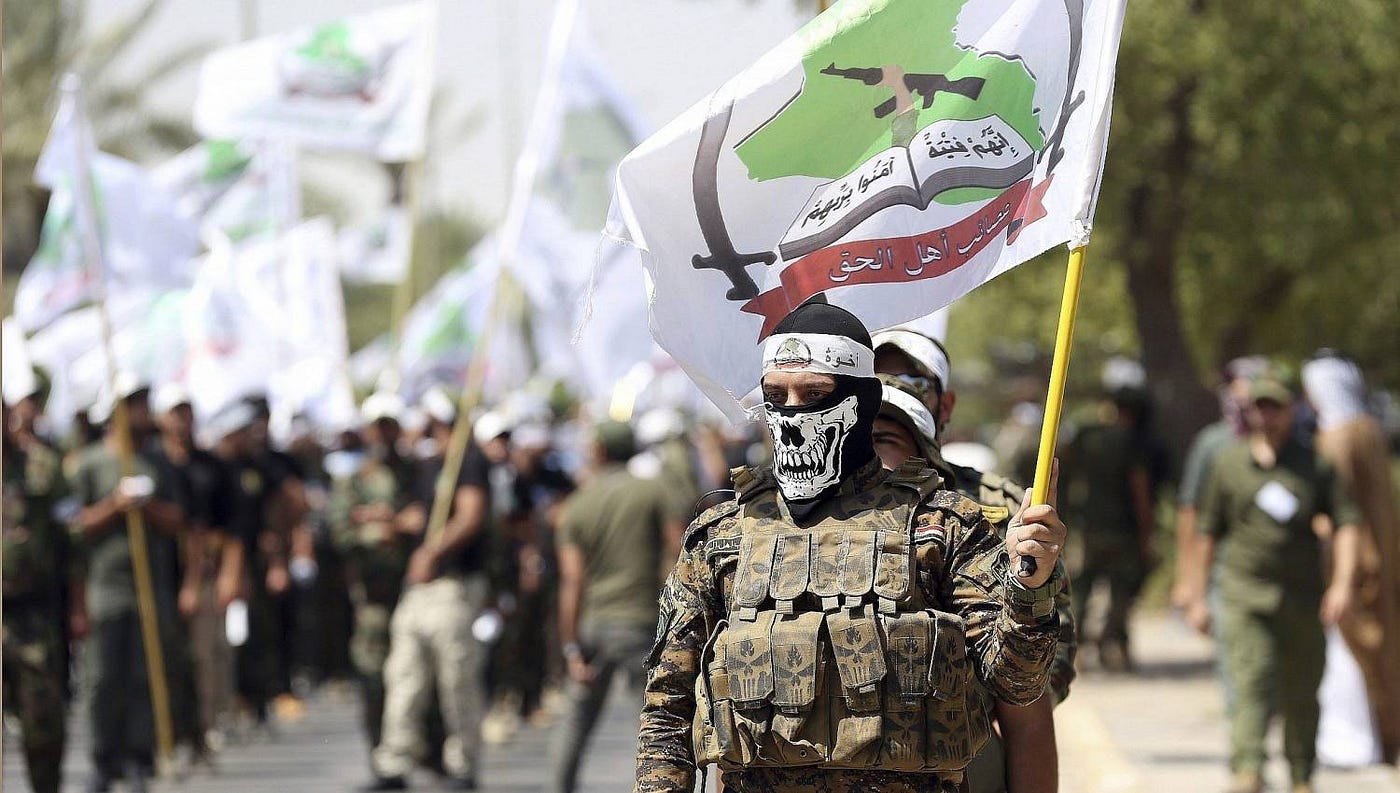
In an exclusive interview, Hussein al-Shihani, a member of the political bureau of the Al-Sadiqoun Movement — the political wing directly affiliated with Qais al-Khazali, Secretary-General of Asa’ib Ahl al-Haq (AAH) — stated that the current process in Iraq is not a disarmament in the conventional sense, but rather a “disengagement” of personnel in the 41st, 42nd, and 43rd Brigades within the Popular Mobilization Forces (PMF) from the movement. He added that these brigades do not operate under the name “Asa’ib Ahl al-Haq,” but under the official brigade designations adopted by the PMF Commission, which have become official military formations, though he described them as having “Asa’ib roots.”
Al-Shihani noted that the current phase requires separating political work, governed by political principles, from armed action, which must be exclusively controlled by the competent state authorities. He explained that the movement complied with the provisions of the Iraqi Political Parties Law by signing a political code of conduct that prohibits military and paramilitary activity. This enabled the successful registration of “Asa me’ib Ahl al-Haq” with the Department of Political Parties as a political entity, while preemptively registering a separate independent party, the “Al-Sadiqoun Movement,” to avoid any potential legal violations by third parties, despite the AAH name itself becoming a legal entity.
He further pointed out that Asa’ib Ahl al-Haq participated in the last two provincial and parliamentary elections through electoral observation by registering entity agents inside polling centers, calling it a legal right. He emphasized that the movement allocated civilian cadres strictly for political activity, while military operations remained tied to the PMF formations and the Commander-in-Chief.
Regarding the timing of this step, al-Shihani rejected describing AAH as the second force to initiate weapons control and disengagement, asserting that it was the first to call for this move following the liberation of Iraqi provinces from ISIS in 2017. He added that Qais al-Khazali preceded the tweet of Sadrist Movement leader Muqtada al-Sadr on this issue by hours during his Eid sermon in Baghdad, denying reports that Saraya al-Salam was the first to begin the process. He attributed the delay in implementation to a lack of political will among previous governments, denying that it came as a result of external pressure and emphasizing that it was a purely “Iraqi choice.”
Furthermore, al-Shihani stressed that the situation in Iraq differs fundamentally from that in Lebanon, explaining that Hezbollah faces demands for complete disarmament, whereas the Iraqi context is different due to the PMF existing as an official state institution. The ongoing process, according to him, involves regulating weapons and reintegrating them into the Iraqi military system rather than confiscating them.
Al-Shihani considered the weaponry of the factions to have served as the primary guarantor of the Iraqi state and political process, citing that these arms fought the terrorist organization ISIS by self-will at a time when Iraq lacked sufficient weaponry. He stated that this was the response of faction leaders during a meeting held on June 10, 2014, at the request of then-Prime Minister and Commander-in-Chief Nouri al-Maliki, attended by Qassem Soleimani and Abu Mahdi al-Muhandis, when al-Maliki asked them to save Baghdad and the political process. According to his account, their reply was: “We are not waiting for this request; we have already begun fighting and are currently defending on the outskirts of Baghdad.”

On the types of weapons and the mechanism of “disengagement,” al-Shihani explained that these brigades hold two categories of arms. The first is government-issued weaponry, officially provided by the Iraqi state to the PMF brigades. The second category consists of “uninventoried” weapons, which he classified into three levels: medium, heavy, and ultra-heavy. He noted that these arms were stored inside PMF brigade depots in compliance with security confidentiality protocols, away from civilian facilities to protect them from targeting, adding that the Iraqi government has now begun inventorying them so they officially become state property.
Regarding the doctrine of fighters with “Asa’ib roots,” al-Shihani stated that their number stands at approximately ten thousand fighters in the current phase, confirming that their reference authority is the Commander-in-Chief of the Armed Forces. He added that even in the event of future disputes with upcoming governments, the movement’s stance will remain political, relying on parliamentary defense as long as they retain their political weight in parliament.
It is worth noting that Al-Sadiqoun Movement leaders previously declared their ambition to secure the Iraqi premiership in upcoming electoral cycles and that they have been preparing for this goal. Despite the challenges facing this ambition — chiefly the sanctions imposed on Secretary-General Qais al-Khazali and his brother Laith al-Khazali, described by sources as the movement’s second-in-command, black box, and primary candidate for the post — al-Shihani stated he does not view these sanctions as an obstacle to achieving this goal. He added that constitutional and legal frameworks exist through which the movement could interact with the U.S. administration if it reaches the premiership, while noting that they are currently unconcerned with building political relations or opening communication channels with American decision-makers.
Al-Shihani cited what he called the movement’s “success” in managing the Ministry of Higher Education in the previous government, alongside its experience in running Babil Governorate, as evidence of its governance capability. He described the United States as “one of the primary founders of corruption in Iraq” post-2003, asserting that past experiences with Washington proved to be a failure, pointing to the electricity sector where American companies monopolized work but failed to develop it.
Regarding recently announced major U.S. investment deals, al-Shihani said the movement is monitoring the performance of these companies, stating that accepting their entry is subject to a period of observation and testing, and warning that this stance will change if the failure of the electricity sector is repeated. He added that Prime Minister Ali al-Zaidi faces a real challenge in neutralizing the influence of these companies and opening fair competition for other nations and firms, emphasizing that the movement will take a “different stance” if equal investment opportunities are suppressed due to American corporate pressure.
In conclusion, al-Shihani stipulated the withdrawal of all foreign forces from Iraqi territory, including Turkish troops, along with the passage of the PMF Law, calling these two conditions fundamental requirements for the success of regulating weapons, inventorying arms under state control, or implementing disengagement, regardless of the terminology used.

메타데이터
- post_id
- 8fd96c206faf
- slug
- asaib-ahl-al-haq-government-begins-inventory-of-hidden-heavy-weapons-and-we-have-nearly-10-000-8fd96c206faf
- url
- https://medium.com/@husseinnalhashemi12/asaib-ahl-al-haq-government-begins-inventory-of-hidden-heavy-weapons-and-we-have-nearly-10-000-8fd96c206faf
- canonical_url
- https://medium.com/@husseinnalhashemi12/asaib-ahl-al-haq-government-begins-inventory-of-hidden-heavy-weapons-and-we-have-nearly-10-000-8fd96c206faf
- author_url
- https://medium.com/@husseinnalhashemi12
- status
- ok
- fetched_at
- 2026-08-15 08:34:14