Part 3: Crack Java or SQL Interview: Top 20 SQL Interview Questions Every Java and Developer Must…
In today’s competitive tech hiring landscape, SQL is no longer just a “nice-to-have” skill it’s a core requirement for Java developers…
Part 3: Crack Java or SQL Interview: Top 20 SQL Interview Questions Every Java and Developer Must Know for Hiring in 2026…!
In today’s competitive tech hiring landscape, SQL is no longer just a “nice-to-have” skill it’s a core requirement for Java developers aiming to crack interviews in 2026. While frameworks and tools continue to evolve, the ability to design efficient queries, understand database behavior, and optimize performance remains a decisive factor in technical interviews. Employers expect developers not only to write Java code but also to confidently interact with relational databases that power real-world applications.
If you are not a Medium member, then Click Here to read free
In Part 3: Crack Java or SQL Interview, we focus on the Top 20 SQL Interview Questions every Java developer must know to stand out during hiring. These questions cover fundamentals, real-world scenarios, and performance-focused concepts that interviewers frequently use to assess problem-solving skills and practical database knowledge. Whether you’re preparing for your first role or targeting a senior position in 2026, mastering these SQL concepts will significantly boost your confidence and interview success.
1. What is the difference between the IN and EXISTS operators?
Ans: The IN operator checks for a value within a set of values or the result of a subquery. The EXISTS operator checks for the existence of rows returned by a subquery.
2. What is the purpose of the TRIGGER statement?
Ans: The TRIGGER statement is used to associate a set of SQL statements with a specific event in the database. It is executed automatically when the event occurs
3. What is the difference between a unique constraint and a unique index?
Ans: A unique constraint ensures the uniqueness of values in one or more columns, while a unique index enforces the uniqueness and also improves query performance.
4. What is the purpose of the TOP or LIMIT clause?
Ans: The TOP (in SQL Server) or LIMIT (in MySQL) clause is used to limit the number of rows returned by a query. It is often used with an ORDER BY clause.

5. What is the difference between the UNION and JOIN operators?
Ans: UNION combines the result sets of two or more SELECT statements vertically, while JOIN combines columns from two or more tables horizontally based on a join condition.

6. What is a data warehouse?
Ans: A data warehouse is a large, centralised repository that stores and manages data from various sources. It is designed for efficient reporting, analysis, and business intelligence purposes.
7. What is the difference between a primary key and a candidate key?
Ans: A primary key is a chosen candidate key that uniquely identifies a row in a table. A candidate key is a set of one or more columns that could potentially become the primary key.
8. What is the purpose of the GRANT statement?
Ans: The GRANT statement is used to grant specific permissions or privileges to users or roles in a database.

9. What is a correlated update?
Ans: A correlated update is an update statement that refers to a column from the same table in a subquery. It updates values based on the result of the subquery for each row.
10. What is the purpose of the CASE statement?
Ans: The CASE statement is used to perform conditional logic in SQL queries. It allows you to return different values based on specified conditions.
11. What is the purpose of the COALESCE function?
Ans: The COALESCE function returns the first non-null expression from a list of expressions. It is often used to handle null values effectively.
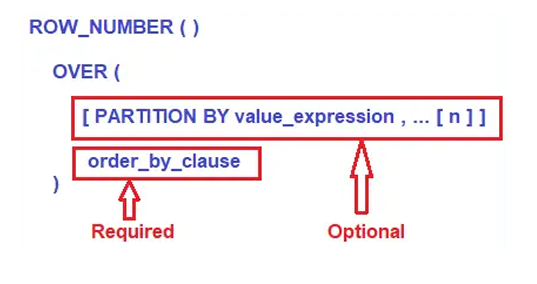
12. What is the purpose of the ROW_NUMBER() function?
Ans: The ROW_NUMBER() function assigns a unique incremental number to each row in the result set. It is commonly used for pagination or ranking purposes.ll values effectively.
13. What is the difference between a natural join and an inner join?
Ans: A natural join is an inner join that matches rows based on columns with the same name in the joined tables. It is automatically determined by the database.
14. What is the purpose of the CASCADE DELETE constraint?
Ans: The CASCADE DELETE constraint is used to automatically delete related rows in child tables when a row in the parent table is deleted.
15. What is the purpose of the ALL keyword in SQL?
Ans: The **ALL keyword in SQL is used to compare a value with all values returned by a subquery**.

6. What is the difference between the EXISTS and NOT EXISTS operators?
Ans: The EXISTS operator returns true if a subquery returns any rows, while the NOT EXISTS operator returns true if a subquery returns no rows.

17. What is the purpose of the CROSS APPLY operator?
Ans: The CROSS APPLY operator is used to invoke a table valued function for each row of a table expression. It returns the combined result set.
18. What is a self-join?
Ans: A self-join is a join operation where a table is joined with itself. It is useful when you want to compare rows within the same table based on related columns. It requiresbined result set.
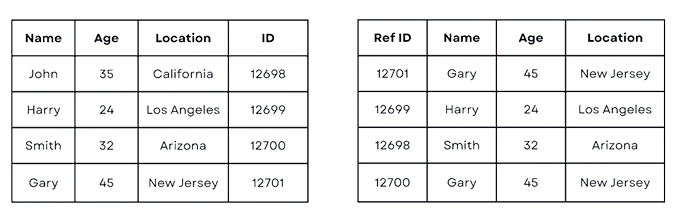
19. What is an ALIAS command?
Ans: ALIAS command in SQL is the name that can be given to any table or a column. This alias name can be referred in WHERE clause to identify a particular table or a column.
20. Why are SQL functions used?
Ans: SQL functions are used for the following purposes: To perform some calculations on the data To modify individual data items To manipulate the output To format dates and numbers To convert the data types.

Conclusion
Thanks for taking the time to read! If this helped you write better, cleaner code, don’t forget to like and follow Ram for more practical development insights. Until next time — happy coding!
메타데이터
- post_id
- 8ff0606dd03f
- slug
- part-3-crack-java-or-sql-interview-top-20-sql-interview-questions-every-java-and-developer-must-8ff0606dd03f
- url
- https://medium.com/@ramakrishna-01/part-3-crack-java-or-sql-interview-top-20-sql-interview-questions-every-java-and-developer-must-8ff0606dd03f
- canonical_url
- https://medium.com/@ramakrishna-01/part-3-crack-java-or-sql-interview-top-20-sql-interview-questions-every-java-and-developer-must-8ff0606dd03f
- author_url
- https://medium.com/@ramakrishna-01
- status
- ok
- fetched_at
- 2026-06-21 19:25:17