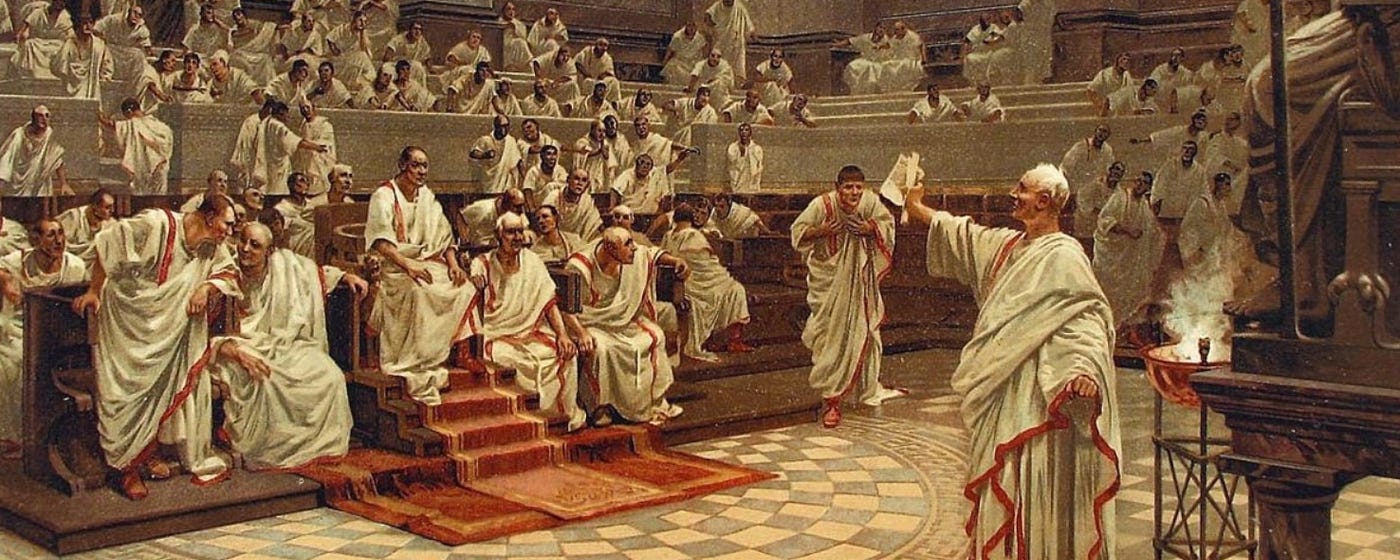
Western & Eastern Moral Philosophy: The Systematic Ethical Core of Civilization (Moral DNA)
Socrates, Confucius, and Siddhartha Gautama (Buddha) were near-contemporaries during a pivotal era of intellectual and spiritual ferment…
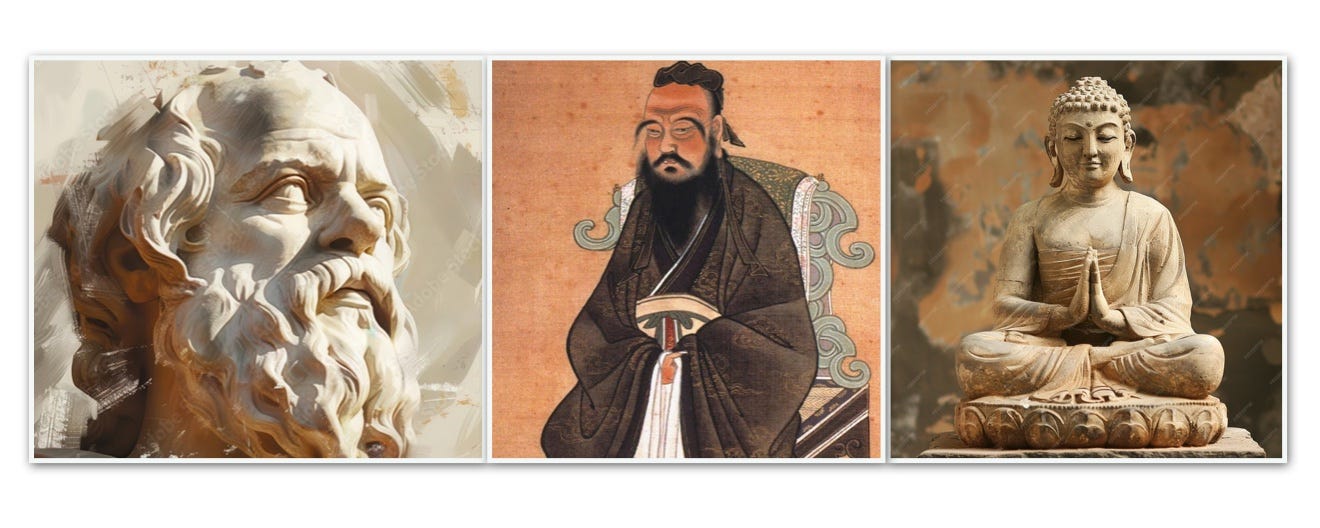
Socrates, Confucius & The Buddha
Western & Eastern Moral Philosophy: The Systematic Ethical Core of Civilization (Moral DNA)
Socrates, Confucius, and Siddhartha Gautama (Buddha) were near-contemporaries during a pivotal era of intellectual and spiritual ferment across Eurasia marked by social upheaval, questioning of old traditions, and the rise of ethical systems focused on the “good life.” Western and Eastern moral philosophic traditions originated over 2,500 years ago, marking a significant point of contemporaneous moral and ethical human evolution in disparate global locations.
The pantheon of Western moral philosophers (or ethicists) is not a fixed official list like a hall of fame, but there is strong scholarly and historical consensus on the foundational and most influential figures. These thinkers shaped the major ethical traditions in the West, primarily virtue ethics, deontology (duty-based ethics), consequentialism/utilitarianism, natural law, and critiques of morality itself, building directly on or reacting to Socrates’ emphasis on virtue, self-examination, and rational inquiry into the good life.
Eastern moral philosophy lacks a single pantheon like the Western canon, but scholarly consensus highlights foundational thinkers from two primary traditions, Chinese (Confucianism, Daoism, and related schools) and Indian (Buddhism, Jainism, and Hindu dharma traditions). These figures emphasize ethics as practical cultivation, relational harmony, and alignment with cosmic or natural order (often intertwined with spirituality), contrasting with the more individualistic or rule-based focus in much Western thought. Their ideas, centered on virtue, non-violence, duty, and inner transformation, have shaped billions of lives across Asia for over 2,500 years.
Pantheon of Western Moral Philosophers
The core pantheon always includes Socrates and his immediate successors and the major developers of systematic ethical theories:
- Socrates (c. 470–399 BCE) is widely regarded as the starting point, the “first Western moral philosopher”, for shifting philosophy from cosmology to ethics through the Socratic method (dialectic questioning), the idea that “the unexamined life is not worth living,” and the view that virtue is knowledge and vice stems from ignorance.
- Plato (c. 427–347 BCE): Socrates’ student; developed ideas of justice, the soul, and the Form of the Good in The Republic and other dialogues. He argued for an ideal moral order where reason rules over appetite and spirit, laying groundwork for virtue ethics and political morality.
- Aristotle (384–322 BCE): Plato’s student; authored the foundational Nicomachean Ethics, introducing virtue ethics centered on eudaimonia (human flourishing), the “golden mean” (virtue as the balanced mean between excess and deficiency), and ethics as a practical habit rather than abstract rules. His influence on Western ethics is enormous and enduring.
Later giants who are routinely included in histories of Western ethics and “great books” curricula expand these foundations across eras:
- Thomas Aquinas (1225–1274): Medieval scholastic who synthesized Aristotelian virtue ethics with Christian theology in works like Summa Theologica. He developed natural law theory (morality derived from God-given reason and human nature) and the idea that true happiness lies in union with the divine good.
- Immanuel Kant (1724–1804): Pivotal Enlightenment figure; pioneered deontological ethics in Groundwork of the Metaphysics of Morals with the categorical imperative (“act only according to that maxim whereby you can at the same time will that it should become a universal law” and treat humanity as an end, never merely a means). Morality is based on rational duty and intention, independent of consequences.
- John Stuart Mill (1806–1873), building on Jeremy Bentham (1748–1832): Key figures in utilitarianism/consequentialism. Bentham’s “greatest happiness for the greatest number” (via felicific calculus) was refined by Mill in Utilitarianism to distinguish higher (intellectual) and lower pleasures, while On Liberty defended individual rights and harm principle as moral limits on society.
Other highly influential figures frequently grouped with them (depending on the history of ethics course or canon) include:
- David Hume (1711–1776): Emphasized moral sentiments/emotions (sympathy) over pure reason as the basis of ethics; a major empiricist counterpoint to Kant.
- Friedrich Nietzsche (1844–1900): Radical critic in On the Genealogy of Morals and Beyond Good and Evil; attacked traditional (especially Christian) morality as “slave morality” and called for a revaluation of values and master morality.
- Hellenistic schools (Stoicism and Epicureanism) and figures like Thomas Hobbes (social contract, egoism in Leviathan) or John Rawls (20th-century “justice as fairness” via veil of ignorance) are also commonly studied as extensions or modern revivals.
Later 20th-21st century thinkers (e.g., Philippa Foot, Alasdair MacIntyre reviving virtue ethics, Peter Singer on applied ethics) build on this tradition but are generally seen as extensions rather than core pantheon members. The list emphasizes enduring, paradigm-shifting impact on how the West conceptualizes right/wrong, virtue, justice, and the good life.
These thinkers represent the dominant Western ethical frameworks taught in philosophy departments worldwide:
- Ancient virtue ethics (Socrates/Plato/Aristotle)
- Medieval natural law (Aquinas)
- Modern duty-based (Kant)
- Outcome-based (Mill/Bentham)
- Sentiment-based (Hume)
- Critical/post-traditional (Nietzsche)
Hellenistic Philosophies: Stoicism and Epicureanism
Stoicism and Epicureanism were the two great rival Hellenistic philosophies (roughly 3rd century BCE onward), both emerging after Alexander the Great’s conquests amid political instability and offering practical “how-to-live” ethics rather than abstract speculation. While Stoicism (founded by Zeno) stressed virtue, duty, and rational acceptance of fate, Epicureanism (founded by Epicurus, 341–270 BCE) pursued refined pleasure through tranquility. Both were materialist, anti-superstitious, and focused on inner peace (ataraxia or apatheia), yet they clashed publicly, Epicureans accused Stoics of unnecessary austerity; Stoics saw Epicureans as self-indulgent. Their debate shaped Western thought for centuries.
Stoicism and Epicureanism Core Similarities
- Practical ethics for happiness (eudaimonia): Both rejected Plato/Aristotle’s idealism for a this-worldly focus. Philosophy is a “medicine for the soul.”
- Materialist physics: Atomistic universe (no divine intervention in daily life); death ends consciousness, so fear of afterlife is irrational.
- Rejection of superstition: Gods exist but are distant and uninvolved (Epicureans) or identical with rational logos (Stoics).
- Friendship and moderation: Essential to the good life; avoid excess.
- Self-sufficiency: Cultivate inner freedom from external chaos.Pantheon of Eastern Moral Philosophers
Stoicism and Epicureanism Key Differences

Pantheon of Eastern Moral Philosophers
Eastern moral philosophy lacks a single pantheon like the Western canon, but scholarly consensus highlights foundational thinkers from two primary traditions. These “Three Teachings” (Confucianism, Daoism, and later Buddhism) often complemented each other in Chinese culture.
1. Chinese Tradition: Harmony, Virtue, and the Way
Chinese moral philosophy emerged during the chaotic Spring and Autumn and Warring States periods (c. 770–221 BCE), producing the “Hundred Schools of Thought.” The most enduring moral frameworks are Confucianism (relational virtue and social order) and Daoism (natural spontaneity and effortless living).
- Confucius (Kong Fuzi, 551–479 BCE): The foundational figure of Confucianism. In the Analects, he taught that true morality arises through ren (humaneness/benevolence), li (ritual propriety and respect for roles), and xiao (filial piety). Ethics is about becoming a junzi (exemplary person) via self-cultivation, education, and harmonious relationships, family, society, and state as microcosms of moral order. “Do not impose on others what you yourself do not desire” is his version of the Golden Rule.
- Laozi (Lao Tzu, traditionally 6th–4th century BCE): Legendary founder of Daoism, attributed with the Tao Te Ching. Moral philosophy rejects forced rules or striving; instead, follow the Dao (the Way of nature) through wu wei (non-action or effortless action), simplicity, humility, and harmony with the universe. Virtue emerges naturally when one stops imposing artificial values, emphasizing balance (yin-yang), flexibility, and compassion over conquest or rigid duty.
- Mencius (Mengzi, c. 372–289 BCE): Confucian idealist who argued human nature is inherently good, with “sprouts” of benevolence, righteousness, propriety, and wisdom that need nurturing (like a plant). Moral failure comes from neglect, not original sin. He defended the right to overthrow tyrannical rulers who fail the people.
- Xunzi (c. 310–235 BCE): Confucian realist who countered Mencius: human nature is selfish/evil and requires ritual, education, and law to shape moral character.
- Mozi (c. 470–391 BCE): Founder of Mohism; advocated jian ai (impartial/universal love) and consequentialist ethics, actions are moral if they promote the greatest benefit for all, regardless of family ties. He criticized Confucian rituals as wasteful.
- Zhuangzi (Chuang Tzu, c. 369–286 BCE): Daoist skeptic who used parables to question fixed moral categories, promoting freedom, relativity, and playful alignment with change.
2. Indian/South Asian Tradition: Karma, Dharma, and Liberation
Indian ethics (c. 6th century BCE onward) arose amid the Shramana movements challenging Vedic ritualism, focusing on dharma (cosmic/moral duty), karma (action and consequence), and liberation from suffering or rebirth.
- Siddhartha Gautama (the Buddha, c. 563–483 BCE): Founder of Buddhism. Moral philosophy is pragmatic and intention-based: the Four Noble Truths diagnose suffering (dukkha), its cause (craving), and cure via the Eightfold Path (right view, intention, speech, action, livelihood, effort, mindfulness, concentration). Core precepts include non-violence (ahimsa), compassion (karuna), and ethical conduct to break the cycle of karma and reach nirvana. Ethics serves enlightenment, not divine command.
- Hindu traditions (via texts like the Bhagavad Gita and later philosophers like Adi Shankara, 788–820 CE): Dharma as contextual duty performed without attachment to results (nishkama karma). Advaita Vedanta sees ultimate reality (Brahman) as non-dual, with ethics supporting self-realization. Earlier figures like Patanjali (Yoga Sutras) outline yamas/niyamas (ethical restraints like non-violence and truthfulness) as prerequisites for spiritual discipline.
Other influential figures include Nagarjuna (c. 150–250 CE, Buddhist “emptiness” philosophy with ethical implications of interdependence) in India, and later East Asian developments like Dogen (1200–1253 CE, Japanese Zen) or Neo-Confucians like Zhu Xi (1130–1200 CE).
Eastern moral thought often views ethics as holistic, personal cultivation leading to societal or cosmic harmony, rather than abstract principles alone. It remains vibrant: Confucian values underpin East Asian governance and education, Buddhist mindfulness shapes modern psychology, and ahimsa inspires global human rights movement.
These traditions invite ongoing dialogue with Western ethics (e.g., virtue ethics parallels with Aristotle, or utilitarianism echoes in Mohism). Exploring primary texts like the Analects, Tao Te Ching, or Buddhist sutras offers the richest entry point.
Comparison: Socrates, Confucius, & Buddha
Socrates, Confucius, and Siddhartha Gautama were near-contemporaries. Each founded enduring moral traditions that emphasize self-cultivation, virtue, and harmony over ritual or divine command alone. They represent the roots of Western rational ethics, East Asian relational harmony, and South Asian introspective liberation. None wrote their own texts but we know them through their disciples:
- Plato/Xenophon for Socrates
- The Analects for Confucius
- Sutras for the Buddha
1. Core Similarities: Socrates, Confucius, & Buddha
All three shifted philosophy toward practical ethics and inner transformation amid chaos (Athens’ democracy crisis, China’s Warring States turmoil, India’s Vedic ritualism). They rejected superficiality. Socrates exposed unexamined opinions, Confucius decried empty rituals, the Buddha diagnosed craving as the root of suffering. They taught that virtue is cultivable through effort, not birth or gods alone.
- Self-knowledge and the examined life: Socrates: Know thyself through dialectic. Confucius: Cultivate ren (humaneness) via reflection and roles. Buddha: Mindfulness and insight into impermanence/no-self (anatta).
- Virtue as the path to flourishing: All link morality to a good life — Socratic aretē (excellence), Confucian junzi (exemplary person), Buddhist nirvana via ethical conduct.
- Golden Rule reciprocity: Treat others as you wish to be treated (explicit in Confucius; echoed in Socrates’ justice and Buddha’s compassion/karuna).
- Oral teaching and accessibility: They welcomed diverse students, used dialogue/parables, and modeled simplicity over wealth or power.
- Moral courage: Each faced opposition (Socrates’ trial/death, Confucius’ wanderings, Buddha’s challenges to caste) yet prioritized truth and non-harm.
2. Key Differences: Socrates, Confucius, & Buddha
Their methods and foci diverge sharply: Socrates is rational and individualistic; Confucius is relational and social; the Buddha is introspective and soteriological (focused on liberation from rebirth). Socrates prioritizes reason and individual truth-seeking; Confucius embeds ethics in community and tradition; the Buddha turns inward to transcend the cycle of desire entirely.

3. Lasting Impact: Socrates, Confucius, & Buddha
Socrates, Confucius, & Buddha shaped the world of critical thought and moral philosophy for centuries.
- Socrates launched Western critical inquiry (Plato, Aristotle, Enlightenment)
- Confucius underpinned East Asian governance and education for millennia
- Buddha’s teachings birthed global traditions of mindfulness and non-violence (influencing Gandhi and modern psychology)
Their shared insight, that ethical living requires deliberate self-work, remains a universal bridge across cultures. In an age of division, their convergence on virtue amid chaos reminds us that philosophy’s deepest questions transcend time and geography.
American Essay. Published April 20, 2026. ©All rights Reserved
메타데이터
- post_id
- 8ffbaee3d5a6
- slug
- western-eastern-moral-philosophy-the-systematic-ethical-core-of-civilization-moral-dna-8ffbaee3d5a6
- url
- https://medium.com/@American.Essays/western-eastern-moral-philosophy-the-systematic-ethical-core-of-civilization-moral-dna-8ffbaee3d5a6
- canonical_url
- https://medium.com/@American.Essays/western-eastern-moral-philosophy-the-systematic-ethical-core-of-civilization-moral-dna-8ffbaee3d5a6
- author_url
- https://medium.com/@American.Essays
- status
- ok
- fetched_at
- 2026-08-04 22:22:08