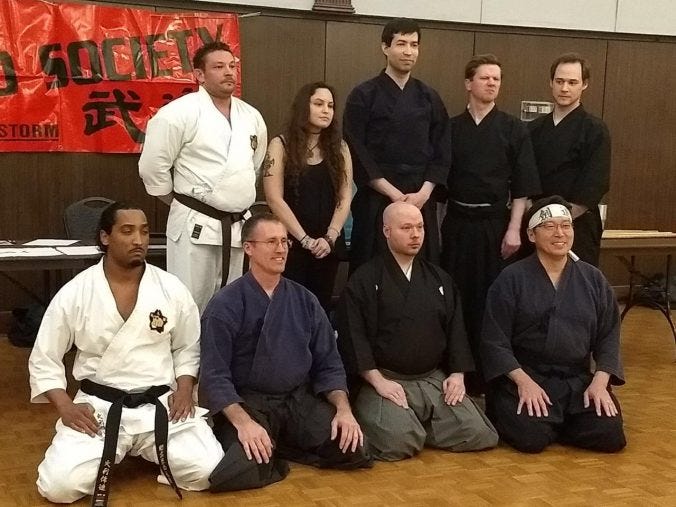
A Miner’s Heart: Tony Perea, UTEP, and the Fight for a Place to Call Home
The Life Story of UTEP Hall of Famer Tony Perea
A Miner’s Heart: Tony Perea, UTEP, and the Fight for a Place to Call Home

Tony Perea in his UTEP football uniform, early 1970s.
1969 was a year of both tumult and progress in the American South. With the passage of the Civil Rights Act and Voting Rights Act in 1964 and 1965, respectively, the region was in a moment of transition. Gone were the days of apartheid and segregation by law; for after years of patient, grinding, often-bloody organizing, the Black liberation struggle had finally broken the back of the old order.
Many of the men and women who led the various strands of the Civil Rights Movement hailed from Historically Black Colleges and Universities located in the very centers of the entrenched bastions of segregation that activists and freedom fighters sought to unseat and dismantle. Indeed, icons like Martin Luther King Jr., Diane Nash, and John Lewis each hailed from HBCUs dedicated to the uplift, moral formation, and intellectual arming of young African American scholars and aspiring leaders.
At a time when Blacks were barred from most public and private colleges, HBCUs served an essential role for Black students. But even after the end of Jim Crow, these schools remained relevant.
By 1969, African Americans had the ability to attend any school in the country. Whether they were wanted is a different story entirely, for the law could change faster than the human heart.
The same could be said for other minority groups at the time. Indeed, the gains of the Black liberation struggle had positive residual effects on immigrants, American Indians, and Asian Americans — but none truly felt welcomed in spaces that had for years excluded them by law and by practice.
But, in truth, the group that experienced the most pernicious form of discrimination were Hispanic Americans — for their appearance made them easily distinguishable from their white countrymen, yet they were technically considered “white” by the census taker’s ledger. So, while African Americans, for example, were concretely affected by the policy changes brought into being by the Civil Rights Movement, Hispanics continued to face the same covert discrimination and ostracization that they had dealt with for years.
Unfortunately, while Black Americans had the relief of places like HBCUs to anchor them in identity and purpose, Hispanics had nothing of the sort — well, almost nothing. For there was one place in America that, by 1969, sought to serve the social and educational needs of the Hispanic American community — a school that stood as both refuge and proving ground. That school was none other than the University of Texas at El Paso.
Nestled in the southwest corner of Texas where desert meets border, El Paso was a city with a rapidly growing Hispanic population and a rich history of progressive activism. Indeed, in 1914, it hosted the first-ever NAACP headquarters in the state of Texas. And, in 1966, UTEP — then Texas Western — became the first college program to start five Black players in the Division I NCAA Tournament final, a game they won decisively and forever against Adolph Rupp’s Kentucky. That team, led by the iron-willed Don Haskins, represented a breach in the walls of an old, racist culture for Blacks all over America. And, by the late 1960s, the broader university held a similar promise of belonging for the growing Mexican American population in El Paso and across the Texas–Mexico border.
While most predominantly white institutions had to be dragged to integration, UTEP embraced the changing demographics of its city and welcomed countless Hispanic Americans seeking a higher education and a brighter future in the 1960s and beyond. And, in 1969, one such student was none other than future UTEP Hall of Famer Tony Perea.
Tony Perea was born to Jacob and Mini in the small town of Dilia, New Mexico, in 1951. The Pereas were a family of farmers — humble, earnest, and, above all else, hard-working. Dilia was a rural village about 20 miles from the Las Vegas border, with a population of roughly 100. Life for the people of Dilia was simple — measured in the seasons, marked by the work of the land, and bound together by ties of family and faith. Jacob, Tony’s father, operated a cattle feed mill, while Mini, Tony’s mother, was a housewife. Tony, for his part, enjoyed his time on the ranch. Neither of Tony’s parents had more than a high school education, but what they lacked in formal schooling, they made up for with work ethic and resolve. “My mother always used to say, ‘When you work hard, good things happen.’ She was right, and that was a lesson that I took with me throughout my whole life.” Indeed, on the farm, in the classroom, and — most tellingly — in sport, Tony Perea always worked until the result matched the effort.
While the Pereas enjoyed the predictable rhythms and slow pace of life in Dilia, Jacob moved the family to Texas in 1963 — right before Tony began 7th grade — after finding work on a ranch in a wind-swept city called Friona. Friona, a grain and cattle outpost on the High Plains, was a rural farming community much like Dilia. The demographics of Friona, however, could not have been more different from the overwhelmingly Hispanic village they had left behind. “I was the only Mexican-American in my school,” said Tony. “It was all white; all Anglo. And I had never seen that before. It was an eye opener for me.”

Tony Perea in 1967, age 16.
While Jim Crow was still in effect when the Pereas arrived in Texas, Tony quickly found that athletics offered a thin shield against the full force of prejudice experienced by most Mexican Americans when he joined the junior high football team. Until that point, he had never played sports before — neither of his parents were athletes — but he thought playing football might be a decent way to integrate into the community and make some friends. Unfortunately, community integration for the only Mexican-American kid at the school was not so easy. “All throughout high school I never had a date! And my only friend was this black guy named John Richardson! He and I were the only minorities on the team,” said Tony with a laugh. But while his presence on the football team did not give him access to the inner circles of small-town social life, his prowess on the field made him partly immune to the nastiest humiliations of prejudice that he might have otherwise experienced. For, on the football field, Tony Perea was a natural.
“I was a running back,” said Tony. “And, to this day, I still hold the record for most rushing yards in a single season. I set that record in 1968. But I surprised myself with how good I was early on! I was breaking tackles. I wasn’t a speedster, but I was quick enough. It just came natural to me — I didn’t understand, and I don’t really know how to explain it.”
In football, it is not uncommon to come across athletes whose seemingly natural physical gifts give them a significant edge over their competition in high school. And, while Tony likely did possess some of those innate tools, far more important was the strength he developed over many years of manual labor during his middle school and high school years. “When I was younger, I built up my strength from loading beef onto semi-trucks on the ranch that my dad and I worked at. I was a beef lugger, and the Missouri beef I’d carry on my back could weigh up to 200 pounds. I also worked on pump trucks in oil and irrigation. So all I did was hard labor. And this was long before I ever started lifting weights at UTEP.” And so, Tony’s hard-won power and work ethic on the farm and oil rigs paid dividends on the football field. Just as his mother had told him all those years ago — “when you work hard, good things happen.”
Tony’s raw strength and God-given instincts made him a force to be reckoned with on both sides of the ball in high school — at running back on offense and linebacker on defense. As the team won more games and Tony’s reputation grew year over year, he began to fall more deeply in love with the game. He relished the collision of bodies, the silent communion of the huddle, and the pure release of running into open field. “Football was my way of expressing myself. I was pretty shy back then. And it was my way of expressing myself, my life — everything. That’s what I lived for. And I think that was the case for many people in my situation back then.”
Indeed, as Tony suggests, many minorities in the pre–Civil Rights Act era — especially Blacks — approached athletics with a singular focus. Not because they didn’t value education, but because they were acutely aware of the discrimination and prejudice that awaited them in almost every other arena of American life. Sports, they felt, was the one industry where they would be assessed not through the lens of pathology, but by the unblinking arithmetic of prowess. As Tony observed, “In my experience, there is no racism in sports. The coach will always play the best player. And I liked that.”
By the end of Tony’s high school career, his footballing prowess earned him scholarship offers from colleges and universities all across the Southwest — Texas Tech, Eastern New Mexico, West Texas State; each of these schools desperately sought the services of one Tony Perea. His parents, for their part, hoped he would choose Texas Tech in Lubbock — so he would be close to home. But, as fate would have it, Tony only had eyes for one school: the University of Texas at El Paso.

Tony Perea during his playing days at UTEP.
“When I visited UTEP, I thought ‘Wow! I can’t believe this!’ I saw so many people who looked like me!” said Tony. “They took me through the campus, the city; and I saw all these people who looked just like me. Everybody looked just like me! Even the teachers — I’d never seen a Mexican-American teacher before I came to UTEP! So I said to myself, ‘I’m coming here.’”
If there was any doubt of Tony Perea’s future as a Miner, it was swept away entirely when he had the opportunity to meet Don Haskins — the trailblazing coach of the UTEP basketball program that won the 1966 NCAA Basketball Championship with five African-American players in the starting lineup. “My high school counselor actually knew Don Haskins well,” said Tony. “So when I came to El Paso, Don Haskins met me and took me to lunch! And he says to me, ‘Tony, come down here. You have more people who look like you. The school is better for you.’ So he was actually the one who recruited me to come down here. I was sold. I didn’t even want to visit any other school!”
With that, Tony Perea — humble son of New Mexico ranch hands — was set to be a Miner. The next four years saw him produce some of the best football the UTEP faithful had ever seen. By the time Tony graduated in 1972, he was a two-time All–Western Athletic Conference selection and an Associated Press All-American. And, to the surprise of his coaches, he made his name in a different position from the one that first brought him to El Paso.
“I was recruited to UTEP to play running back,” said Tony. “But when I got there, they had like 15 or 20 running backs and I never got to even carry the ball. So I went to the coach and said, ‘hey, I want to play defense.’ So they shifted me to linebacker.” Bobby Dobbs’ decision to listen to Tony and change his position proved a tactical masterstroke. At linebacker, under the expert tutelage of Y.C. McNease, Tony recorded 459 career tackles in three seasons of varsity play and was the 1972 WAC Defensive Player of the Year.
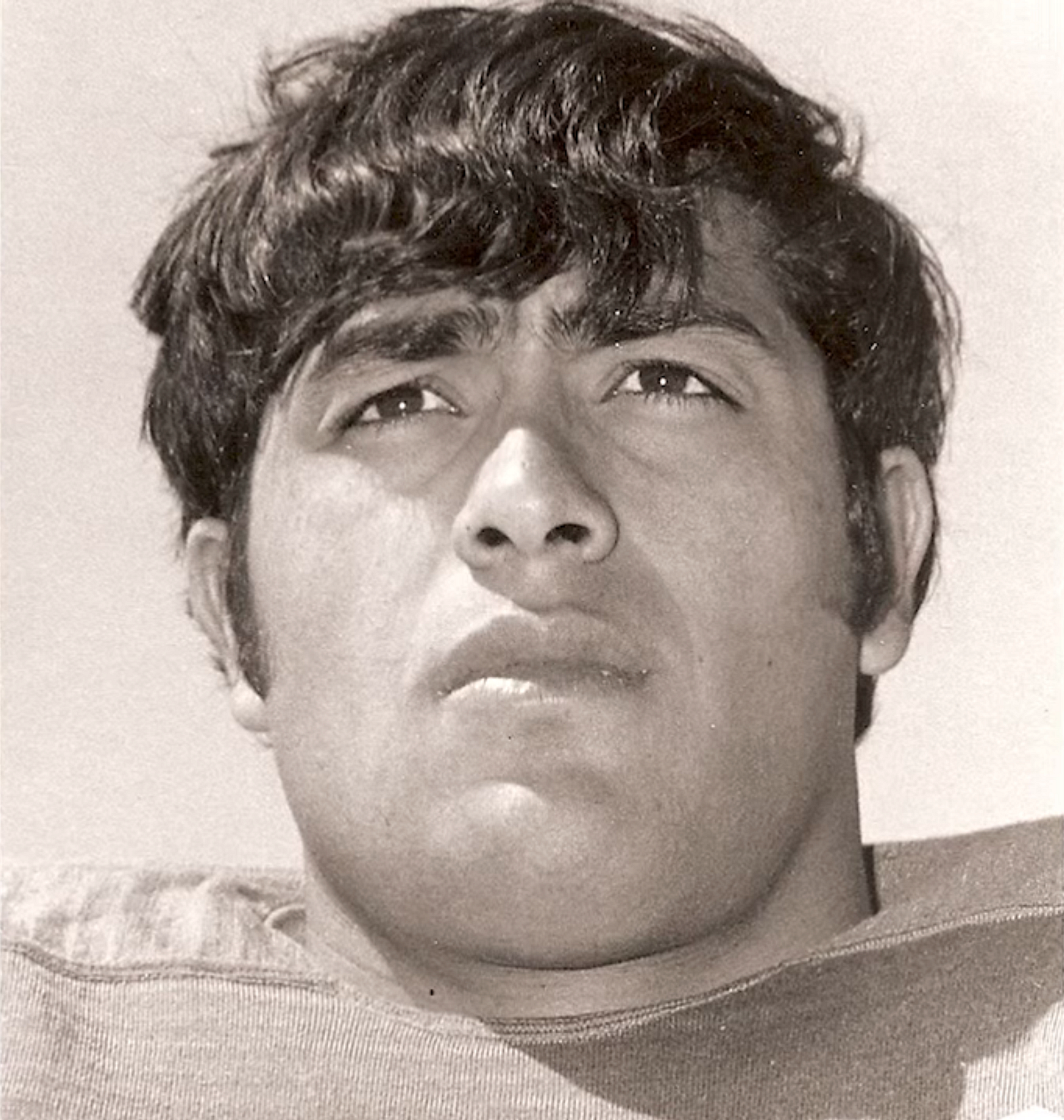
A determined Tony Perea in his UTEP uniform.
The transition from high school to college — and from offense to defense — was seamless. While freshmen were ineligible for varsity football in those days, Tony dominated the upperclassmen in scrimmages — so much so that Coach Dobbs told him that, had he been eligible, he would have been a varsity starter.
Tony credits UTEP’s then–linebacker coach, Y.C. McNease, with preparing him for the intellectual side of defensive football — the part where film study and instinct meet. “We ran the Oklahoma defense, and coach McNease taught me how to anticipate the play by reading the guard. It was so easy — I tried to teach this to the high school kids I coached as well — when you look in front of the guard, if his helmet goes to the right, the play is going to the right, if his helmet goes to the left, the play is going left, if he blocks down, it’s going to be a trap, if he pass blocks it’s going to be a pass. It was so easy! Just concentrate on the guard, don’t be distracted by anything else — the guard is going to tell you where the ball goes every time.”
Tony took to Coach McNease’s teachings like a fish to water — and, in just his sixth game as a college football player, he delivered a performance for the ages.
The year was 1970, the date October 24th, and the opponent: Arizona State. The Miners were at home and coming off three straight wins after a slow start to the season — 0–2, to be exact. This was to be the toughest test of their entire season, as the Sun Devils arrived at the Sun Bowl ranked 12th in the country. ASU was undefeated and featured a litany of future pros — Bobby Thomas, Monroe Ealy, J.D. Hill, and Steve Holden, just to name a few. “I remember J.D. Hill running across the field…” said Tony, “…he caught a pass and I remember hitting him. He had to be 6’3 or 6’4; and the impact was so big that it felt like I’d been hit!”
UTEP, outmatched and outgunned, suffered a sound beating as they lost 42–13. The one bright spot for the Miners was none other than Tony Perea, who tallied a school-record 26 tackles on the day. In a game where UTEP was swallowed whole by a superior opponent, Perea played like the field itself belonged to him.
While Tony’s on-field exploits were the stuff of legend, what he remembers most about his time at UTEP were the relationships he built with Mexican Americans in the El Paso community. After years of being tolerated rather than accepted, Tony finally felt like he had found a home. “The Mexican community really showed me a lot of love,” said Tony. “They’d invite me to their homes and we’d have burritos. It was funny because, here I was — Mexican-American — and I didn’t even speak Spanish! But they treated me like family. It was an experience I’ll never forget.”

Tony Perea, UTEP captain, 1972.
After graduating from UTEP in 1972, Tony sought to continue his football career in the pro ranks. Going undrafted by the NFL, he found employment up north in the Canadian Football League on a recommendation from Coach Dobbs. Unfortunately, due to roster-construction restrictions and untimely injuries, Tony was never able to get his footing and make his mark in the league as he had in college. “You know, back in those days they only allowed 15 or 16 Americans on each team in Canada — so you had to start or you’d get cut. The first year I went to Calgary — but I hurt my knee in training camp before I even had a chance to play an exhibition game. So they cut me.”
Undeterred, Tony rehabbed his knee back in El Paso, continued to train his body and hone his game, and returned to Canada the following season to give the CFL another shot — a second chance he intended to seize. “The next year I went back and made the team! But I got hurt again, and got cut. You see, if you’re American and you get hurt in the CFL, they don’t keep you around. They just go get another American to play your position. It’s a revolving door.”
Eventually, Tony did get the opportunity to see the field with the Hamilton Tiger-Cats and Saskatchewan Roughriders in 1975 and 1976, respectively. But upon the conclusion of the ’76 season, he hung up his cleats for good, closing the curtains on his football career. “I was burnt out.”
For 13 years — from 1963 to 1976 — Tony Perea devoted his life to the game of football. What began as a way to earn acceptance in a white world evolved into a labor of love that shaped his identity. Through it, he found fulfillment not just in the accolades he earned on the field, but in the community it helped him find off of it. And so, it can be said that football was more than just a sport to Tony — it was the bridge that carried him to UTEP, the first place in his life where he truly felt at home, embraced by a Mexican-American community that saw him as one of their own.
After retiring from professional football in 1976, Tony settled in El Paso, becoming an essential part of the community that had adopted him during his time at UTEP. He followed in the footsteps of mentors like Y.C. McNease and Don Haskins, and began coaching high school football while teaching Health and Alternative Education — the latter being his favorite, as it gave him the opportunity to mentor troubled kids who had a hard time getting along with their general education teachers. “The administration really wanted me in the alternative program. The school would send me kids that got kicked out of their regular classes. So I ended up taking care of all the kids who were having problems. But I liked it! And I really got along with them, so we never had any problems in my classroom.”
Now, having left the roar of the stadium behind and settled into civilian life, Tony was pleased with the legacy he was building off the field in El Paso. But while he no longer had any desire to hit people for a living, he did want to sustain the strength and discipline he had developed over many years of training. So he paid the local gym a visit to shoot some hoops on their basketball courts and maybe join a recreational league in his free time. He had played the game competitively in high school and, while he was nowhere near as good at basketball as he was at football, he had always possessed good defensive instincts and a nose for the ball. But before he could step foot on the court, something else in the gym caught his eye and sparked his interest — something that would change the trajectory of his life forever.
“I walked into the San Juan gym to play basketball — but then I saw the boxing gym to the side and I thought, ‘Wow!’ My cousins were all boxers, and they were ranked, so I thought, ‘Maybe I’ll try boxing!’ So I picked up a pair of gloves and started hitting the heavy bag. This little guy came over and looked at me and asked, ‘Do you want to box more seriously?’ I responded, ‘Yea… maybe.’ Then he says, ‘Let me train you!’ So he started training me.”
That trainer turned out to be a gentleman named Ralph Reese, and he took to Tony immediately, seeing potential in him that even Tony was only vaguely aware of at the time. “I was 27 years old when I started boxing,” said Tony. “So I was too old to fight in the amateurs. Ralph told me, ‘You’re going to have to turn pro.’ I didn’t know much about boxing, but I decided to give it a try.” So began the professional boxing career of Tony Perea.

Heavyweight boxer, Tony Perea.
After a year of training and sparring under the watchful eye of Ralph Reese, Tony was ready to make his debut under the bright lights. And so, in the summer of 1979, he squared off against John Wages in El Paso’s County Coliseum. Tony won the fight by knockout. A month later, he had another fight booked — this time against a man named Tony Martinez in Albuquerque. He won that fight by knockout as well. In fact, Tony won the first 13 fights of his professional career en route to a world heavyweight title shot against then-champion Earnie Shavers.
Just as Tony was a natural at football, he took to boxing immediately. Indeed, both Tony and Ralph Reese understood early on that he was going to be a force in the professional ranks after several exceptional performances in sparring sessions against established veterans. “When I started sparring seasoned fighters in ’78, I was beating them pretty good. Then I sparred with the Mexican heavyweight champion, and I could handle him!”
When Tony defeated Charlie Wade in February of 1982 on points in El Paso, he earned a chance to be the world’s best against Earnie Shavers — arguably the hardest-hitting boxer in the sport at that time. “That guy was good. And he was a nice guy too,” said Tony. “Honestly, that was probably one of the best fights I had — and it was the only one I lost.” In the end, the referee stopped the fight after the sixth round due to a deep, bleeding cut over Tony’s right eye, as he fell just short in the first and last world title shot of his career. But Tony was not one to dwell on setbacks, and after six months of hard work in the gym, he got back in the ring — this time against undefeated Tony Fulilangi in Houston’s Astro Arena. In a closely contested bout that Tony felt he won, the fight was judged a draw, preserving Fulilangi’s perfect record.
Winless in his previous two fights and now 33 years old, Tony’s career appeared to be on the decline. His body had been worn down over two decades of hard labor on the farm, collisions and grind on the football field, and punishing exchanges in the ring. But Tony was determined to prove that he had one more big night left in him. “In 1984 I fought against a guy from Odessa called Charles Hostetter. He was the reigning Texas Heavyweight Champion, and had won a Golden Gloves title in the amateurs too.” In what would be the last big fight of his career, Tony channeled the relentless pressure of his boxing idol Joe Frazier and knocked Hostetter out in the ninth round, winning his first and only title.
After beating Charles Hostetter and hoisting the belt, Tony continued boxing intermittently — fighting three times over the next six years. He won each contest. Then, in 1990, after an unlikely 11-year boxing career that started when he was 27 years old, Tony finally closed the curtains on his life as a professional athlete.

Tony Perea, then teacher at Raymond Telles Academy, watches student Christian Hernandez work out on a heavy bag in the school’s boxing program.
In retirement, Tony continued to serve the community of El Paso, teaching students, coaching aspiring football players, and training up-and-coming boxers. His most accomplished pupil was Joe Hipp, a Native American fighter from Montana. Under Tony’s steady hand, Hipp earned an opportunity to fight for the world heavyweight title — just as his trainer had done a decade earlier. “Joe was actually the first Native American to fight for a world title. He ended up losing; but we did pretty good to get him there.”
Now, at age 74, Tony has returned home to New Mexico to live a quiet, unassuming life on his almond farm in Vado, 50 yards from the Rio Grande. He lives away from the noise and pull of the public eye — and he wouldn’t have it any other way. “I’ve got about 600 almond trees to tend to; those keep me busy. I can go fishing — I don’t really care if I catch anything, I just like to sit out there with a glass of wine. I love it out here in the country, you know? I don’t think I could live in the city again.”
He has earned that peace. For decades, Tony Perea gave the best of himself — as an athlete, teacher, and coach — to the people and places that shaped him. In stadiums, on practice fields, and in classrooms, he left behind more than victories; he left behind lives touched, doors opened, and a legacy rooted in service.

A painted tribute to Tony Perea’s two athletic lives — dominating as a linebacker at UTEP and stepping into the ring as a professional heavyweight boxer.
메타데이터
- post_id
- 8ffc67b110b8
- slug
- a-miners-heart-tony-perea-utep-and-the-fight-for-a-place-to-call-home-8ffc67b110b8
- url
- https://medium.com/@josephpressiv/a-miners-heart-tony-perea-utep-and-the-fight-for-a-place-to-call-home-8ffc67b110b8
- canonical_url
- https://medium.com/@josephpressiv/a-miners-heart-tony-perea-utep-and-the-fight-for-a-place-to-call-home-8ffc67b110b8
- author_url
- https://medium.com/@josephpressiv
- status
- ok
- fetched_at
- 2026-07-18 09:37:53