One Party, Two Oligarchs, and a Question Democracy Can’t Dodge
When the choice is which millionaire to trust, voters are already losing
One Party, Two Oligarchs, and a Question Democracy Can’t Dodge
When the choice is which millionaire to trust, voters are already losing

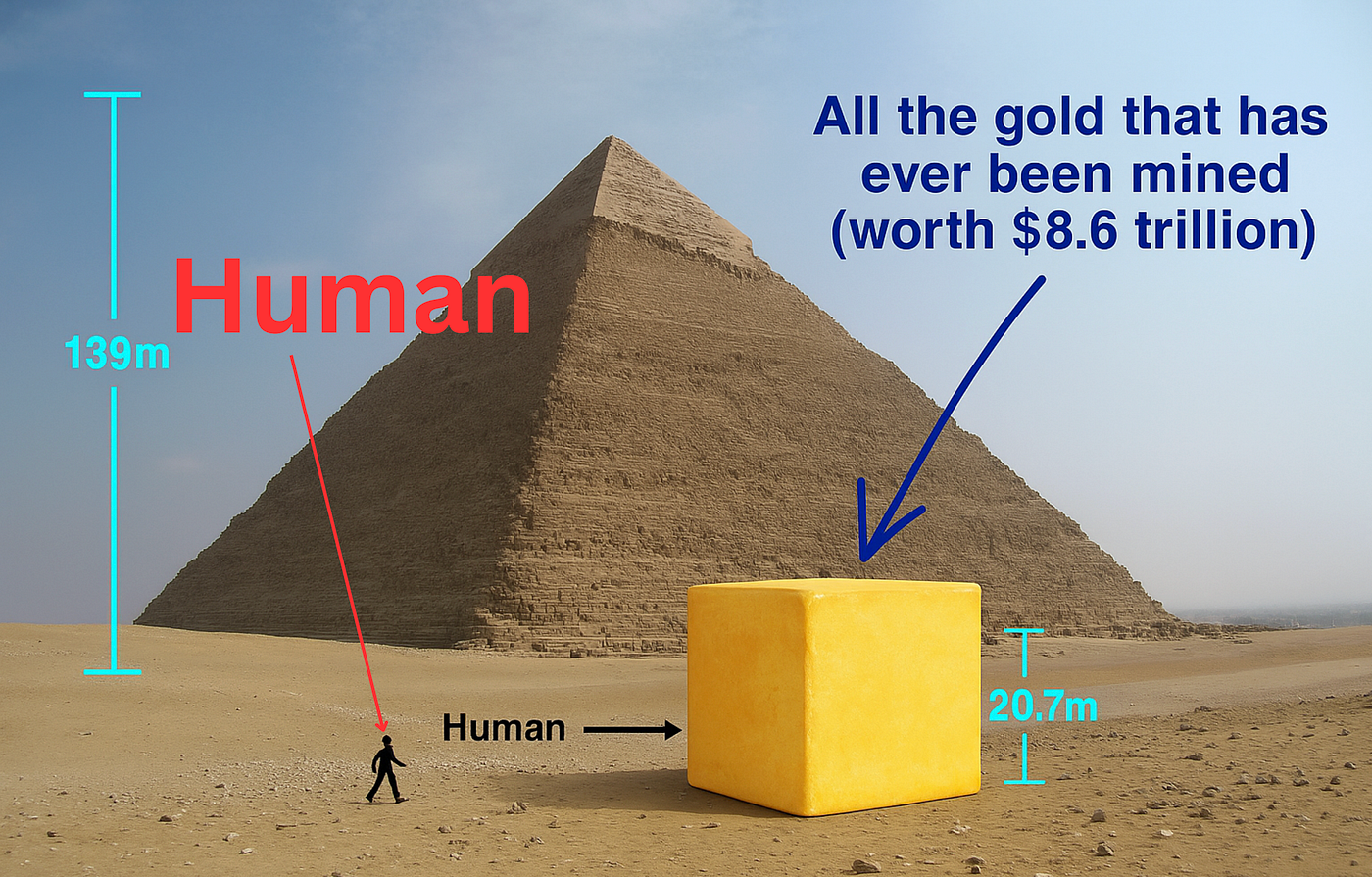
Image created by the author using AI
The most revealing election in America this month is not a presidential primary, a Senate cliffhanger, or a red-blue cage match. It is a Democratic House primary in Maryland where the price of admission to democracy appears to be $32.4 million.
Five days before the Maryland primary, the math tells a story the campaign ads never will. One Democratic candidate has loaned her congressional campaign $7.4 million. Another has loaned his $25 million. A third — a fired federal worker who used to monitor banks in America — has $41,000 in the bank and is raising her daughter between doorknocks.
If you want to understand why one in three Americans now tells pollsters that democracy is failing, you don’t need a think tank. You need a ZIP code: Maryland’s 6th Congressional District, where on June 23 voters will be asked, in essence, to ratify a quiet American transition — from representative government to representative purchasing.
The dynasty no one voted for
Begin with a fact so blandly extraordinary it has barely registered in the national press: neither leading candidate lives in the district, which is allowed under the Constitution, but the seat they’re battling over has been held by either a Trone or a Delaney since 2013. Read that again. For thirteen years, a swath of Maryland stretching from the D.C. suburbs to the Appalachian foothills has been represented exclusively by members of two wealthy families who do not live there.
This is not a partisan complaint. It is a structural one. Trone has loaned himself $25 million for the 6th District race, while McClain Delaney has loaned her campaign $7.4 million — a combined personal outlay that exceeds the median household lifetime earnings of most voters in Garrett County, the district’s poorest.
In Maryland’s 6th Congressional District race, two multimillionaire Democrats have put their own wealth front and center. To be fair, April McClain Delaney, the incumbent, and David Trone, who held the seat before her, are debating more than money — voting records, endorsements, who will stand up more against President Donald Trump. But they’re also pointing fingers at each other for playing politics with their cash — giving to their own campaigns and to allies.
In other words: the disagreement is over which oligarch is the better oligarch.
The candidate the algorithm didn’t predict
Into this gilded primary walked Alexis Goldstein, and her biography is the kind of plot twist American politics rarely produces anymore. A longtime financial regulatory expert who once worked on Wall Street before becoming involved with the Occupy Wall Street movement, Goldstein was on admin leave from the Consumer Financial Protection Bureau until being fired — after the Trump administration’s gutting of the CFPB removed key oversight of the financial industry. “So, essentially, no one is watching the biggest banks,” she told Democracy Now.
Her firing was not for incompetence. It was for witnessing. Goldstein encountered DOGE officials in the CFPB headquarters as she rolled her empty stroller around the bureau’s basement. She had just dropped her toddler off at daycare. “I noticed a number of people who I had never seen before who were not wearing the required CFPB badges, and they were accessing what appeared to be CFPB equipment, so I wanted to take a closer look,” she said. For asking questions of Elon Musk’s hand-picked operatives, she was eventually shown the door.
There is a kind of grim American symbolism here that no novelist would dare invent: a mother with a stroller, a watchdog agency being looted in the basement, and the response from official Washington is to fire the mother. It is the entire political economy of Trump 2.0 in a single elevator pitch.
Goldstein’s policy platform, accordingly, is not subtle. “I have a three-point plan: Step one, find the billionaire money. Step two, take the billionaire money. Step three, give the billionaire money back to the people they stole it from.”
You can scoff. Plenty of consultants do. But the political question worth asking is not whether her plan is realistic. It’s why a plan this blunt sounds fringe — when the alternative on offer in her own primary is two self-funded multimillionaires loaning themselves the GDP of a small town to win a job that pays $174,000 a year.
The data that should embarrass every incumbent
The Maryland race is not an aberration. It is the canary. Twelve years ago, political scientists Martin Gilens of Princeton and Benjamin Page of Northwestern took an extraordinary data set and a small army of researchers and set out to determine whether America could still credibly call itself a democracy.
As case studies, they used roughly 1,800 policy proposals tracked over two decades, from 1981 to 2002, following how each one made its way through the political system and whose interests were served. Their conclusion was stark: economic elites and organized business interests had substantial, independent influence on policy outcomes, while the preferences of average citizens registered a “near-zero, statistically non-significant” effect. America, they argued, functioned less like a democracy than an oligarchy.
Then came Citizens United metastasizing into the bloodstream. Then came a presidential ticket front-loaded with tech billionaires. The 2024 campaign saw record support by billionaires for both candidates, but most conspicuously for Donald Trump from Tesla and Starlink owner Elon Musk, the world’s richest person.
This is the throughline most pundits miss: the Trone-Delaney primary is not the opposite of Trump-Musk. It is the same disease in Democratic colors. A self-funded congressional race is structurally indistinguishable from a self-funded executive branch. Both rest on the proposition that civic legitimacy can be acquired wholesale.
The Frederick County rebellion
Here’s the overlooked angle: Goldstein’s campaign is gaining traction because the voters of Maryland’s 6th have been quietly rehearsing this argument for two years — over data centers.
“Yeah, people really hate them across the whole district. I’d say it’s bipartisan. In Frederick County, the local government essentially approved a data center, and all of these local people were like, ‘No.’ They put together a ballot referendum and got 22,000 signatures to roll it back. All the normal things that can go wrong when you do a ballot referendum went wrong, and they overcame all of it.
Every county I go to, whether it’s in the mountains in western Maryland or the more urban Montgomery County, closer to DC, nobody wants these things. Local politicians have had to change hearings about data centers into things like ‘information sessions.’ They’re pitching people. It’s this really unifying thing that’s bringing together a lot of people of different political orientations.”
Twenty-two thousand signatures. In a single county. Against an industry backed by some of the most powerful capital concentrations in human history. The most underreported political fact of 2026 is this: ordinary Americans, when finally offered a way around the donor class, do not hesitate — they act.
Goldstein sees it everywhere she campaigns. “We don’t have to convince anyone that billionaires are stealing from us,” she explains. “Everybody already knows. The public is so far ahead of Congress. On data centers. On abolishing ICE. The people are already there. Congress just hasn’t caught up.”
This empirically refutes the consultant class’s favorite alibi — that the electorate is hopelessly polarized and incoherent. It isn’t. It simply disagrees with its representatives.
Brandeis was not bluffing
A line long attributed to Justice Louis Brandeis captures a warning that has aged into prophecy: “We can have democracy in this country or we can have great wealth concentrated in the hands of a few, but we cannot have both.”
Worth noting: historians who have combed Brandeis’s writings, opinions, and speeches have never found this exact sentence in anything he wrote or said on the record — it appears to trace to a 1941 eulogy in which a friend recalled him saying something close to it. Whether or not those were his precise words, they track what Brandeis did write elsewhere, including his warning that concentrated fortunes were “inconsistent with democracy.”
What he understood — and what we have spent a hundred years pretending we don’t — is that political equality is physically incompatible with extreme economic inequality, in the same way that two objects cannot occupy the same space at the same time. The Maryland 6th race is what that physics looks like when the equation finally balances: a $41,000 candidate against a $32.4 million wall of self-funding, all running under the same party banner, all promising to represent the same people.
History rhymes here with a specificity that should chill anyone paying attention. For nine years in the 1920s, Republicans went on a tax-cutting and regulation-destroying spree known as the “Roaring 20s,” making the merely rich into the morbidly rich while keeping average working people in poverty by violently fighting that era’s union movement.
Their excesses led straight to the stock market crash of October 1929, which kicked off the Republican Great Depression and brought Democratic President Franklin D. Roosevelt into office. Roosevelt gleefully took on America’s most toxic oligarchs, saying, “They hate me, and I welcome their hatred!”
Roosevelt did not win by being slightly less plutocratic than Hoover. He won by drawing a bright line between the public and its predators — and then, crucially, by acting on it. The Democratic Party that emerged from the 1932 election was not a referee between billionaires. It was an antagonist of them.
Benevolent oligarch, malevolent oligarch — still an oligarch
So what does Maryland’s 6th tell us about the rest of 2026, and beyond?
First, the post-Citizens United primary is becoming a closed shop. When the dominant theory of victory is “outspend your opponent with your own checkbook,” the talent pool for Congress shrinks to a demographic of roughly 700 Americans. We will get the legislators that filter produces — and then wonder why nothing works.
Second, the “oligarch vs. oligarch” framing is the new clientelism. The Democratic Party’s quiet bet — that voters will choose a benevolent rich person over a malevolent one — is a bet against the broader empirical record on money and influence in American politics, contested as some of its particulars are. Voters don’t want to pick a master. They want a representative.
Third, the policy issues most likely to break the 2026 cycle are the ones no one in Washington is polling on. Data centers. Slumlords. Predatory student loans. Goldstein is winning local converts on these because they are the issues where the gap between voter preference and legislative output is most embarrassingly wide. “There’s a huge slumlord problem in western Maryland.
People there have said, ‘You seem to know a lot of consumer lawyers — win or lose, will you come back and help connect us so we can fight these slumlords?’ Often people don’t even know it’s illegal. So given my policy background, my regulatory background, my networks, I’m seeing a real need that’s not being met.”
Fourth, and most importantly: the firewall is breaking down between the billionaire takeover of the executive branch and the billionaire takeover of the legislative branch. When David Trone loans himself $25 million for a House race in the same political moment that Elon Musk is rewriting federal personnel policy by fiat, these are not two unrelated stories. They are the same story, told in different fonts.
A prediction
Here is my forecast — offered with the humility appropriate to anyone making predictions about Maryland primaries five days out. Even if Goldstein loses on June 23, the political theory she is articulating will be the dominant Democratic theory by 2028. Not because the party establishment will embrace it — it won’t — but because the alternative is electoral suicide in a country where the Gilens-Page thesis, whatever its methodological dents, is now common sense.
The base of the Democratic Party has been screaming, for at least a decade, that you cannot defeat Trumpism with a slightly classier version of the same plutocratic bargain. The Maryland 6th is the lab experiment that proves whether the party brass is listening. If a fired CFPB whistleblower with a stroller and a $41,000 war chest can pull even 20 percent against a combined $32 million in self-funding, that is not a loss. That is a referendum on the donor model itself.
And if she wins — well. Then the most important sentence in American politics for the next decade will not be uttered in a debate or a stump speech. It will be the one she said on a Zoom call, holding her infant daughter, wearing a union T-shirt with a skull on it: “We don’t have to convince anyone that the billionaires are stealing from us. Everybody already knows. The public is so far ahead.”
The public is so far ahead. That is the entire crisis, and the entire opportunity, of American democracy in 2026 — distilled intowords by a woman the system tried to fire into silence, and accidentally turned into a candidate.
The only remaining question is whether the rest of the political class will catch up before the voters stop waiting.
메타데이터
- post_id
- 903d2f7afb08
- slug
- one-party-two-oligarchs-and-a-question-democracy-cant-dodge-903d2f7afb08
- url
- https://medium.com/the-geopolitical-economist/one-party-two-oligarchs-and-a-question-democracy-cant-dodge-903d2f7afb08
- canonical_url
- https://medium.com/the-geopolitical-economist/one-party-two-oligarchs-and-a-question-democracy-cant-dodge-903d2f7afb08
- author_url
- https://medium.com/@earlbabson
- status
- ok
- fetched_at
- 2026-07-10 05:19:05