The Weight of Patience: Returning to the Black Hallway in No Record of the Dead
The Weight of Patience: Returning to the Black Hallway in No Record of the Dead
There’s a particular kind of silence that belongs to abandoned buildings. Not the absence of sound, but the presence of something that has been listening for a very long time.
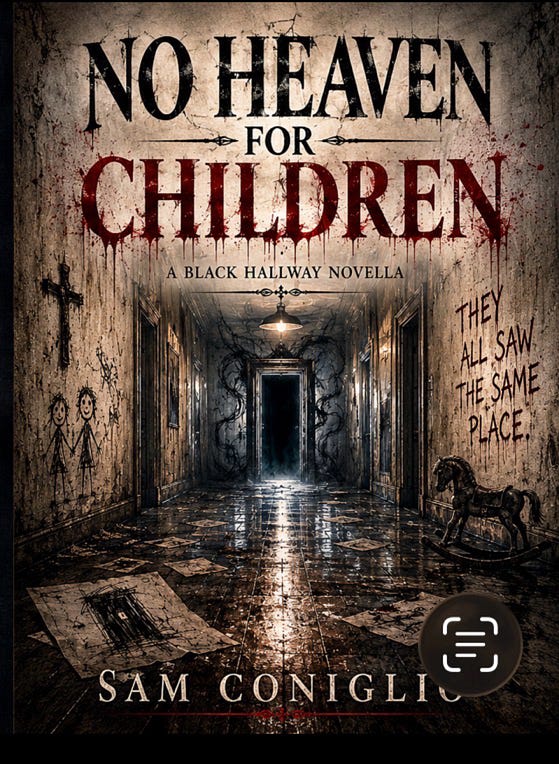
I’ve been thinking about that silence a lot while working on No Record of the Dead, the second novel in The Black Hallway series. If No Heaven for Children was about what comes through the door, this book is about what has been standing on the other side of it — waiting.
The story follows Renata Vasquez, an investigative journalist who has spent her career documenting the things cities prefer to forget: disappearances, institutional failures, the quiet violence of systems that outlive the people they were meant to serve. When a mysterious cassette tape arrives at her office — labeled only “DISMAS” — she follows it to the ruins of Saint Dismas Psychiatric Hospital, a place that closed in 1989 and has been slowly forgetting how to be a building ever since.
What she finds inside is not a conventional haunting. The corridors sometimes run longer in one direction than the other. Temperature drops arrive like warnings. Black rectangles drawn obsessively on the walls function less like graffiti and more like thresholds — thin places where something on the other side can press a hand against the surface and be heard. And somewhere in the deeper layers, something has been studying the people who enter for longer than the hospital has existed.
I didn’t set out to write a book about an ancient mind that has learned how to weaponize grief. But once I started listening to what the building wanted to say, that’s what emerged. The horror in No Record of the Dead isn’t primarily about jump scares or visible monsters. It’s about the terrible intimacy of a place that knows exactly which lost voice will stop you in your tracks, and exactly how long it is willing to wait for you to stop walking.
There’s a line in the book that has stayed with me: the most frightening thing about the presence in the lower levels isn’t its nature. It’s its patience.
Patience is an underused tool in horror. We’re accustomed to entities that hunger, that pursue, that need something from us right now. The thing in Saint Dismas doesn’t need to chase. It has already arranged the conditions. It has already identified the people carrying the right kind of loss, the right kind of refusal to look away. All it has to do is stand at the end of the corridor with its head tilted slightly to one side — the posture of something that has been listening since before the first stone was laid — and wait for those conditions to develop at their own pace.
Writing this book has made me think differently about abandoned asylums, about the stories we tell about institutional cruelty, and about the way grief can function as both a map and a trap. It has also made me think about what it means to document horror versus what it means to survive it. Renata’s notebooks and recorder are her armor. They are also, in some ways, what makes her visible to the thing that has been waiting for someone who pays attention the way she does.
No Record of the Dead is still in progress, but the shape of it feels inevitable now. It belongs to the same Black Hallway as the first book — same rules, same universe, same refusal to look away from what the dark has learned about us — but it goes further into the architecture of the parallel space and deeper into the question of what, exactly, has been watching from the other side all these years.
If you’ve read No Heaven for Children, you already know the doorways don’t stay closed. If you haven’t, this book can still be read on its own, though I suspect the two stories will speak to each other more as the series continues.
For now, I’m still walking the corridors with Renata, still counting the steps that sometimes come up short and sometimes go on too long, still trying to understand what it costs to keep moving when the building has learned the exact frequency of your grief.
The tape is still playing. The hand is still pressed against the inside of the black rectangle. And somewhere below the basement level that shouldn’t exist, something with infinite patience is tilting its head a fraction further to the right, and listening.
I’ll have more to share as the manuscript continues to develop. In the meantime, if you’re new to the Black Hallway, No Heaven for Children is available now. And if you’ve already stepped through one of those doorways, welcome back. The building remembers you.
메타데이터
- post_id
- 9052829a969f
- slug
- the-weight-of-patience-returning-to-the-black-hallway-in-no-record-of-the-dead-9052829a969f
- url
- https://medium.com/@hvn1980/the-weight-of-patience-returning-to-the-black-hallway-in-no-record-of-the-dead-9052829a969f
- canonical_url
- https://medium.com/@hvn1980/the-weight-of-patience-returning-to-the-black-hallway-in-no-record-of-the-dead-9052829a969f
- author_url
- https://medium.com/@hvn1980
- status
- ok
- fetched_at
- 2026-06-14 11:28:49