Why Christmas Used to Be the Scariest Night of the Year
Long before ugly sweaters and gift guides, the Victorians had a different Christmas ritual: scaring each other senseless.
Why Christmas Used to Be the Scariest Night of the Year
Long before ugly sweaters and gift guides, the Victorians had a different Christmas ritual: scaring each other senseless.
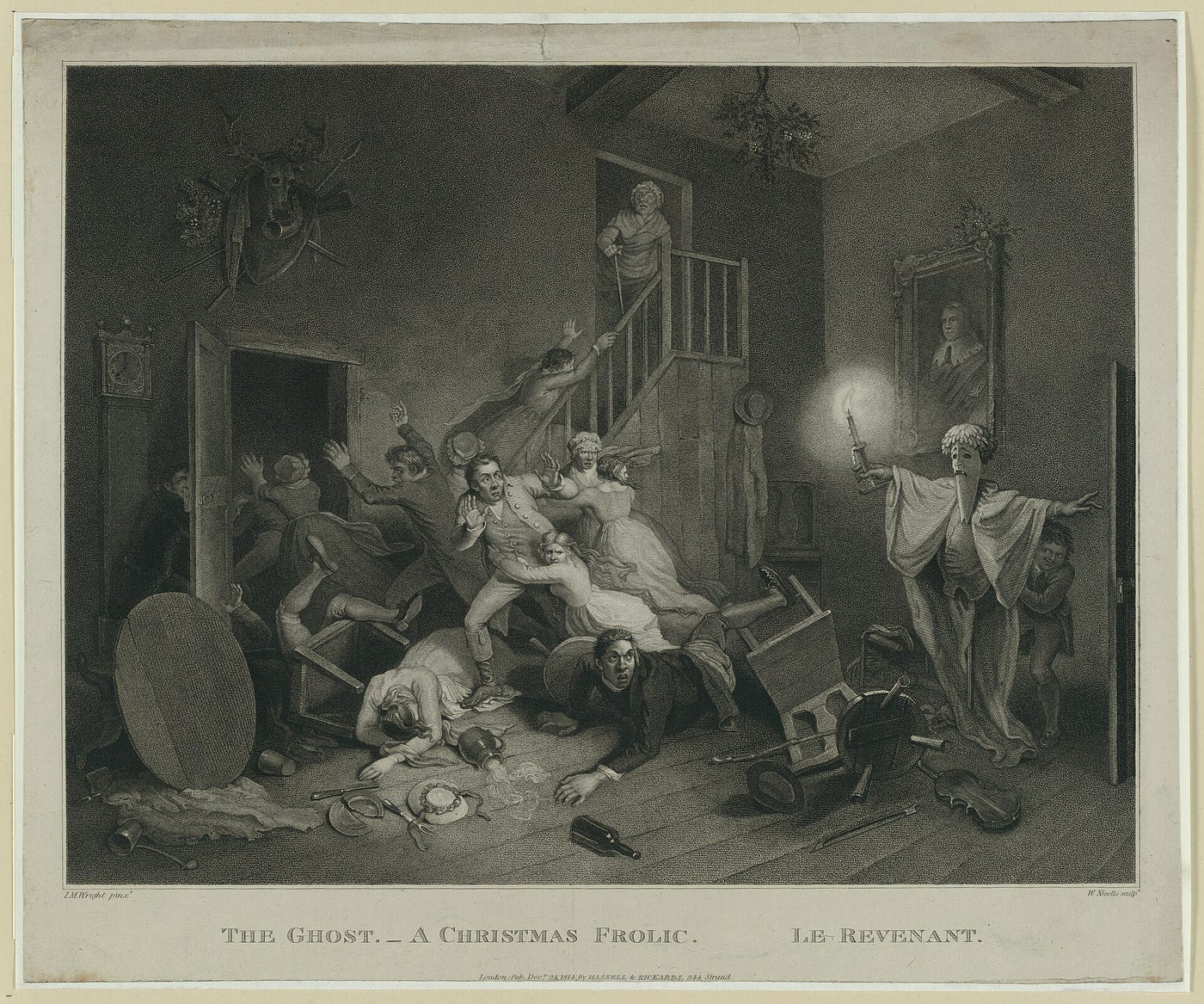
Print shows a boy with a mannequin ghost holding a candle frightening several guests at an intimate party. Source
Every December, as the fires go up and the playlists switch over, Americans reach for the same comforting rituals: the classic films, the dog-eared holiday books, the songs that somehow never get old. But there is one Christmas tradition that quietly disappeared from the repertoire.
One that used to be just as essential as any of these. Not carols. Not gifts. Ghosts.
In Victorian England, no Christmas was complete without a good, spine-chilling ghost story, and for a while, it was the most anticipated part of the season.
This wasn’t some niche habit of the eccentric upper class. It was widespread, deeply felt, and rooted in something much older than the Victorians themselves.
In today’s story, let’s unravel this. Grab your most comfortable spot and enjoy today’s interesting piece and dose of history. I hope you’ll enjoy it.
It all started around the fire
Long before anyone thought to put them on paper, ghost stories were generally spoken. Families and communities gathered at the end of the year, when the nights were longest, and the cold made staying indoors feel almost necessary, and they told each other stories. Dark ones. The kind that made you pull your coat a little tighter even when you were already warm in the first place.
This oral tradition has existed for centuries across Britain and much of Europe. What the Victorians did was find a way to bottle it.
…and then the press changed everything
The *Industrial Revolution gave the world the steam-powered printing press, and with it, the written word became something ordinary people could actually *afford. Literacy rates climbed as a result. Periodicals multiplied, and editors, perpetually hungry for content, began looking for ways to fill their Christmas issues.
The ghost story was sitting right there all around.
What had once lived in the mouths of villagers now lived on the page, wrapped in a bow and sold at newsstands. The supernatural went commercial, and it worked beautifully.
See a couple of examples for yourself below:
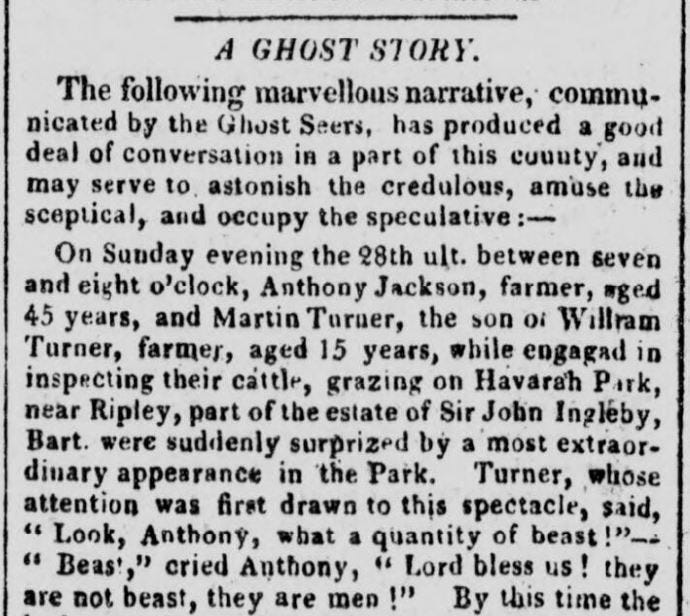
Leeds Mercury | 18 July 1812
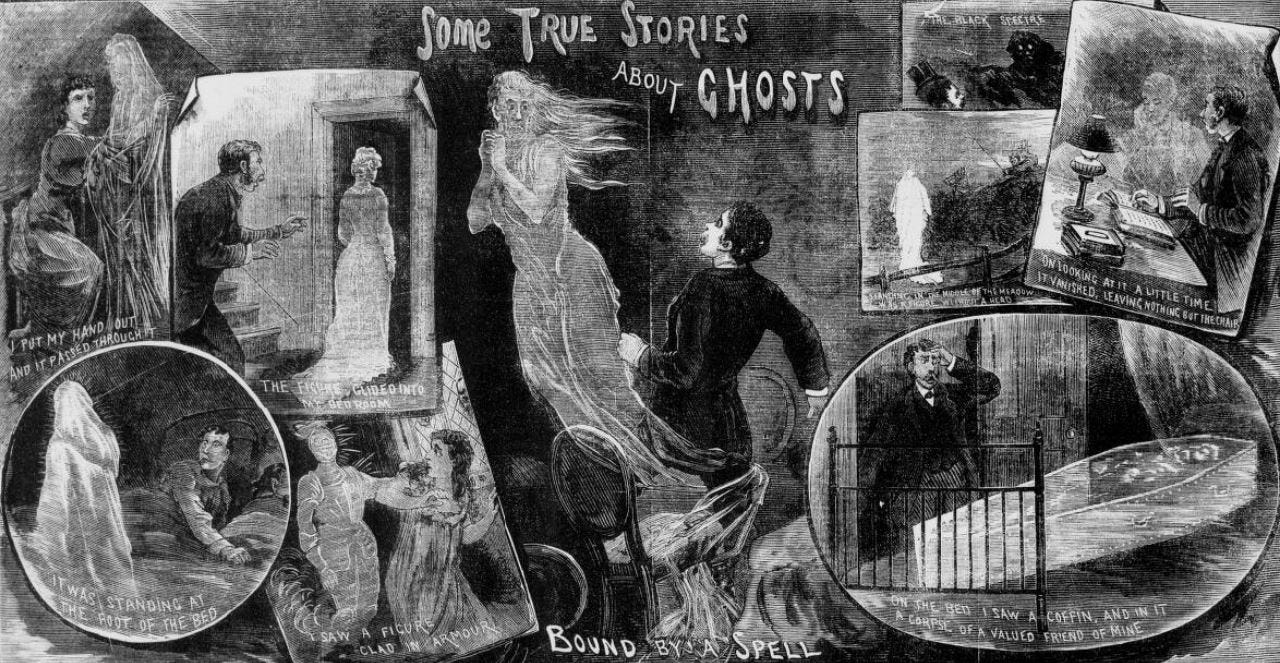
Illustrated Police News | 29 October 1881
People who moved out of their towns and villages and into larger cities still wanted access to the supernatural sagas they heard around the fireplace growing up.
“Fortunately, Victorian authors like Elizabeth Gaskell, Margaret Oliphant and Arthur Conan Doyle worked through the fall to cook up these stories and have them ready to print in time for Christmas,” Moore says.
One interesting aspect about ghost stories gaining more prominence is also attributed to the then-prevailing uncertainties.
The Industrial Revolution brought about a shift in which the agrarian and handicraft economy was largely replaced by industry and machinery. This created significant uncertainty and, as a result, a spike in cumulative interest for this genre.
“Higher literacy rates, cheaper printing costs, and more periodicals meant that editors needed to fill pages,” Moore says. “Around Christmas time, they figured they could convert the old storytelling tradition [in]to a printed version.” *Source*
Brittany Warman, a folklorist specialising in Gothic literature and co-founder of The Carterhaugh School of Folklore and the Fantastic, writes, “Interest was driven by the rise of industrialisation, the rise of science, and the looming fall of Victorian Britain as a superpower. All of these things were in people’s minds, and made the world seem a little bit darker [and] a little bit scarier.”
I think that perfectly encapsulates the prevailing reasons the genre shot to popularity.
The stories found a diverse audience
Daily or weekly periodicals were not a novel affair. The sole distinction was that in the past, they served a narrowly defined demographic, such as homemakers, kids, adults, single parents, or vacationers. No two groups of people used to read the same magazines or periodicals.
But this time, everyone in the family became involved and interested in reading about the mystical creatures and their quests. Telling horror-filled holiday tales continued to be a family affair in England, even when they became more of a reading exercise than reciting.
The popularity of Victorian Christmas ghost stories also transcended socioeconomic status. They were available to read everywhere from cheap publications to expensive Christmas annuals that middle-class ladies would show off on their coffee tables.
Their broad audience was reflected in the stories themselves, which sometimes centered around working class characters, and other times took place in haunted manor houses.
“These upper class settings were intended to invite readers from all classes into an idealized, upper-crust Christmas, the type todays’ fans of Downton Abbey still enjoy as entertainment,” writes Moore.
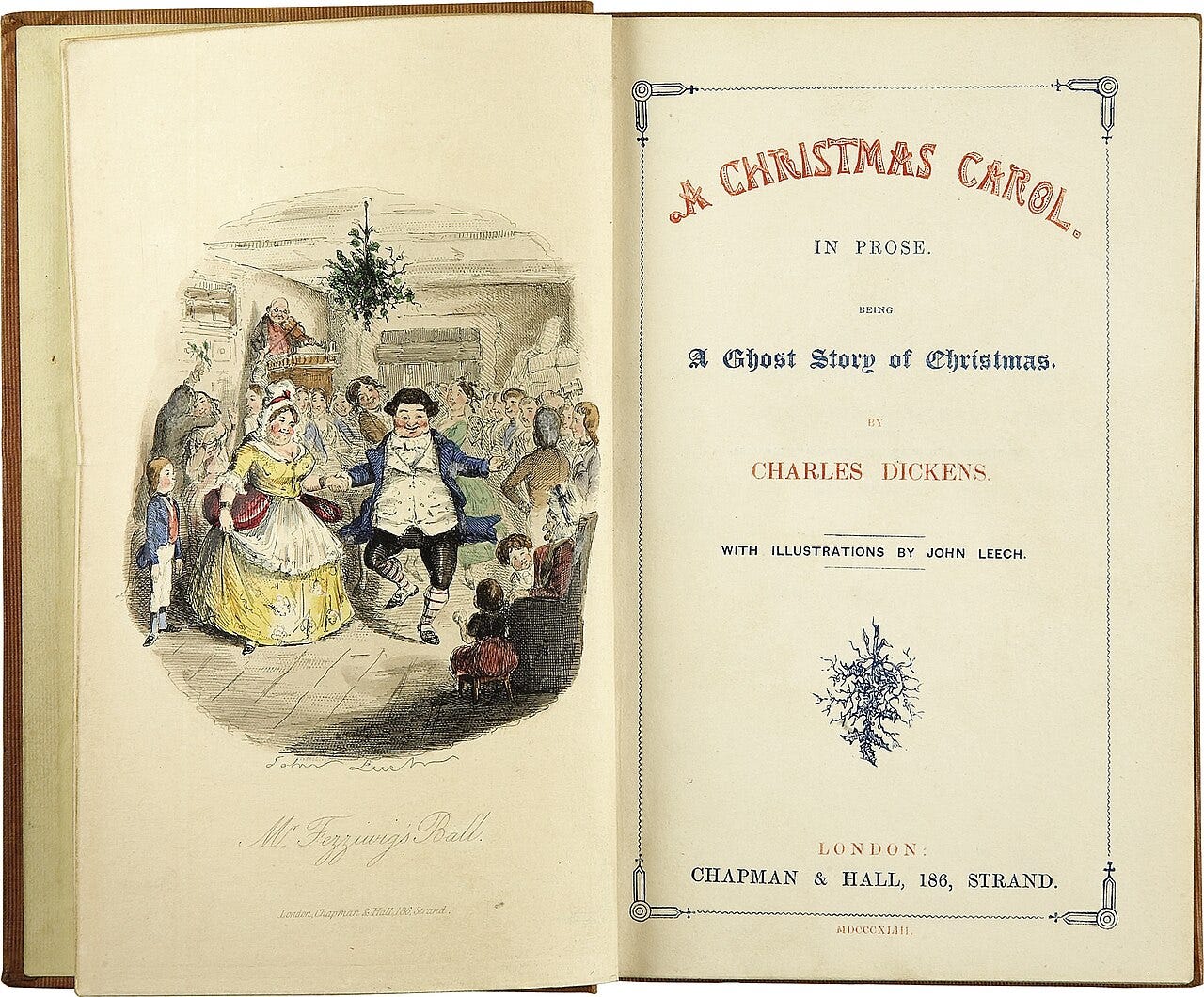
Charles Dickens: A Christmas Carol.
Charles Dickens and Christmas
Charles Dickens’ 1843 novella A Christmas Carol — you know, the one with Scrooge and Jacob Marley’s ghostly visit — cemented his name with Christmas forever. But the British author’s impact on Victorian England’s holiday traditions went way deeper, like kickstarting the custom of sharing ghost stories around the fire.
Cleto points out Dickens was massive in making ghost tales a holiday staple in England. “He cranked out several Christmas novellas packed with ghosts,” she notes, “then started editing spooky stories from other writers for his magazines. It spread like wildfire.”
He also shaped Christmas stories overall, says Moore, by setting the tone for big themes like forgiveness and family reunions that we still expect this time of year.
American Christmas Traditions
While Victorian England sent countless trends across the Atlantic to America, the cozy tradition of Christmas ghost stories never really took root there. Charles Dickens’s A Christmas Carol exploded as a bestseller in the U.S. right from its 1843 release, but that had everything to do with his rock-star status as the world’s most famous writer and his massive existing fanbase, rather than any American appetite for supernatural holiday chills. “American Christmas tales leaned syrupy sweet,” notes Moore.
A handful of U.S. writers did experiment with Victorian-style ghostly Christmas vibes. Nathaniel Hawthorne and Henry James gave it a shot, while Washington Irving slipped supernatural twists into his Christmas-themed short stories as early as 1819 and 1820. Still, the tradition fizzled.
Warman pins America’s reluctance on a deeper cultural mindset. “Americans resisted the supernatural in ways Europeans didn’t,” she says. Settlers arrived with a fresh, secular outlook, eager to shed old-world superstitions as relics of the past they were leaving behind.
Halloween sealed the deal. Irish and Scottish immigrants brought their own eerie festivities, akin to modern Halloween, and repurposed them as the season for spooks in America. “That shift cemented ghosts with October nights, not December fireplaces,” Warman adds. What started as a Dickensian spark in foggy London stayed an English quirk, while U.S. holidays carved out sweeter, less haunted paths.
메타데이터
- post_id
- 90bb78f73d64
- slug
- why-christmas-used-to-be-the-scariest-night-of-the-year-90bb78f73d64
- url
- https://medium.com/history-uncovered/why-christmas-used-to-be-the-scariest-night-of-the-year-90bb78f73d64
- canonical_url
- https://medium.com/history-uncovered/why-christmas-used-to-be-the-scariest-night-of-the-year-90bb78f73d64
- author_url
- https://medium.com/@vritant
- status
- ok
- fetched_at
- 2026-06-16 19:09:56