SS-31 and Mitochondrial Research: What Laboratories Are Studying in 2026
Mitochondria are where cellular energy is produced.
SS-31 and Mitochondrial Research: What Laboratories Are Studying in 2026
Mitochondria are where cellular energy is produced.
Every heartbeat, every muscle contraction, every metabolic reaction ultimately depends on how efficiently these structures function.
Because of that, mitochondrial research has become one of the most active areas in modern cellular biology.
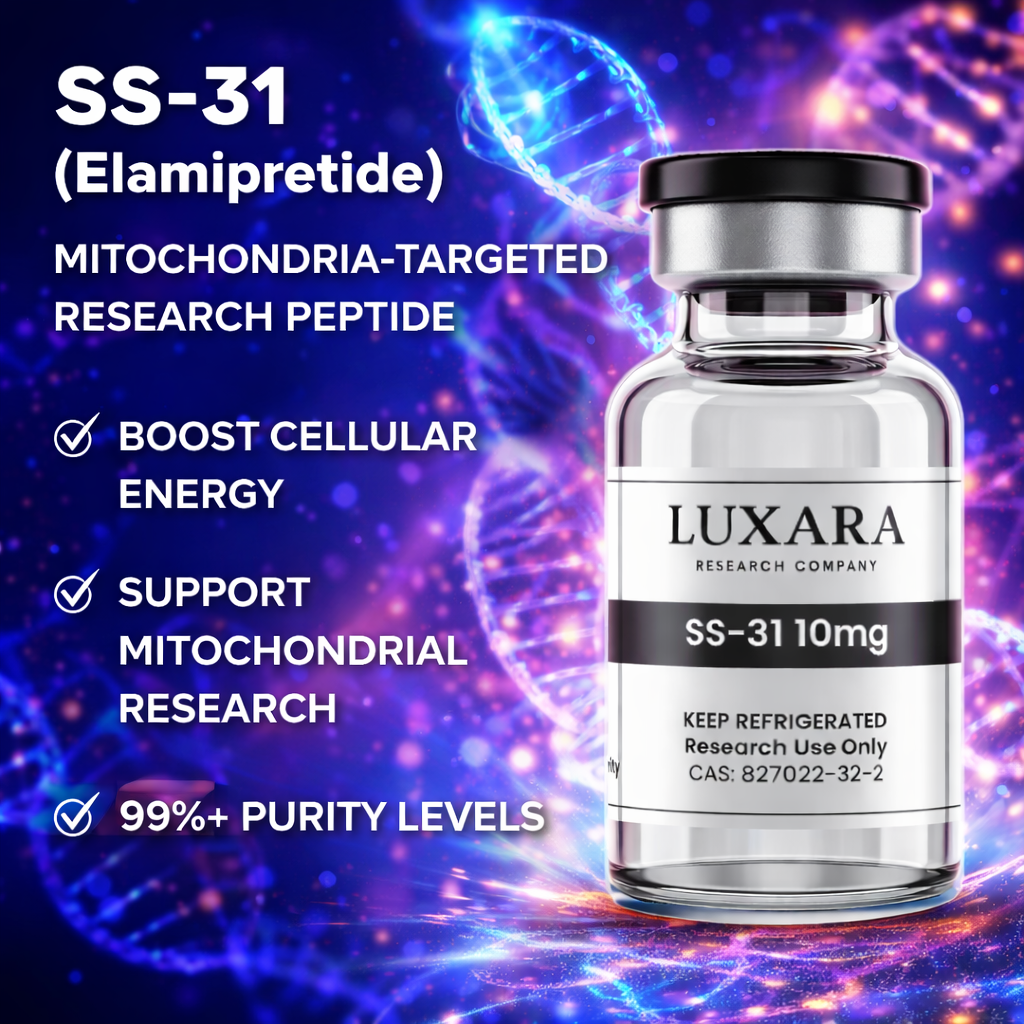
One compound that continues to appear in mitochondrial research literature is SS-31, also known as Elamipretide.
What Is SS-31?
SS-31 is a synthetic tetrapeptide with a unique characteristic: it targets the inner mitochondrial membrane.
Unlike most peptides that act at cell surface receptors, SS-31 accumulates directly within mitochondria due to its structural charge properties. This allows researchers to examine energy-producing pathways at their source.
In simple terms, it is used in laboratory models to study how cells produce energy and how mitochondrial structures respond under stress conditions.
Why Mitochondria Matter
Inside mitochondria, a lipid called cardiolipin plays a structural role in organizing the electron transport chain, the machinery responsible for ATP production.
When cardiolipin structure becomes disrupted in experimental stress models, mitochondrial efficiency can change. This makes cardiolipin a major focus in bioenergetics research.
SS-31 has been studied in laboratory settings for its interaction with cardiolipin on the inner mitochondrial membrane.
Because of that mechanism, it is commonly used in:
- Cellular energy production research
- Oxidative stress modeling
- Electron transport chain studies
- Structural membrane analysis
- Mitochondrial pathway investigations
What Makes SS-31 Unique?
Several features distinguish SS-31 from other mitochondrial research compounds:
- It is only four amino acids long.
- It accumulates directly within mitochondria.
- It interacts with cardiolipin rather than traditional receptor pathways.
- It is stable in lyophilized laboratory form.
- It integrates well with broader mitochondrial research clusters, including NAD+ pathway modeling and mitochondrial-derived peptides.
This specificity makes it particularly useful in controlled in-vitro experiments.
Why Purity Matters in Mitochondrial Research
Mitochondrial assays are highly sensitive.
Even small variations in peptide composition can influence experimental outcomes. For that reason, research laboratories typically require:
- ≥99% HPLC-verified purity
- Mass spectrometry confirmation
- Batch-specific documentation
- Lot traceability
High purity is not a marketing term in this field. It is a reproducibility requirement.
The Broader Research Context
SS-31 has been referenced in multiple research publications examining mitochondrial structure and bioenergetic function. While it is not approved as a therapeutic product, it continues to appear in scientific literature focused on:
- Mitochondrial dysfunction modeling
- Cardiac energy systems research
- Skeletal muscle bioenergetics
- Neurobiological pathway studies
These investigations remain within laboratory and clinical research frameworks.
Final Thoughts
Mitochondrial research is expanding rapidly.
As scientists continue exploring how cellular energy systems function under stress, compounds that directly interact with mitochondrial structure remain important experimental tools.
SS-31 is one of those tools.
For a complete research overview, including mechanism details, purity standards, and laboratory sourcing considerations, the full guide is available here:
https://luxaralabs.com/ss31-canada/
All discussion above is intended strictly for scientific and laboratory reference.
메타데이터
- post_id
- 90d6d184cd07
- slug
- ss-31-and-mitochondrial-research-what-laboratories-are-studying-in-2026-90d6d184cd07
- url
- https://medium.com/@info_89116/ss-31-and-mitochondrial-research-what-laboratories-are-studying-in-2026-90d6d184cd07
- canonical_url
- https://medium.com/@info_89116/ss-31-and-mitochondrial-research-what-laboratories-are-studying-in-2026-90d6d184cd07
- author_url
- https://medium.com/@info_89116
- status
- ok
- fetched_at
- 2026-07-13 06:23:13