OpenAI Wants Its Own Alaska Permanent Fund — It’s Just Missing the Oil
“We don’t believe this kind of government access process should become the long-term default,” OpenAI wrote on June 26. Six days later, it…
OpenAI Wants Its Own Alaska Permanent Fund — It’s Just Missing the Oil
*“We don’t believe this kind of government access process should become the long-term default,” OpenAI wrote on June 26. Six days later, it proposed making the government a permanent partner instead.*

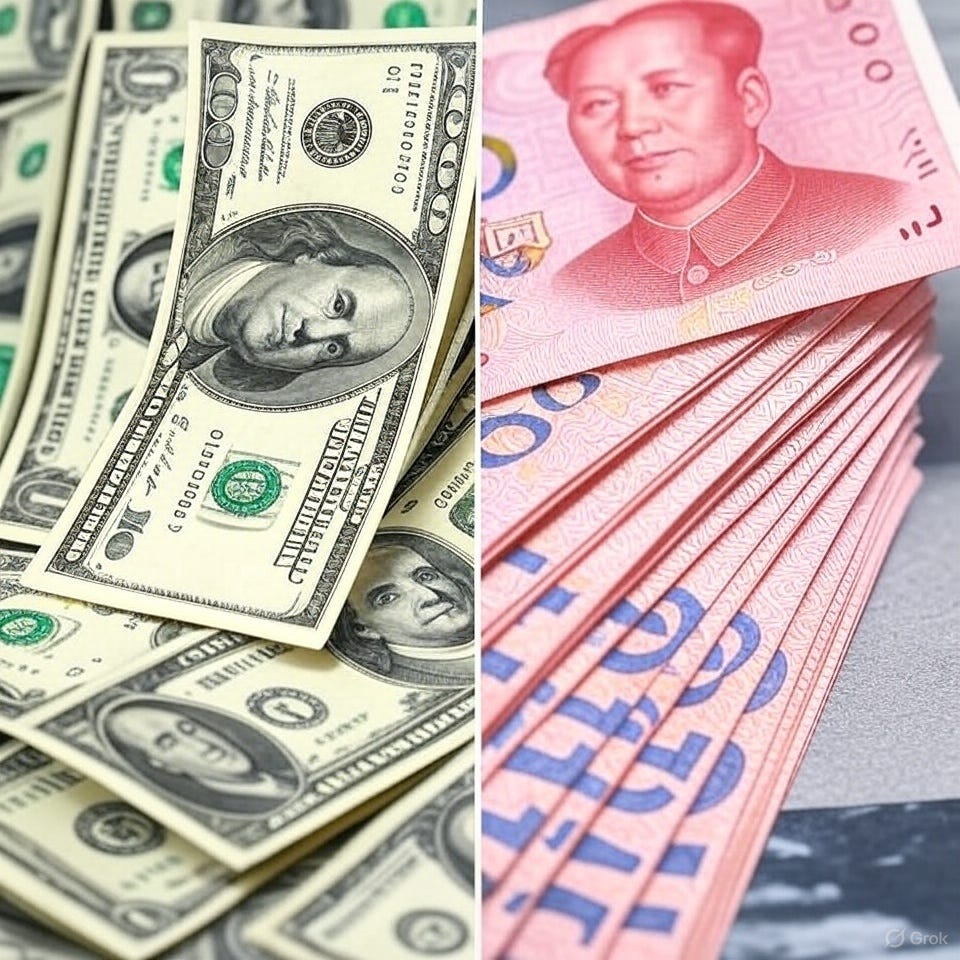
Photo by Shino Nakamura on Unsplash
On June 17, at the G7 summit in Évian-les-Bains, Donald Trump and Sam Altman sat down at a working lunch that put a dozen AI executives, Anthropic’s Dario Amodei, and Google DeepMind’s Demis Hassabis among them, across the table from world leaders, to talk about frontier risk and who gets to set AI’s rules. Nothing about it looked unusual: the two men had been talking since the start of the second term.
What wasn’t on that day’s public agenda was a separate, quietly intensifying conversation: Altman had been talking to Trump, Treasury Secretary Scott Bessent, and Commerce Secretary Howard Lutnick about giving Washington a piece of OpenAI.
Two weeks later, the Financial Times broke the story. OpenAI had proposed handing 5% of its equity to the US government. At the $852 billion valuation it set in March, that works out to $42.6 billion, nearly five times the stake taken in Intel a year earlier.
Sam Altman frames it as sharing the wealth. Structurally, it looks more like an insurance premium.
Seven Days, Four Signals
Let’s rewind the week.
On June 26, OpenAI launched GPT-5.6 Sol, which the company called its most capable model to date, particularly in cybersecurity. But access wasn’t open to the public. Only around twenty partners, individually vetted by the administration, could reach it through the API. It was a first: no American frontier model had ever launched under a government-managed access list. The measure followed Executive Order 14409, “Promoting Advanced Artificial Intelligence Innovation and Security,” signed June 2, which established a voluntary 30-day government review before the launch of any model judged to carry high cyber risk. OpenAI complied, but made sure everyone knew it wasn’t happy about it: this kind of access control, the company said, shouldn’t become the norm going forward.
That same month, a short distance away on the org chart of power, Anthropic went through the mirror-image experience. Fable 5 and Mythos 5, its most advanced models, were suspended on June 12 to comply with a direct administration export control, the first time an American commercial model had been pulled this way, rather than a piece of hardware. Anthropic complied, but publicly called the measure disproportionate. Access was restored on July 1, after negotiation.
That same July 1, SoftBank closed the second tranche of its $30 billion investment in OpenAI (another $10 billion in cash, at the $852 billion valuation). The next day, the Financial Times broke its scoop on the 5% stake.
Four events. Seven days. One thread: at the exact moment OpenAI absorbs a regulatory constraint and recapitalizes at the peak of its valuation (while its IPO filing sits dormant, submitted confidentially to the SEC back in June), it proposes turning its regulator into a shareholder.
On OpenAI’s balance sheet, the move costs nothing. No cash goes out; these are reserved shares, not sold ones: the dilution hits existing investors, not the company’s coffers. On the political terrain, though, it buys something no check can: a direct financial reason, somewhere inside the state, to prefer OpenAI’s growth over restraining it.
The motive almost doesn’t matter. Whether OpenAI is chasing regulatory relief or longer-term political alignment, the institutional result is the same.
Approached by several newsrooms, both the White House and OpenAI declined to comment. At this stage of the negotiation, silence may be the most honest data point on either side.
The Alaska Model, Minus the Oil
This isn’t an idea that came out of nowhere. Over the past year, the Trump administration has repeatedly converted its regulatory leverage into direct ownership. In August 2025, it turned CHIPS Act subsidies into a 9.9% stake in Intel ($8.9 billion), a position that has since climbed more than 400%. It has also taken stakes in IBM, in quantum computing firms, in MP Materials, the rare-earths specialist. NVIDIA and AMD, for their part, hand over 15% of their China chip revenue in exchange for export licenses. Generative AI is simply joining an already crowded category: sectors deemed too strategic to be regulated from the outside alone.
Senator Bernie Sanders, whom Altman has consulted directly, is pushing a far more radical version: a public stake of roughly 50% in major AI companies, achieved through legislation. OpenAI’s 5% is, by that measure, the most modest offer on the table yet: less an act of generosity than a way of setting the price before someone else sets it instead. Anthropic, for its part, published a paper in June arguing for universal “pre-distributive capital accounts” for every American — a kindred philosophy, minus the equity mechanism.
The vehicle Altman is proposing has a name: the Public Wealth Fund, explicitly modeled on the Alaska Permanent Fund. That fund is real, and it has been running for almost fifty years. Created by constitutional amendment in 1976 under Governor Jay Hammond, it captures a legal minimum of 25% of the oil and mineral royalties the state collects, and has paid a dividend to every resident since 1982, anywhere from $1,000 to more than $3,000 a year, depending on the year. The mechanism is popular across the Alaskan political spectrum, precisely because it runs without discretionary judgment calls: the share paid out is fixed by the Constitution, independent of whatever policy the state pursues toward oil companies elsewhere.
This is where the analogy cracks. Alaskan oil comes out of the ground whether the state is lenient or harsh with the companies extracting it. The value of an OpenAI share, by contrast, depends directly on how much latitude the state chooses to allow it: on its launches, on its approved partners, on its IPO timeline. Owning a slice of oil rent and owning a slice of a regulated company are not the same transaction, even if both pay out in dividends. Plenty of regulated industries (banks, defense contractors, drugmakers) see their value move with regulatory decisions too; what’s new here is the regulator sitting on the cap table instead of just writing the rules.
There’s a fair objection here: the Intel precedent cuts the other way. That deal has been profitable, support for the idea oddly crosses the partisan divide — Trump and Sanders each like it for their own reasons — and any formal agreement would have to pass a vote in Congress, a genuine democratic check the executive doesn’t fully control on its own. The fact holds. But it doesn’t change the frame: whether the stake turns out profitable or popular says nothing about who, tomorrow, will have an interest in the regulator looking the other way.
Seen from Brussels, Lagos, or Singapore, the question shifts up a level. Forrester’s Indranil Bandyopadhyay puts it bluntly: a pre-IPO public stake might ease American investors’ regulatory concerns, but “expect other jurisdictions to demand analogous arrangements as a condition of market access.” For a company building on OpenAI’s infrastructure from abroad, the question stops being merely contractual — which terms of service do I accept — and becomes fiscal: which state’s balance sheet am I economically tied to. That’s exactly the risk Washington is already dangling over Europe in the event of a trade war: the ability, one day, to cut off access to American AI tools. A state shareholding just adds a financial reason to a capability that’s already political.
What Washington Hasn’t Signed
All of this remains, as of this writing, conceptual. The FT itself describes the talks as preliminary. No fund governance structure exists, no dividend amount has been set, no date has been floated. Google, Meta, and Anthropic, targeted by the “all labs” version of the plan, have confirmed no commitment whatsoever. It’s entirely possible none of this materializes: Congress could bury the idea, or Altman could drop it the moment the political pressure eases. This piece describes a mechanism still being negotiated, not a done deal.
Congress, or the Prospectus
Strip it down, and the story fits in one sentence: a company that just learned, the hard way, what a hostile regulator costs is now offering to pay a friendly one. This isn’t a scandal — it’s a negotiation, conducted in plain sight, by a company that can afford to run it.
Betting markets aren’t convinced it lands. Kalshi traders currently put the odds of an actual government stake in OpenAI below 30%. When CNBC pressed Trump directly on the proposal, he didn’t confirm it, though he’s called the broader idea of government stakes in private companies “very American.”
Two milestones will show whether it goes through. The first is legislative: a deal of this size would require a vote in Congress, where the cross-partisan support Trump and Sanders have each expressed could just as easily curdle into mutual gridlock, each side demanding its own version of the mechanism. The second is quieter, but more revealing: if OpenAI files its IPO prospectus, expected around 2027, and this stake appears in black and white as a contractual commitment rather than a stated intention, the deal will have become, for the first time, legally real. Until then, it remains what it has always been: a working lunch photographed at Évian, and a number ($42.6 billion) that nobody yet knows who will really end up owning.
Thanks for reading! If you’re interested in clear-eyed analysis of technology, infrastructure, and geopolitical power, follow BloomTheDigitalLens.
(Originally published on BloomTheDigitalLens)
메타데이터
- post_id
- 90e1abec3dae
- slug
- openai-wants-its-own-alaska-permanent-fund-its-just-missing-the-oil-90e1abec3dae
- url
- https://medium.com/the-geopolitical-economist/openai-wants-its-own-alaska-permanent-fund-its-just-missing-the-oil-90e1abec3dae
- canonical_url
- https://medium.com/the-geopolitical-economist/openai-wants-its-own-alaska-permanent-fund-its-just-missing-the-oil-90e1abec3dae
- author_url
- https://medium.com/@bloomthedigitallens
- status
- ok
- fetched_at
- 2026-07-13 06:23:13