Electricity Is More Than Light. It Is Time, Safety, and Possibility
What changes in a home, a village, and a child’s future when clean energy finally reaches the places darkness has kept waiting for too long
Electricity Is More Than Light. It Is Time, Safety, and Possibility
What changes in a home, a village, and a child’s future when clean energy finally reaches the places darkness has kept waiting for too long
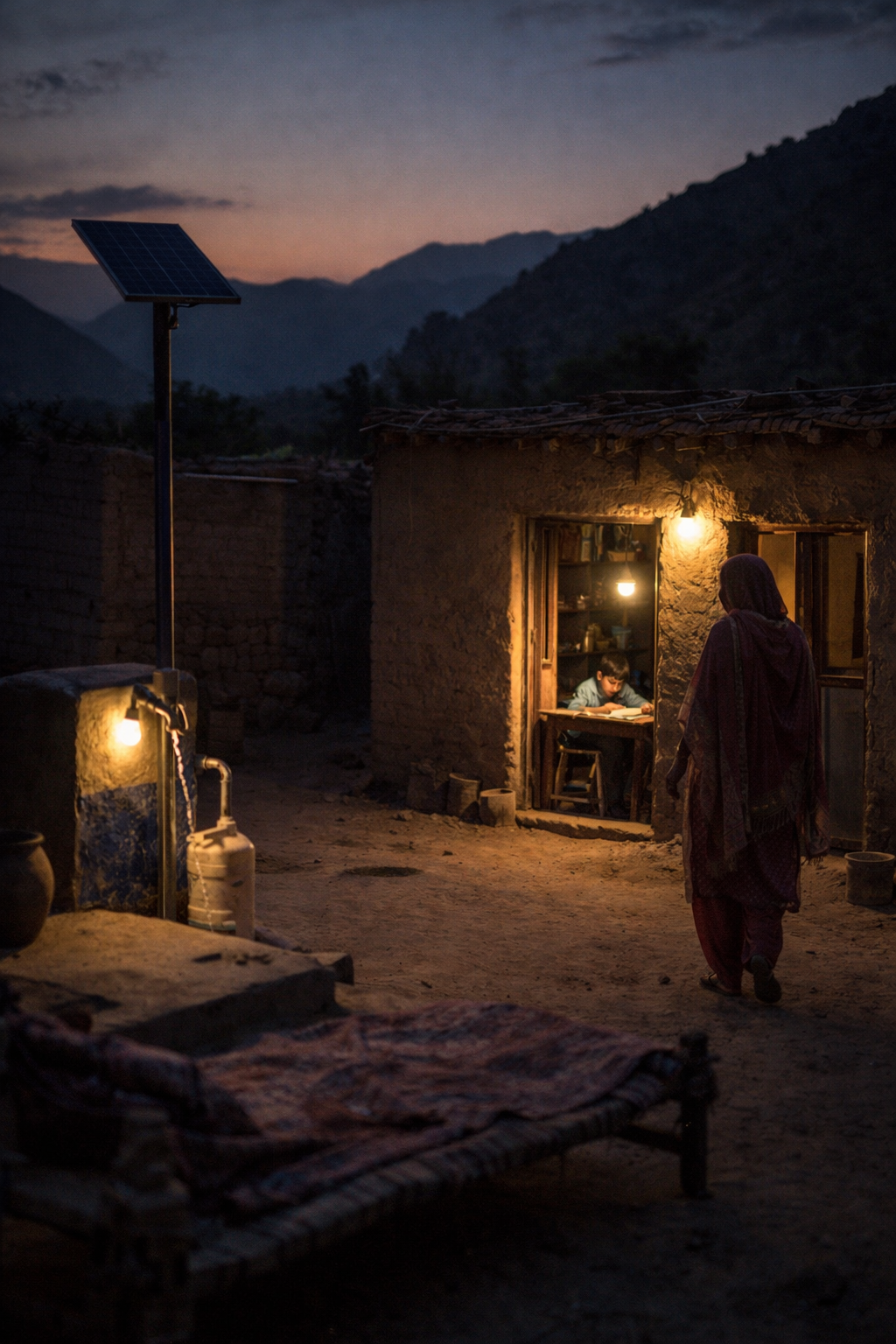
When electricity reaches the margins, it does far more than turn on a light.
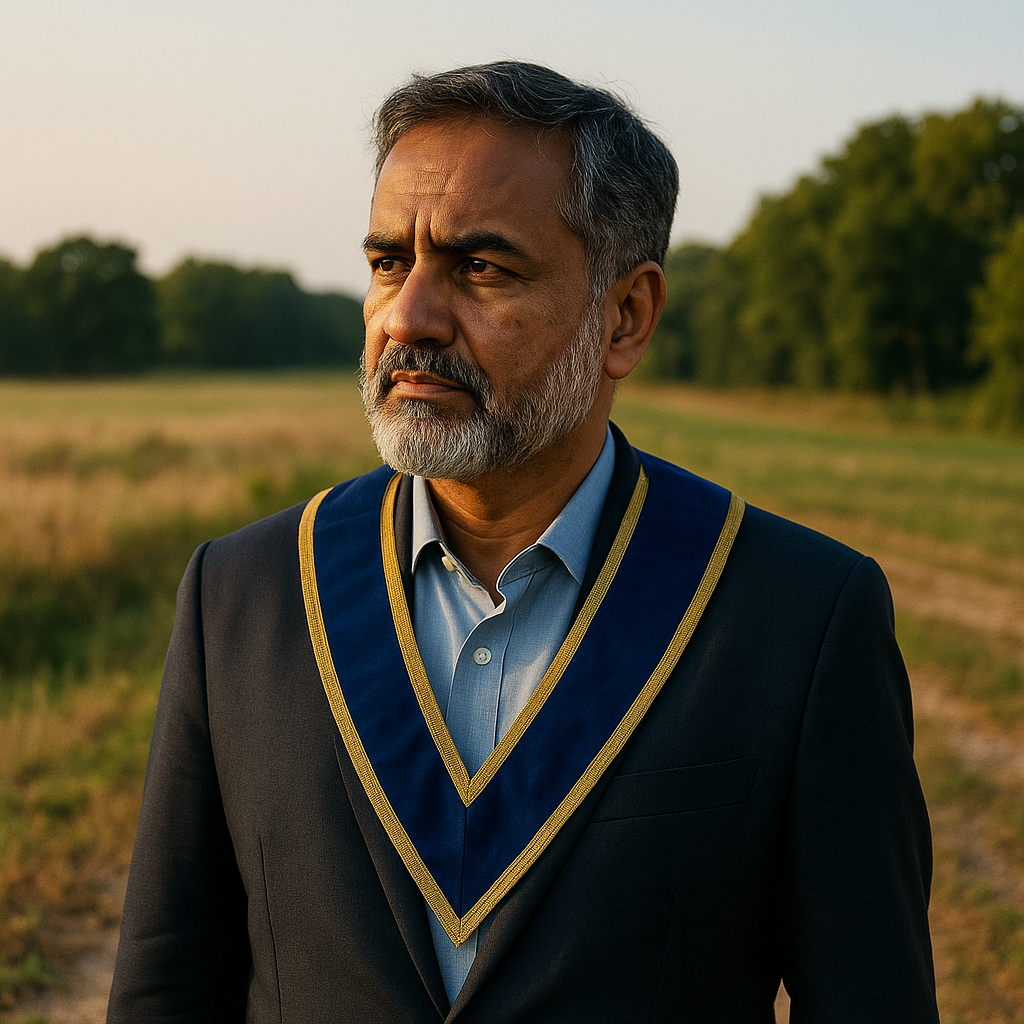
By: Arbab Naseebullah Kasi
For people who have always lived with electricity, it is easy to think of it as a convenience. A switch on the wall. A bill at the end of the month. A background part of modern life so ordinary that it barely deserves notice. But in far too many underdeveloped and off-grid communities, electricity is not background at all. It is the difference between movement and fear, study and interruption, relief and exhaustion, isolation and possibility.
That is why I want to tell this story carefully.
Because when we talk about renewable energy, we often talk in technical language. Megawatts. Systems. Infrastructure. Transitions. Those things matter, but the deepest truth is much simpler and much more human. Electricity is not only about power. It is about what power gives back to people who have lived too long without it. It gives back time. It gives back safety. It gives back the feeling that home can be a place of comfort rather than constant adjustment. And sometimes, it gives back belief in the future.
People who have never had to plan their lives around darkness often underestimate what darkness takes away. Darkness shortens the day before the day is over. It narrows movement. It limits study. It makes routine tasks harder, riskier, slower, and more exhausting. It changes how women move inside and outside the home. It changes how children learn. It changes how families rest. It changes the emotional texture of evening itself. In some communities, darkness is not just inconvenient. It is dangerous.
One voice from District Kharan says more in a few lived details than a hundred abstract development phrases ever could. Ali Akbar, a beneficiary of a Solar House System, described decades of living in darkness, struggling with snake bites, and watching children unable to study at night. Then came a change that sounds simple until you understand what it means in daily life: solar-powered lighting, a solar fan, and a solar-powered drinking water supply scheme. And suddenly, a different evening became possible. People could move around safely at night. Children could study with ease. The heat became more bearable. Access to drinking water became less punishing. Daily struggle did not disappear, but it eased. That matters more than many people realize, because progress is not always dramatic. Sometimes it arrives as a house that no longer feels cut off from dignity after sunset.
This is the mistake people make when they think electricity means only illumination. Light is the visible benefit, but the real transformation is larger. When a child can study after dark, electricity becomes educational opportunity. When a woman can move more safely at night, electricity becomes protection. When a fan runs in intense heat, electricity becomes physical relief. When a water system functions through solar power, electricity becomes time saved, labor reduced, and health protected. When a health unit has reliable power, electricity becomes care that can actually function. When schools are electrified, electricity becomes concentration, continuity, and hope.
That is why this story matters. It asks us to stop thinking about energy as a narrow sector and start seeing it as a multiplier. Energy touches education, health, livelihoods, safety, gender inclusion, climate resilience, and human dignity all at once. That is not a small impact. That is foundational impact.
In underdeveloped and off-grid areas, access to clean and reliable energy is not a luxury upgrade. It is long-delayed fairness. A far-flung village in Dir Upper district is set to receive uninterrupted electricity through a 200 kilowatt micro hydropower unit designed to serve more than 300 households, along with one Basic Health Unit and three government schools. Pause there for a moment. More than 300 households. One health facility. Three schools. That is not just infrastructure. That is a rewrite of what ordinary life can look like.
A child studies longer. A clinic functions better. A school feels less cut off from the modern world. Families reduce dependence on firewood and kerosene. Economic activity gets a chance to expand because energy is no longer missing from the equation. This is what I want my readers to feel in this story: electricity does not just brighten spaces. It expands what a place is able to become.
I think one reason stories like this matter is that they correct our sense of what real change looks like. We are often drawn to big declarations and dramatic moments. But some of the most meaningful transformations are deeply practical. A village gets uninterrupted electricity. A water system becomes solar-powered. A home gains light. A fan turns in summer heat. A family walks more safely at night. A student studies one hour longer, then another, then many more across the year. That is how real progress accumulates. Not always through spectacle. Through relief. Through consistency. Through things working where they did not work before.
This is especially true in communities that have spent decades being overlooked. In such places, a practical intervention can feel almost emotional in its significance, because it tells people something they have not heard enough: your life matters enough for infrastructure to reach you too.
There is also a bigger truth inside this story. The energy transition means very little if it remains a conversation for cities, conferences, and policy documents while underserved communities continue living with darkness, heat, unsafe water access, and reliance on polluting fuels. A green future that does not include the margins is not a real transition. It is only a partial one.
That is why renewable energy becomes so powerful in places like Kharan and Dir Upper. It does two important things at once. It reduces dependence on fossil fuels like kerosene and firewood, and it improves real life for people who are too often left outside the center of national progress. That is development at its best. Not climate language separated from people. Not people’s needs separated from sustainability. But both held together in one practical, dignified solution.
Across 1,446 renewable energy projects, more than 582,000 people have benefited, and 53 percent of them are women. More than 78,000 households have been reached through these efforts, with over 14 megawatts of capacity generated. Those numbers matter. But what makes them powerful is not their size alone. It is what they represent. They represent hundreds of thousands of lives becoming more livable. They represent women and girls experiencing a different kind of evening. They represent homes gaining comfort, villages gaining momentum, and communities gaining proof that modern energy does not have to remain someone else’s privilege.
I do not think we talk enough about the gender dimension of energy. When a community lacks reliable electricity, women often carry a disproportionate share of the burden. They manage households under harsher conditions. They handle routines made more exhausting by poor infrastructure. They adapt constantly to what is missing. And too often, they do this invisibly. So when energy access improves, women are not merely beneficiaries in the passive sense. They are among the people whose daily load becomes lighter. Safety improves. Domestic work changes. Water access can become easier. The home becomes more manageable. Time can be used differently. Economic possibilities can open wider. This is one reason energy access increases opportunities for women. It does not only provide a technical service. It changes the structure of daily life. And when daily life changes, possibility changes with it.
One of the weakest ways to talk about underserved communities is to imagine that they only need aid. In truth, what many communities need is infrastructure that allows their own effort, intelligence, endurance, and ambition to work better. Energy is one of those foundations. Without it, people are still trying. They are still adapting. They are still surviving. But they are doing all of that under heavier constraints. With it, effort becomes more productive. Learning becomes more consistent. Movement becomes safer. Institutions become more functional. Livelihoods become more viable.
This is why I believe energy access should be understood not only as service delivery, but as capability expansion. It does not hand people their future. It helps remove one of the barriers that kept that future too far away.
There are also a few mistakes we should stop making when we tell stories like this. The first is treating renewable energy as if it is mainly about technology. It is about people first. The second is describing remote communities only through lack. Yes, there is deprivation, but there is also patience, resilience, intelligence, and readiness. These communities do not need pity as much as they need systems that finally meet them with fairness. The third is assuming that one intervention only solves one problem. In reality, a good energy intervention can improve safety, education, health, comfort, water access, and livelihoods at the same time. And the fourth is failing to notice how transformative ordinary relief can be. A child studying at night may sound like a small image. It is not. It is the image of a future being given more hours to form itself.
I think every powerful story should leave the reader with something more than admiration. It should leave behind a way of seeing. So here is what this story asks of us. When you hear about electricity reaching an off-grid community, do not reduce it to wires, panels, or equipment. Ask what human burden just became lighter. When you hear about solar systems and micro hydropower, do not think only of energy generation. Think of the child reading after sunset. Think of the woman moving more safely. Think of the clinic that works better. Think of the household breathing a little easier in the heat. When you hear the phrase renewable energy transition, ask whether it is truly reaching the people who need it most. Because the measure of progress is not how advanced our language sounds. It is whether people’s evenings, homes, schools, and futures are actually becoming more livable.
And if you work in development, policy, philanthropy, or storytelling, remember this: never present infrastructure as if it were emotionally neutral. It is not neutral when it changes how people sleep, move, study, drink water, and imagine tomorrow.
In the end, this story is not really about electricity alone. It is about what happens when exclusion begins to lose its grip. It is about what happens when a village no longer has to accept darkness as fate. It is about what happens when a child gets more time to learn, when a family gets more safety after sunset, when a home becomes more breathable in the heat, and when water becomes easier to reach. It is about what happens when clean energy meets places that have waited too long to be included in modern progress.
That is why I keep coming back to this truth: electricity is more than light. It is time returned to children who want to study. It is safety returned to families who want to move without fear. It is relief returned to homes that have carried too much discomfort for too long. And in the quietest, most powerful way, it is possibility returned to people who were never lacking in potential, only in access.
메타데이터
- post_id
- 912a4202db42
- slug
- electricity-is-more-than-light-it-is-time-safety-and-possibility-912a4202db42
- url
- https://medium.com/entrepreneurs-worldwide/electricity-is-more-than-light-it-is-time-safety-and-possibility-912a4202db42
- canonical_url
- https://medium.com/entrepreneurs-worldwide/electricity-is-more-than-light-it-is-time-safety-and-possibility-912a4202db42
- author_url
- https://medium.com/@arbabnaseeb
- status
- ok
- fetched_at
- 2026-07-11 00:39:47