8 One-Word Title Books That Have Been Life-Changing For Me
Some books need one word. That word carries everything.
8 One-Word Title Books That Have Been Life-Changing For Me
Some books need one word. That word carries everything.
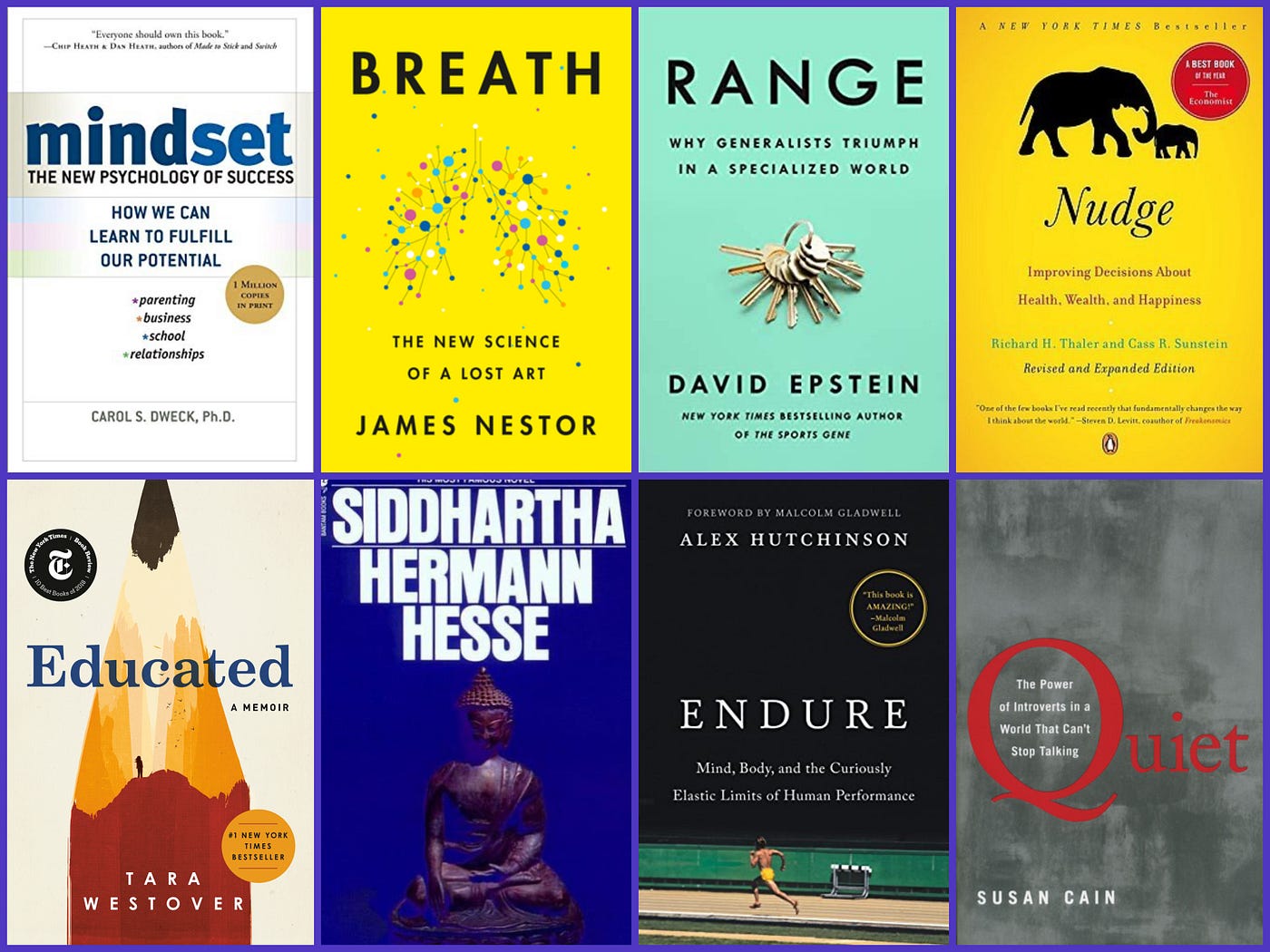
Book Collage from Good Reads
Missed the earlier instalments in this series? You’ll find Four Books I Never Saw Coming and Four Uncommon Brilliant Books I Read with Long Titles on my profile.
There is a particular kind of confidence in a one-word title.
A long title explains itself before you’ve opened the book. A one-word title makes a bet. It means that the word alone, Grit, Mindset, Quiet, is strong enough to carry an entire argument on its back, without a subtitle to help it along.
The eight books on this list did that for me, at least. Each of them took a single ordinary word, a word I thought I already understood, and rebuilt my understanding of it from the ground up.
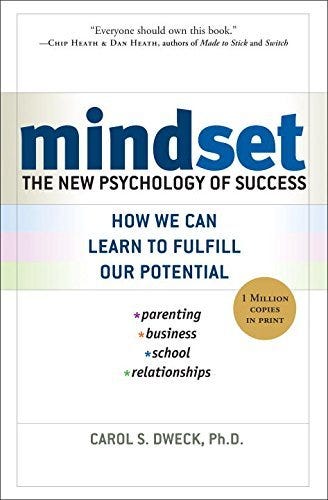
Mindset by Carol Dweck
I was gifted this book at a strange, low point, and I thought it was surreal that I read the book when I needed it the most. Carol Dweck is a Stanford psychologist, and the idea at the centre of this book is deceptively simple.
Book cover from Good reads
Some people believe their abilities are fixed traits, something they either have or don’t. Others believe abilities are things that grow with effort and the right strategies.
Dweck calls these the fixed mindset and the growth mindset, and she spent decades studying what happens to people, especially children, depending on which one they carry.
Her research kept returning to one particular finding that has stayed with me. When children are praised for being smart, they tend to avoid challenges afterwards, because a challenge risks exposing that the smartness was never guaranteed.
When children are praised for their effort and their strategy, they lean into difficulty instead, because difficulty is just the next thing to work at, not a verdict on who they are.
I have carried that distinction into every hiring decision I’ve made and every classroom I’ve taught in. I have always believed mindset matters more than raw talent or years of experience, and this book is the reason why.
A young recruit with almost no experience but the right mindset toward learning will, in my experience, outgrow a far more credentialed hire within a couple of years.
This matters even more now. In a world where AI has unsettled almost every job description overnight, it is not the depth of someone’s technical knowledge of a tool that decides whether they’ll be fine. It’s whether they approach the tool with curiosity or with dread.
Mindset, not aptitude, is the real dividing line in this moment, and Dweck gave me the language for that years before I needed it this badly.
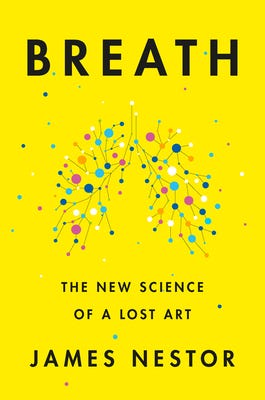
Breath by James Nestor
James Nestor is a journalist, not a doctor or a yoga teacher, and that outsider’s curiosity is what makes this book work.
Book cover from Good reads
He went looking for the science behind an act so automatic that almost nobody examines it, and came back with research spanning continents and centuries. These included an experiment where he had his own nose plugged for ten days to see what mouth breathing alone would do to his body.
What Nestor found, again and again, is that how we breathe, not just whether we breathe, shapes nearly everything about our physical and mental state.
Nasal breathing, slow and unhurried, changes how the body absorbs oxygen, how the nervous system settles, even the shape of the face and jaw over generations.
Reading this as an Indian, I felt a particular kind of pride mixed with humility. I grew up with a quiet awareness that Pranayama and the breathing disciplines woven into Yoga were treated in our scriptures as central to well-being, not peripheral.
Nestor’s research showed me that this instinct was never uniquely ours. Cultures across the world, independently, arrived at the same conclusion about the power of deliberate breath.
What the book gave me practically was simpler than I expected.
In a life that moves as fast as mine does, teaching, coaching, running, writing, the reminder to pause and breathe properly for even a few minutes has done more for my clarity than most of the productivity systems I’ve tried.
And on the harder stretches of a marathon, when the legs start negotiating with the mind, controlling the breath is often the only lever still within reach.
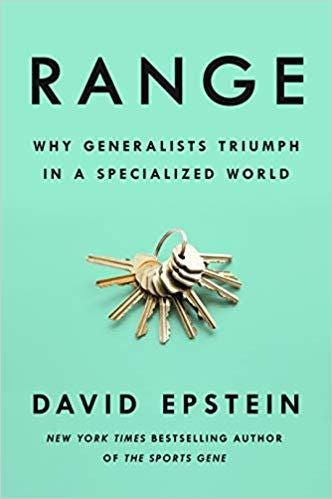
Range by David Epstein
I read this book in 2018, at a genuine crossroads in my running life. Five years into marathons, I had to decide which direction to take next: the brutal specificity of ultra distances, or the very different discipline of triathlon.
Book cover from Good reads
Epstein opens with a comparison I found instantly relatable: Tiger Woods and Roger Federer, two athletes I’ve admired for years.
Woods was handed a golf club before he could properly walk and specialised immediately. Federer, by contrast, played tennis, badminton, basketball, football, and skiing as a child before tennis pulled ahead as his sport.
Epstein’s argument, built on far more than these two examples, is that in genuinely complex domains, a broad early sampling period tends to produce more adaptable, more resilient expertise than early hyper-specialisation.
What struck me was his distinction between kind and wicked learning environments. In a kind environment, the rules are stable, and the feedback is immediate and clear; chess is the classic example.
In a wicked environment, the rules shift, the feedback is delayed or misleading, and rigid specialists often struggle exactly where generalists thrive.
Endurance sport, I realised while reading this, is a wicked environment in Epstein’s sense. The variables- terrain, weather, nutrition, your own body’s unpredictable responses on a given day- refuse to sit still.
That recognition is a large part of why I chose triathlon over the narrower path of pure ultra running.
Triathlon demanded a breadth of skill in the water, on the bike, on foot, that felt closer to what Epstein was describing as durable strength.
Range shaped a decision I still live inside every time I train.
Nudge by Richard Thaler and Cass Sunstein
Richard Thaler won the Nobel Prize in Economics for the thinking that underlies this book, co-written with legal scholar Cass Sunstein, and its central idea is what they call libertarian paternalism, a phrase that sounds like a contradiction until you see it in practice.
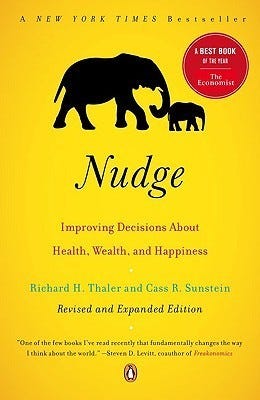
Book cover from Good reads
A nudge, in their framing, is any small feature of how a choice is presented that steers people toward a better decision without ever removing their freedom to choose otherwise. Their favourite illustration is retirement savings.
Simply changing a pension scheme from opt-in to opt-out, where employees are automatically enrolled unless they actively choose to leave, dramatically increases participation, even though nobody’s actual options have changed at all.
The architecture of the choice, not the choice itself, does the work.
I was reminded of the book when in meetings where I had to convince a group to make better decisions without the authority, or sometimes the full information, to simply mandate the outcome.
Workplace politics rarely rewards the person who insists loudly on being right.
It rewards the person who quietly restructures the choice so that the sensible option becomes the easy one.
Thaler and Sunstein gave me a vocabulary for something I had been doing instinctively for years, and made me considerably more deliberate about doing it well.
Quiet by Susan Cain
Susan Cain’s core argument is that modern culture, particularly modern workplace and school culture, has quietly built itself around what she calls the Extrovert Ideal, the assumption that the confident, talkative, quick-to-speak person is the more capable one.
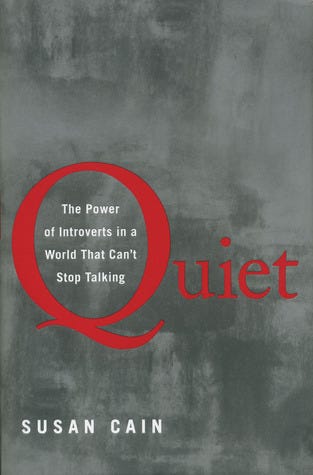
Book cover from Good reads
Cain’s research pushes back on that assumption at every turn, and one line from her has stayed with me since I first read it: there is no correlation between being the best talker in a room and having the best ideas in it.
I grew up an introvert, and I remember the specific discomfort of being read as slow or under-engaged simply because I wasn’t the one filling silences.
Cain names this pattern precisely, describing how quieter children are too often assumed to need remedial attention, when what they usually need is space to think before they speak.
I’ve taught long enough to recognise, uncomfortably, that I once made exactly that assumption about some of my own quieter students. This book corrected me.
Quiet is not the absence of capability; it is a different operating mode for capability, and it deserves to be recognised rather than corrected.
Educated by Tara Westover
I read this in 2017, at a stage of my own life where the ground under me didn’t feel entirely stable.
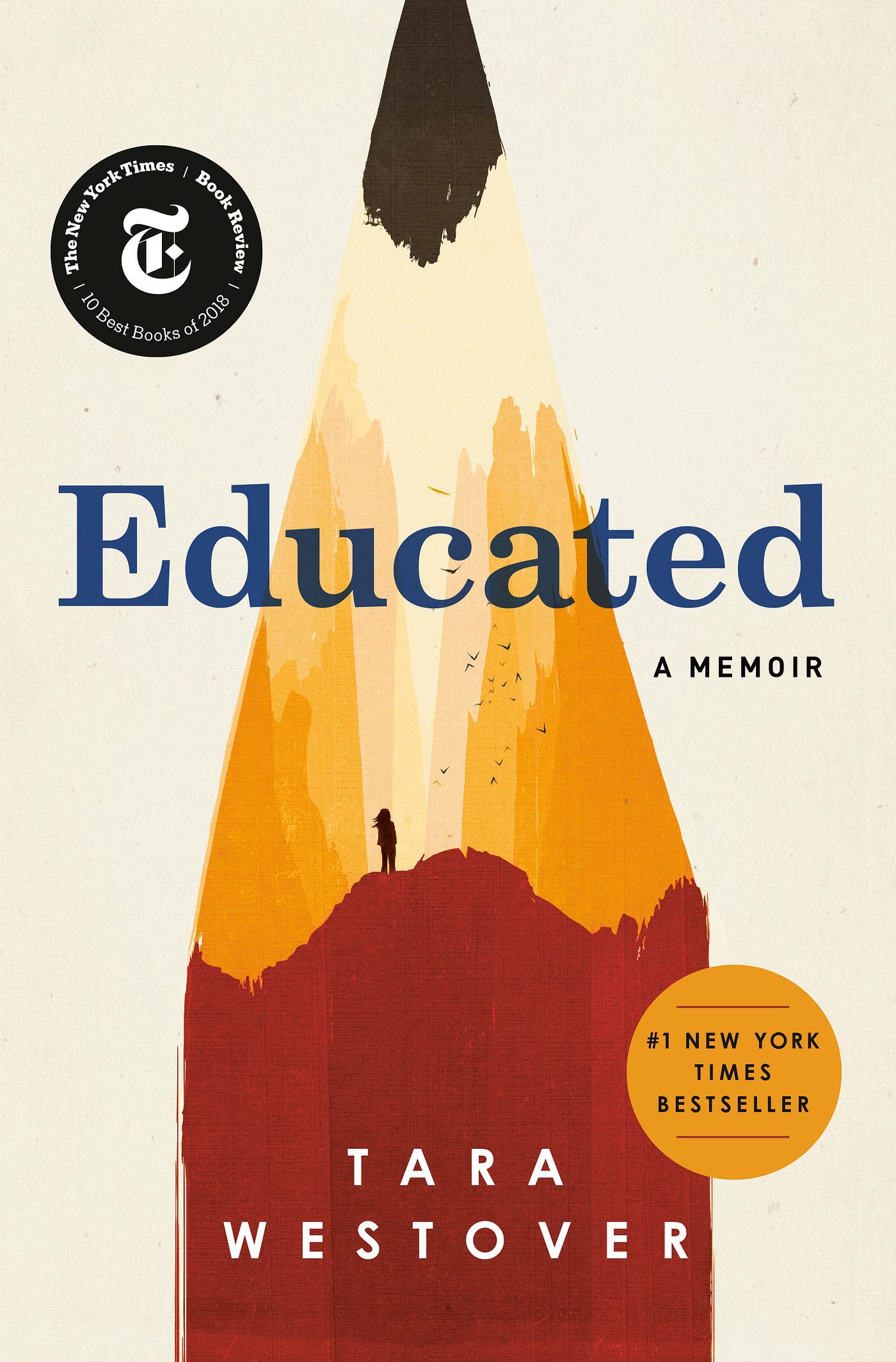
Book cover from Good reads
Tara Westover’s memoir tells of a childhood in a survivalist family in rural Idaho, kept out of school entirely, and her long, halting climb toward formal education, eventually earning a doctorate from Cambridge.
What makes the book extraordinary isn’t simply the distance she travelled, from no classroom at all to one of the world’s most demanding universities. It’s her honesty about what that climb cost her.
Westover doesn’t offer a tidy redemption arc. She writes about the grief of growing away from a family she still loved, and one line from the book has stayed with me:
How plainly it holds two conflicting truths at once, that you can miss people every day and still be glad they are no longer part of your life.
Reading this while I was working through my own version of unmaking and rebuilding, I found in her account a kind of permission.
Permission to keep loving what you’re leaving.
Permission to let education, in the widest sense, be the thing that carries you out of a story that no longer fits, without demanding you hate everyone who was part of writing it.
Siddhartha by Hermann Hesse
This one deserves a small clarification because it was often misremembered, myself included, for years. Siddhartha isn’t a biography of Gautama Buddha.
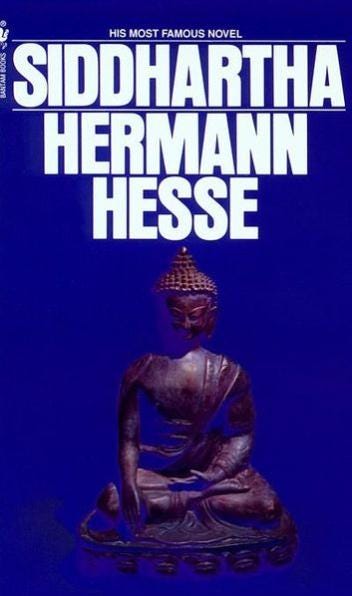
Book cover from Good reads
Hesse’s protagonist is a different man entirely, also named Siddhartha, who lives during the same era and even crosses paths with the Buddha himself partway through the novel, without becoming his follower.
The book is Hesse’s own invented character walking his own invented road toward enlightenment, alongside, rather than as, the historical Buddha.
What has stayed with me across years since I first read it is Hesse’s insistence that wisdom cannot simply be handed from one person to another the way knowledge can.
Siddhartha tries the path of the ascetics, then the path of wealth and sensual pleasure with the courtesan Kamala, then finally the patient work of listening to a river, before he arrives at anything resembling peace.
Each stage teaches him something the previous stage’s teacher could not simply tell him.
The prose itself, spare, unhurried, almost meditative in its rhythm, taught me something about writing that I didn’t fully absorb until years later.
A sentence doesn’t need ornamentation to carry weight. It needs to be earned. I return to this book less for its plot than for what its narration itself demonstrates about patience, both the character’s and the reader’s.
Endure by Alex Hutchinson
Alex Hutchinson opens this book with a definition of endurance that has since become the one I reach for whenever someone asks me why I still run: endurance is the struggle to continue against a mounting desire to stop.
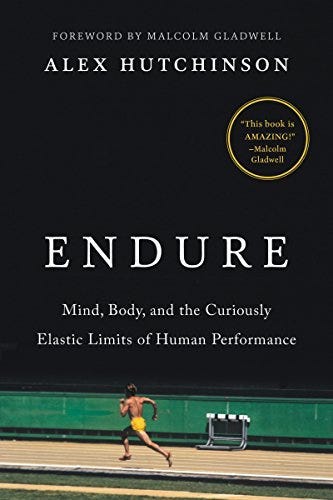
Book cover from Good reads
The book’s central argument, drawn from Hutchinson’s own background in physics and years of science journalism, is that the limits of human endurance are not set by the body’s raw physiology, oxygen delivery, or muscle fatigue.
It’s more through the brain’s own regulation of effort, a protective mechanism that slows us down long before we’ve actually run out of physical capacity.
He walks through decades of research on this idea, including work on what’s often called the central governor theory, and profiles athletes like Kilian Jornet, whose relationship with their own perceived limits seems to operate on entirely different rules from the rest of us.
As someone who has run marathons and completed IRONMAN distances, I recognised in this book something I had felt in my own body without ever having language for it.
The moment in a race when the mind announces that it’s over, long before the body has actually failed, is not a lie exactly, but it isn’t the whole truth either.
Hutchinson helped me treat that moment as a negotiation rather than a verdict, and that shift in how I understand my own limits has changed how I train and how I race.
In Summary
Eight words. Mindset. Breath. Range. Nudge. Quiet. Educated. Siddhartha. Endure.
None of them was words I thought needed explaining before I read these books. All of them meant something different to me afterwards.
Dweck rebuilt how I hire and how I teach. Nestor rebuilt how I understand something as automatic as air moving in and out of my lungs. Epstein helped me choose a sport.
Thaler and Sunstein gave me a way to move people without pushing them. Cain corrected a bias I didn’t know I was carrying into my own classroom. Westover permitted me to grieve what I was leaving while still leaving it.
Hesse showed me what patient prose can do. Hutchinson gave me a way to keep running when my own mind had already decided to stop.
A single word, it turns out, can hold an entire life’s worth of instruction if the person who wrote it did the work of earning that word first.
Which one-word title has quietly rewritten something in your own life?
I’d love to know in the comments, because that’s usually where the next book on this list finds me.
메타데이터
- post_id
- 917d3ce0c0c7
- slug
- 8-one-word-title-books-that-have-been-life-changing-for-me-917d3ce0c0c7
- url
- https://baos.pub/8-one-word-title-books-that-have-been-life-changing-for-me-917d3ce0c0c7
- canonical_url
- https://baos.pub/8-one-word-title-books-that-have-been-life-changing-for-me-917d3ce0c0c7
- author_url
- https://medium.com/@hetal.sonpal
- status
- ok
- fetched_at
- 2026-07-14 19:24:14