Meet NINAYO, the digital marketplace for agriculture!
In Tanzania, around 65% of the working population are farmers.
Meet NINAYO, the digital marketplace for agriculture!
In Tanzania, around 65% of the working population are farmers. 80% of them are small farmers at the mercy of middlemen to sell their crops. With asymmetrical pricing information, the price for a given amount of maize can vary by up to a 100%. When the average revenue per farmer is around 900$ a year, a 20% increase in revenue can go a long way in improving their living standard.
What is NINAYO?
NINAYO was launched in 2015 as an online trading platform for the Tanzanian agricultural market. According to the company’s profile on Venture Capital for Africa (VC4A):
By enabling Tanzanian farmers to post their supply (crops) they gain access to a far wider range of demand. Food processors, likewise, have a much clearer view of the crops available in their region. Each side of the value chain is incentivized to use this website.
On this platform, farmers cut intermediaries and directly sell to distributors. They hence get a fair picture of the market prices for their crops.
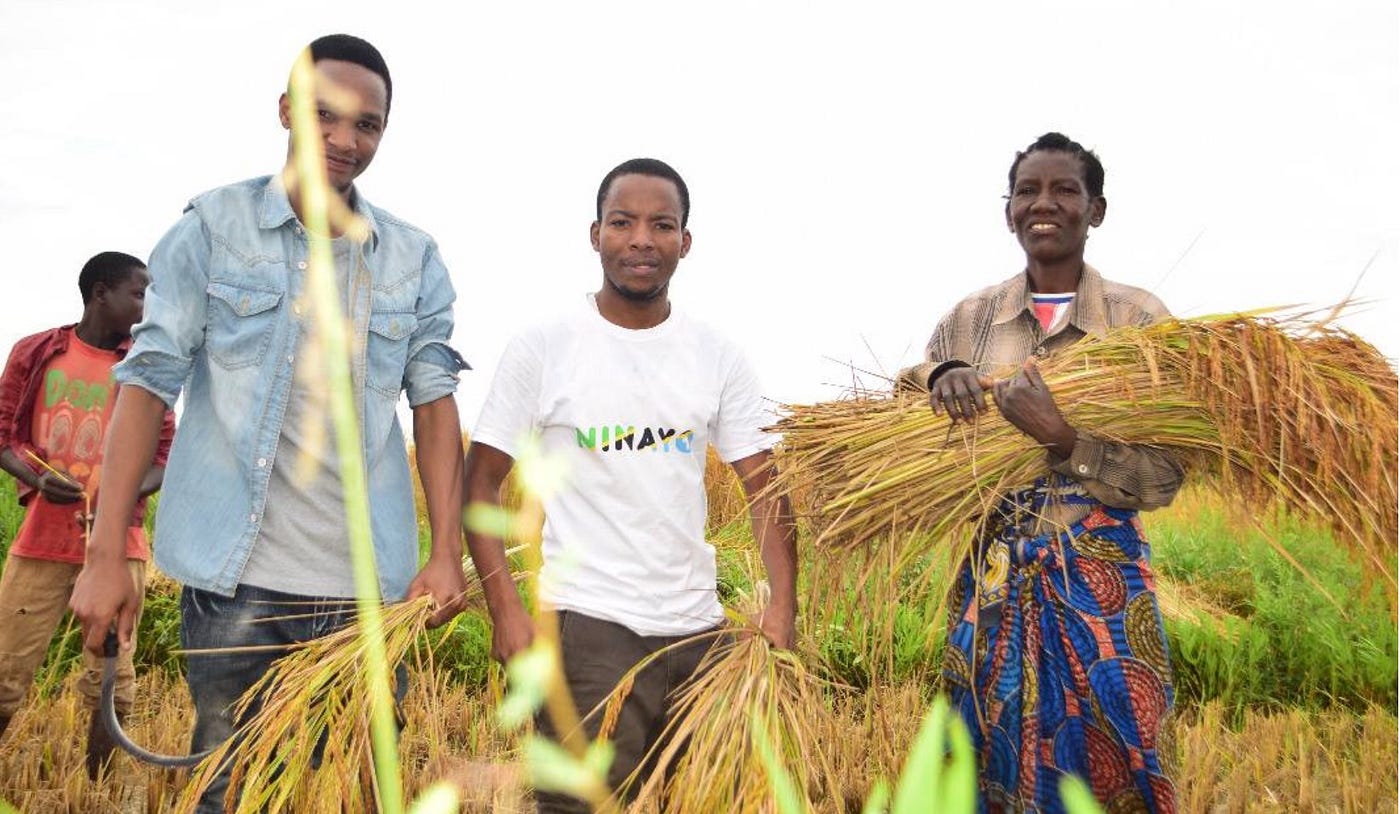
NINAYO: a solution to an economic and social problem
The market NINAYO operates in has the following main characteristics:
- Farmers earn an average income of less than 3$/day and this income stream is both cyclical and irregular
- Farmers live in remote villages with a lack of access to information
- 30% of the crops rot before being bought while 34% of children under five years old suffer from chronic malnutrition (UNICEF, 2015)
Most farmers in Tanzania are women but they are traditionally blocked from land ownership. As a consequence, leasing the land further reduces a farmer’s margins. Women may also be victims of sex-based discrimination in the agricultural trading system.
By reducing information asymmetry and increasing farmers’ margins, NINAYO’s online agricultural trading platform both alleviates poverty and solves intersectional challenges.
The business model
A Tanzanian farmer usually gets an income only when he sells his crops. Between the time he sells his crops and the time he can harvest again, a farmer has to forgo any salary for a few months. Therefore, farmers save for family and current expenses rather than invest in pesticides and fertilizers that would increase their agricultural yield. NINAYO knows precisely when farmers have sold their crops. The company can directly offer farmers fertilizers at the right moment and at a fair price, through partnerships with agro-giants such as Bayer. This is facilitated by the margins generated thanks to NINAYO.
Second, the trading platform can also rely on grants and technical assistance brought by international organizations. The latter seek to increase financial inclusion and alleviate poverty in low-income countries. The UN has thus partnered with NINAYO because it gains access to data that was previously hard to find or untrustworthy.
Third, NINAYO has been gathering three years of data on their platform and therefore has acquired a very fine knowledge of prices. They have subsequently tried to be the middleman themselves by buying at a fair price to farmers and selling to agro-giants at the right moment. This revenue stream is more risky as markets fluctuate year to year and still need some fine-tuning on NINAYO’s part.
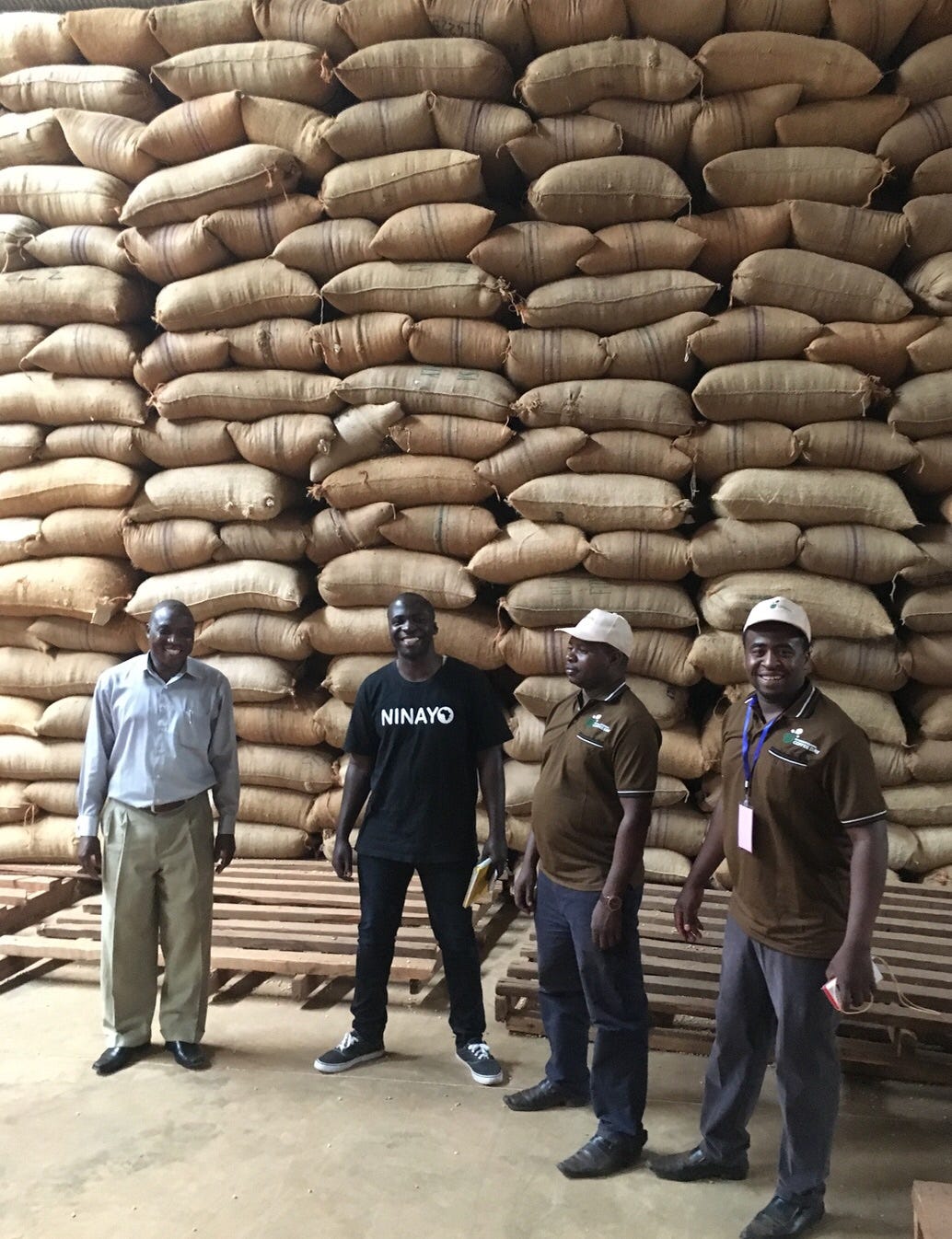
Future plans
NINAYO also plans on capitalizing on its commercial transactions data to partner with banks. The data greatly facilitates the loans’ assessments done by the banks. This increases the amounts of money loaned to farmers that excluded by banks for their highly risky profile.
One of the key components and cost of trade are logistics. This is also potentially an area where NINAYO could come in to smoothen the value chain.
Finally, NINAYO is currently thinking of using blockchain technology to track products on a granular level. Such information could be of significant interest for agro-giants such as Bayer. Consequently, NINAYO should be launching the NINAYOcoin in 2019.
Promising results
NINAYO reports that, so far, this year:
An estimated $221,680 moved to market, and by our user reports represents a 21% increase in income, approximately $46,552 in additional income in the pockets of our farmers trading on NINAYO.
Jack Langworthy, NINAYO’s Founder whom we met adds that:
NINAYO is in the midst of its best year yet. Revenues are on track to double for the third year in a row, breaking the $100K mark.

NINAYO also secured $500K in funding from Expa Labs, an incubator launched by Uber’s co-founder, Garett Camp. The company is in the process of raising more funds.
NINAYO just won the Entrepreneurial Venture Award in London and was mentioned in a speech by Barack Obama!
If you want to read more follow Jack Langworthy on Medium.
메타데이터
- post_id
- 91820fd5fbb6
- slug
- meet-ninayo-the-digital-marketplace-for-agriculture-91820fd5fbb6
- url
- https://medium.com/@benandalex/meet-ninayo-the-digital-marketplace-for-agriculture-91820fd5fbb6
- canonical_url
- https://medium.com/@benandalex/meet-ninayo-the-digital-marketplace-for-agriculture-91820fd5fbb6
- author_url
- https://medium.com/@benandalex
- status
- ok
- fetched_at
- 2026-07-30 02:46:47



