EXCLUSIVE: Understanding India’s human rights story with Bharat Lal, NHRC India secretary general
THE concept of human rights has remained ever significant with the progress of human civilisation. They are the basic rights and freedom…
EXCLUSIVE: Understanding India’s human rights story with Bharat Lal, NHRC India secretary general
THE concept of **human rights** has remained ever significant with the progress of human civilisation. They are the basic rights and freedom that are guaranteed to all people irrespective of race, gender, religion, nationality or any other determinant. Such rights are shielded by international law and many national constitutions and are seen as critical for promoting socio-political ideals such as dignity, equality and justice.
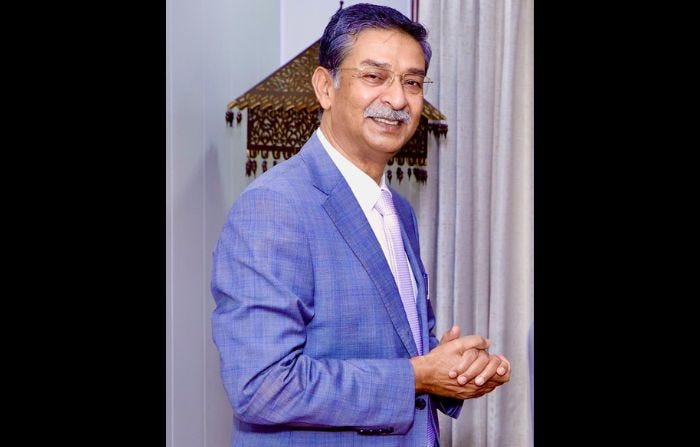
Bharat Lal, secretary general of National Human Rights Commission India
A number of western nations have adopted declarations on human rights over the centuries that are considered milestones, including the Magna Carta (1215), the French Declaration of Man and Citizens (1789), and the United States Bill of Rights (1789). Three years after the Second Great War (1939–45) concluded, the Universal Declaration of Human Rights (UDHR) was adopted by the newly formed United Nations.
India too has not been far behind when it comes to protecting and promoting human rights. Etched in the ancient Indian culture and its Constitution, these rights are designed to ensure equality, dignity, and justice for every individual, reflecting the nation’s commitment to upholding democratic principles and social justice.
Read: Foxconn’s ‘gender discrimination’ in hiring: India human rights body alarmed
India’s National Human Rights Commission (NHRC), which was founded in October 1993, plays a pivotal role in this framework, striving to protect and promote the rights of all people, encourage the education of human rights among the masses, and cultivate an environment where conversations on human rights never ceases.
However, India’s track record on human rights has recently been criticised by Human Rights Watch and Amnesty International.
The US, which has raised concerns over the south Asian nation’s human rights record, flagged in its 2023 Human Rights Report “credible reports” of alleged human rights abuses of various kinds in India, such as arbitrary arrest or detention, extrajudicial killings, torture to coerce confessions, repeated imposition of internet shutdowns, monitoring of civil society activists and journalists, among others.
Read: Indian-American lawmakers warn against ‘lecturing’ India on human rights
Similarly, in January this year, Human Rights Watch said in its World Report 2024 that the Narendra Modi government “persisted with policies that discriminate and stigmatize religious and other minorities” and it resulted in “increasing incidents of communal violence in many parts of the country, including in Manipur state, where hundreds were killed in ethnic clashes”.
Amnesty International alleged that national financial and investigation bodies were “weaponized against civil society, human rights defenders, activists, journalists and critics, further shrinking civic space”. It added that officials of the government, political leaders and supporters of the Hindu nationalist ruling Bharatiya Janata Party “advocated hatred and violence against religious minorities with impunity, particularly Muslims, marking a rise in hate crimes”.
The US report had also mentioned “violence or threats of violence targeting members of ethnic and caste minorities” and claimed that the ethnic violence in the state of Manipur also resulted in significant abuse of human rights.
The Indian authorities have time and again rejected these claims. It reacted to the recent report by the US state department that spoke about “human rights abuses” in Manipur and called the claims deeply biased and added that they reflect a poor understanding of India.
“We attach no value to it and urge you to do the same,” said Randhir Jaiswal, spokesperson of the Indian ministry of external affairs.
India has similarly hit back against United Nations’ report alleging human rights abuse in Jammu and Kashmir and even counter claimed that such assertions are in violation of its sovereignty and territorial integrity and overlooked the “core issue” of cross-border terrorism.
With claims and counter-claims thickening over India’s human rights record, India Weekly spoke to Bharat Lal, secretary general and chief executive officer of the NHRC, to understand what causes this conflict of positions and how India looks at this problem.
Philosophical foundation of India’s idea of human rights
Stressing that India has a very long civilizational ethos, evolved over centuries of looking at human rights, Lal said the country’s human rights framework is deeply rooted in its cultural, religious and philosophical traditions and only looking at things through the western prism is not the right approach.
He said, “It has an ancient Indian ethos of empathy, compassion and dignity of every human being. It draws this from the many ancient texts and literature that promotes ethical principles and rights of all living beings.
“India’s human rights ethos stems from cultural, religious, and philosophical traditions that emphasize dignity, compassion, non-violence, and social justice. While the Vedic literature focuses on obligations, responsibilities, communal benefits, and societal good over individual rights, the Upanishads promote equality and universal brotherhood among all human beings.
“Religions such as Buddhism and Jainism, with their emphasis on non-violence and compassion, have also significantly shaped India’s human rights philosophy, preaching religious tolerance, compassion, and non-violence. Stalwarts such as Raja Ram Mohan Roy, Ishwar Chandra Vidyasagar, Dr D V Karve, Mahatma Gandhi, Dr B R Ambedkar and many others worked tirelessly to protect and promote human rights of all human beings especially the most vulnerable and marginalised sections of society.
메타데이터
- post_id
- 91b1f243cb6a
- slug
- exclusive-understanding-indias-human-rights-story-with-bharat-lal-nhrc-india-secretary-general-91b1f243cb6a
- url
- https://medium.com/@indiaweeklygg/exclusive-understanding-indias-human-rights-story-with-bharat-lal-nhrc-india-secretary-general-91b1f243cb6a
- canonical_url
- https://medium.com/@indiaweeklygg/exclusive-understanding-indias-human-rights-story-with-bharat-lal-nhrc-india-secretary-general-91b1f243cb6a
- author_url
- https://medium.com/@indiaweeklygg
- status
- ok
- fetched_at
- 2026-06-20 20:29:01