The Rise of WASM-Native Runtimes for AI Tools
How WebAssembly Components Are Becoming the Deployment Format for AI Capabilities, and Why This Supports Universal Microservices (UMA) —…
The Rise of WASM-Native Runtimes for AI Tools
How WebAssembly Components Are Becoming the Deployment Format for AI Capabilities, and Why This Supports Universal Microservices (UMA) — WASM Radar #20

A quiet moment at a Chappe telegraph tower, where a simple shared contract linked distant stations. The early relay system mirrors the way modern WebAssembly components and the universal microservices architecture (UMA) create portable capabilities that travel consistently across runtimes.
In the early nineteenth century, long before radio or electrical communication, a small group of engineers climbed the hills of rural France before sunrise. They worked in silence, boots sinking into cold earth, their breath drifting into the morning fog. At the top of each hill stood a Chappe telegraph tower, a wooden frame with movable arms that could be positioned into precise angles. Each shape represented a symbol. Each symbol carried meaning. Each tower could see the next one through the haze.
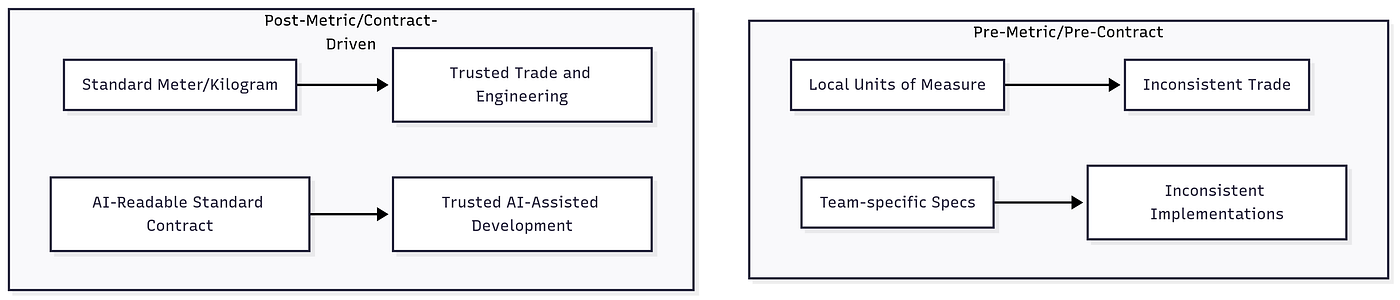
Across hundreds of kilometers, these towers formed one of the first large-scale distributed systems in history. A signal leaving Paris could reach Lille in minutes. The mechanics were clever, but the real breakthrough was the contract. Every tower used the same interface, the same positions, the same protocol. Once you understood one tower, you understood all of them. The terrain, the weather, and the people changed, but the system remained predictable because everyone shared the same contract for a single capability.
This year, I kept thinking about those quiet towers as I worked on a series of proofs of concept with AI models running in the browser, at the edge, and in the cloud. What surprised me was not the performance. It was the simplicity. I could take the same small capability, the same logic, the same code, and run it everywhere with almost no changes. The more I explored WebAssembly, the more it felt like watching a new chain of towers appear on the horizon, one after another.
Somewhere in the middle of this work, while writing the book on the **universal microservices architecture (UMA)**, I realized that the idea was no longer theoretical. It was already happening around me. The future is portable. The future is built on small, atomic capabilities that can be composed into many workflows and executed wherever they make the most sense.
The maturity of WIT and the WASI family made this possible. The contracts are stable. The interfaces are consistent. The runtimes are reliable. Developers no longer have to choose between rewriting everything for the browser or building heavy infrastructure for the cloud. And the **universal microservices architecture (UMA)** extends this world even further. It allows native code and WebAssembly to run together, enabling teams to migrate incrementally, starting with the capabilities that benefit most from portability.
This is why the present moment feels like a turning point. What WASM runtimes are quietly enabling, the **universal microservices architecture (UMA)** formalizes. What AI workloads demand, WASM-native runtimes now support. And what software teams have tried to achieve for decades, we are finally approaching with clarity. A shared interface. A portable capability. A universal execution model.
From the outside, it might look like another evolution in tooling. To me, it feels like those engineers on the hills of France. A chain of small, consistent signals forming a system larger than any individual part.
And the message traveling through that chain is unmistakable. A new architecture is coming into view.
TLDR
The last few weeks have made something clear. WebAssembly is becoming a universal execution layer for AI tools. The Component Model and WIT allow developers to package capabilities that run the same in the browser, on the edge, and in the cloud. WASI NN and WebGPU provide consistent access to acceleration, and MCP servers are already loading these components as tools.
This shift changes what a microservice is. Instead of heavy containers, AI systems rely on small portable capabilities that can move across runtimes without rewriting the code. The universal microservices architecture (UMA) builds on this foundation by providing a clear structure for discovery, orchestration, and composition.
Portable components make the idea practical. UMA makes the system coherent.
A new category is emerging, WASM native AI runtimes
Over the past twenty days, a pattern has been taking shape across the WASM ecosystem. It is not loud. It is not presented as a revolution. It looks more like a quiet shift in how developers think about capabilities and where those capabilities should run. For years, WebAssembly was framed as a way to make the web faster. Then it became a way to shrink containers. Then it became a way to run code at the edge. But something different is happening now.
WASM is becoming a runtime for AI tools.
This is not about running entire models inside a browser tab, even though that is becoming easier. The shift is deeper. AI systems are starting to treat WebAssembly as the format for capabilities, not just code. A capability might be a tokenizer. A classifier. A transformation. A document parser. A vision operator. A small numerical routine. A domain-specific action that an AI agent needs to perform.
Instead of shipping these capabilities as Python packages, Node modules, or hand-built bindings, teams are beginning to distribute them as portable WebAssembly components. These components run in the browser. They run on the edge. They run in the cloud. They run inside the MCP servers. They even run inside the Chrome extension that exposes browser actions to AI agents. They run on any platform with a WASM runtime, and that list grows every week.
The result is the emergence of a new programming category. Not microservices. Not functions. Not plugins. Capabilities.
Small units of behavior that can be loaded, executed, and composed on demand.
They do not need heavy infrastructure. They do not require a full container. They do not force developers to choose a specific language. They rely only on the contract described in WIT and the guarantees provided by the underlying WASI interfaces.
This shift matters because it changes the shape of the software we build. When AI agents can pull specific capabilities from remote registries, run them in a secure sandbox, and chain them into workflows, the boundary between local, edge, and cloud compute starts to blur. The code becomes portable. The execution becomes predictable. The deployment becomes trivial.
And for the first time, the industry has a common substrate for distributing AI capabilities across all these environments.
This is the foundation on which the universal microservices architecture (UMA) is built. But before UMA formalizes the architectural model, the ecosystem itself is already moving in this direction. Capabilities are becoming portable. Runtimes are becoming lightweight. The contract is becoming universal.
A new category is arriving. WASM native AI runtimes are the first clear signal.
The component model is making AI capabilities portable
The more closely you look at the recent movement in the WASM ecosystem, the clearer the role of the Component Model becomes. It has been framed as a technical milestone, a refinement of how WebAssembly modules communicate, a new ABI with more structure. But what is actually happening beneath the surface is much more important. The Component Model is quietly changing how behavior moves through a system.
The key is that it gives us a stable way to describe what a capability is. Not a function signature tied to a particular language, and not a network API tied to a particular service. Instead, it provides a simple contract that captures what the capability expects and what it produces, expressed through WIT in a way runtimes can interpret consistently. This is the first time AI tooling can be expressed in a format that does not care about the environment it runs in.
When you begin to work with components in practice, the difference becomes obvious. A tokenizer compiled as a component behaves the same whether it runs in a browser tab or inside an edge worker. A small classification routine can run in a serverless environment or be invoked directly by an MCP server. A Rust transformation and a Go document parser can both expose the same capability and run in the same workflow. The environment changes, the underlying code changes, but the contract stays stable.
This stability is what allows components to flow between runtimes without friction. You can pull a component into a browser session, run it in an isolated sandbox, and then use the exact same artifact inside a cloud environment without modifying its behavior. You can chain capabilities together without first harmonizing languages or frameworks because each component already speaks the same interface.
For AI systems, this coherence is powerful. Agents no longer need a monolithic environment. They can assemble the behavior they need by loading small, well-defined capabilities from anywhere they are published. The infrastructure becomes lighter because each component carries only what it needs. The architecture becomes simpler because the contract defines the boundary. The workflow becomes more predictable because every component behaves the same way across all runtimes that support it.
This is also the point where the **universal microservices architecture (UMA)** fits naturally. UMA assumes that services are portable and shaped by contracts rather than infrastructure. The Component Model materializes that idea at the lowest level, giving developers a way to package and run capabilities that stay consistent across the entire spectrum of devices and environments. UMA depends on this level of portability, and the Component Model is finally delivering it.
So, when you look at recent progress, it becomes clear that the Component Model is not just a refinement of WebAssembly. It is creating a world where capabilities travel more easily than the systems that use them, and where behavior can be composed without worrying about the runtime underneath. This is the foundation for a different way of building software, and the shift has already begun.
WASI NN and WASI WebGPU are unifying the AI execution path
As developers experiment with AI workloads across browsers, edge devices, and cloud runtimes, they often run into the same obstacle. Every environment exposes its own way of accessing hardware acceleration. Every platform has its own API. Every model runtime expects a different set of bindings. The result is fragmentation. Even simple inference tasks feel heavier than they should because they rely on tools that behave differently depending on where they run.
This is why the recent maturity of WASI NN and WASI WebGPU matters so much. These proposals are not just extensions or convenience layers. They create a common path for AI execution that works across very different environments. Instead of relying on custom bindings or framework-specific interfaces, developers can access acceleration through a single, stable contract that runtimes know how to interpret.
WASI NN does this by defining a consistent way to load a model, pass inputs, and retrieve outputs. It does not dictate the hardware or the underlying runtime. It simply describes how the capability should behave. The host decides whether the call is routed to a CPU, a GPU, a neural accelerator, or a vendor-specific driver. The developer writes against the contract, not the device. This small shift removes an enormous amount of friction.
WASI WebGPU takes this idea a step further in the browser. It gives developers a reliable way to reach modern GPU features without writing platform-specific code. Combined with WebAssembly, it enables running small models or custom kernels directly in a tab, with predictable behavior that mirrors what happens on the server. This consistency makes it possible to write components that run locally, offload work efficiently, and still behave the same when executed elsewhere.
Together, these interfaces create a shared language for AI workloads. The browser, Edge, and the cloud no longer present three distinct execution stories. They become variations of the same capabilities, shaped by the same contracts. When a component relies on WASI NN or WebGPU, it assumes that every compliant runtime will interpret its behavior correctly.
This is what enables portable AI capabilities. A component built around WASI NN can run in a serverless environment, be executed via an MCP server, and still run unchanged in a browser-based workflow. A component written for WebGPU can accelerate local inference and smoothly transition to a distributed pipeline without rewriting the logic. The boundary between platforms becomes less rigid as interfaces remain consistent.
The universal microservices architecture (UMA) depends on exactly this kind of portability. UMA assumes that capabilities move across runtimes, that services compose without infrastructure-dictated constraints, and that the execution model remains consistent even when the environment changes. The new WASI proposals give developers the building blocks to achieve this with AI workloads at scale.
WASI NN and WASI WebGPU are not isolated efforts. They are the next logical step toward creating a unified execution story for AI, one that aligns with how developers are already trying to build. And with each new runtime that supports these interfaces, the system becomes more predictable and more flexible.
The ecosystem is aligning around a single idea. AI capabilities should run wherever they need to, without rewriting the world around them.
MCP is pushing the ecosystem toward capability-driven design
The shift toward portable AI capabilities is happening in many places at once, but one of the clearest signals comes from the Model Context Protocol. MCP was designed to help AI systems interact with tools, but the way it defines those tools aligns naturally with how WebAssembly components behave.
MCP treats every tool as a capability with a clear contract. It needs to describe its inputs, outputs, and interaction rules. Once that contract is defined, the tool can be invoked in any compliant environment. This mirrors the way WIT defines component boundaries in the WebAssembly world.
What makes the recent movement interesting is how quickly MCP servers began adopting WebAssembly under the hood. We now see browser-based MCP servers that run entirely in WASM. We see servers that accept components as tools. We see early experiments where the same capability is packaged once and executed across different runtimes without being rewritten for Python, Node, or any specific backend.
This is not accidental. MCP and the Component Model share the same philosophy. They both shift the focus from infrastructure to behavior. They both use contracts to define how capabilities interact with the system. They both allow developers to build once and run in many places.
For AI systems, this unlocks a simple but powerful pattern. A capability can be exposed through MCP and implemented as a WebAssembly component. The environment does not matter. The boundary stays stable. The runtime does the work.
This is exactly the world the universal microservices architecture (UMA) was designed for. It assumes that tools, services, and capabilities should be portable and defined by contracts rather than tied to a specific platform.
MCP did not set out to promote UMA, but both are converging on the same idea. AI systems work better when the capabilities they rely on can move freely.
Real implementations showing the shift in motion
The recent research period makes something clear. The move toward portable AI capabilities is not theoretical. It is already happening across different corners of the ecosystem, sometimes quietly and sometimes very directly.
One example is Wassette, which pulls WebAssembly components from registries and loads them as runtime tools. It treats these components as self-contained capabilities that can slot into different workflows without rewriting the implementation. The contract is all that matters.
Another example is wasmCloud, which distributes lightweight units of behavior across nodes. Developers can deploy components that perform small AI tasks, then let the runtime handle placement and scaling. The capability stays portable, and the system adapts around it.
WasmEdge is moving in the same direction. It runs AI workloads at high performance at the edge without the overhead of large containers. Components load quickly, run efficiently, and behave the same whether they sit near a user or inside a cloud worker.
We also see browser-based MCP servers that execute tools directly through WebAssembly. They can run language models, preprocessors, or small inference routines without depending on a backend environment. Everything stays inside a secure sandbox and follows the same tool contract that MCP defines.
Even the WASI proposals reinforce this trend. With WASI NN and the growing support around WebGPU, runtimes gain a consistent path to acceleration. A component that depends on these interfaces can run the same workload across very different hardware.
These examples show the same idea from different angles. Capabilities are becoming independent. The environment matters less. The contract matters more. And as this continues, the architecture that ties it all together needs to be equally portable.
This is the context where the universal microservices architecture (UMA) fits naturally. UMA does not replace these tools. It gives them a shared structure, a way to interoperate, and a way to grow without creating new silos.
The shift is already underway. The implementations are here. The architecture is catching up.
How does this change the idea of a microservice?
For most of the last decade, microservices have been defined by their environment. A microservice lived in a container, ran on a server, exposed an API, and depended on an entire cloud stack around it. The service was shaped by where it ran, and the infrastructure dictated the design.
Portable AI capabilities shift this relationship. When a component can run in the browser, on the edge, or inside a small serverless worker, the traditional idea of a microservice starts to dissolve. The boundaries become smaller. The units become lighter. The behavior becomes more focused and easier to move.
A capability no longer needs an entire environment to exist. It can load instantly inside a sandbox. It can perform a single task. It can join a workflow on demand. It can operate alongside other components without requiring a shared runtime or language. It behaves the same everywhere because the contract defines the interaction, not the infrastructure around it.
This makes the traditional container-based model feel heavier than it needs to be for many new workloads, especially those driven by AI systems. Instead of shipping a full environment, developers can ship a portable piece of logic. Instead of designing for a single runtime, they design for many. Instead of thinking in terms of services, they think in terms of capabilities.
This is where the universal microservices architecture (UMA) becomes relevant. UMA does not replace the idea of a microservice. It reframes it. A service becomes a contract. A capability becomes the unit of execution. The runtime becomes flexible enough to move these pieces to the environment that makes the most sense.
This is a subtle shift, but an important one. It changes how systems scale. It changes how developers build. And it changes how AI integrates with the rest of the application landscape.
The microservice is not disappearing. It is becoming smaller, more portable, and more universal.
A small hands-on example of a portable AI capability
To make this shift more concrete, consider a very small example. Imagine a simple text classification capability. It does not need to be a full model. It can be a lightweight rule, a tiny scoring function, or a compact embedded classifier. What matters is how it is packaged.
With the Component Model, the capability exposes a clear contract. The WIT file describes a function that accepts a piece of text and returns a classification result. The implementation can be written in Rust, Go, Zig, or any language with component support. The output is a component that any compliant runtime can understand.
Once compiled, the same component can run in a browser-based MCP server, where the text is generated from a user action. It can run at the edge, where classification needs to happen close to the source. It can run inside a serverless worker, triggered by an event. It can even run within a native application via WASM embedding.
The interesting part is not the classifier itself. The artifact does not change across environments. The behavior stays consistent. The contract stays stable. The component remains small and easy to reason about. It can be part of a workflow one moment and reused somewhere else the next.
This is what makes the new model powerful. Developers can build these small capabilities without choosing where they will run ahead of time. They can ship them through registries or include them in MCP tool lists. They can compose them alongside native code or other components. The system adapts to the capability, not the other way around.
The universal microservices architecture (UMA) extends this pattern across an entire application landscape. UMA provides the structure for discovery, orchestration, and composition so that many of these small capabilities can work together without creating new layers of complexity.
The future WASM is the universal execution layer for AI tools
If you step back and look at all the movement in the ecosystem, a larger pattern becomes visible. WebAssembly is no longer defined by its original purpose. It is becoming the common execution layer that connects the browser, the edge, and the cloud. The Component Model gives it structure. WIT gives it language. The WASI proposals give it access. And AI systems give it a reason to spread everywhere.
In this landscape, the unit of work is no longer tied to infrastructure. It is shaped by the capability it offers. A classifier, a parser, a transformer, a scoring function, a small model, a tool behind an MCP server. These are the pieces that move. They can run next to the user or far from them. They can run within a page, a worker, or a distributed system. They can be discovered dynamically and composed when needed.
This makes WebAssembly feel less like a technology and more like a shared foundation for modern compute. It is light enough for the browser, secure enough for untrusted code, fast enough for the edge, and consistent enough for cloud workflows. AI systems simply expose this flexibility more clearly because they depend on small, well-defined capabilities that can run anywhere.
The universal microservices architecture (UMA) shapes this emerging reality. UMA treats portability as a default rather than a feature. It treats contracts as the boundary. It treats runtime differences as implementation details. It allows WebAssembly and native code to coexist and evolve at different speeds. And it gives teams a path to adopt this model gradually, starting with the capabilities that benefit most from portability.
The direction is becoming clear. Capabilities are getting smaller. Workloads are getting closer to users. Runtimes are getting lighter. And the architecture needed to tie it all together is finally taking form.
WASM is becoming the universal execution layer for AI tools. UMA is becoming the structure that puts that flexibility to work.
Takeaways
- WebAssembly is moving beyond performance and browser use cases. It is becoming a practical runtime for AI capabilities that can run in the browser, on the edge, and across the cloud.
- The Component Model and WIT provide developers with a stable way to define capabilities that behave consistently across different runtimes. This consistency is what makes portability real.
- WASI NN and WebGPU provide a unified path for AI acceleration, eliminating the need for device-specific bindings and making it much easier to distribute small AI workloads.
- MCP aligns naturally with the component-based model. Tools become well-defined capabilities, not platform-specific integrations, and WebAssembly runtimes can execute them securely.
- Real implementations across the ecosystem show the shift in motion. Portable AI components are already being loaded, executed, and composed in browsers, edge nodes, and serverless environments.
- The idea of a microservice is evolving. It is becoming smaller, more focused, and no longer tied to containers or full infrastructure stacks.
- The universal microservices architecture (UMA) gives this emerging world a coherent structure. It defines how portable capabilities are discovered, orchestrated, and composed across very different environments.
- The direction is clear. AI systems need portable capabilities. WebAssembly provides the execution layer, and UMA provides the architecture that ties everything together.
메타데이터
- post_id
- 91b2da07b2ad
- slug
- the-rise-of-wasm-native-runtimes-for-ai-tools-91b2da07b2ad
- url
- https://medium.com/wasm-radar/the-rise-of-wasm-native-runtimes-for-ai-tools-91b2da07b2ad
- canonical_url
- https://medium.com/wasm-radar/the-rise-of-wasm-native-runtimes-for-ai-tools-91b2da07b2ad
- author_url
- https://medium.com/@enricopiovesan
- status
- ok
- fetched_at
- 2026-06-11 05:11:55