Why Did the Boston Tea Party Lead to the American Revolution?
All wars are fought for wealth! Be it land, natural resources, or looting the enemy of all material wealth it all boils down to money. The…
Why Did the Boston Tea Party Lead to the American Revolution?
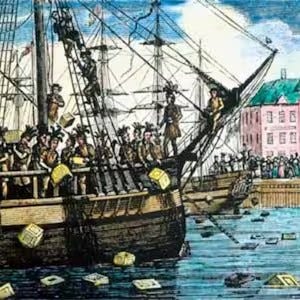
Boston Tea Party
All wars are fought for wealth! Be it land, natural resources, or looting the enemy of all material wealth it all boils down to money. The American Revolution is no exception.
After the European Seven Years War, known in the Americas as the French and Indian War, England was up to its ears in debt to the Bank of England. The revolution in fighting wars was a national bank. Instead of raising taxes to fight the war the bank would loan the money to fight the war and after the war the nation’s taxes would be used to pay it off. The Bank of England was also where the country stored its tax collections.
It was new and the idea of keeping a running tab called a national debt was scary. Parliament didn’t want to raise taxes on just the citizens of England, since the war started in the Americas, and the result was additional land, Canada, then the colonies should be taxed too. Sounded good to the Tories in parliament, but the Whigs, the minority party, was worried that it would cost more to tax the colonies than the money to be gained.
No one told the Tories that the colonials did not have currency. All the goods they sold to the British they were given letters of credit to then trade their raw materials to British manufactured goods and a much higher price. Most farmers and plantation owners were years in debt.
The Stamp Act and subsequent taxes imposed proved the whig party right. What scant money was raised was offset by the colonies refusing to buy English goods, impoverishing the merchants trading with them. Instead of getting money out of the colonies, they were losing money that they would normally spend on British products.
The Tories rescinded all the taxes in the Intolerable Acts, as referred to by the colonies, except that on tea.
Enter stage right the British East India Company that was faced with competition with Holland, France and Spain for selling tea, and their warehouses were overflowing. They were facing bankruptcy.
The North Ministry’s solution was the Tea Act, which received the assent of King George on May 10, 1773. This act restored the East India Company’s full refund on the duty for importing tea into Britain, and also permitted the company, for the first time, to export tea to the colonies on its own account. This would allow the company to reduce costs by eliminating the middlemen who bought the tea at wholesale auctions in London. Instead of selling to middlemen, the company now appointed colonial merchants to receive the tea on consignment; the consignees would in turn sell the tea for a commission. In July 1773, tea consignees were selected in New York, Philadelphia, Boston, and Charleston. The Tea Act in 1773 authorized the shipment of 5,000 chests of tea (250 tons) to the American colonies. There would be a tax of £1,750 (equal to £231,000 today) to be paid by the importers when the cargo landed. The act granted the East India Company a monopoly on the sale of tea that was cheaper than smuggled tea; its hidden purpose was to force the colonists to pay a tax of 3 pennies on every pound of tea. from Wikipedia
The law concerning a merchant ship coming into harbor was that they had to unload the cargo and sell it within 20 days or sail out of the harbor. If they stayed in the harbor past the 20 days the product then became property of the port and was seized.
The ships of the British East India company would enter the port. They were to sell the tea to the consignees, who would then distribute the tea. While the ships were crossing the Sons of Liberty, threatened the consignees who then refused to buy the cargo. In New York and Philadelphia, the ships returned with the cargo. In Charleston the governor refused the ship to leave, the port seized the tea and gave it away without paying the tax.
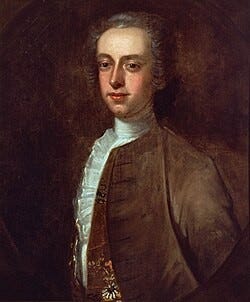
Governor Thomas Hutchinson
In Boston the Governor Thomas Hutchinson refused to let the three ships in harbor leave, his two sons were consignees and would not be intimidated. He planned to confiscate the tea after 20 days and have his two sons then sell the tea at price with the tax. It was still cheaper than the Dutch tea smugglers like John Hancock were trying to sell.
The day before the 20 days were up the Boston Tea Party dumped 92,616 lbs. of tea into the harbor, the equivalent in today money of $1, 784,138 (according to the Wikipedia).
This set in motion the punitive damages placed on Boston Harbor. Martial Law was declared, even though there was no bloodshed. The harbor was closed to trade, an act of war, soldiers were quartered in people’s homes a right violated in the English Bill of Rights. Taxes were imposed on town to pay back the British East India Company the loss of their tea, and arrests were made without warrant for those suspected of throwing the tea into the harbor.
Many of those who took part in the tea party were hiding in the countryside. Squads of soldiers roamed the countryside searching for the fugitives like Samuel Adams, the leader of the Sons of Liberty in Boston and John Hancock.
Governor Hutchins was replaced by General Thomas Gage.
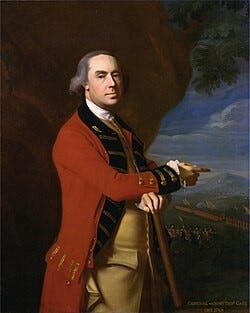
General Thomas Gage
Under Gage’s imposed martial law in 1770 soldiers on guard duty were assaulted by a rabble who threw snowballs at them with rocks inside. It’s not certain who yelled fire, the angry soldiers opened fire and a few of the lads, including a freed slave by the name of Crispus Attucks, were killed.
It became known as the Boston Massacre. Another rock on the slippery slope to outright rebellion and war.
l Spies and other information came to Gage that the surrounding area of Boston was arming for war and stockpiling weapons, shot and powder. Gage’s answer was to disarm them.
On April 18, 1775, Lieutenant Colonel Francis Smith was given orders to take 700 British regular soldiers and capture the stockpile of weapons at Concorde.
The resulting skirmish resulting in nearly half his force either killed or wounded started the war. The shot heard round the world.
메타데이터
- post_id
- 91c6b052bfa5
- slug
- why-did-the-boston-tea-party-lead-to-the-american-revolution-91c6b052bfa5
- url
- https://medium.com/@patrickprescott_75079/why-did-the-boston-tea-party-lead-to-the-american-revolution-91c6b052bfa5
- canonical_url
- https://medium.com/@patrickprescott_75079/why-did-the-boston-tea-party-lead-to-the-american-revolution-91c6b052bfa5
- author_url
- https://medium.com/@patrickprescott_75079
- status
- ok
- fetched_at
- 2026-07-15 00:06:11