How U.S. Corn Subsidies Made Us Sick
We regulate alcohol and nicotine — so why not the sweetener hiding in your bread?
How U.S. Corn Subsidies Made Us Sick
We regulate alcohol and nicotine — so why not the sweetener hiding in your bread?
When “Healthy” Started Making Me Sick
I was always a healthy person — until everyday food began turning on me. The first time it happened, I’d had a bottle of Sunny Delight. Within an hour, my stomach was twisting, and I was in the bathroom for the rest of the night. I told myself it couldn’t be the high-fructose corn syrup (HFCS). I didn’t want it to be.
But every time I ate or drank something with HFCS — sodas, sauces, even cheap mustard — the same thing happened again. I finally switched to Vitamin Water, hoping it would be safe. It wasn’t. Same reaction.
That’s when I had to accept it: the sweetener hiding in nearly everything was the problem. It’s in countless foods, in almost every children’s cereal, and even in products marketed as “healthy.” My gut wasn’t wrong — the system was. And I suspect many others are reacting too, whether they realize it or not.
The Sweetener Hiding in Plain Sight
You can skip dessert and still consume HFCS every day — it’s in almost everything. From “healthy” granola bars to salad dressings and even bread, HFCS has quietly flooded the American food supply for decades.
While the corn industry insists it’s no different from sugar, science — and common sense — say otherwise. A UC Davis study found that just 16 days of HFCS-sweetened drinks raised liver fat and reduced insulin sensitivity, even in lean adults.
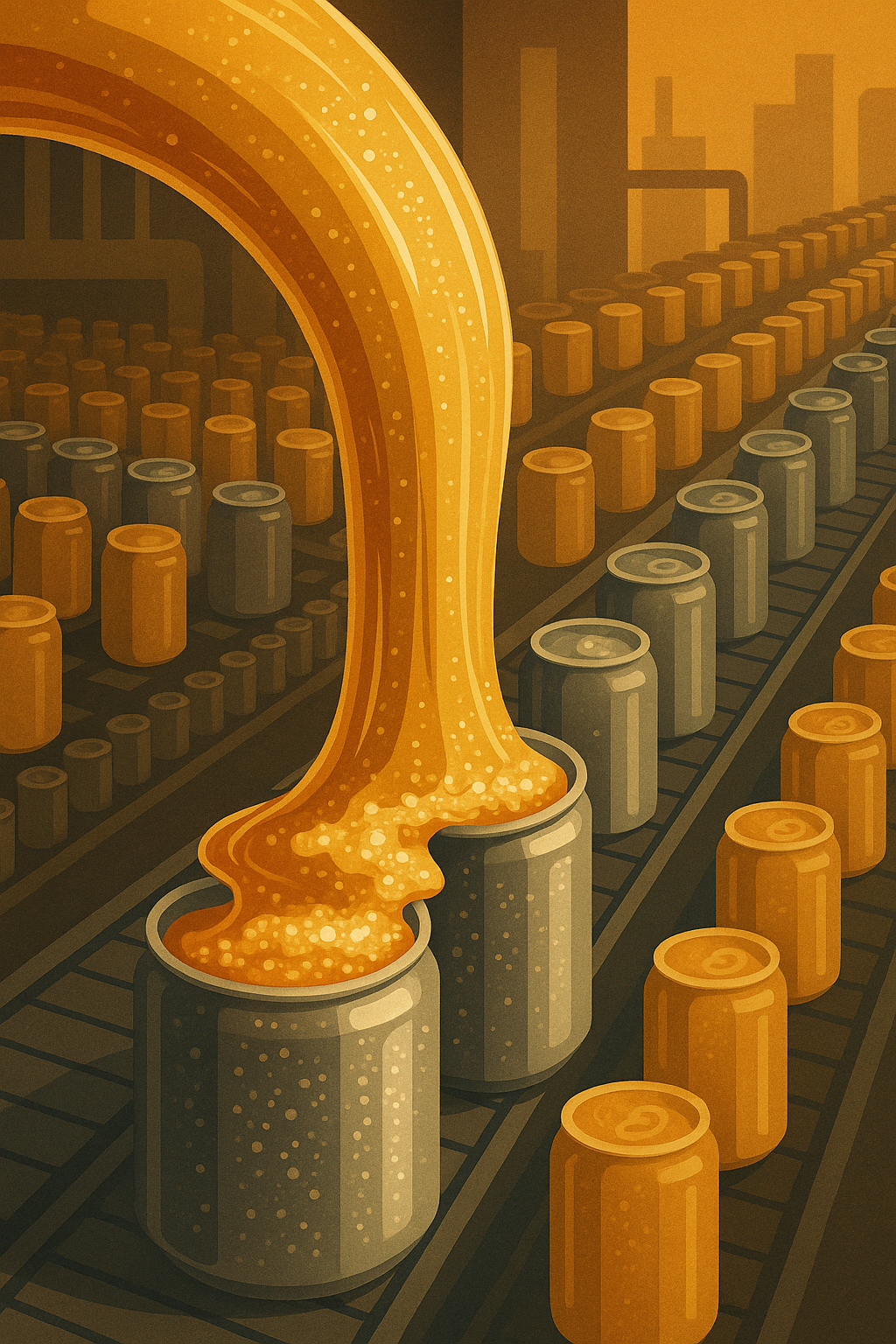
A river of corn syrup pouring into factory molds shaped like soda cans — symbolizing mass production of sweetness. By TandA.
The Health Fallout We Can’t Ignore
HFCS doesn’t behave like glucose. The liver processes it rapidly, converting it to fat. The National Institutes of Health links chronic fructose intake to fatty liver disease, obesity, and Type 2 diabetes — now epidemic in the U.S.
Princeton researchers saw the same in animals: rats drinking HFCS gained more body fat than those getting equal calories from sugar. HFCS doesn’t just add energy — it rewires how bodies store it.
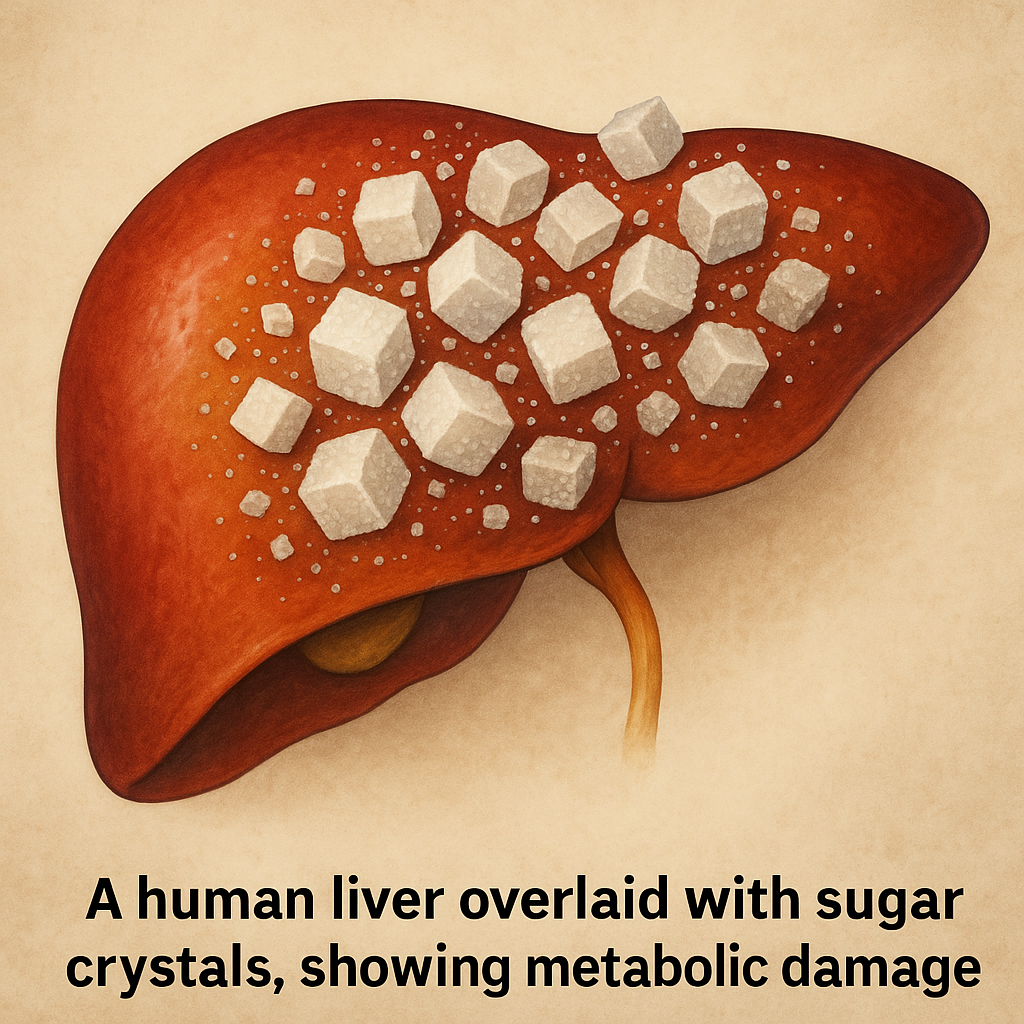
A human liver overlaid with sugar crystals, showing metabolic damage. By TandA.
Subsidized to Make Us Sick
HFCS didn’t take over by accident. Federal corn subsidies made it artificially cheap, pushing food companies to replace cane sugar in the 1970s. Today, it’s the default sweetener in sodas, cereals, sauces, and baked goods — almost impossible to avoid.
Meanwhile, manufacturers hide it behind labels like corn syrup solids or glucose-fructose syrup. The result: consumers make “choices” without realizing what they’re really eating.
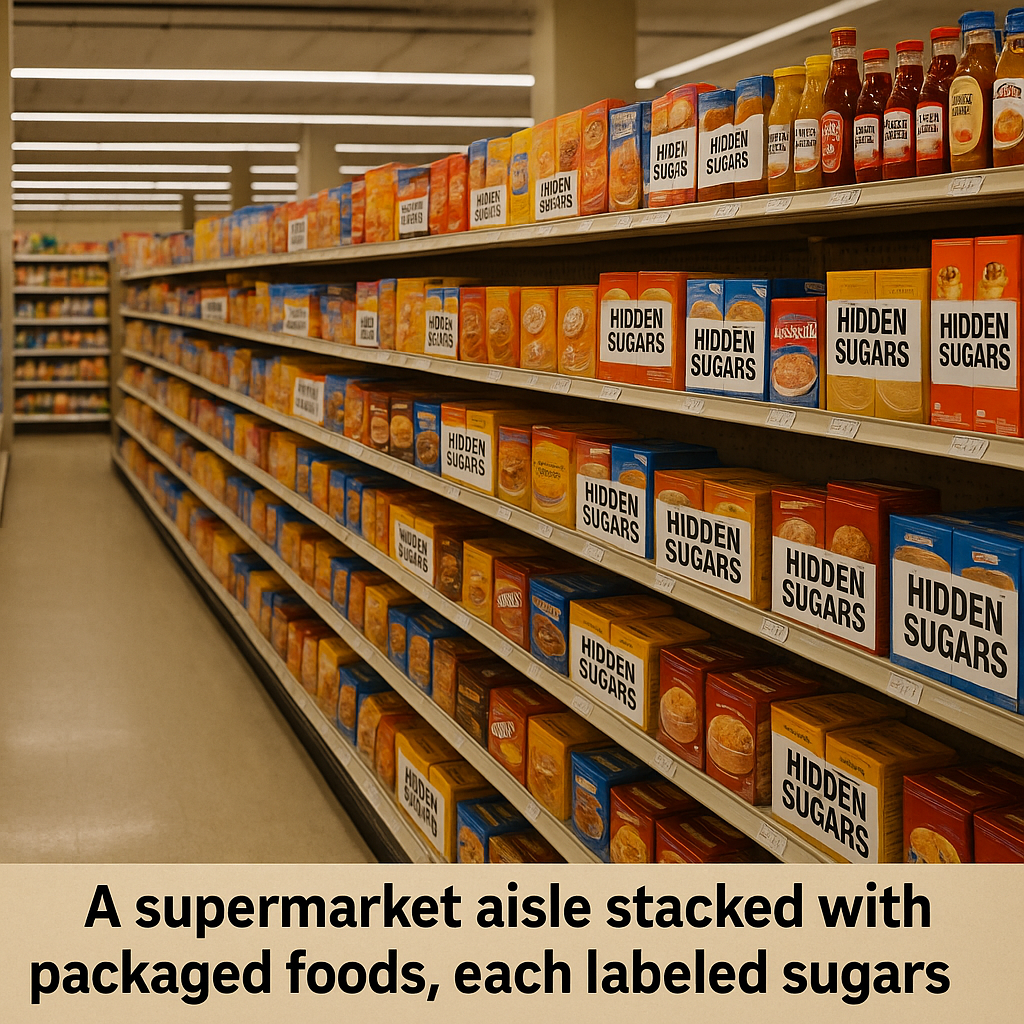
A supermarket aisle stacked with packaged foods, each labeled with hidden sugars. By TandA.
The Evidence Is Clear — The Labels Aren’t
Back in 2008, the American Medical Association warned that HFCS was saturating our diets. Sixteen years later, evidence is even stronger — yet HFCS still hides behind claims like “natural” or “no added sugar.”
We already regulate substances with comparable health risks: alcohol, nicotine, and trans fats. HFCS deserves the same oversight when it drives chronic disease and rising healthcare costs.
What Needs to Change
1. Mandatory disclosure Every label should show how much added sugar comes from HFCS — not just total sugars. Real transparency forces reformulation.
2. Protect children Ban or limit HFCS in school foods and kid-targeted products. Early diets shape lifelong health.
3. Reform subsidies Redirect federal farm money from industrial corn to fruits, vegetables, and legumes. Taxpayers shouldn’t bankroll junk ingredients.
4. Reevaluate “Generally Recognized as Safe” status That label is decades old. Modern research shows harm regulators missed.
5. Reward healthier formulas Give tax breaks or grants to companies cutting HFCS. Policy can encourage innovation instead of addiction.
6. Educate the public Anti-smoking campaigns worked. National sugar-awareness efforts can too.
7. Enforce honesty Fine brands using “natural” or “no added sugar” claims when HFCS is present. Truth should be the price of business.
This Isn’t About Banning Sugar — It’s About Balance
Regulation isn’t prohibition. It’s about honesty and public health. If we know HFCS fuels obesity, liver disease, and diabetes — and still subsidize it — that’s not free choice. It’s systemic negligence.
Every grocery trip is a quiet vote for what gets subsidized next. It’s time to hold the food industry to the same standards we expect from individuals: accountability for the consequences.
“If sugar is bad, HFCS is the cheap imposter that made it impossible to escape.”
메타데이터
- post_id
- 922615db67af
- slug
- how-u-s-corn-subsidies-made-us-sick-922615db67af
- url
- https://medium.com/my-plate-my-path/how-u-s-corn-subsidies-made-us-sick-922615db67af
- canonical_url
- https://medium.com/my-plate-my-path/how-u-s-corn-subsidies-made-us-sick-922615db67af
- author_url
- https://medium.com/@ttrimm
- status
- ok
- fetched_at
- 2026-06-13 09:11:36