The Care That Refuses to Be Spoken
In Japan, the kindest thing we do for a stranger is also the thing that leaves them most alone
A-CULTURATED’S JULY 2026 WRITING PROMPT
The Care That Refuses to Be Spoken
In Japan, the kindest thing we do for a stranger is also the thing that leaves them most alone
Photo by Atikah Akhtar on Unsplash
A friend of mine said something over coffee last month that I haven’t been able to put down.
He is not Japanese. He has lived here a long time — long enough that the country no longer surprises him, long enough that he moves through Osaka the way I do, without thinking. We were talking about the newer arrivals, the ones who have come in the last year or two for work, and he lowered his voice slightly, the way people do before they admit something they aren’t proud of.
“Honestly,” he said, “sometimes I’m embarrassed. They don’t know the rules. And because they don’t, people look at all of us the same way. As foreigners.”
I didn’t say anything at the time. I just nodded, because that is what you do. But something in it stayed with me, and it took me a few days to understand what.
It was this: when he first arrived, years ago, he was the one being looked at. He has told me the stories himself — the neighbor who watched him sort his garbage and quietly re-sorted it after he left. He didn’t know, for example, that you are supposed to wrap raw food in a small bag first, tightly, so the smell doesn’t seep out and draw crows. The collection schedule was printed; the color-coded bags were explained. But wrap it tight because the neighbors keep even their garbage point spotless and the crows will shred your bag by morning — nobody writes that down. You learn it from the silence of the neighbor who cleaned up after you without saying a word. He told me about the silences in meetings he couldn’t read; the sense, everywhere, of a rulebook everyone else had been handed at birth and no one would show him. He had been the stranger who didn’t know. And now, safely inside, he had turned to look back through the same narrow eyes that once fell on him.
I don’t tell you this to shame him. I tell you because I recognized the shape of it, and the shape was mine too.
The moment you are finally let inside a culture, you inherit its blindness along with its comforts.
The rules no one will say out loud
I have lived my whole life inside those unwritten rules, and until I watched someone struggle against them, I could not see them at all.
They are everywhere in Japan, and almost none of them are written down. At work, you do not simply leave when your task is finished; you read the room. In many schools, the children clean their own classrooms, and no one ever quite explains why — it is simply what is done. There is an order to who speaks first in a meeting, a rhythm to how a decision is really made behind the decision that appears to be made. There is a whole grammar of wa, of harmony, of not being the one who disturbs the surface of the water.
To me, none of this was ever a rule. It was just air. And the air worked because everyone in the room was breathing the same way — I understand without being told, and so do you. That silent mutual knowing is itself a kind of intimacy, even a kind of love. To spell it out would be to admit the bond isn’t there. I breathed it without noticing, the way you don’t notice your own language until you hear someone else stumble through it.
And that is exactly the problem. A rule you cannot see is a rule you cannot teach. When something feels to you like nature itself, you don’t explain it — you just feel a quiet wrongness when a stranger fails to observe it, and you call that feeling manners, or common sense, when it is neither common nor sense. It is simply yours.
The newer arrivals my friend was embarrassed by had broken nothing that was ever explained to them. They had only failed to guess a code that no one guesses — that everyone is simply raised inside.
We call it support. But is it care?
Here is where I want to be careful, because it would be easy to end on a comfortable note about tolerance, and I don’t think tolerance is the point.
Japan, in fact, offers newcomers a great deal. So do most countries I know anything about. There are orientation booklets, city-hall counters with translation, guides to garbage days and health insurance and where to register your address. Volunteers give their weekends to it. It is genuine, and it is kind, and I don’t want to diminish it.
But I have come to think it is not quite care. It is support. And the two are not the same.
Support hands you the surface: here is the form, here is the day the truck comes, here is the number to call. Care would do something harder. Care would say: the reason you feel lost is not that you missed a form. It is that we, the people around you, have agreed to understand each other without speaking, and that agreement has no door in it for you. Let me hold the door.
Nobody hands you that. The unspoken assumptions stay unspoken, because to the person inside, they don’t feel like assumptions at all. And so the newcomer is given every leaflet and still, somehow, left alone — fed the map of the streets but never the map of the silence.
Support gives a stranger the rules of the place. Care gives them the reasons no one thought needed saying.
What a Legalist understood two thousand years ago
When I think about this gap — between the support we offer and the care we withhold — I keep arriving at the same question: what would it actually look like to make the invisible visible? To take the unspoken and speak it? There is an old Chinese thinker who asked a version of that question over two thousand years ago, and I’ll introduce him briefly because he is easy to misread.
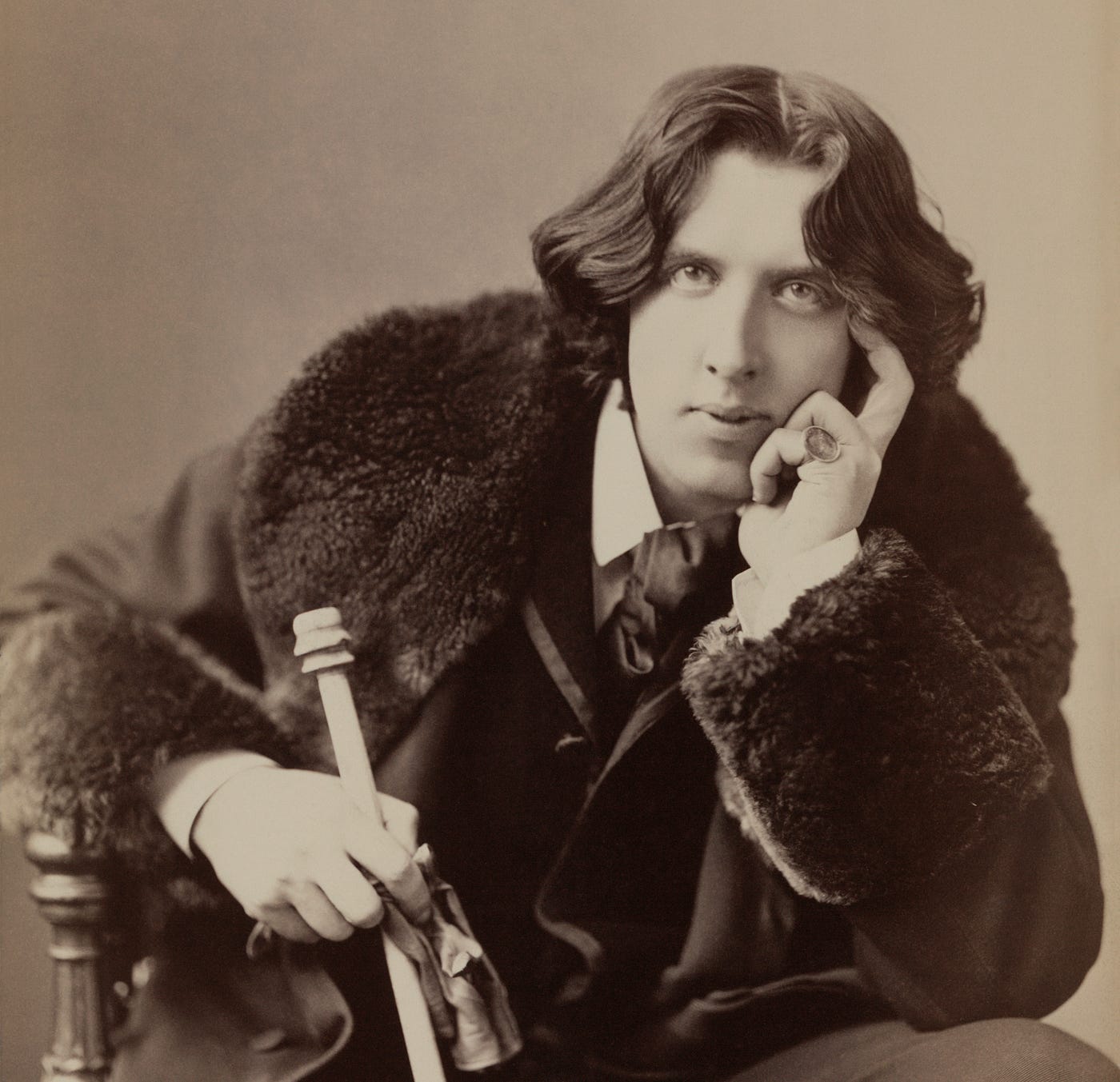
His name was Han Feizi (韓非子), and he lived in the third century BCE, in an age of collapsing states and constant war. The dominant idea of his time — the Confucian idea — was that a good society runs on virtue: cultivate good people, model good conduct, and order will follow from the inside out. Han Feizi (韓非子) didn’t fully trust this. Virtue, he noticed, is invisible and unevenly shared. It works beautifully among people who already understand one another, and fails the moment a stranger walks in who was never taught the same unspoken things.
His answer was the opposite: write the rules down. Make them explicit, clear, and the same for everyone. For centuries he has been read as cold for saying so — the hard Legalist against the warm humanist.
But I have come to read him almost tenderly. Because an unwritten rule only serves the people who already know it. The instant you make a rule explicit, you have done something generous: you have made it available to the person who wasn’t born knowing. A written rule is the only kind a stranger can actually follow. What looks like severity is, from the outside, the first thing that resembles welcome.
The hardest form of hospitality
I keep thinking about my friend, and the version of himself he’d forgotten.
What he wanted, back when he was the one being watched over the garbage bins, was not more kindness. People were often kind. What he wanted was the map — the thing no one would say aloud, because to them it wasn’t a thing at all. And now that he finally holds that map, the most generous thing he could do with it is not to guard it, and not to feel embarrassed by those who lack it, but to speak it. To turn to the next person who doesn’t know and simply say the silenced part out loud.
That is the care my own culture is least good at. We are extraordinary at the unspoken — at anticipating, at sensing, at the wordless accommodation between people who share a world. It is one of the most beautiful things about this country. But it is a gift we can only give each other. To everyone else, our fluency in silence is a wall with no handle on their side.
To put the unspoken into words costs us something. It breaks the pleasant fiction that we simply understand one another by nature. It admits that our harmony was learned, and therefore teachable, and therefore not ours alone. That admission is uncomfortable. I think it is also the beginning of actually caring for someone who did not grow up inside your silence.
I am not going to end with advice, because I distrust essays that do. I only notice this, and offer it the way you’d offer a chair: the next time you feel that small, righteous irritation at someone who doesn’t know the rule — the one that everybody knows — it may be worth asking who ever told you. And whether the kindest thing you own is not the knowing, but the willingness to say it out loud.
This piece works alongside a dialogue on the same subject. The messier, more honest version of this conversation lives there.
SHIBUMIWORKS PROJECT explores Japanese philosophy, aesthetics, and culture — not as a guide, but as a mirror. The views in this piece are my own — shaped by how I grew up, what I practiced, and what I noticed. They are not the correct interpretation of Zen, or of anything else. English is not my first language; I use AI as a linguistic tool to bridge that gap. The thinking is mine. The words are a collaboration.
This piece is written in response to A-Culturated’s July 2026 Writing Prompt, “Care Has a Culture.”
메타데이터
- post_id
- 922973b2d361
- slug
- the-care-that-refuses-to-be-spoken-922973b2d361
- url
- https://medium.com/a-culturated/the-care-that-refuses-to-be-spoken-922973b2d361
- canonical_url
- https://medium.com/a-culturated/the-care-that-refuses-to-be-spoken-922973b2d361
- author_url
- https://medium.com/@shibumi4011
- status
- ok
- fetched_at
- 2026-07-15 19:22:58