Why Workplace Mental Health Starts With the Relaxation Response
In the modern professional landscape, “burnout” has transitioned from a buzzword to a bona fide occupational hazard. We live in an era of…
Why Workplace Mental Health Starts With the Relaxation Response

In the modern professional landscape, “burnout” has transitioned from a buzzword to a bona fide occupational hazard. We live in an era of “hustle culture,” where the “always-on” mentality is often worn as a badge of honor. However, beneath the surface of high-performance metrics and rapid-fire Slack notifications lies a burgeoning crisis of mental exhaustion, anxiety, and chronic stress.
Organizations have attempted to address this with various “wellness” initiatives — ranging from office fruit baskets and gym memberships to “Mental Health Days.” While these gestures are well-intentioned, they often fail to address the physiological root of workplace stress. To truly revolutionize workplace mental health, we must look deeper than superficial perks. We must look at the human nervous system.
True mental health in the workplace starts with a physiological shift known as the Relaxation Response. Coined by Dr. Herbert Benson of Harvard Medical School in the 1970s, the Relaxation Response is the physical antithesis of the “fight-or-flight” response. It is a state of deep rest that changes the physical and emotional responses to stress. By understanding and implementing this response, both employers and employees can move beyond “coping” with stress and begin building a foundation of genuine, sustainable resilience.
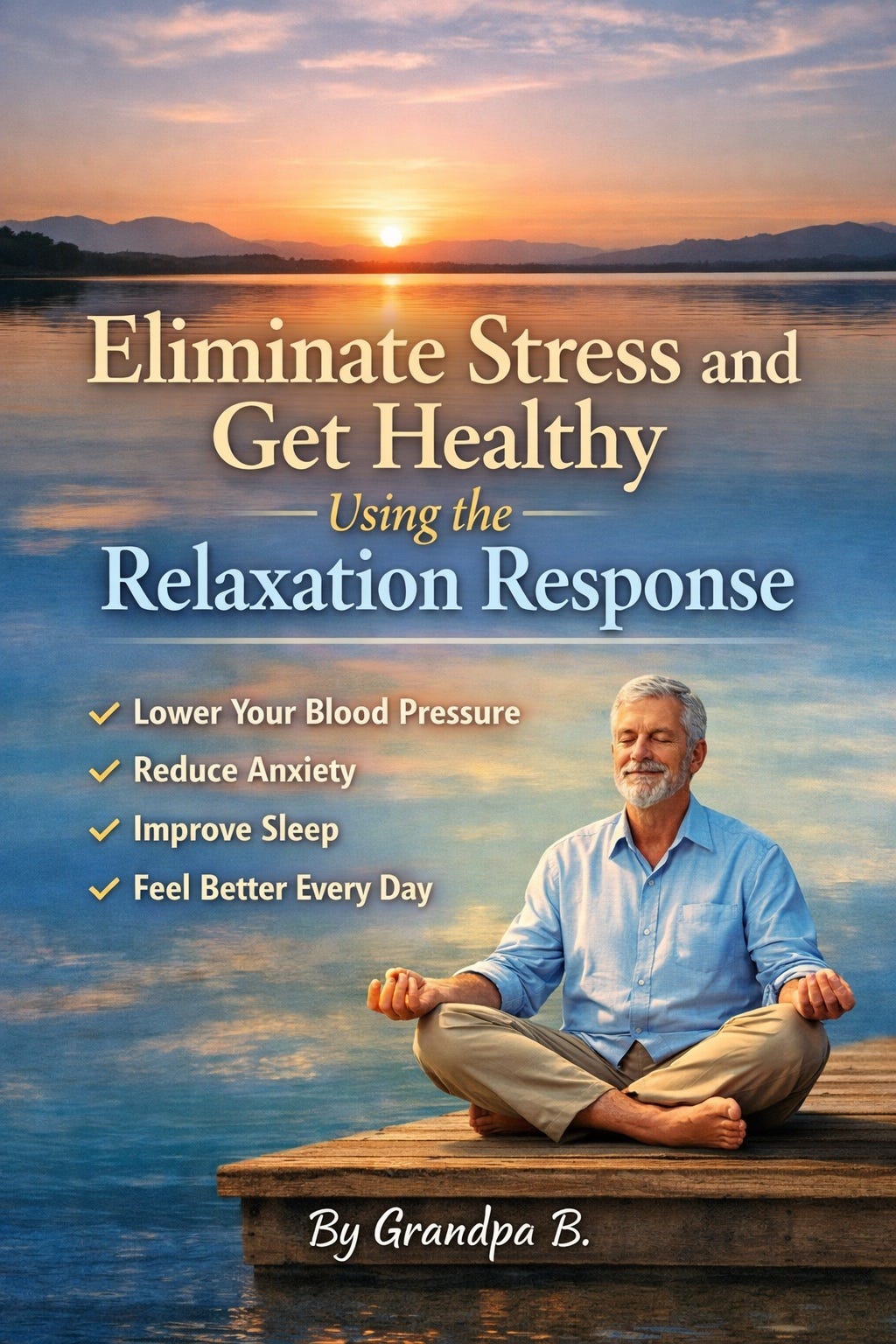
📚>> CLICK HERE Feel calmer starting today — download your copy instantly on Gumroad. >> 📚
1. The Biology of the Modern Office: Why We Are Always “On”
To understand why the Relaxation Response is so critical, we first have to understand what we are fighting against. The human body is equipped with an evolutionary survival mechanism known as the Sympathetic Nervous System (SNS). This is our “fight-or-flight” mode. In the prehistoric era, this system was triggered by life-threatening events, like being hunted by a predator. It floods the body with cortisol and adrenaline, spikes the heart rate, and redirects blood flow to the muscles.
In the 21st century, we are rarely hunted by predators, but our brains haven’t quite caught up to our office environments. To the amygdala — the brain’s emotional processing center — a passive-aggressive email from a manager, a looming deadline, or a crowded calendar of back-to-back Zoom calls feels exactly like a physical threat.
The result? Modern professionals are living in a state of chronic “low-grade” fight-or-flight. We are perpetually bathing our brains in stress hormones. This chronic activation leads to:
- Cognitive Decline: High cortisol levels impair the prefrontal cortex, the area of the brain responsible for decision-making, creativity, and emotional regulation.
- Physical Ailments: Chronic stress is linked to hypertension, heart disease, and a weakened immune system.
- Emotional Fragility: When the nervous system is overtaxed, we become more prone to irritability, anxiety, and eventual depression.
The workplace has become a minefield of triggers. If we do not have a conscious mechanism to flip the switch from the sympathetic nervous system to the parasympathetic nervous system (the “rest and digest” mode), we are essentially running an engine at redline until it inevitably breaks.
2. Defining the Relaxation Response: More Than Just “Chilling Out”
Many people mistake “relaxation” for passive activities like watching Netflix or scrolling through social media. While these might feel like downtime, they often do not trigger the physiological “Relaxation Response.”
The Relaxation Response is an inducible, physiological state of quietude. According to Dr. Herbert Benson’s research, when we engage this response, we see measurable changes:
- Decreased oxygen consumption.
- Reduced heart rate.
- Lowered blood pressure.
- Slowing of the breath.
- An increase in alpha brain waves (associated with calm, focused states).
The beauty of the Relaxation Response is its simplicity. It requires two basic components:
- A Mental Device: A repetitive sound, word, phrase, or muscular activity (like breathing) to shift the mind away from everyday thoughts.
- A Passive Attitude: When distracting thoughts occur (and they will), you simply acknowledge them and return to the repetition without judgment.
In a workplace context, this isn’t just “meditation” — it’s a biological reset button. It is the practice of consciously telling the nervous system that it is safe. When the body feels safe, the mind can follow suit. This is why any workplace mental health strategy that doesn’t prioritize the physiological regulation of the nervous system is destined to fail. You cannot think your way out of a stress response that is happening in your cells; you must breathe and practice your way out of it.
📚>> CLICK HERE Reduce stress naturally. Get instant access on Gumroad and start relaxing today. >> 📚
3. The Productivity Paradox: How Relaxation Drives Performance
There is a persistent myth in corporate culture that stress is the primary driver of performance. We often think that if we aren’t stressed, we aren’t working hard enough. This is what psychologists call the Yerkes-Dodson Law. It suggests that there is an optimal level of arousal for performance, but once stress exceeds that point, performance plummets.
When an employee is in a state of chronic stress, they are not “productive” — they are “busy.” There is a significant difference. High-stress environments lead to:
- The “Silo” Effect: Stressed brains focus on immediate survival, making it harder to see the big picture or collaborate effectively.
- Increased Errors: When the brain is focused on threat-detection, it misses the nuances of complex tasks.
- Reduced Innovation: Creativity requires a sense of psychological safety. You cannot innovate when you are in a defensive crouch.
By integrating the Relaxation Response into the workday, employees actually become more efficient. When the prefrontal cortex is back online, problem-solving becomes faster. Communication becomes clearer because the person is no longer reacting from a place of fear or irritability.
Think of the Relaxation Response as “sharpening the saw.” If you spend eight hours trying to cut down a tree with a blunt blade, you are exhausted but unsuccessful. If you take twenty minutes to sharpen the blade (the Relaxation Response), the work becomes significantly easier. Workplace mental health isn’t a distraction from work; it is the engine of high-quality work.
4. Cultural Integration: Moving Beyond the “Quiet Room”
For the Relaxation Response to truly transform workplace mental health, it cannot be a solitary act performed in secret. It must be integrated into the culture of the organization. Many companies provide “quiet rooms” or meditation apps, but employees are often too afraid to use them for fear of appearing “lazy” or “uncommitted.”
True integration requires three levels of change:
The Leadership Level
Leaders must “go first.” When a CEO or manager openly discusses their own use of the Relaxation Response or mindfulness practices, it gives the rest of the team “psychological permission” to do the same. Leadership should normalize taking “micro-breaks” — short, 5-minute intervals throughout the day to reset the nervous system.
The Structural Level
Organizations should look at how meetings and workflows are structured. Are meetings back-to-back with no breathing room? Is there an expectation of immediate responses to emails after hours? Structural change might mean implementing “No-Meeting Wednesdays” or starting a meeting with 60 seconds of collective silence to allow everyone to transition from their previous task and engage their Relaxation Response.
The Peer Level
Mental health thrives in a community. Group sessions where the Relaxation Response is practiced together can reduce the stigma. It shifts the narrative from “I am struggling with my mental health” to “We are optimizing our nervous systems for excellence.”
📚>> CLICK HERE Your body knows how to relax — get the guide now on Gumroad. >> 📚
5. The Long-Term ROI: Resilience as a Business Strategy
Investing in the Relaxation Response isn’t just “nice to have” — it’s a strategic business decision. The financial cost of poor mental health in the workplace is staggering. Between lost productivity, absenteeism, and high turnover rates, companies lose billions of dollars annually to burnout.
However, when an organization prioritizes the physiological well-being of its employees, the ROI is evident:
- Retention: Employees stay where they feel supported and where the work-life integration is sustainable.
- Healthcare Costs: By reducing the incidence of stress-related illnesses, companies can see a significant reduction in insurance premiums and healthcare-related expenditures.
- Employer Branding: In a competitive talent market, a company known for its genuine commitment to mental health becomes a magnet for top-tier talent.
Resilience is not the ability to endure suffering; it is the ability to recover from it. By teaching and encouraging the Relaxation Response, companies are giving their employees the tools to recover in real-time. This creates a workforce that is not just “tough,” but “agile.” They can handle high-pressure situations because they have a reliable mechanism to return to a baseline of calm afterward.
📚>> CLICK HERE Sleep better, calm anxiety, and restore balance — download instantly on Gumroad. >> 📚
Conclusion: The First Step Toward a Healthier Workforce
The future of work is not about who can grind the hardest; it is about who can sustain their mental and emotional energy the longest. We have spent decades optimizing our software, our hardware, and our supply chains. It is finally time to optimize the most important asset any company has: the human nervous system.
Workplace mental health is a complex challenge, but the solution starts with a surprisingly simple biological shift. By triggering the Relaxation Response, we move from a state of survival to a state of thriving. We move from reactive to proactive. We move from exhaustion to inspiration.
If you are ready to stop the cycle of burnout and start building a culture of true resilience, the time to act is now. You don’t need a massive overhaul of your office to begin; you simply need the right tools and the commitment to use them.
Are you ready to transform your professional life and reclaim your mental clarity?
We have developed a comprehensive system designed specifically for the modern professional. This protocol takes the science of the Relaxation Response and distills it into actionable, daily habits that fit into even the busiest schedules.
Take Control of Your Mental Wellbeing Today
Don’t wait for a crisis to start caring for your mental health. Burnout is elective when you have the right physiological tools at your disposal. Our “Mastering the Relaxation Response: The Executive Edition” is currently available at a special introductory rate for organizations and individuals who are serious about peak performance and mental longevity.
By purchasing this program, you will receive:
- A 21-day guided video series on inducing the Relaxation Response in high-stress environments.
- A downloadable “Office Reset” toolkit for quick 2-minute nervous system breaks.
- Exclusive access to our “Resilient Leader” webinar series.
The cost of inaction is too high. Protect your mind, protect your career, and lead your team into a new era of health and productivity.
메타데이터
- post_id
- 9238fa8d53d2
- slug
- why-workplace-mental-health-starts-with-the-relaxation-response-9238fa8d53d2
- url
- https://medium.com/@dogcollection/why-workplace-mental-health-starts-with-the-relaxation-response-9238fa8d53d2
- canonical_url
- https://medium.com/@dogcollection/why-workplace-mental-health-starts-with-the-relaxation-response-9238fa8d53d2
- author_url
- https://medium.com/@dogcollection
- status
- ok
- fetched_at
- 2026-07-13 06:23:13