Self-employed Report Germany 2018
Invoice and the VGSD have created a comprehensive picture of the situation of the self-employed in Germany with the self-employed report…
Self-employed Report Germany 2018
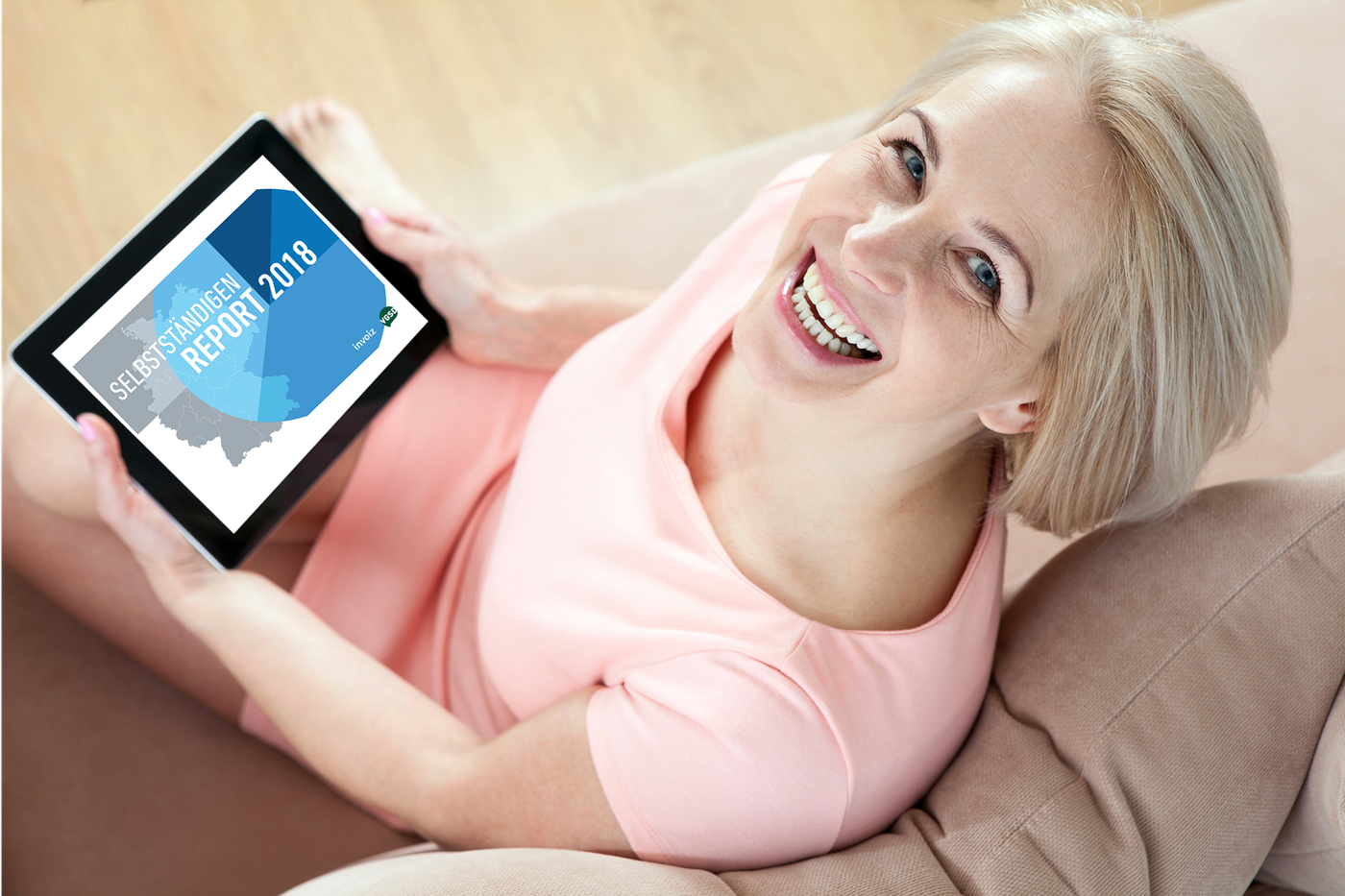
Invoice and the VGSD have created a comprehensive picture of the situation of the self-employed in Germany with the self-employed report 2018.
Four out of five respondents feel little or no respect for politics
- Four out of five respondents feel little or no respect for politics
- More than half of the small business owners have no tax advisor
- Hourly rate of women around 19% lower than men
- More than half of the respondents are not afraid of automation in their job
The complete report can be downloaded for free -> here .
Neunkirchen / Munich, October 9, 2018 — In partnership with the Association of Entrepreneurs and Self-Employed Germany ( VGSD ), the Neunkirchen-based manufacturer of the independent software, invoiz, has developed the “Independent Report 2018”, which will be officially published today. More than 3,000 self-employed from all over Germany took part in the survey. The complete results are now available.
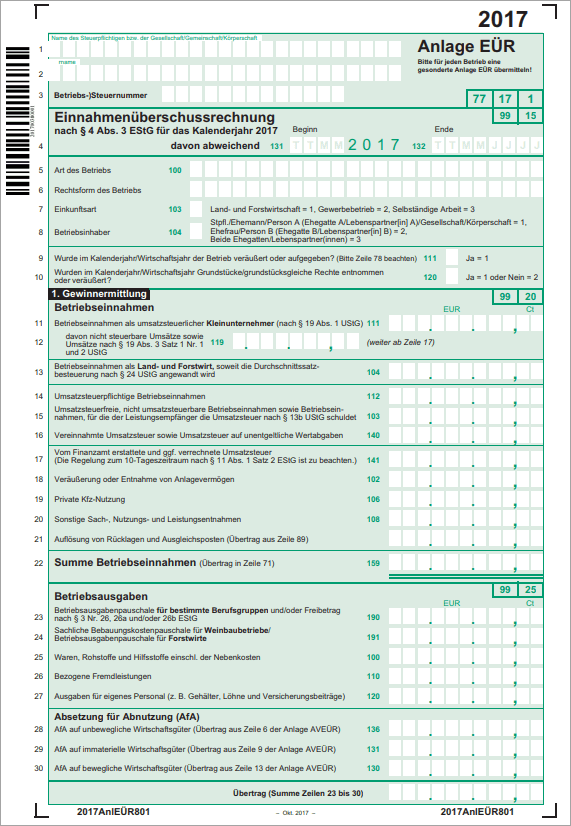
Waiver of tax consultants — own accounting and taxation obligations One in four respondents completely waives the assistance of a tax consultant. Small entrepreneurs with annual sales of up to € 17,500 even prove that they have the most courage to fill their tax and accounting obligations: 55% of respondents refrain from providing professional help. Age and educational background also show differences: Most college graduates secure the support of a consultant. On the other hand, just three out of four respondents without a university or vocational qualification refrain from appointing a tax consultant.
Self-employed and the policy — a broken relationship Main disadvantage of the self-employment is the bureaucracy problem. 59% of respondents have identified bureaucratic hurdles as the main obstacle in their business practice. Self-employed also miss in this country respect and fair treatment by politicians and state institutions: Four out of five respondents feel politically or politely respected little. Even greater (82.4%) is the proportion of self-employed persons who see room for improvement or even considerable need for improvement with a view to fair social security.
If today’s Bundestag election would be — surprising preferences A big surprise: With 24.8%, the respondents feel the “Greens” politically closest — followed by the FDP with 22.5%. The CDU scored just 19.4% in the survey. However, it is still almost twice as strong as the SPD: when it comes to the question of party preference, the Social Democrats in the self-employed come to just 10.6%. They are even overtaken by the “left”: With 13.1% of respondents feel more self-employed of the left connected than in the total population. This is exactly the opposite for the AfD: with 8.5% of the respondents, their share is about one-third less than their general share of voters.
Many self-employed, low hourly wages — how the regional distribution is In Berlin, the share of self-employed in the total population by far the highest. In Saxony-Anhalt, on the other hand, self-employment is just one-fifth of Berlin’s share. Behind the capital is Hamburg, another attractive city state — followed by Bavaria and Hesse. At the lower end of the self-employment density, Saxony-Anhalt and Mecklenburg-Vorpommern, Thuringia and Brandenburg are three other new federal states. Even in Saarland and Lower Saxony, the self-employment share is strikingly low. The situation is different for the hourly rate: with an average hourly rate of 91 euros, Rhineland-Palatinate is ahead. Berlin, on the other hand, with an average hourly rate of 61 euros in the nationwide comparison, together with its colleagues in the other five East German states and in Schleswig-Holstein, is one of the income tail holders. With an average hourly rate of 44 euros, Thuringia’s self-employed are far behind at the end of the income table.
It’s a man’s world — the world of self-employed is still male-dominated Only a third of respondents are female. In the age groups under 30, the proportion of self-employed women is between 15% and 20%. The gender imbalance has nothing to do with a lack of qualifications: at 70.6%, the share of female college graduates among female self-employed is significantly higher than that of their male counterparts (59.2%). Nevertheless, women who set themselves up, apparently go to more cautious to work: Almost one in five (18.4%) opts for the small business status and sets itself to an annual turnover of less than € 17,500. For comparison, only 8.1% of male self-employed are small business taxpayers. Accordingly, women are less represented in the upper sales regions: While almost half of men self-employed earn sales between 60,000 and 240,000 euros (46.9%), only about a quarter of self-employed women reach this sales segment (24.3%). Among the self-employed, who implement more than 240,000 euros, men are even three times more likely to be represented.
Gender pay gap — gap still available The self-employed service providers we surveyed reported an average hourly rate of 63 euros. On average, their male colleagues charge an hourly rate of 78 euros per hour, which means that women earn around 19% less than men. Around half of the women (46.7%) consider the current situation of their company to be moderate, bad or even life-threatening.
Automation in the job — no fear of artificial intelligence Regardless of age, qualifications, location and industry, more than half of the self-employed (56.8%) expect that at most minor parts of their current work will be automated within 20 years. Another quarter (26%) does not expect any changes at all. Only about one in six respondents (17.1%) assumes that the activity currently being performed at the end of the 2030s is entirely or predominantly done by software or robots. However, the areas of insurance and administration are striking: in the administrative sector, optimistic and skeptical forecasts about automation are in balance. In the insurance industry, however, two out of three respondents (65%) assume that most of their work will be automated in 20 years.
Main motives for self-employment — most would do it again Self-determination, more time flexibility and higher earning potential — these are the main motives of the self-employed we interviewed. Emergent foundations, such as those observed in the era of “self-employed persons”, are today more of an exception: only just under 12% of the survey respondents cited the lack of employment alternatives as a reason to start a business. Particularly noteworthy: The positive expectations of self-employment are apparently mostly fulfilled in practice. A good 86% of respondents would become self-employed again. One of the guarantors of business success is the above-average skill level of the self-employed: According to our survey, two out of three self-employed people have a university degree (63%).
“With the Independent Report 2018 we have a large and equally differentiated overview of the situation of the self-employed, freelancers and founders in Germany. The results surprise in part strongly, such as the risky decision to settle profits and tax returns without expert advice. From my daily work, I know how important it is for the self-employed to use tools that allow you to handle things easily and quickly yourself. For example, we use invoiz to make it clear to the founders that these types of tools do not replace a tax consultant. Frightening for me is the small proportion of self-employed women. This survey is a good guide that shows us where the fears and worries lie, and where there is a need for education and improvement, “says Moritz Buhl.
“Instead of helping, the state with ever more bureaucracy and unclear legislation, the self-employed laces the air to breathe. This burdened straight solo and part-time self-employed over-time disproportionately. Depending on the objectives of the parties, the self-employed are sometimes put in the drawer “fake self-employment” and then again in that of the “Porsche driver and tax evader”. And then, based on these prejudices, laws are made. Clear that many feel they are not understood and respected. The survey clearly shows that politicians should listen more carefully and with more impartiality. Above all, I would like more legal certainty. Currently, many IT projects are being relocated abroad because it is not possible to carry out innovative projects in Germany with legal certainty. Andreas Lutz, About the methodologybased on the present “Independent Report 2018” forms an online survey among more than 3000 participants. The survey took place from May to July 2018. Freelancers, sole proprietors and owners of small partnerships and corporations have participated. Numbers strongest group was that of independent service providers without employees (“solo”).
About the methodology Basis of the present “self-employed report 2018” forms an on-line survey among more than 3000 participants. The survey took place from May to July 2018. Freelancers, sole proprietors and owners of small partnerships and corporations have participated. Numbers strongest group was that of independent service providers without employees (“solo”).
About invoiz Invoicing is the leading finance and invoicing program that enables the self-employed and small business to create their offers, invoices and reminders directly in the cloud — easily, intuitively and in seconds. Orders can be billed according to hourly or daily rates using the time recording function and relevant data can be exported to the accountant at the touch of a button. The taxizator calculates the order of magnitude of the already accrued tax burden on the basis of the business figures. With the online payment method, invoizPAY, recipients can pay the bill at the touch of a button. The option invoizBANKING recognizes immediately, if this was paid. Invoice is a product of the Buhl Group and supports all German banks. Invoice is available as a web version and as an app for iOS and Android. More information at www.buhl.de or www.invoiz.de .
About the Association of Founders and Self-Employed Germany (VGSD) eV The VGSD eV represents the interests of solo and micro-entrepreneurs, founders and part-time self-employed in Germany. The association, founded in 2012, currently has around 3,300 club members and around 14,500 community members. The VGSD is committed to legal certainty (in terms of bogus self-employment), to fair health insurance contributions, a meaningful design of the planned pension obligation, less unnecessary bureaucracy and meaningful start-up support. The Chairman of the Management Board Andreas Lutz is at the same time spokesman for the Federal Association of Self-Employed Associations (BAGSV).
메타데이터
- post_id
- 924b9dfa8a7a
- slug
- self-employed-report-germany-2018-924b9dfa8a7a
- url
- https://medium.com/@amundra_33916/self-employed-report-germany-2018-924b9dfa8a7a
- canonical_url
- https://medium.com/@amundra_33916/self-employed-report-germany-2018-924b9dfa8a7a
- author_url
- https://medium.com/@amundra_33916
- status
- ok
- fetched_at
- 2026-07-29 23:05:25