4. The Third Day
How Church is completing 2000 years in 2030–2033 AD, and is now at the brim of the redemption day, next 1000 years, the Sabbath Millennium.
4. The Third Day

Photo by Smitha Basil George: ‘Garden captures — God’s art’
Authored by Smitha Basil George under the complete direction and guidance of God, the Holy Spirit, dated August 28, 2023.
Scriptural and extra-Biblical references are provided throughout the article and in the ‘References’ section at the end.
Abstract
Throughout the history of mankind, as events progressed, God has used a series of threes — for number of things (physical objects and spiritual strengthening principles) and for periods of time (multiples of three days, months, years), as an implication of certain significant purposes being completed, and new things being unfolded. Among the multiple significant manifestations of threes — Holy Trinity of God Himself, the strength displayed by a cord of three strands, three gifts given by the wise men during Jesus’ birth, Jesus’ three-time restitution of Peter, and many more like that, we will mainly focus on a selected set of very important ‘Third Day’ manifestations in this article. This would include God foreshadowing His Only Son’s sacrifice as His atoning perfect Lamb through the test given to Abraham, with Abraham receiving Isaac back on the third day of their journey of sacrifice, Jesus’s own resurrection on the third day from his sacrificial death on the cross, and the third day (3rd 1000 years) of restoration, about to be getting dawned for mankind after the 2000 years of Church Age.
Scripture references [1]: Genesis 12: 1–3, 17, 22; 1 Kings 17–18; Esther 4–5; Ecclesiastes 4: 12; Hosea 6: 2; Amos 9: 11–12; Jonah 1: 17–2: 10; Matthew 2: 11, 28: 1–10; Mark 16: 1–14; Luke 24: 1–44; John 1: 1–18, 20: 1–29, 21: 15–19; Acts; Romans 12: 1–2; 1 Corinthians 6: 19, 12, 13; 2 Corinthians 2: 17–21; Ephesians 5: 22–26; 1 Peter 3: 18–20, 4: 6
Helpful Extra-Biblical Reads: [2] Lee Strobel
The Threes of God
Scriptures for this section [1]:
- 1 Kings 17–18
- Esther 4–5
- Ecclesiastes 4: 12
- Jonah 1: 17–2: 10
- Matthew 2: 11
- John 1: 1–18, 21: 15–19
- 1 Corinthians 6: 19
God, in Himself, exists as a ‘three persons in one’ being. The Being of the infinite Godhood is completed in His three personalities — Father (the Most High God who is the source of unconditional and infinite love), Son (the Word of God, Jesus Christ, who took on humanity, to make it perfect), and the Holy Spirit (the Spirit of God, who dwells in everyone whose sins are forgiven through Jesus, the Son). The Word of God is replete with other manifestations of groups of three, both in terms of periods of time — as multiples of three days / months / years, and in terms of strengthening / purpose driven symbolisms and physical objects.
Examples of periods where a group of three is used to achieve a purpose include:
- God, sending rain, under the ministry of Elijah in the third year after a period of drought because of Israel’s sin during Ahab’s time.
- Esther, going to the king’s inner court to start presenting her request of deliverance for her people, the Jews, on the third day of her fasting and prayer.
- Jonah, having to spend three days and three nights in the belly of a fish to repent and turn himself to God’s purpose for him.
Examples of the manifestation of purposes exhibited through three physical objects / occurrences include:
- God, raising up a widow’s son after Elijah’s plea for him being done three times.
- Solomon’s instruction regarding a cord made of three strands which cannot be easily broken.
- Wise men, giving three gifts to Jesus at His birth — Gold in honor of His Kingship, Frankincense as a symbol of His deity and Myrrh as a symbol of His sacrificial death.
- Jesus, restoring Peter thrice, in reinstating him as the leader of His flock, following Peter’s denial of Him three times during His trial.
In the upcoming sections, we will look into 3 more major Third Day deliverance events God had established, of which 2 already came to pass in the past, and 1 will take place in the very near future.
Abraham’s Test Foreshadowing Jesus’ Sacrifice
Scriptures for this section [1]:
- Genesis 12: 1–3, 17, 22
- Matthew 27, 28: 1–10
- Mark 15, 16: 1–14
- Luke 23, 24: 1–44;
- John 19, 20: 1–29
- 1 Peter 3: 18–20, 4: 6
Extra-Biblical references: [2] Lee Strobel
In Genesis 22, we see a heartbreaking account of God, rehearsing what He intended to do eventually with His Son, as a sacrificial Lamb to carry and destroy the sin of mankind through His death, through an event He commanded from His faithful servant and friend, Abraham. God gave Isaac miraculously to Abraham and his wife Sarah in their very old age. God’s first promise of Isaac came to Abraham when he was 75 years old. God reaffirmed this promise when he was 99 years old. He specifically promised in Genesis 17: 19 that He would establish an everlasting covenant with Isaac, and would make him a great nation. Isaac was born to Abraham and Sarah, as God promised, when they were 100 and 90 years old respectively.
It is quite incredible to see the great obedience and trust that Abraham had shown towards God, when he decided to follow through God’s command, to provide Isaac as a burnt offering to Him in the land of Moriah, which was a three-day journey away from where Abraham and Isaac had been. Abraham, no doubt with the anguish of surrendering his only son, whom he got after a life-time of prayers and promises, through whom God Himself had promised a great nation as inheritance, got up early in the morning of the next day, split the wood needed for the burnt offering, arranged the needed men and provisions for the journey and the sacrifice, and started the journey with Isaac and the 2 men. The land of Moriah, being a three — day journey away, he got enough time to think, re-think, and turn around to go back if he wanted to do so. He also knew that He could trust God enough, even not to follow through with the command (he had failed multiple times before — giving Sarah over to Abimelech to save his own life, succumbing to Sarah’s pressure resulting in Ishamel’s birth, but God had not dealt as harshly with Him). Still, he went ahead in the way God asked him to go for two whole days, no matter how anguishing the journey had been.
A very significant moment in the journey came on the third day, when he and Isaac went alone to perform the sacrifice, ahead of the other 2 men. Isaac asked him that they had the wood and fire, but where the sacrificial lamb was. The reply of Abraham, quoting from [1] NKJV Genesis 22:8 was as follows — “My son, God will provide for Himself the lamb for a burnt offering.” That statement shows what made Abraham go ahead with the journey the past two days. He had a completely surrendered trust in God that, somehow God will provide for Himself the lamb for the burnt offering, even though he didn’t know how, and somehow God will follow through with His promise of making Isaac a great nation by giving him back / raising him back to life, if killed.
Abraham upheld that faith even when he built the altar, bound Isaac, put him on the altar and stretched his hand out to take the knife to kill his son. Isaac too, showed deep faith by quietly obeying his father and trusted God in offering himself to be bound up and killed. God honored their faith and great obedience by forbidding Abraham at the moment he stretched his hand to kill Isaac, and indeed did provide a burnt offering for Himself, in the form of a ram caught in a thicket near the altar. Abraham called that place -”Jehovah Jireh — The LORD Will Provide — In the Mount of the LORD it shall be provided.” God greatly blessed Abraham for the deep obedience, faith and reverence he showed towards Him, and blessed his descendants as well, as a new beginning for both Abraham and Isaac, in His great faithfulness. This great deliverance and blessing came on the third day, after two days of deep anguish, and questions about the whole promise, along with the very difficult physical journey.
God, on the other hand, didn’t have a way out from sacrificing His only begotten Son, because we humans had not given Him much of a choice as explained in the second article titled — ‘Jesus the Christ, the Atonement for Human Sin’. 2000 more years later (typology for another two more days), He indeed went through with the whole sacrifice, and Jesus let it happen without missing even one detail, as the most perfect offering. Just like how a burnt offering gets completely consumed, without even a bit of flesh or blood remaining, He offered every drop of blood and every bit of His flesh to be consumed in the fire of God’s wrath upon sin. How the infinitely loving Father God could make Himself to strike His Son with that kind of wrath is something which we can understand, only when we know that, the power which could pull Him back from showing His wrath on His Son was won over by the power of His love for each one of us.
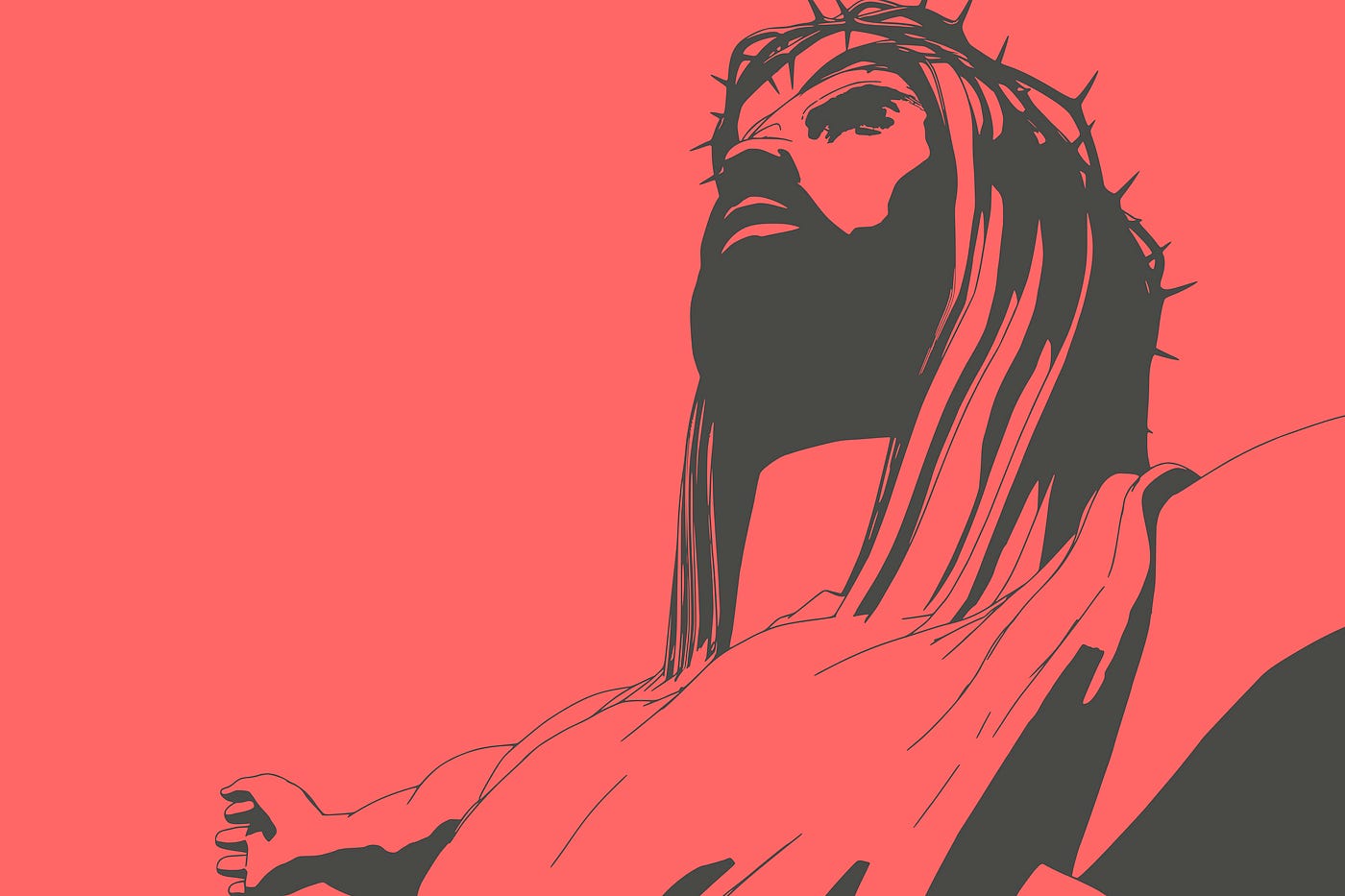
After enduring the unfair trial, torture, the cross, the death and Hades, on the third day, Jesus overcame death and resurrected back to life with a transformed glorious body, still having the scars of His suffering. His resurrection opened a new chapter in God’s plan of redemption and eternal blessings, not just for Abraham’s descendants, but for all the people of the earth. It was the third day (after approximately 2000 years since the covenant was given to Abraham and the later covenant of Law given to Moses) for Abraham’s descendants to start walking according to the new covenant established by the Lord Jesus Christ. When anyone accepts Christ’s covenant of sin’s destruction and thus entering into a new relationship with God through His sacrifice as a new creation, they, whether Abraham’s descendants or not, would become a part of the Body and Bride of Christ, the Church. And it was the first day for the Bride of Christ, His Church’s new journey.
Church Age
Scriptures for this section [1]:
- Hosea 6: 2
- Amos 9: 11–12
- Matthew 28: 18–20
- The book of the Acts of the Apostles
- Romans 12: 1–2
- 1 Corinthians 12, 13
- 2 Corinthians 2: 17–21
- Ephesians 5: 22–26
In Acts 1–2, Jesus, before His ascension to heaven, instructed His disciples to wait patiently until He would be sending God’s Holy Spirit over them. Just like how He received the Holy Spirit during His baptism at John’s hand, He said that they would receive power when the Holy Spirit came upon them, in such a way that they would be emboldened and equipped with multi-fold gifts to witness about Jesus’ work of salvation for the whole mankind in Jerusalem, Judea, Samaria and to the ends of the earth. The disciples waited in Jerusalem as Jesus instructed, and gathered together for prayer regularly. When the Day of Pentecost came, the Holy Spirit came upon them as flames of fire, and the disciples started speaking, which those gathered around them heard in their own different languages. Peter explained the whole Good News (Gospel) of Salvation of Jesus Christ in a sermon, empowered by the Holy Spirit. On that day, about three thousand people received his word, got baptized and joined the disciples as a single community, the Church.
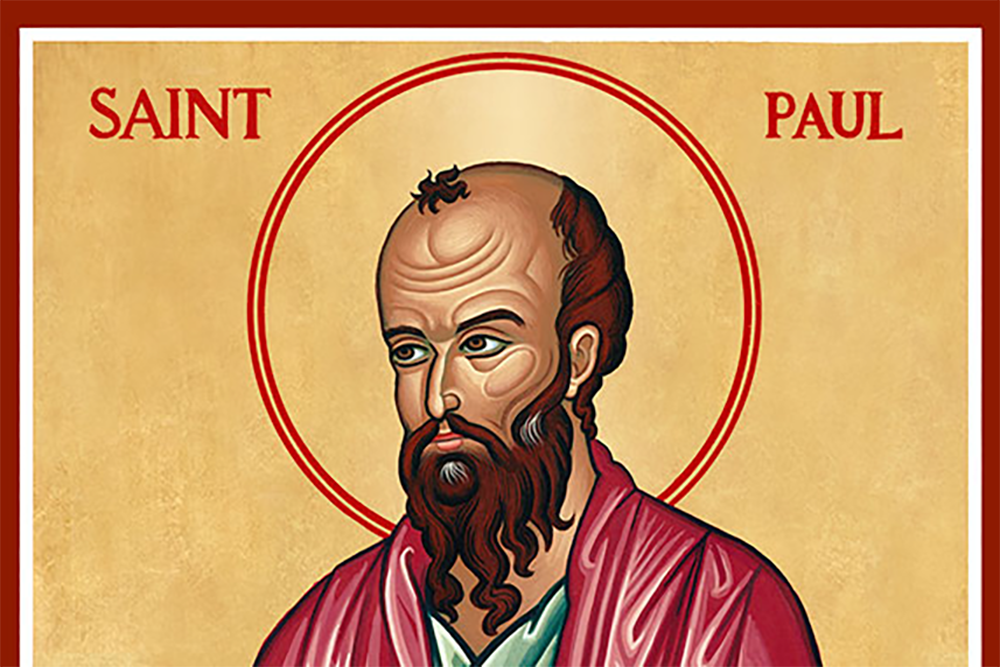
From then on, through the disciples of Jesus, and other Church leaders that God ordained including Stephen, Paul, Barnabas, Silas, Timothy, Aquila and Priscilla and many more, the Gospel spread to the entire Asia Minor, Greece, islands in the Mediterranean Sea, regions of Europe and even as far as India. All their work were accompanied by multiple signs and wonders, through the empowerment of the Holy Spirit — healing from various infirmities (the crippled man at the Temple Gate called Beautiful by Peter and John, Paul healing many, even those who touched his garment fringes), casting off of demons (Paul delivering a servant girl in Philippi), resurrection from the dead (Tabitha by Peter, Eutychus by Paul), being caught away by the Holy Spirit to different locations (Philip from the Ethiopian eunuch to Azotus) and many more. The Church faced severe persecution at the hands of the religious Jews, and at their instigation, from the Roman government. However, the persecution helped in the Church getting scattered throughout, and thus growing much farther and stronger.
The Church thus included not only the Jews who accepted the Gospel of Jesus Christ, but the Gentiles also, who once belonged to different other religious backgrounds and cultures before accepting the Gospel. Acts 10 gives an account of how an Italian Cohort named Cornelius along with his whole household, relatives and close friends received salvation and Holy Spirit baptism after listening to Peter’s account of the Gospel. James referred to this event when he spoke in the Jerusalem Council in Acts 15: 14–17, quoting from the Old Testament prophet Amos 9: 11–12, that not just the house of David will be rebuilt by God, but the rest of the mankind will seek the Lord and that, there will be Gentiles who are called by His name. Also, we see Paul doing his missionary journeys gathering many Gentiles to the Church and establishing local churches in many places — Galatia, Philippi, Thessalonica, Corinth, Ephesus, Colossae and many more.
Paul highlighted the fact that the Church is the body of Christ, and the members of the Church are like different members of a physical body, fulfilling their different duties — teachers, apostles, pastors, administrators, healers, prophets etc. to encourage, help and sustain each other, bound by God’s love over everything (1 Corinthians 12, 13). In 2 Corinthians 2: 17–21, Paul mentions that those who belong to Christ are new creations. Our old selves are to be crucified with Christ and we need to be living as new creations, born again into a relationship with the Holy Spirit, being the Temple of the Holy Spirit, and being transformed into Christ’s character day by day (Romans 12: 1–2). Moreover, the Church is the Bride of Christ, for whom Christ died, to present herself as a holy and blameless bride to Him, by transferring His righteousness to her by the washing of the blood that He spilled on the cross for her sake and by the water, that is His Word — the Holy Spirit empowered transformational obedience to His Word (Ephesians 5: 22–26).
From the Day of Pentecost, Christ’s Bride has started her journey, through multiple persecutions at the hands of the different governments and kingdoms of this world, still holding onto her faith and growing in love for each other. The Gospel has spread far and wide, reaching every political country of the world. Still, even in the 21st century, physical and spiritual persecution of the Church is prevalent and increasing, all across the world. There were countless martyrs made during the past 20 centuries (about 2000 years) because they stood for the Word of God and for the love of Christ. Jesus foretold it in John 15: 18–27, that since the world persecuted Him, it would persecute His disciples too.
But as it is mentioned in Hosea 6: 2, “After two days He will revive us; On the third day He will raise us up, That we may live in His sight.”, the time is now very near for the revival of the Jews, and the whole mankind. With 2000 years, since Christ’s crucifixion, resurrection and the Day of Pentecost, getting completed in 2030–2033 AD, and with Daniel’s 70th week (being covered in next article) of Antichrist’s system and God’s wrath on the unrepentant world bound to be happening as the last 7 years of the 2000 years, and the Church not being appointed for God’s wrath all over again (Isaiah 26: 19–20, Revelation 3: 10, John 14: 1–3), the redemption moment for Christ’s Church, is in the horizon!
References
- The Holy Bible, https://www.biblegateway.com/, New King James Version.
Helpful Extra-Biblical Reads
- Lee Strobel, The Case for the Resurrection: A First-Century Reporter Investigates the Story of the Cross, 2010.
Articles in this series
메타데이터
- post_id
- 925b2cc6f02a
- slug
- 4-the-third-day-925b2cc6f02a
- url
- https://medium.com/@smitha.b.george/4-the-third-day-925b2cc6f02a
- canonical_url
- https://medium.com/@smitha.b.george/4-the-third-day-925b2cc6f02a
- author_url
- https://medium.com/@smitha.b.george
- status
- ok
- fetched_at
- 2026-08-09 08:40:13