Mirrorless Cameras Accidentally Killed Photography.
The machine can make things sharper. It cannot teach us what is worth seeing.
Mirrorless Cameras Accidentally Killed Photography. What Photography’s Crisis Teaches Us About Design Education

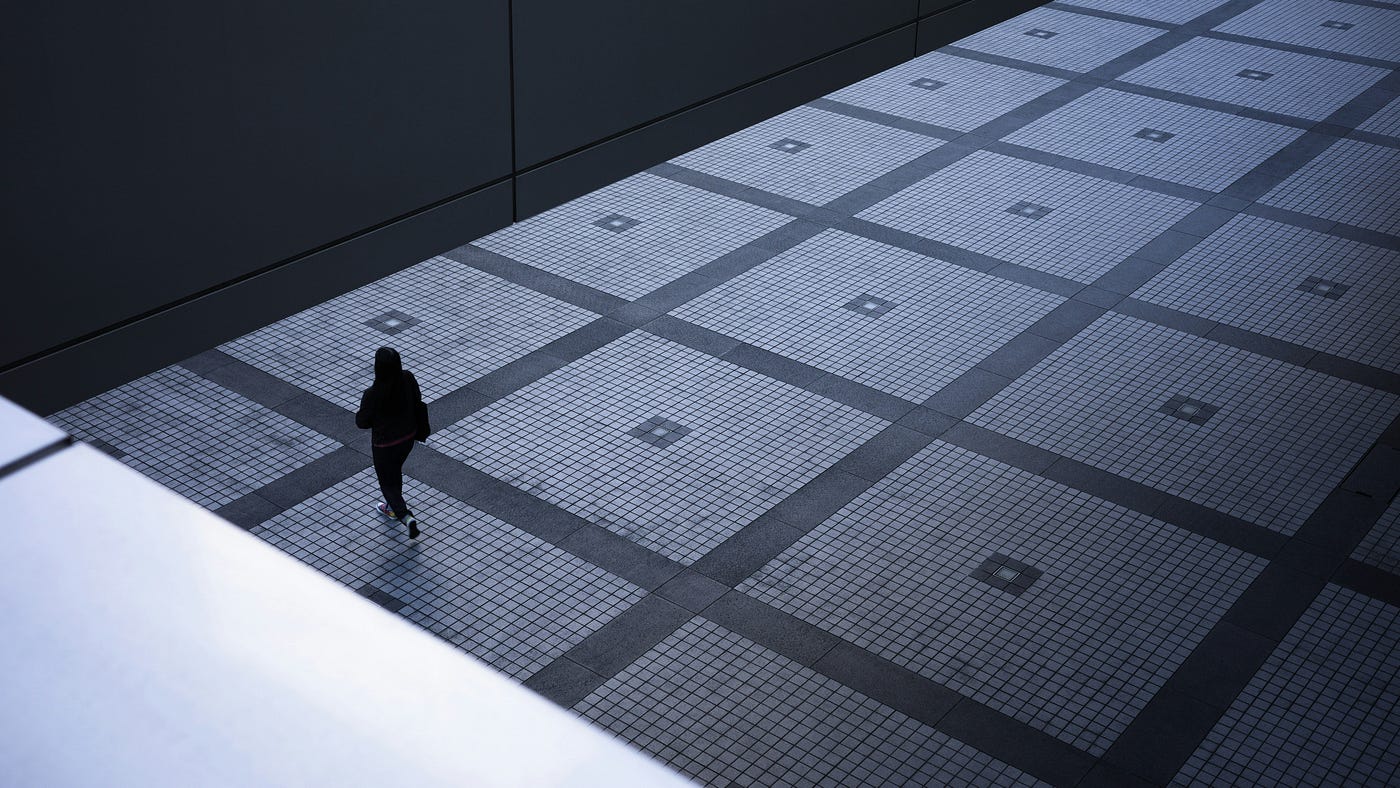
Photo by Odile on Unsplash
The machine can make things sharper. It cannot teach us what is worth seeing.
The argument that mirrorless cameras accidentally killed photography is not really about cameras. It is about what happens when a tool becomes so advanced that it removes the very struggle through which judgement is formed. Photography has been optimised for perfection, speed, sharpness, tracking, convenience and performance, but often at the expense of presence, patience, observation and emotional connection.
That is why this matters for design education. The danger is not that technology improves. The danger is that technology begins to replace the formative experience that once made people perceptive. In photography, older tools forced the photographer to wait, focus, frame, expose, miss, learn and try again. The process was not merely technical. It was educational. The friction trained the eye. The limitation sharpened attention. The possibility of failure produced concentration.
Mirrorless cameras did not destroy photography by becoming bad. They disrupted photography by becoming too good. Eye autofocus finds the subject. Burst mode captures the moment. Computational systems preview the result. Firmware improves the machine. The photographer is increasingly invited to supervise a system rather than make a photograph. The image may be sharper, cleaner and more technically reliable, but the person behind it may be less involved. That is the central problem.
Design education faces exactly the same crisis. For decades, design schools have taught students tools, outputs and deliverables while often failing to protect the deeper formation of the designer. Now AI, templates, automated layout systems, brand generators, mock-up platforms and social media aesthetics are doing to design what mirrorless cameras did to photography. They remove friction. They accelerate production. They make average work look finished. They generate the appearance of competence before the student has developed judgement.
This is not progress if it produces designers who can operate systems but cannot see.
Perfection Is Not Proof of Life
Photography has become too perfect. That is a brutal but useful phrase. The modern image is often sharp, polished, stabilised and technically flawless, yet strangely dead. Design has the same problem. We now see endless branding projects, posters, interfaces and motion graphics that look professionally resolved but have no necessity. They are smooth but empty. They are well rendered but weakly thought. They have no wound, no risk, no pressure, no lived observation.
Design education must therefore stop treating polish as evidence of learning. A polished outcome may hide intellectual laziness. A beautiful mock-up may conceal weak research. A perfect brand presentation may disguise the fact that the student has not understood the client, the audience, the culture, the market, the ethics or the historical context. The danger is that education rewards the surface while the machine does more and more of the work underneath.
The Process Used to Matter
Older cameras made photographers slower, and perhaps that was a good thing. This is the lesson design schools must recover. Slowness is not inefficiency. Slowness is where perception develops. A student who sketches thirty bad ideas by hand learns more than a student who generates thirty acceptable options instantly. The bad sketches matter because they show the mind searching. They show the hand thinking. They show the student encountering resistance.
Without resistance, there is no formation. This is where design education must become more demanding, not less. Students need to draw, cut, compose, print, photograph, sequence, bind, observe, compare and revise. Not because analogue methods are nostalgic, but because they make thinking visible. They slow the student down enough to notice proportion, rhythm, hierarchy, contrast, tone, relationship and meaning.
Gear Became Content
Photography became obsessed with cameras, lenses, rumours, upgrades, comparisons and affiliate links. Design has its own version of this disease. Software becomes identity. Students and professionals obsess over tools, plug-ins, prompts, AI platforms, fonts, mock-ups and trends. They know what the latest software can do, but not what a page should do. They know how to generate options, but not how to judge them. They know how to follow a visual trend, but not how to establish a point of view.
This is fatal for education. A design school that teaches tools before judgement produces operators, not designers. The question is not, what software did you use? The question is, what did you see? What did you understand? What did you decide? Why does this need to exist?
Convenience Changed Behaviour
The best camera became the one with you. This is true, but it also reveals a deeper shift: convenience changed behaviour. When making becomes effortless, everything becomes capture. The world becomes content. The person no longer has to decide whether something deserves attention. They simply record, collect and move on.
Design students now live inside this condition. They gather references endlessly. They scroll rather than study. They save images rather than analyse them. They confuse exposure with understanding. They mistake visual accumulation for visual culture. This is why design education must teach students how to look again.
Looking is not scrolling. Looking is not collecting. Looking is not moodboarding. Looking is disciplined attention. It is the ability to sit with one image, one poster, one page, one object, one sign, one street corner, and ask what is actually happening. What is the structure? What is the hierarchy? What is the cultural code? What is being assumed? What is being hidden? What is being sold? What is being repeated?
Without that discipline, students become consumers of visual material rather than makers of visual meaning.
Imperfection Can Carry Human Presence
Modern cameras removed imperfection and, in doing so, cleaned the soul out of photography. This is one of the strongest ideas in the argument. Imperfection is not automatically good, but meaningful imperfection often carries evidence of human presence. Grain, blur, awkward framing, uneven light, a hand-drawn line, a misregistered print, a rough edge: these can all carry life when they emerge from attention rather than carelessness.
Design education must teach the difference between lazy imperfection and meaningful imperfection. A badly made piece is not automatically authentic. A rough piece is not automatically honest. But a perfectly produced piece is not automatically good either. The task is to help students understand when refinement strengthens meaning and when it kills it. Sometimes the work needs precision. Sometimes it needs tension. Sometimes it needs silence. Sometimes it needs damage. The designer’s job is not to make everything smooth. The designer’s job is to decide what the work requires.
Photography Became Performance
Photography became a performance for validation. People no longer take photographs for themselves. They make images for platforms, algorithms and approval. Design education is already trapped in this logic. Students produce portfolio projects that look like other portfolio projects. They design for Behance, Instagram, LinkedIn and assessment panels. They learn the visual language of approval before they learn the discipline of inquiry.
This produces safe work. Safe work looks contemporary. Safe work photographs well. Safe work uses the right mock-up. Safe work has the correct amount of white space. Safe work looks employable. But safe work rarely changes anything because it has been designed to be accepted, not to be necessary.
Design education must resist this. Students should not be trained to perform design competence. They should be trained to build design judgement. That means critique must become central again. Not the soft critique of preference, but the serious critique of consequence. What is this work doing? Who does it serve? What does it clarify? What does it distort? What assumptions does it carry? What world does it help to build?
Tools Shape Thought
There is something important in the difference between a mechanical tool and an operating system. Whether one prefers DSLR cameras or mirrorless cameras is not the main issue. The educational point is more important: tools shape behaviour. Interfaces shape thought. A tool that makes everything effortless changes the maker’s relationship to the act of making.
This is why design schools need material experience. A student who has only designed on screens has not fully understood scale, texture, pressure, surface, weight, ink, paper, binding, light or physical context. The screen flattens consequence. It makes everything reversible. It encourages endless adjustment without commitment. Material work forces decisions. It makes the student encounter resistance. It teaches that design is not merely an arrangement of pixels, but an intervention into the world.
Cameras Became Computers. Design Tools Became Intelligent Systems.
Modern cameras became computers. Design tools have moved in the same direction. A designer today increasingly works with software that suggests, corrects, predicts, completes, generates and optimises. The tool is no longer passive. It has agency. It offers solutions before the student has fully formed the question.
That is the danger. When the machine proposes too quickly, the student may stop searching. When the system completes the sentence, the student may stop thinking. When AI generates the layout, the student may stop discovering structure. The educational task is therefore not to ban advanced tools. That would be naive. The task is to teach students how not to surrender authorship to them.
Students must learn to use intelligent tools without becoming intellectually dependent on them.
Social Media Changed What Good Looks Like
Photography stopped documenting reality and started manufacturing aesthetics. This is directly relevant to graphic design. Much contemporary student work is not rooted in content, audience or context. It is rooted in aesthetic mimicry. It borrows the look of seriousness without the substance. It borrows the look of activism without political understanding. It borrows the look of luxury without craft. It borrows the look of experimentation without risk.
This is where design education must become historically and culturally serious again. Students need more than visual references. They need lineage. They need to know where forms come from, what they once meant, how they have been used, corrupted, revived and emptied. A style is never just a style. Swiss typography, punk graphics, constructivism, corporate modernism, psychedelic posters, vernacular signage, digital brutalism, luxury minimalism: each carries histories, politics, technologies and values.
Without this knowledge, students merely sample surfaces.
Consumption Replaced Observation
People are collecting gear more than experiences. Photography has become consumption instead of observation. This is perhaps the most important warning for design education. Students are surrounded by tools that encourage accumulation: more references, more outputs, more versions, more presets, more prompts, more mock-ups, more content. But education is not accumulation. Education is transformation.
The student does not need more images. The student needs a better eye. The student does not need more tools. The student needs stronger judgement. The student does not need faster output. The student needs deeper responsibility.
The Real Warning Is About AI and Design
The argument about mirrorless cameras becomes a warning about AI and design. The issue is not the machine itself. The issue is what the machine removes from the learning process. If the tool removes difficulty before the student has learned through difficulty, the tool does not empower the student. It weakens them. It produces fluency without formation.
So what should design education do? It should reintroduce friction deliberately. Not pointless difficulty. Not outdated gatekeeping. Productive friction. Students should be asked to draw before they generate. Observe before they search. Research before they style. Make by hand before they automate. Critique before they publish. Revise before they present. Explain before they defend. Print before they upload. They should sit with one idea long enough for it to become uncomfortable.
Design education should also stop worshipping finished outcomes. The process book should matter. The failed attempts should matter. The rejected sketches should matter. The student’s ability to explain decisions should matter. The critique should examine not only what the work looks like, but how the student arrived there and what kind of judgement was formed along the way.
Attention Is the Real Crisis
The real question is not whether mirrorless cameras killed photography. The real question is whether automation kills attention when education fails to defend it. A good camera can still make a good photograph. AI can still support meaningful design. Digital tools can still extend human capability. But only when the human being remains awake. Only when the tool serves perception rather than replacing it. Only when the student understands that convenience is not the same as mastery.
For design education, the lesson is clear. Do not train students to chase the newest tool. Do not confuse speed with intelligence. Do not reward polish without thought. Do not mistake technical perfection for meaning. Do not allow software to replace the slow formation of the eye, the hand and the conscience.
The future of design education depends on restoring the very things that advanced tools quietly remove: patience, attention, failure, material knowledge, historical memory, ethical judgement and the courage to make decisions.
The machine can make things sharper.
It cannot teach us what is worth seeing.
This article is inspired by this wonderful video from the Amar Tech talk youtube channel
💛 Love what we do at The New Art School & Design Education Talks podcast? Help keep design education alive!
✨ Join our mailing list: https://sendfox.com/thenewartschool Explore more: https://linktr.ee/thenewartschool | @newartschool| https://newartschool.education/ | https://heretakis.medium.com/ | https://odysee.com/@thenewartschool:c
메타데이터
- post_id
- 92b3c668cfd8
- slug
- mirrorless-cameras-accidentally-killed-photography-92b3c668cfd8
- url
- https://medium.com/@heretakis/mirrorless-cameras-accidentally-killed-photography-92b3c668cfd8
- canonical_url
- https://medium.com/@heretakis/mirrorless-cameras-accidentally-killed-photography-92b3c668cfd8
- author_url
- https://medium.com/@heretakis
- status
- ok
- fetched_at
- 2026-06-09 15:37:30