The Crisis of the Empty Shell: Why the Digital Built Environment Needs a Supply Chain
By The Digital Hardware Store (TDHS)
The Crisis of the Empty Shell: Why the Digital Built Environment Needs a Supply Chain
By The Digital Hardware Store (TDHS)
Abstract
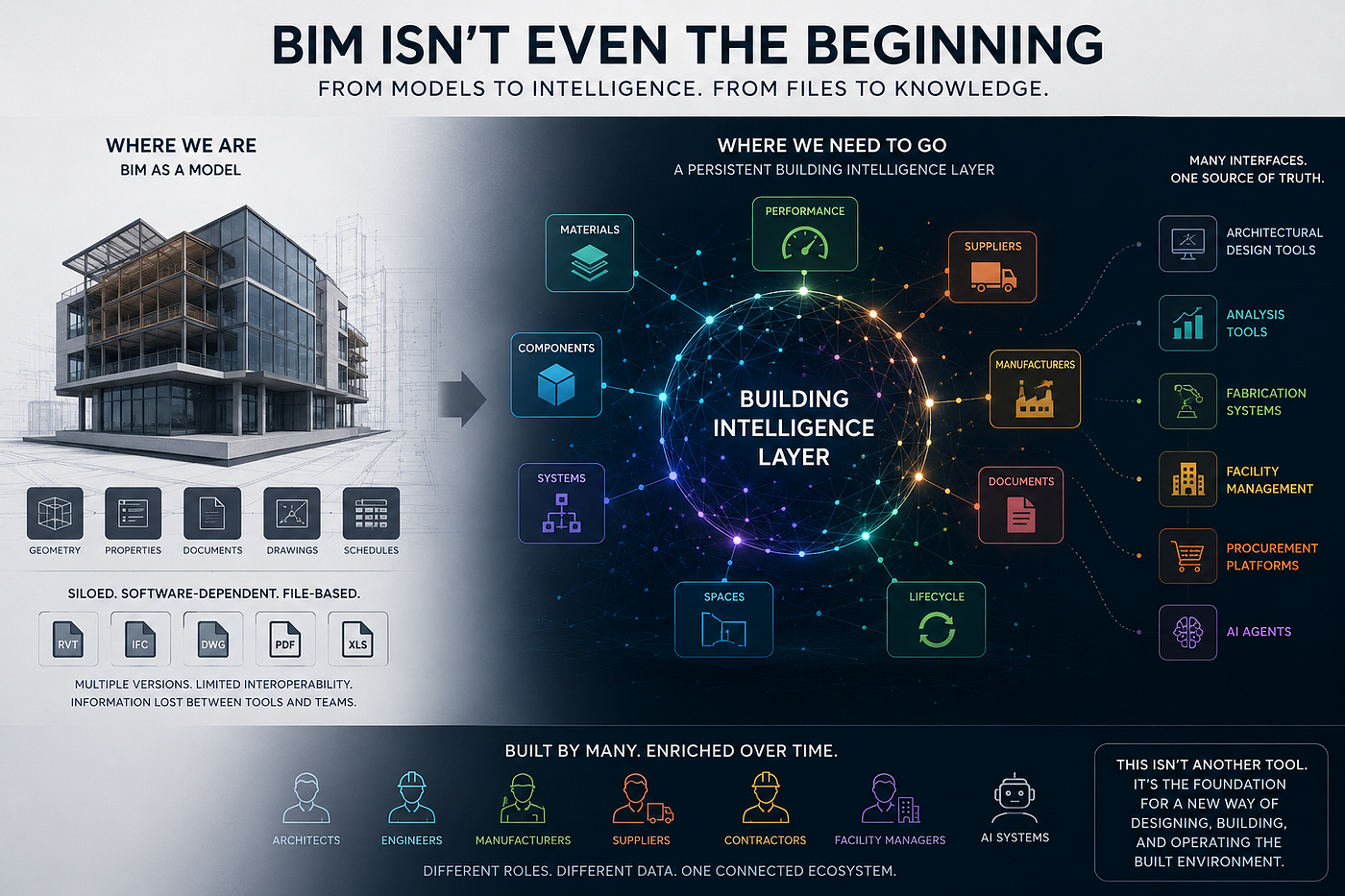
The Architecture, Engineering, Construction, and Operations (AECO) industry is currently racing toward two parallel horizons: the “Industrial Metaverse” and the “Smart City.” Both promise a future where digital simulation precedes physical execution, reducing waste and optimizing performance. However, these simulations are currently being constructed on a fractured foundation. We are building sophisticated digital environments using “empty shells”, 3D assets that prioritize visual verisimilitude over semantic and geometric integrity. This article states that true Digital Twins cannot exist without a standardized, manufacturing-grade supply chain. It proposes the Universal Standard Kit (USK) as a methodological framework to bridge the schism between the parametric rigor of engineering and the visual fidelity of real-time simulation.
The Schism: Art vs. Inventory
For the past two decades, the digitization of the built environment has evolved along two divergent vectors, creating a fundamental interoperability crisis.
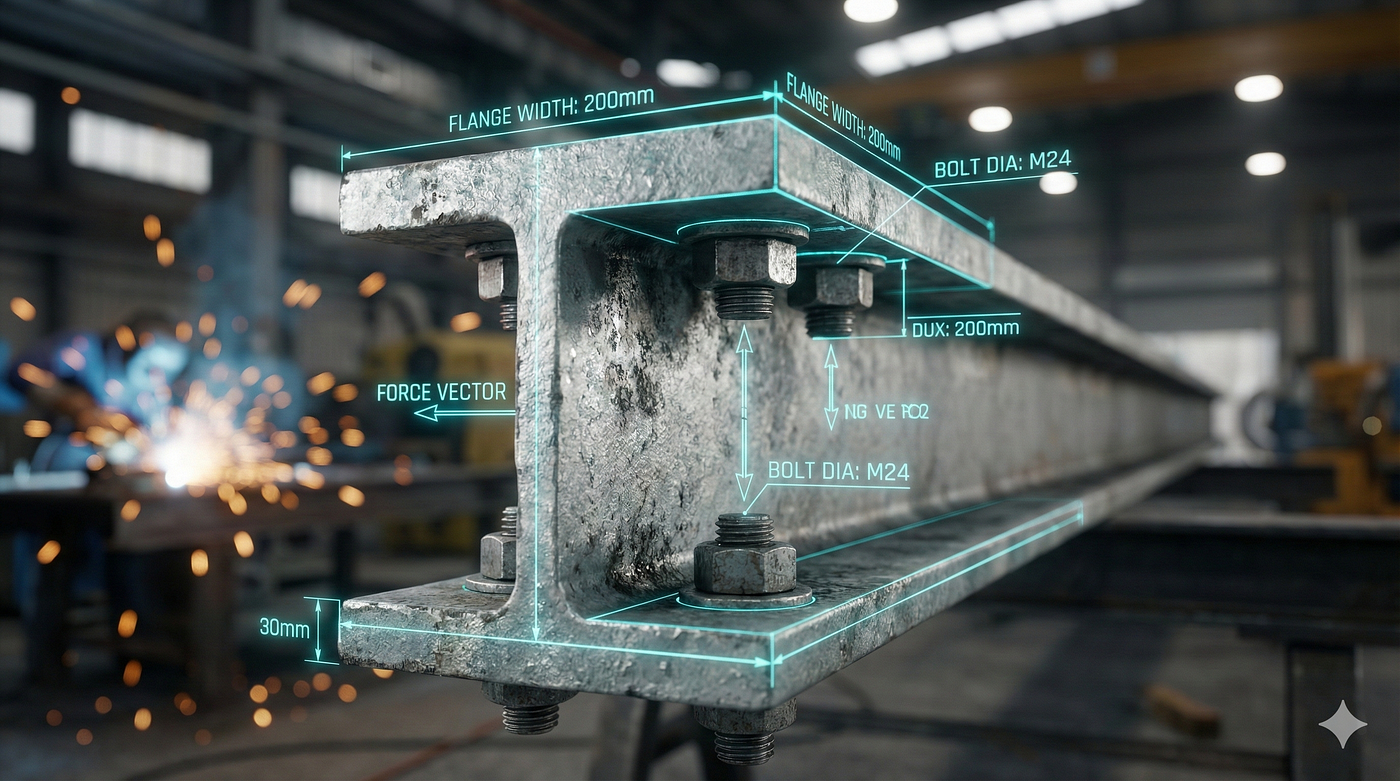
On one side, we have the Engineering Domain (BIM/CAD). Here, validity is defined by data. An IPE 80 beam in a BIM environment is a semantic container holding mass, thermal conductivity, and load capacity. However, historically, the geometric representation of these objects has been an abstraction, a simplified extrusion lacking the nuanced reality of root fillets or surface imperfections.
On the other side, we have the Visualization Domain (CGI/Game Engines). Driven by the entertainment industry, this domain prioritizes the “suspension of disbelief.” Assets are modeled to appear realistic, often utilizing “box mapping” and optimized topology that overlooks construction logic. In this world, a steel beam is usually just a hollow mesh with a texture map, lacking the volumetric integrity to support a physics simulation or the dimensional accuracy to pass a fabrication review.
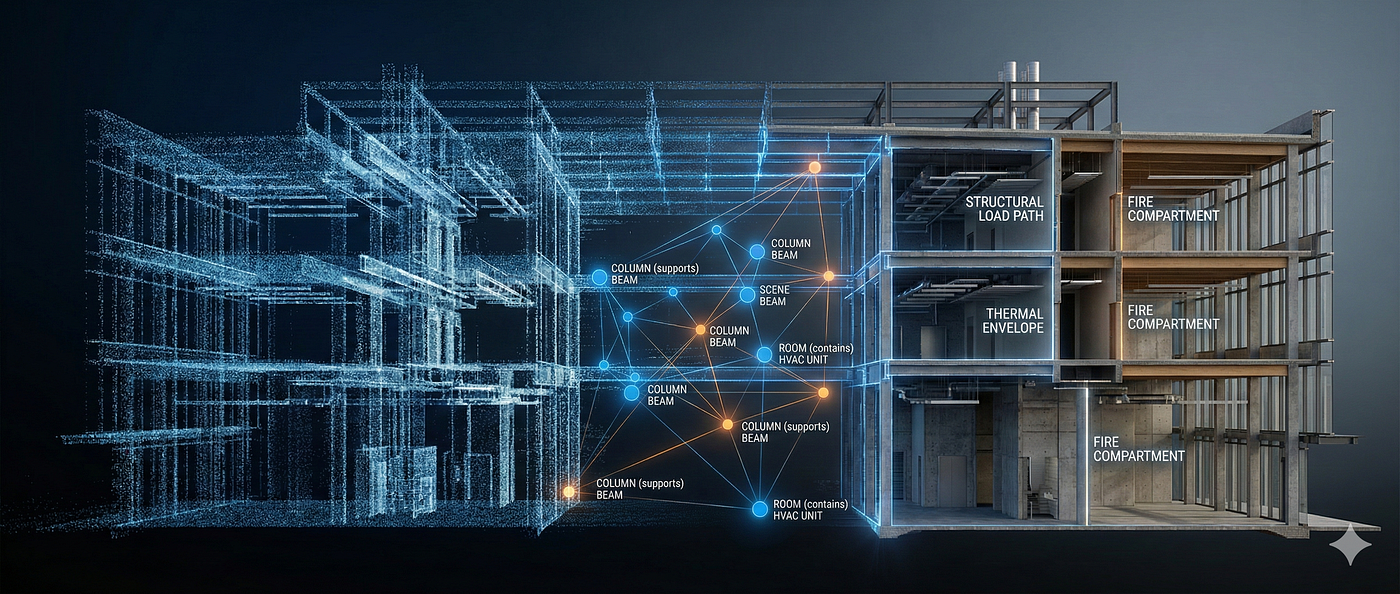
This separation creates a “Potemkin Village” effect in our Digital Twins. We can render a photorealistic city or a factory, but if we attempt to run a structural stress test or a 4D logistics simulation, the illusion collapses. The assets are “props,” not components.
The “Housing as Machine” Paradigm
This crisis is not limited to industrial megaprojects. It is perhaps most acute in the residential sector. As the industry pivots toward Off-site Construction, Modular Fabrication, and Prefabrication, the distinction between “Housing” and “Industry” is dissolving.
In a modern modular construction workflow, a residential housing block is effectively a machine for living, assembled with the same tolerance requirements as an automotive assembly line. A door handle in a Lisbon apartment is no longer just a decorative element; it is a SKU (Stock Keeping Unit) in a global logistics chain. If the digital asset representing that door handle is merely an “artistic interpretation,” the automated manufacturing process fails.
Therefore, the requirement for precision is universal. The beam supporting a warehouse roof and the lintel above a residential window must share the same geometric DNA. They require a taxonomy that respects the “Civilization Scale” of construction, from the Civil infrastructure of the street (USK_CIV) to the Structural bones of the tower (USK_STR), down to the Equipment used to build it (USK_EQP).
The Universal Standard Kit (USK): A Methodology
To solve the “Empty Shell” crisis, we must move from creating “Art” to managing “Inventory.” This is the foundational philosophy of The Digital Hardware Store (TDHS). We are establishing a supply chain based on the Universal Standard Kit (USK), a protocol that hybridizes parametric definition with poly-modeling optimization.
The USK workflow addresses the three critical failures of current digital assets:
1. The Geometric Fidelity Gap
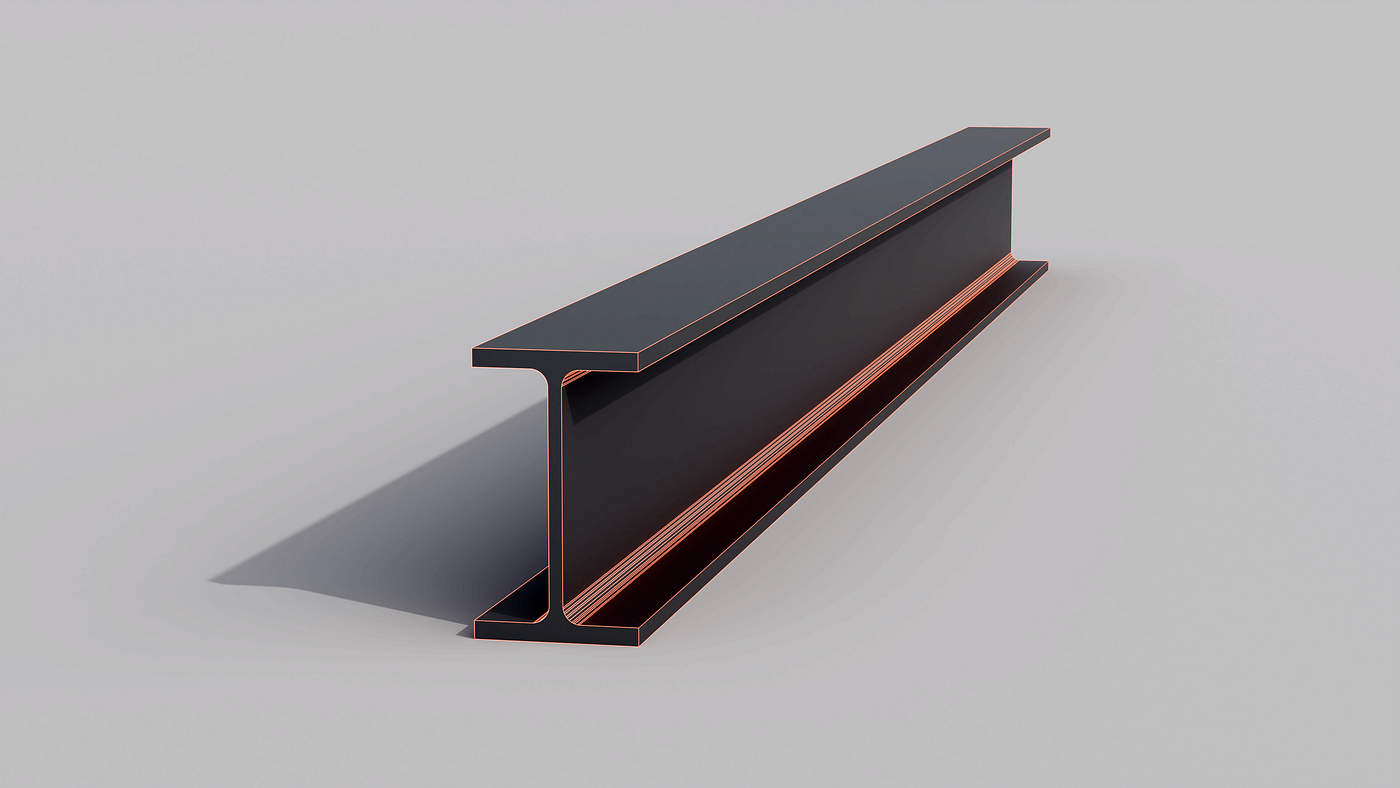
Most “game-ready” industrial assets approximate curved surfaces to save polygon count. In structural steel, this is catastrophic. The structural integrity of an I-section is heavily influenced by its root radius (r). The USK protocol mandates that geometry be derived directly from standard data tables (e.g., EN 1993–1–1). For our USK_STR_IPE80 asset, this meant generating the source geometry in a parametric kernel (FreeCAD) where the root fillets (r=5mm) are mathematically constrained. This creates a challenge: high-fidelity fillets result in heavy geometry. To resolve this, we employ a “Limited Dissolve” optimization technique, reducing polygon density on planar surfaces while preserving the explicit curvature of the engineering nodes. The result is a mesh that is “Nanite-Ready” but functionally accurate.
2. The “Static Shape” Constraint
In true digital manufacturing, parametric flexibility often introduces error. If a user is allowed to arbitrarily stretch a beam by dragging a vertex, the carefully calibrated root radius distorts, invalidating the engineering certification.
The USK protocol enforces a Static Shape workflow for high-fidelity assets. The geometry is baked as a “Golden Master.” It does not auto-extrude. Instead, we utilize a “Clone & Scale” methodology. The root asset serves as the immutable “Source of Truth” (1.00m Unit Asset). The user generates instances (Clones) and drives their length via specific scaling vectors (Scale Y), ensuring that the cross-sectional profile, the engineering DNA, remains untouched.
3. Semantic Integrity (The “Raw DNA”)
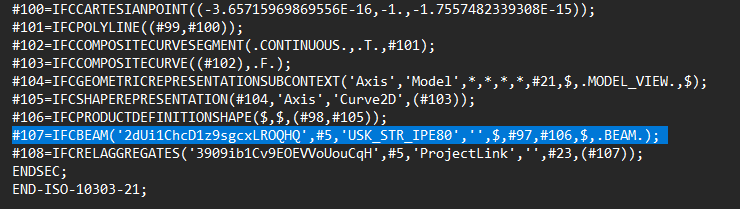
A geometry without identity is just a shape. In the BIM environment, an object must self-identify. The USK protocol injects the semantic classification (IfcBeam) directly at the parametric source. However, we have observed that interoperability between software vendors (e.g., Blender, Revit, Unreal) often results in "Identity Loss," where viewers mislabel objects based on default fallbacks (e.g., displaying "Electric Actuator" instead of "Beam"). The USK standard requires Forensic Validation. We do not trust the viewport. We validate the "Raw DNA" by inspecting the compiled IFC schema directly (#107=IFCBEAM) to ensure the asset will behave correctly in a Common Data Environment (CDE).
Conclusion: Stocking the Shelves
We are entering an era where the boundary between the “Digital Twin” and the “Physical Asset” is indistinguishable. To build this future, we cannot rely on the ad-hoc creation of “movie props.” We need a robust, standardized supply chain that treats digital assets with the same seriousness as physical inventory.
The USK_STR_IPE80 is the first unit of this new supply chain. It represents a commitment to the idea that in the Digital Built Environment, precision is not a luxury; it is the prerequisite for existence.
메타데이터
- post_id
- 92bb2513b60e
- slug
- the-crisis-of-the-empty-shell-why-the-digital-built-environment-needs-a-supply-chain-92bb2513b60e
- url
- https://medium.com/@raulspcarvalho/the-crisis-of-the-empty-shell-why-the-digital-built-environment-needs-a-supply-chain-92bb2513b60e
- canonical_url
- https://medium.com/@raulspcarvalho/the-crisis-of-the-empty-shell-why-the-digital-built-environment-needs-a-supply-chain-92bb2513b60e
- author_url
- https://medium.com/@raulspcarvalho
- status
- ok
- fetched_at
- 2026-06-27 07:40:21