#5 Maybe It Won’t Be That Bad…
Again, we learned in class that an Informational Dystopia would be where lose sight of what it means to be human, and there will be…
#5 Maybe It Won’t Be That Bad…
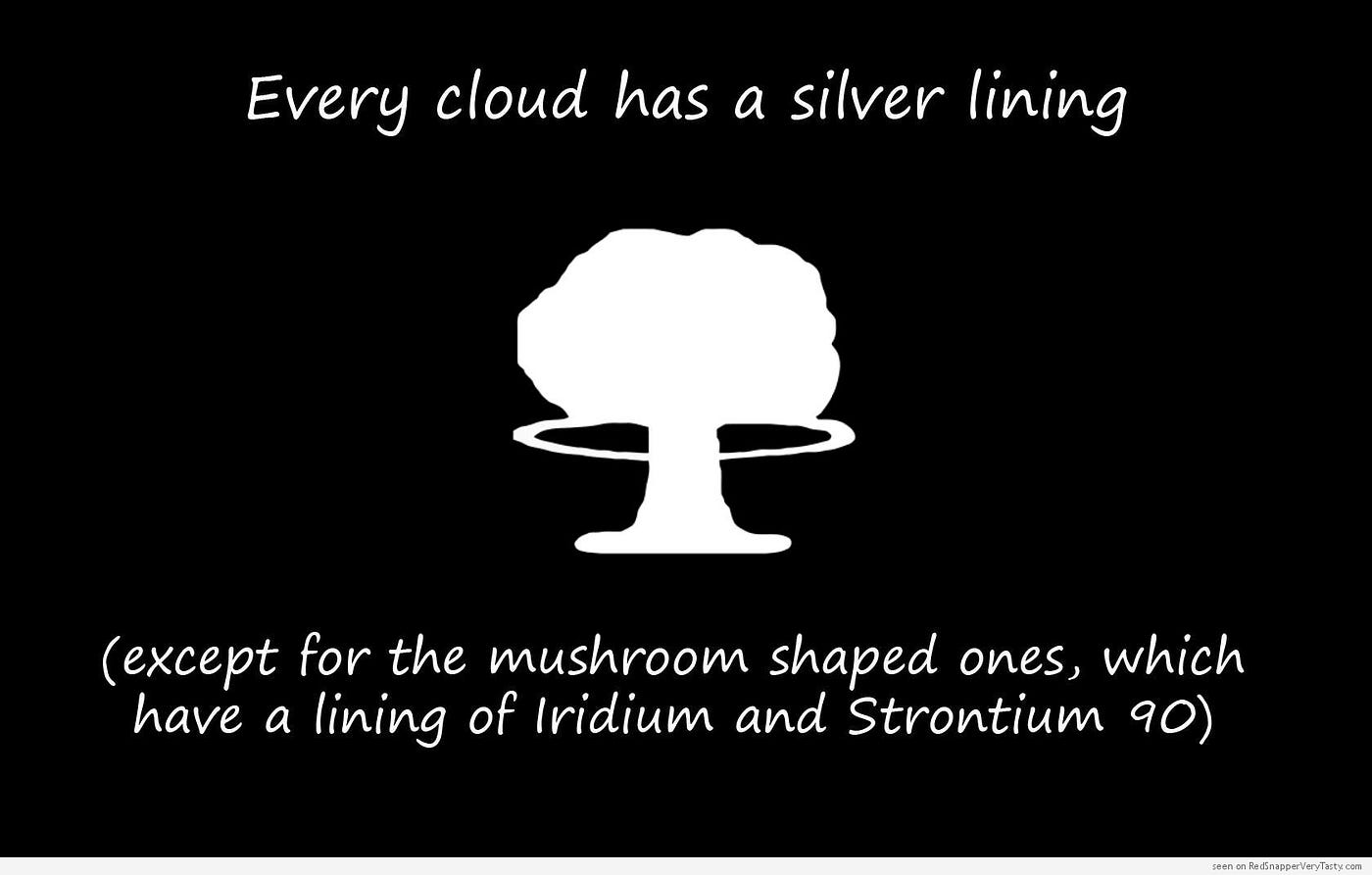
Again, we learned in class that an Informational Dystopia would be where lose sight of what it means to be human, and there will be irreparable damage to human psychology and culture. This made me think of the Singularity. The Singularity is the phenomenon that technology will surpass human intelligence, and humans will combine their consciousness with AI (Artificial Intelligence), ridding of their biological roots (Lanier 24–25).
From the sound of that definition, the Singularity sounds like it would be a bad scenario for humans. We become less human because we are not biological anymore. Basic human idiosyncrasies, such as human touch and eye contact, will be no more. Our minds will probably be uploaded to some sort of cloud, eliminating privacy. We will just be a petabyte of information.
However, I came across a book called The Singularity is Near by Ray Kurzeil. Kurzeil is an American Author with a computer science degree. This book has won many honors, such as “CBS News’s Best Fall Books of 2005”. In the first chapter of the book he says the Singularity is “…neither utopian or dystopian…” (Kurzeil 22). He goes on to say that our bodies restrict the human mind, calling bodies “…frail and subject to a myriad of failure modes…” and that “ The Singularity will allow us to transcend these limitations of our biological bodies and brains. We will gain power over our fates… We will fully understand human thinking and will vastly extend and expand its reach” (Kurzeil 24). Kurzeil also says that regarding the Singularity, “ We are now in the early stages of this transition” (Kurzeil 24).
From the text, it appears that Kurzeil’s stance is that the Singularity is a good thing, though its effects are necessarily mixed. We do in fact lose some of our human tendencies, in exchange for higher intellectual capabilities. It reminds me similar to evolution. We evolve more intellectually, by losing our physical capabilities. This has happened before during the ice age, from Homo erectus to Homo sapiens, only this time this will be on a digital level. In general, civilization has developed more and more, but there are still problems throughout, this Singularity is no exception. Society will improve, since we are more intelligent, but we lose physical existence. So indeed, the Singularity (or rather information technology) is neither Utopian or Dystonia; it is just a change in human society.
Kurzeil’s arguments reminded me of listening to Rheingold’s Ted talk on The new power of collaboration. In the talk he says “ Descartes said we need an entire new way of thinking” (Rheingold). Although he is talking about cooperation through technology, his words also pertain to becoming more dependent of technology, leading to the Singularity. We must think differently on how technology affects us, in so that although there are problems in society, we can make the most of it, creating a better future for us….
Whether the Singularity actually happens or not.
Work Cited
Kurzweil, Ray. The Singularity Is Near: When Humans Transcend Biology. N.p.: Viking, 2005. Web. http://www.grtl.org/Singularity-Is-Near.pdf.
Rheingold, Howard. “The New Power of Collaboration”. Ted. Ted, Feb 2005. Web. 15 October 2016. Web. http://www.ted.com/talks/howard_rheingold_on_collaboration/transcript?language=en#t-1111000.
메타데이터
- post_id
- 92d45fece634
- slug
- 5-maybe-it-wont-be-that-bad-92d45fece634
- url
- https://medium.com/@georgezhsi110/5-maybe-it-wont-be-that-bad-92d45fece634
- canonical_url
- https://medium.com/@georgezhsi110/5-maybe-it-wont-be-that-bad-92d45fece634
- author_url
- https://medium.com/@georgezhsi110
- status
- ok
- fetched_at
- 2026-07-30 16:47:26






