5 Reasons Your First Digital Product Isn’t Selling (And How to Fix Each One)
Created by the author using AI
5 Reasons Your First Digital Product Isn’t Selling (And How to Fix Each One)

A honest diagnostic for the most common problems that kill first-time Gumroad sales
You published your first digital product.
You shared it. You waited. You checked the analytics every few hours hoping something changed.
Nothing.
Or almost nothing — a few views, maybe one download of the free version, zero paid sales.
Before you conclude that digital products don’t work, or that your product isn’t good enough, or that you need a bigger audience — read this.
In almost every case, a digital product that isn’t selling has one of five fixable problems. Not ten. Not twenty. Five.
Here’s how to diagnose which one is yours — and what to do about it today.
Reason 1 — The wrong people are finding your page
This is the most common problem and the one most sellers never think to check.
Traffic is not just traffic. 100 random visitors and 100 targeted visitors are completely different things. Random visitors — people who stumbled onto your page without a specific reason — almost never buy. Targeted visitors — people who have the exact problem your product solves and were actively looking for a solution — buy at a completely different rate.
If you’ve been sharing your product link on your personal Facebook profile, in general “entrepreneur” groups, or anywhere that isn’t specifically populated by people who have your buyer’s problem — you’re getting the wrong traffic.
How to diagnose it:
Look at your Gumroad referral sources. Where are your views coming from? If the answer is “direct” or unidentified sources, you have a traffic targeting problem.
How to fix it:
Stop sharing broadly. Start sharing specifically.
Find the exact places online where your target buyer is already asking about the problem your product solves. Reddit threads. Specific Facebook groups. Medium readers who searched for your topic. These people already have the problem. They’re already looking for a solution. Your job is to show up where they are — not to bring them to you from somewhere else.
One comment in the right Reddit thread will outperform a hundred shares to a general audience every time.
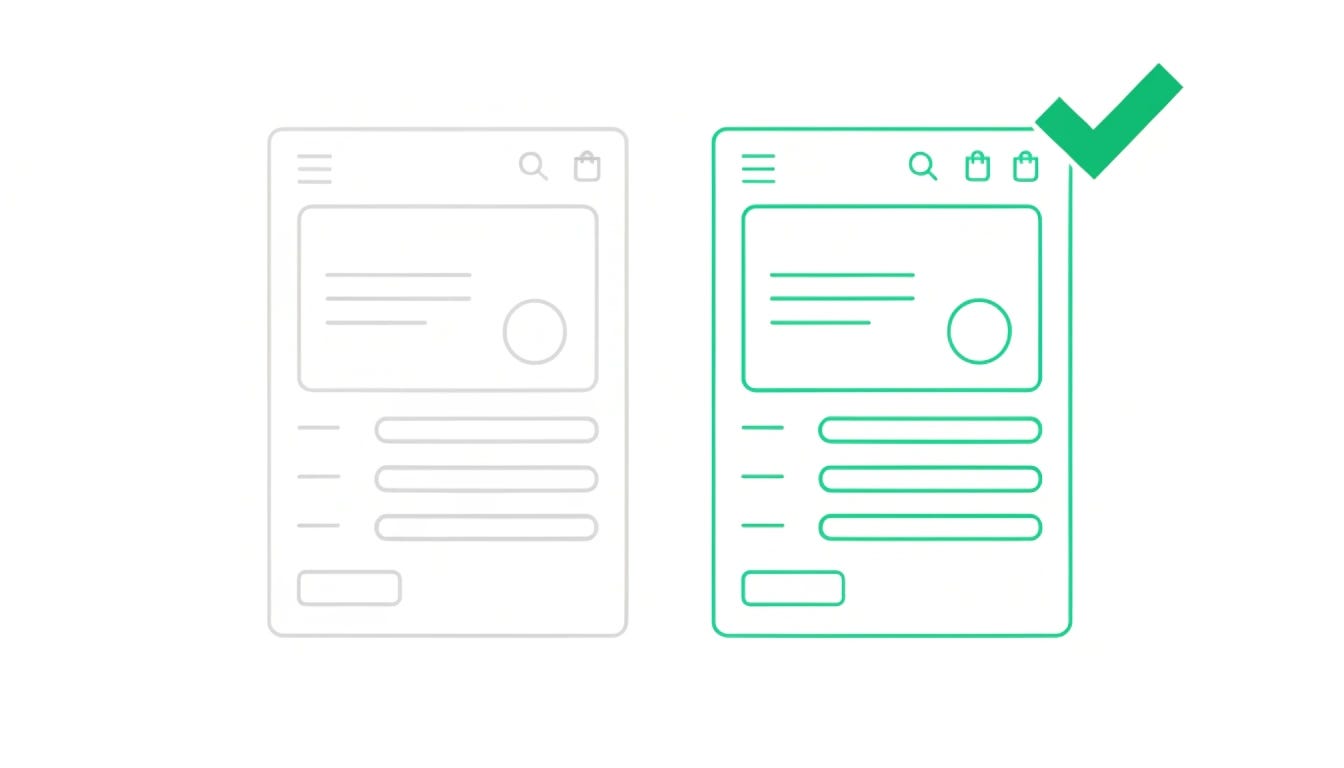
Reason 2 — Your product page doesn’t answer “is this for me?” fast enough
Created by the author using AI
When someone lands on your Gumroad page, they make a decision in the first five to ten seconds. Stay or leave.
In those seconds, they’re not reading your description carefully. They’re scanning for one thing: is this for me?
If your title is generic, your first sentence is about you, and your description could apply to anyone — they leave. Not because your product is bad. Because nothing on the page told them it was specifically for them.
How to diagnose it:
Read your product page title out loud. Does it name a specific person or situation? Or could it describe any product in any niche?
Then read your first sentence. Does it start with “I” or with the buyer’s problem?
How to fix it:
Rewrite your title to include a specific person: “For first-time Gumroad sellers” or “For freelance developers who want passive income.”
Rewrite your first sentence to open with the buyer’s problem: “If you’ve been sitting on a digital product idea but have no idea how to launch it — this is for you.”
These two changes alone can double your conversion rate without touching anything else on the page.
Reason 3 — Your price doesn’t match your page
Price and trust need to be in balance.
A $25 product on a page with no reviews, no preview, no social proof, and a two-sentence description will not sell. Not because $25 is too much — but because nothing on the page justifies $25 to a stranger.
Equally, a $1 product signals that it’s probably not worth much. Too low a price creates suspicion, not excitement.
How to diagnose it:
Look at your price and your page together. Does the page build enough trust to justify what you’re charging? Do you have a preview, a clear description, specific bullet points, and at least one element of social proof?
If your page is thin and your price is above $10 — that’s your problem.
How to fix it:
Either build up the page to match the price — add a preview, expand the description, add a “who this is for” section — or temporarily lower the price to get your first five to ten sales and reviews, then raise it back.
The goal is to make the purchase feel like a no-brainer. At $5.99 with a clear, specific page, most buyers don’t think twice. At $19.99 with a thin page and no reviews, most buyers hesitate until they leave.
Reason 4 — You have no free entry point
Most cold traffic — people who find your product for the first time with no prior context — will not pay immediately.
Not because they don’t want what you’re selling. Because they don’t know you yet. You’re a stranger asking them to hand over money. The barrier is trust, not price.
A free product removes that barrier.
When you offer something genuinely useful for free — a checklist, a template, a short guide — you give cold traffic a low-risk way to experience your work before they pay for it. The people who download it and find it helpful are already warm when they see the paid version. The conversion rate from free-to-paid is dramatically higher than from cold traffic directly to a paid page.
How to diagnose it:
Do you have a free product that naturally leads into your paid product? Is it easy to find? Is the connection between the free and paid version obvious?
How to fix it:
Create a free version of your product — a smaller, simpler version that solves one part of the problem your paid product solves completely. Make it genuinely useful. Put a clear link to the paid version at the end.
Then share the free product everywhere. Let it do the trust-building work. Let the paid product close the sale.
Reason 5 — You gave up too early
This one is uncomfortable to say but it’s the most common reason first digital products fail.
Most sellers share their product once or twice, see low numbers, and quietly stop promoting it. They don’t delete it — they just stop talking about it. The product sits there, collecting the occasional random view, while the seller moves on to “something that actually works.”
But digital product traffic compounds. A Reddit comment you wrote three weeks ago is still getting views. A Medium article you published last month is still showing up in Google searches. A Facebook group post from two weeks ago is still being discovered by new members.
The sellers who succeed with digital products are not the ones with the best products. They are the ones who kept showing up after the first week produced disappointing results.
How to diagnose it:
How many times have you actively promoted your product in the last 30 days? How many Reddit comments, Medium articles, or group posts have mentioned it?
If the answer is fewer than ten — you haven’t promoted it enough to know whether it works.
How to fix it:
Commit to 30 days of consistent promotion before you draw any conclusions. One Reddit comment per day. One Medium article per week. Two Facebook group posts per week.
At the end of 30 days you’ll have real data — not the three-day sample that most sellers use to decide their product is a failure.
How to diagnose your specific problem right now
Go through this checklist in order. Stop at the first one that applies — that’s your problem.
Step 1: Where is your traffic coming from? If it’s random or untargeted — fix Reason 1 first.
Step 2: Read your title and first sentence. Does it name a specific person and open with their problem? If not — fix Reason 2 first.
Step 3: Does your page have a preview, specific bullet points, and match the trust level your price requires? If not — fix Reason 3 first.
Step 4: Do you have a free product that leads into the paid one? If not — fix Reason 4 first.
Step 5: Have you actively promoted your product at least 10 times in the last 30 days? If not — fix Reason 5 first.
Fix one thing at a time. In that order. Most sellers find their problem at step 1 or 2 and never need to go further.
One more thing
The product you built is probably better than you think.
The problem is almost never the product. It’s one of these five things — and all five are fixable without rebuilding anything from scratch.
Find your problem. Fix it. Give it 30 days.
That’s the whole process.
Free checklist for your Gumroad launch
Created by the author using AI
If you want the complete step-by-step checklist for launching your first Gumroad product the right way:
→ Free Gumroad Launch Checklist
Download and use it today.
And if you want the full system — page templates, 60 AI prompts, and a launch tracker:
Follow me on Medium for more honest, practical guides to selling digital products with no audience and no budget.
메타데이터
- post_id
- 92f1f19fcdca
- slug
- 5-reasons-your-first-digital-product-isnt-selling-and-how-to-fix-each-one-92f1f19fcdca
- url
- https://medium.com/activated-thinker/5-reasons-your-first-digital-product-isnt-selling-and-how-to-fix-each-one-92f1f19fcdca
- canonical_url
- https://medium.com/activated-thinker/5-reasons-your-first-digital-product-isnt-selling-and-how-to-fix-each-one-92f1f19fcdca
- author_url
- https://medium.com/@digitallab2026
- status
- ok
- fetched_at
- 2026-06-09 15:37:30