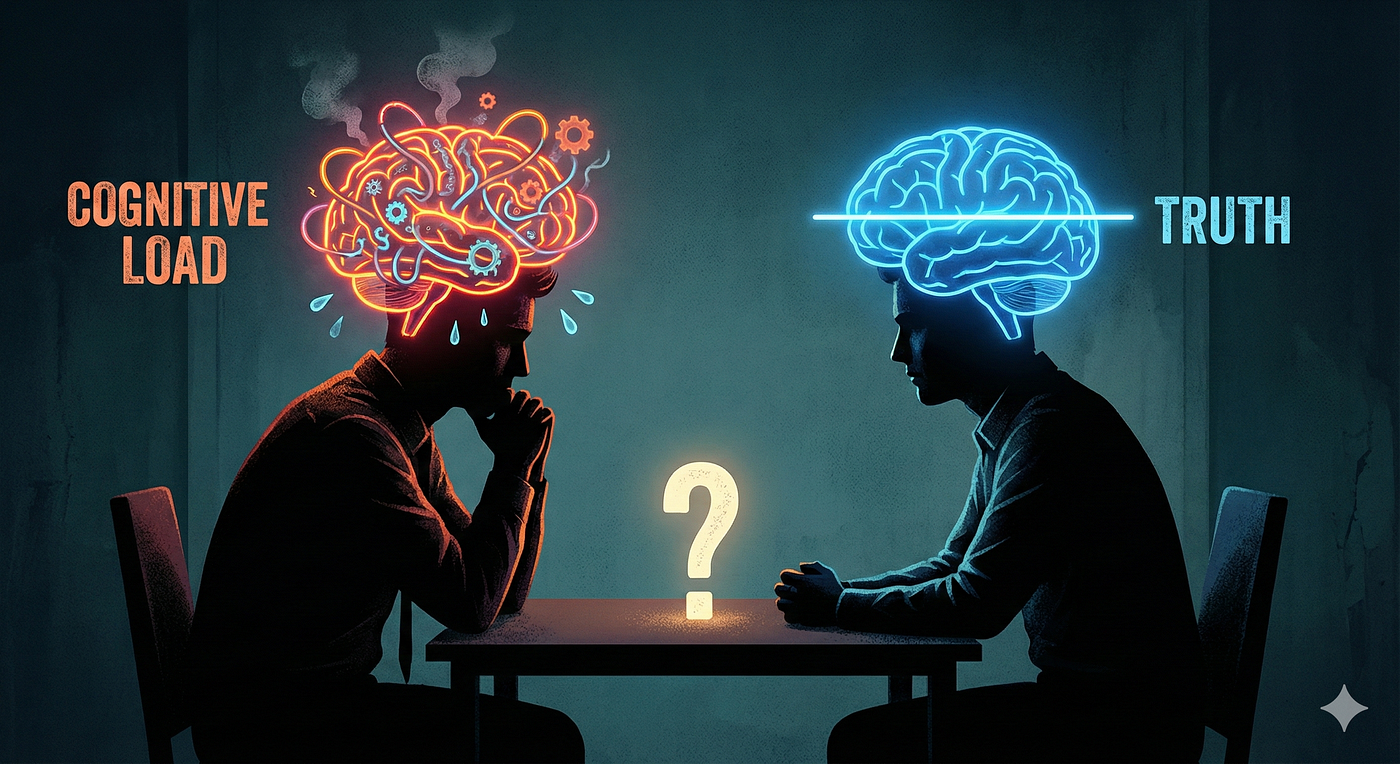
The Future of Research Isn’t Who Works Hardest — It’s Who Designs the Best Workflow
AI can now run the full research pipeline — read, hypothesize, experiment, analyze, write. The winner? Whoever designs the best workflow.
The Future of Research Isn’t Who Works Hardest — It’s Who Designs the Best Workflow
FARS just showed us that AI can now run the entire scientific pipeline on its own. Here’s what that means for every researcher.
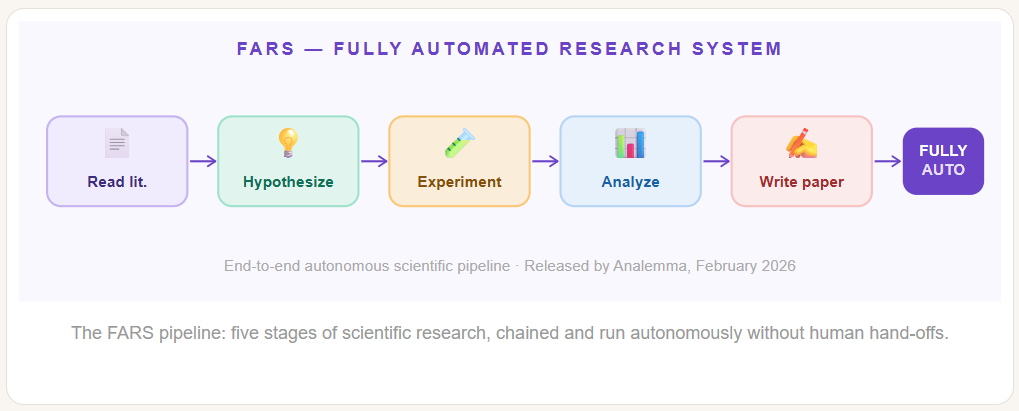
Something stopped me mid-scroll last week. I was catching up on AI agent papers and research workflow tools when I came across FARS — Fully Automated Research System — published and deployed by Analemma in February 2026. I sat with it for a while, because this felt different.
FARS isn’t a smarter literature search tool. It’s not a writing assistant that polishes your abstract. It is a system that attempts to run the entire scientific research process — from reading papers and forming hypotheses, to running experiments, analyzing results, and writing a paper — as a single, chained autonomous loop.
“The competition in research won’t be about who works harder. It’ll be about who builds the better workflow.”
What FARS Actually Does
Most AI tools in academia today are point solutions. They help you with one step. FARS is different in ambition: it treats the research process as a pipeline, and attempts to run that pipeline end-to-end with minimal human intervention.
Think about what that pipeline normally looks like for any researcher:
The Research Workflow, Deconstructed

Every one of those steps above has historically relied on human effort, experience, and time to string together. The inefficiency isn’t in any individual step — it’s in the transitions between them. That’s where time disappears, where context is lost, and where the bottleneck lives.
Agent systems like FARS don’t just speed up individual steps. They attempt to eliminate the friction between steps entirely.
My Honest Reaction
My first instinct wasn’t “research is over.” It was something quieter and more unsettling:
Research might increasingly become a competition in workflow design — not raw output.
Because here’s the thing: a huge portion of everyday research work is already procedural. Finding related papers, organizing literature, generating candidate ideas, running baseline experiments, iterating on results, structuring arguments — these aren’t mysterious creative leaps. They are pipelines. And pipelines can be automated.
The Two Types of Researchers Going Forward

The gap between these two groups will compound. Researchers who treat AI as a point tool will keep working linearly. Researchers who design AI-augmented workflows will run multiple threads simultaneously, iterate faster, and cover more ground with the same hours.
A Signal, Not the Finish Line

To be clear: FARS is not a fully autonomous science machine ready to replace researchers. There are still enormous gaps — in reliability, in domain depth, in the kind of intuition that makes a truly good research question. Anyone claiming otherwise is selling something.
But it is a credible signal of a direction. And in research, catching the direction early matters enormously.
The future isn’t about using AI to write your paper. It’s about integrating AI correctly into the research production line itself — knowing where to insert automation, where to keep human judgment, and how to design systems that compound your output over time.
What This Means for You
If you’re a researcher — PhD student, postdoc, faculty, or independent — the practical question isn’t “will AI replace me?” It’s: “Am I building my own research system, or am I just using AI as a fancier Google?”
The researchers who will pull ahead aren’t necessarily the ones who work the most hours. They’ll be the ones who invest now in understanding how to design, chain, and refine AI workflows that make every hour they do work dramatically more productive.
FARS isn’t the end of researcher-driven science. It’s the beginning of researcher-designed science infrastructure.
FARS was publicly released and deployed by Analemma in February 2026. This article reflects a personal perspective on its implications for research culture — not a technical review of the system.
Tags: #AIResearch #ResearchWorkflow #AcademicAI #PhD #FARS #AgentSystems
메타데이터
- post_id
- 92f7162332bf
- slug
- the-future-of-research-isnt-who-works-hardest-it-s-who-designs-the-best-workflow-92f7162332bf
- url
- https://medium.com/@chow_phoonsam/the-future-of-research-isnt-who-works-hardest-it-s-who-designs-the-best-workflow-92f7162332bf
- canonical_url
- https://medium.com/@chow_phoonsam/the-future-of-research-isnt-who-works-hardest-it-s-who-designs-the-best-workflow-92f7162332bf
- author_url
- https://medium.com/@chow_phoonsam
- status
- ok
- fetched_at
- 2026-06-25 12:15:08