They Found a Baby Giant Squid. But Where’s its Mother?
Researchers analyzing findings from the waters off Japan published an extraordinarily rare sight: the discovery of young, juvenile giant…
They Found a Baby Giant Squid. But Where’s its Mother?
Researchers analyzing findings from the waters off Japan published an extraordinarily rare sight: the discovery of young, juvenile giant squids
Photo by Meressa Chartrand on Unsplash
The squid on the screen is about the size of a house cat. It drifts in the blue-lit water off the Ogasawara Islands like a pale ribbon, translucent, slightly dazed by the submersible’s lights, trailing eight arms and two longer tentacles in a loose, unhurried spiral. It’s beautiful in the way newborn things often are — delicate and a little helpless-looking. Researchers watching the footage leaned forward, probably holding their breath. A juvenile giant squid, *Architeuthis dux*, caught on camera in the wild. Extraordinarily rare. A scientific gift.
And then someone did the math. If this squid survived to adulthood — grew at the rate the species is known to grow — it would reach somewhere between ten and thirteen meters. A school bus, basically. A school bus with a beak, eight arms lined with serrated suckers, and eyes the size of dinner plates.
What they filmed was the baby.
So the question you can’t help asking, is: where’s the mother?
Deep-sea gigantism is one of those biological phenomena that sounds made-up until you look at the list. Giant isopods — pill bugs, essentially — that grow to the size of footballs. Oarfish stretching eighteen meters, longer than a semi-trailer. The colossal squid, *Mesonychoteuthis hamiltoni*, which may exceed the giant squid in sheer mass, carries hooks on its suckers instead of serrations because apparently the ocean decided serrations weren’t enough.
The working hypothesis for why things get so enormous down there involves cold temperatures slowing metabolism, the scarcity of food demanding larger fat reserves, and the crushing pressure selecting for bulk. The deep sea takes regular creatures and runs them through some slow, dark machine that returns them at twice the size and ten times the menace.
Whales can surface with circular scars - signs of altercations with giant squid. Photo by Chinh Le Duc on Unsplash
Until very recently, we had never seen a live colossal squid in its natural habitat. We know it exists because sperm whales surface with circular scars on their heads. The sperm whale — seventeen meters, fifty tons, the largest predatory animal on Earth — comes up from the abyss with fresh wounds the shape of hubcaps, and the only thing we’ve found down there that could do that is Mesonychoteuthis. So we’re inferring the existence and scale of a creature from the scars it leaves on something that could swallow a car.
Think about that for a second. We know there are titanic battles happening right now, somewhere below 1,000 meters, in complete and perfect darkness. Sperm whales and colossal squid, locking into combat in water so cold and pressurized that your blood would behave differently, in a world where the only light is the blue-green flicker of bioluminescence on something trying to eat something else. The whale wins sometimes. We know this because we find squid beaks — hard, indigestible — in whale stomachs. The squid wins sometimes, too. Probably. We’re less sure about that part. We’ve never watched.
That’s the thing that could keep you up at night if you let it. We haven’t watched.
Photo by Cristian Palmer on Unsplash
Here are the numbers people cite and nobody really internalizes: according to the latest NOAA Ocean Exploration data, we have mapped roughly 25% of the ocean floor with any meaningful resolution. The other 75% — an area larger than the combined surface of every continent — is essentially a blurred smear on our charts. Meanwhile, we have higher-resolution maps of the Moon. We have better surface coverage of Mars. We have mapped Venus more thoroughly than our own seabed, and it is 261 million kilometers away at its closest approach, with an atmosphere that will dissolve metal.
The ocean is right here. It covers 71% of our planet. And it is, for all practical purposes, unknown.
This isn’t exactly a funding failure, though it’s that too. It’s physics. Water is almost incompressible, which means pressure builds at a rate that destroys most equipment before it can reach the interesting parts. The deepest point we know of, the Challenger Deep in the Mariana Trench, sits at roughly 11,000 meters. At that depth, the pressure is about 1,100 atmospheres — enough to crumple a submarine like a paper cup. We’ve sent humans there exactly a handful of times.
We’ve sent landers more often, but landers are blind and slow, and they sit in one spot. The deep ocean is not a spot. It’s a world. It has mountain ranges longer than the Andes, plains wider than Asia, hydrothermal vents hosting entire ecosystems that run on chemosynthesis instead of sunlight — life that has never needed the sun, not once, in its entire evolutionary history.
And somewhere in all of that, there are things we haven’t classified. Things we haven’t seen. Things that are, given everything we know about deep-sea gigantism and the few samples that occasionally surface or get dragged up in nets, probably large.
Photo by Zen Maldives on Unsplash
But our historical ignorance of the deep ocean is no longer a shield for the creatures living within it. As industrial humanity alters the surface biosphere, the consequences are cascading downward into the dark faster than our submersibles can follow. The slow, dark machine of the abyss is breaking down.
Climate change is fundamentally altering the twilight zone (the mesopelagic layer between 200 and 1,000 meters) where these juvenile squids begin their lives. As surface waters warm, they hold less oxygen. This creates expanding marine oxygen minimum zones — invisible, suffocating suffocating deserts that are creeping horizontally across the globe and vertically into the depths. For a high-performance predator like the giant squid, which possesses an incredibly demanding metabolic system to propel its massive frame through the water column, these low-oxygen zones are a death sentence. It compresses their habitat, forcing them out of the nutrient-rich dark layers and closer to the surface, where they become vulnerable to predators and thermal shock.
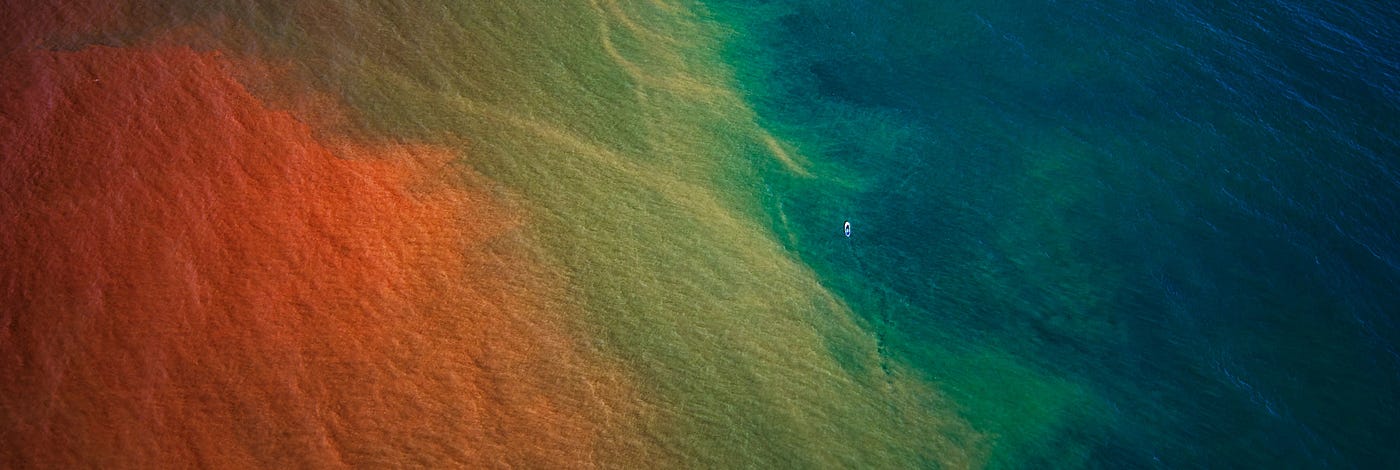
Worse still is the looming spectre of deep-sea mining. Corporate interests are aggressively targeting the abyssal plains for polymetallic nodules — potato-sized rocks rich in cobalt, nickel, and manganese. The machinery required to scrape these nodules off the seafloor will create catastrophic, miles-wide sediment plumes. In a world that has been perfectly clear and pitch-black for millennia, these plumes will clog the delicate feeding mechanisms of deep-sea organisms and disrupt the bioluminescent communication networks that animals use to find mates or lure prey.
When we disrupt the bottom of the food web, the shockwaves travel all the way up to the giants. The biological pump — the process by which carbon and nutrients sink from the surface to the deep sea — is being throttled. The house-cat-sized juvenile squid caught on camera in 2015 relied on a steady drop of “marine snow” and small deep-sea fish to fuel its rapid transformation into a school-bus-sized apex predator. If that conveyor belt of nutrients thins out due to ocean acidification and collapsing surface ecosystems, the giants simply won’t survive to grow their dinner-plate eyes.
The juvenile giant squid near Japan was caught on camera for a few minutes. It drifted. It pulsed its mantle in that slow, hypnotic way cephalopods do, like breathing, like thinking. Then it moved away from the lights, back toward whatever dark it came from, and was gone.
Researchers called it a once-in-a-lifetime sighting. They’re probably right.
What they didn’t say — what there’s no scientific framework for saying, really — is that the squid wasn’t lost or wandering. It was going somewhere. It had a direction. Down, presumably, eventually. Back toward the black where the water gets so cold and heavy that light doesn’t bother.
Back toward whatever else is down there.
The ocean has kept its secrets for longer than we’ve been asking. It’s very good at it. It is patient in a way that geological formations are patient — not passive, not empty, but simply indifferent to whether we understand it or not. The deep water doesn’t need our maps. It knows where it is.
We’re the ones who are lost.
메타데이터
- post_id
- 93201d578bc6
- slug
- they-found-a-baby-giant-squid-but-wheres-its-mother-93201d578bc6
- url
- https://medium.com/the-new-climate/they-found-a-baby-giant-squid-but-wheres-its-mother-93201d578bc6
- canonical_url
- https://medium.com/the-new-climate/they-found-a-baby-giant-squid-but-wheres-its-mother-93201d578bc6
- author_url
- https://medium.com/@sugashnandita
- status
- ok
- fetched_at
- 2026-07-14 00:44:25