An interbellum building is reigniting a passion for the restoration of historic monuments
“We tackle complex tasks right away and we put off the achievable ones for a little while.” This practical advice for future restoration…
An interbellum building is reigniting a passion for the restoration of historic monuments
“We tackle complex tasks right away and we put off the achievable ones for a little while.” This practical advice for future restoration professionals sets the tone for a special day in Tighina (Bender).
Starring: a historic building constructed in 1907 and a generation of young people determined to save cultural heritage.
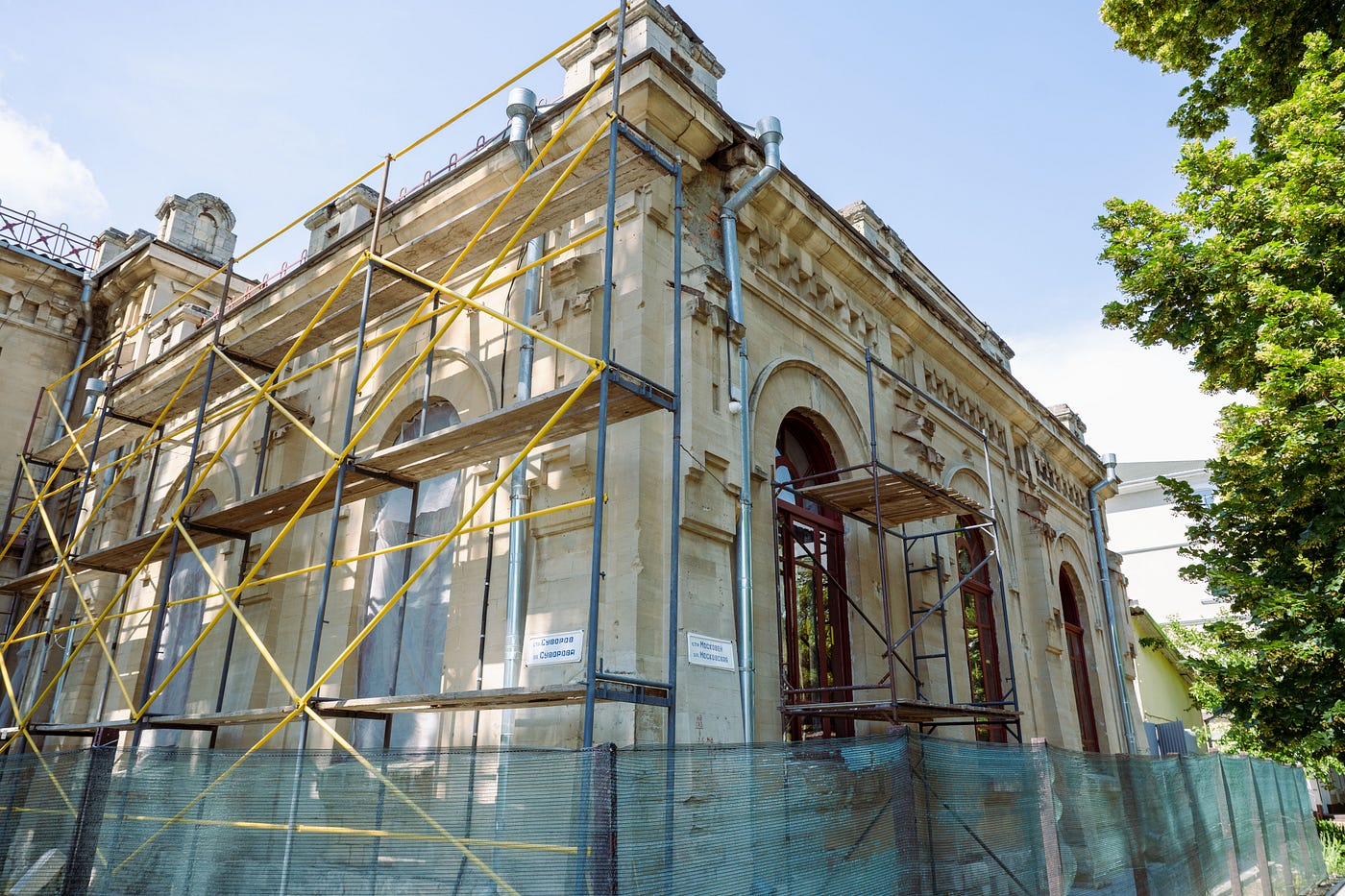


Twenty-five students — future architects, designers, and restorers from specialized institutions on the left bank of the Nistru — participated in an open lecture on the importance of preserving and restoring historical monuments. The most fitting setting for the lesson was the facade of the interbellum building of the Savings and Treasury Bank in Tighina (Bender), which is currently undergoing restoration. The work is being carried out with support from the European Union and UNDP through the Confidence Building Measures Programme.
A building that has witnessed many historical events
At the beginning of the 20th century, the building served the financial sector; later, for a time, it housed a place of worship; today, it is the headquarters of the gymnastics school in the city of Tighina (Bender). For experts and students alike, its walls conceal entire chapters of history, as well as construction secrets that today seem almost impossible to replicate.
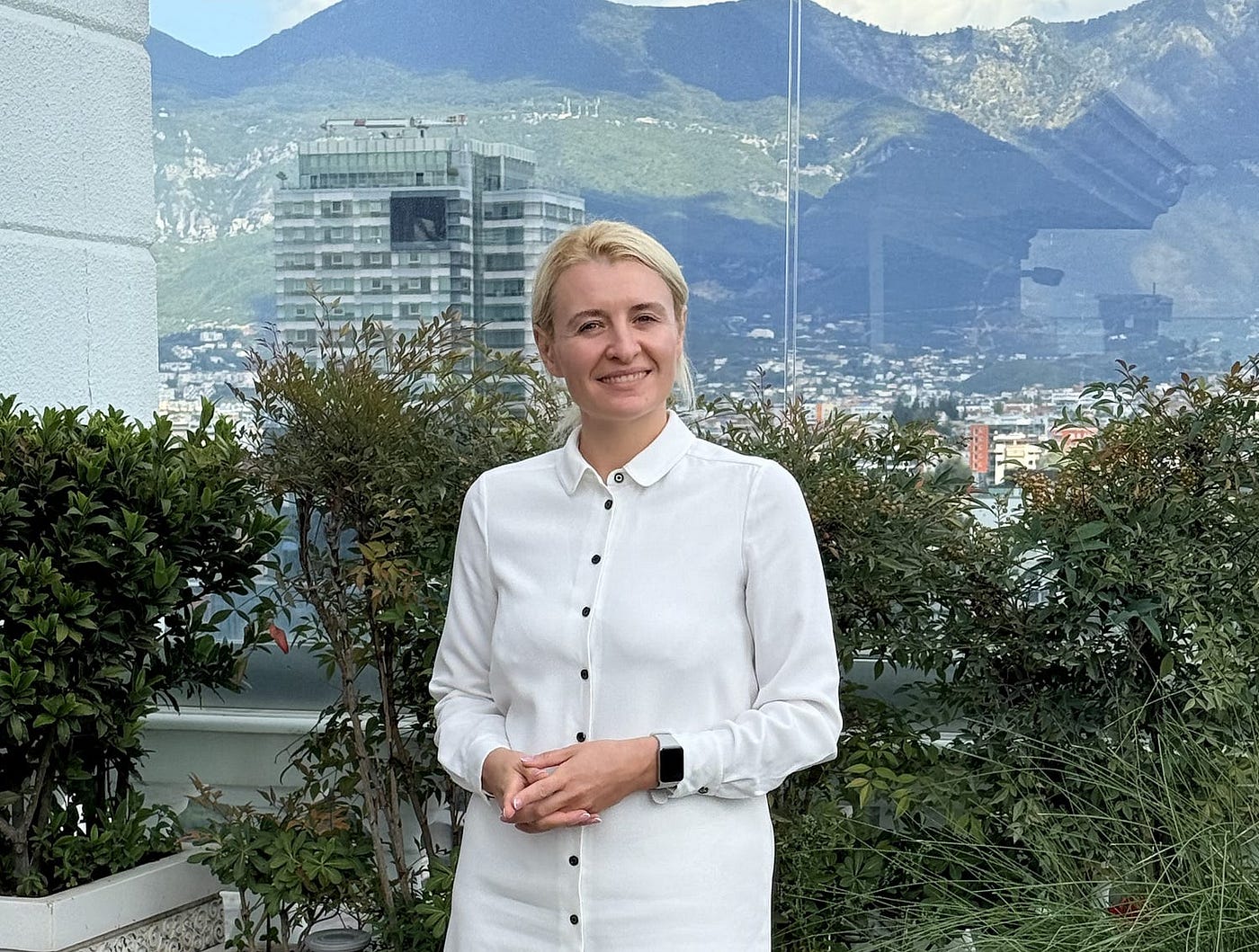
“This building has a unique architectural style and has witnessed many historical events. If we hadn’t been told that it was built in 1907, we wouldn’t have been able to imagine that it had witnessed the world wars and the formation and collapse of the Soviet Union. Basically, it has seen it all,” emphasized Olga Chirica, an architect.


She drew the young people’s attention to the construction details from the interbellum period: “We need to give due credit to the architects who designed and built this building, because during the renovation work we saw just how much tremendous effort was put into it. This isn’t just about some drawings and plaster; here, every stone was carved and set in place. And every design on this wall was done manually — not with machines, as is done today, but by hand. This is yet another immense value — something we, unfortunately, no longer know how to do today.”
Preserving historical heritage — a chance to defy the passage of time
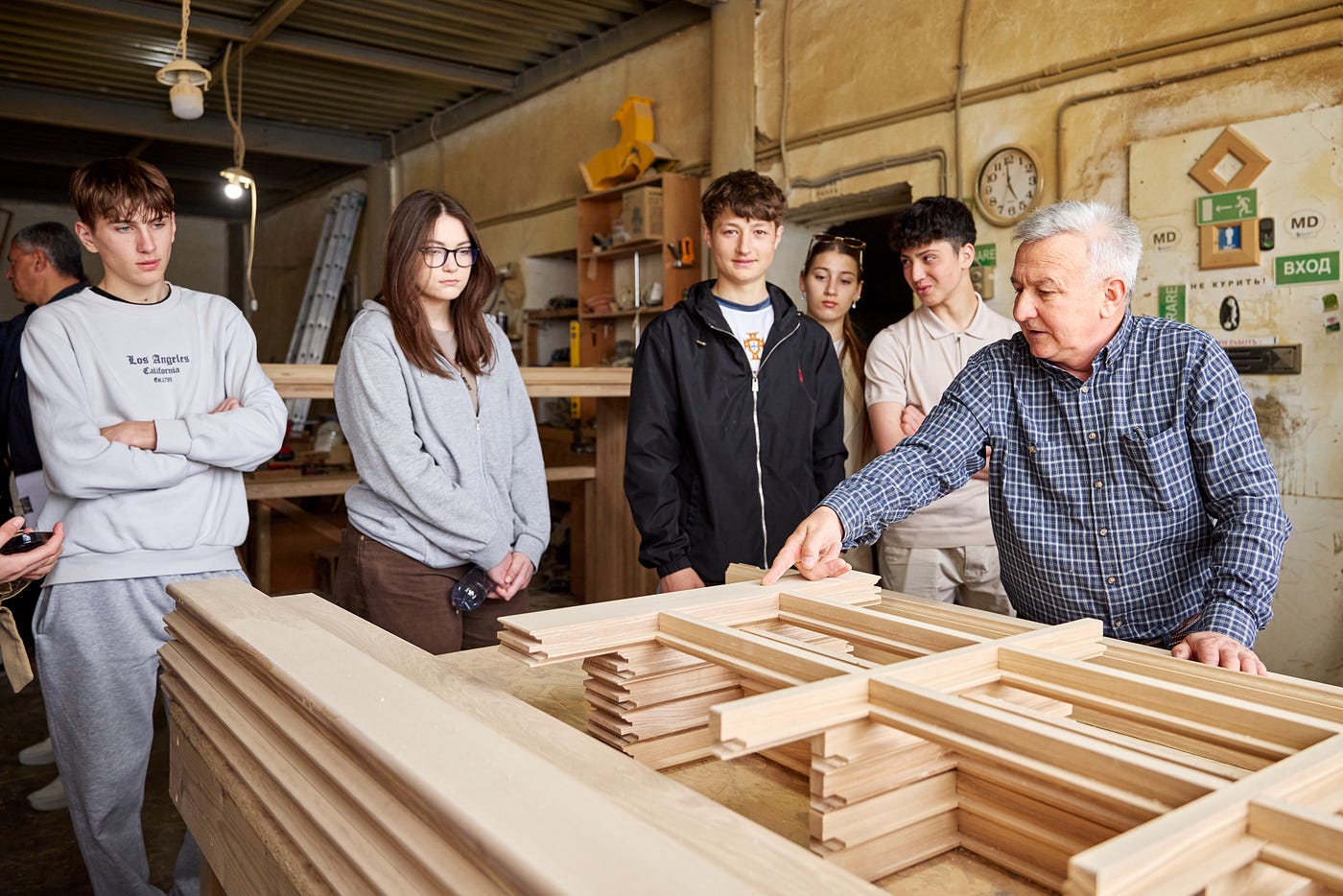
This visit offered the students a rare opportunity to see how classroom theory comes to life on a real construction site, transforming a historical monument into a heritage site. The students were fascinated by the visit, as evidenced by their eagerness to photograph every detail and they listened attentively to all the presentations regarding the various stages of the restoration work.

“We are honored that our building has been given such special attention. When you climb the stairs, it transports you somewhere — to a certain era,” added Elena Polișciuk, the sports school’s deputy director. “Our task is to preserve it as much as possible and pass it on to future generations. We shouldn’t think only of the present, but of what it will look like in a few months. We’ll see a building that will beautify the city center and attract even more tourists.”
More and more girls are interested in architecture and restoration
In addition to the technical lesson, the visit also highlighted a clear shift in dynamics among the new generation of specialists: the growing presence of women in a field once considered strictly male.
“The current trend is that many girls want to participate in this process of design and restoration. Whereas before the field of architecture was the preserve of only men — or at least mostly men — now many young women are interested in pursuing this profession. They enjoy this process, want to create beautiful things, and, most importantly, are not afraid of technical challenges or difficulties. Today, young women are well-versed in both technical disciplines and those related to history and culture. All of this helps them master the profession,” noted Tatiana Ciudina, head of the Department of Architecture and Design at “Taras Shevchenko” University.


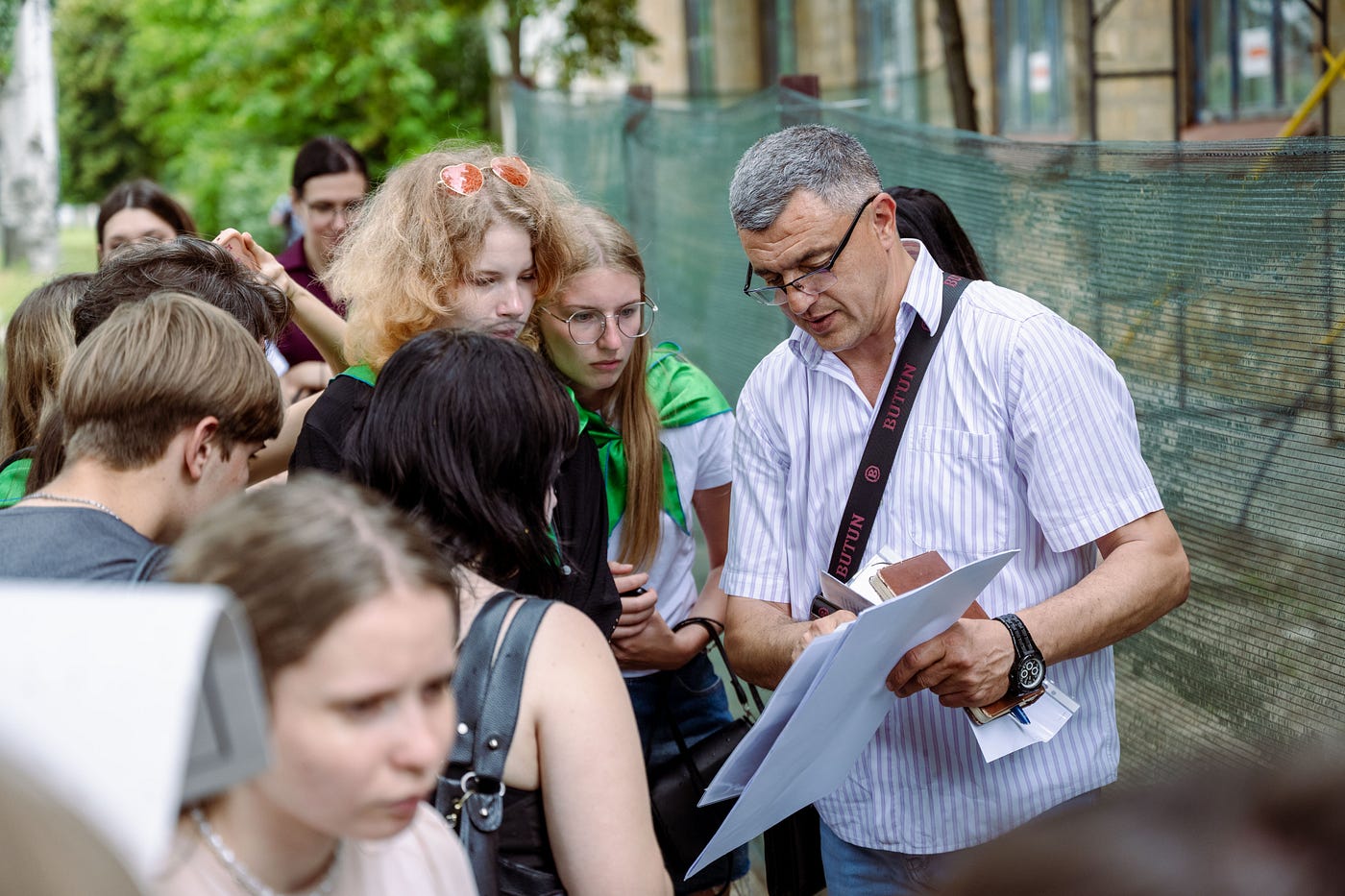

“I believe the profession of architecture suits both men and women. I came to this profession because, in principle, I’ve followed a creative path since school — I attended art school and realized I wanted to combine creativity with the exact sciences, which is why I ended up in architecture. Today I learned about the construction plan — first and foremost, for this building — because in my first year I took a surveying course, and I measured and drew; it seems I’ve come back to that, but now in greater depth,” says Anna, a delighted third-year student in the Department of Architecture and Design.

Historic monuments: from the ruins of the past to a living foundation for the future
Nikita is another young person who has seen theory come to life on the construction site: “I’ve learned more about the disciplines of restoration, which we won’t study until next year. I’ve come to understand the different types of restoration, conservation, and reconstruction, and how they differ from one another. I probably chose this profession largely because of my art school teacher; she advised me to come here to study architecture, and I love it,” adds Nikita Ghiev, a third-year student in the Department of Architecture and Design at the Tighina (Bender) Polytechnic Institute.


Behind the scenes details of this extensive reconstruction process were revealed by the very person shaping the project on-site: “The biggest challenge was restoring the huge windows, which are over 3 meters tall; we had to manually remove up to seven layers of old paint to bring them back to life. Our mission at this heritage site focuses on three pillars: the facade, the windows, and the roof, including the original stone-carved attic. Even though there have been missteps in the past, such as the installation of double-pane windows or the destruction of the balcony, our task is to restore everything in accordance with its history. The restoration work is painstaking and often invisible, but the final result will completely transform the building’s appearance,” added Igor Glavațkii, the contractor overseeing the restoration of the historic building.
The visit to Tighina (Bender) demonstrated that restoration is not just about repairing old walls, but also about inspiring new generations. With the support of development partners and guided by dedicated teachers, these young people are learning to view monuments not as ruins of the past, but as a living foundation for the future.
메타데이터
- post_id
- 933f3cb69d96
- slug
- an-interbellum-building-is-reigniting-a-passion-for-the-restoration-of-historic-monuments-933f3cb69d96
- url
- https://medium.com/undp-moldova/an-interbellum-building-is-reigniting-a-passion-for-the-restoration-of-historic-monuments-933f3cb69d96
- canonical_url
- https://medium.com/undp-moldova/an-interbellum-building-is-reigniting-a-passion-for-the-restoration-of-historic-monuments-933f3cb69d96
- author_url
- https://medium.com/@undpmoldova
- status
- ok
- fetched_at
- 2026-06-18 07:02:39