I Analyzed My Own Python Codebase — These 7 Patterns Kept Repeating (And Slowing Me Down)
The problem wasn’t complexity it was repetition I didn’t notice.
I Analyzed My Own Python Codebase — These 7 Patterns Kept Repeating (And Slowing Me Down)
The problem wasn’t complexity it was repetition I didn’t notice.
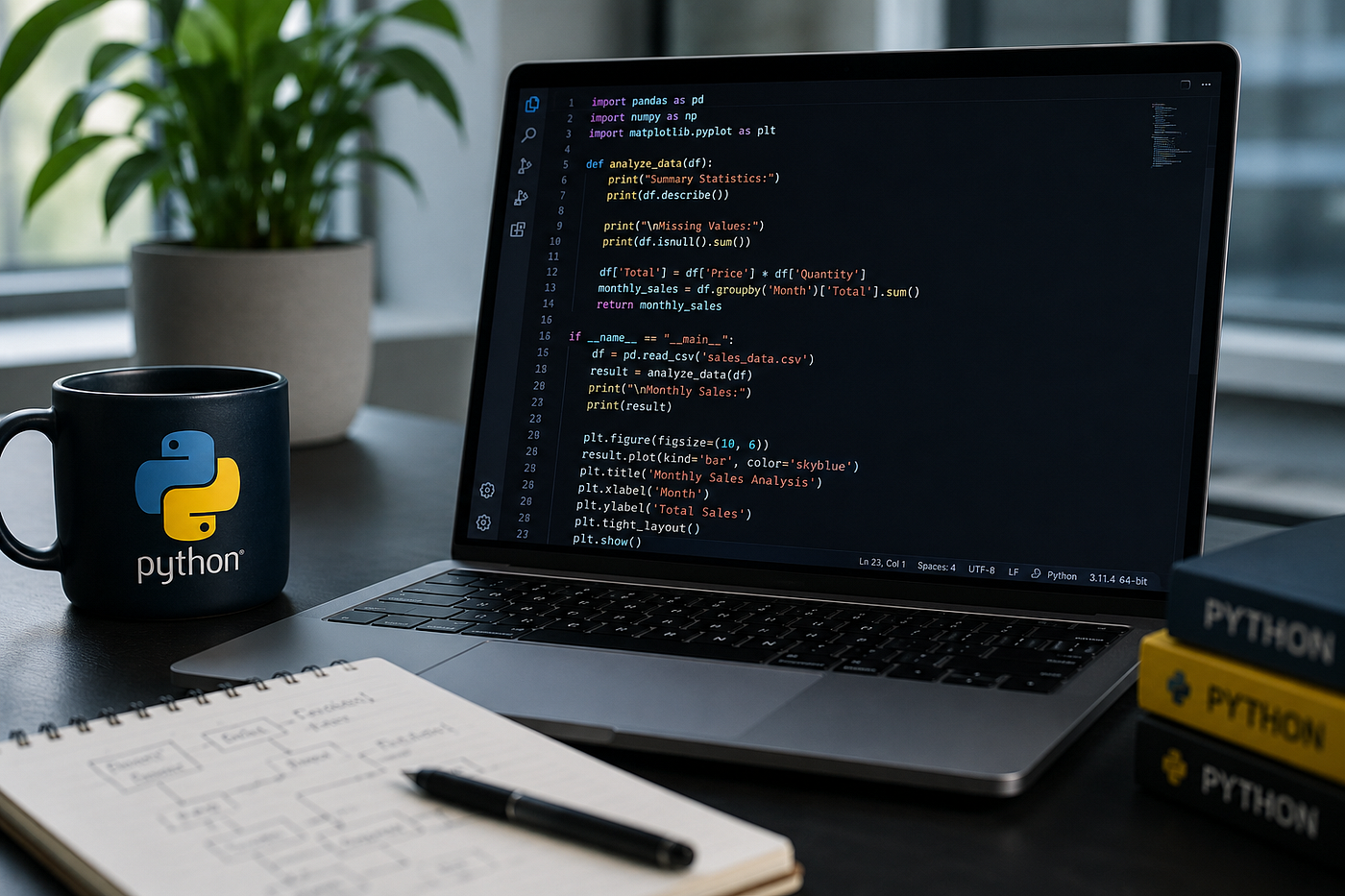
I revisited one of my older Python repositories ,A project that had survived real traffic, automated workflows, production failures, and the occasional 3 AM emergency fix. The code wasn’t terrible. In fact, younger me would’ve been proud of it.
The surprising part?
Almost every bottleneck I found existed inside code that was technically correct.
No broken syntax.
No obvious anti-patterns.
No catastrophic algorithms.
Just hundreds of small decisions repeated over time.
Repeated transformations. Repeated API logic. Repeated assumptions about memory. Repeated shortcuts that slowly evolved into architecture.
That realization changed how I think about Python.
Because experienced developers rarely lose performance from writing bad code.
They lose it by writing acceptable code repeatedly.
And repetition is dangerous.
A slow function hurts once.
A slow pattern replicated across services, pipelines, automation scripts, and data systems becomes technical debt with compound interest.
So I audited my own projects automation tools, AI workflows, backend services, scraping systems, cloud jobs and found seven patterns appearing far more often than I expected.
None of them looked serious in isolation.
Together, they explained almost every scaling issue I had faced.
Let’s go through them.
1. Rebuilding Data Instead of Streaming It
The biggest memory killer in modern Python isn’t computation.
It’s loading everything.
Old habit:
records = [
    transform(x)
    for x in huge_dataset
]
Modern approach:
def stream():
    for row in huge_dataset:
        yield transform(row)

for item in stream():
    process(item)
Why this matters in 2026:
AI pipelines.
ETL jobs.
RAG systems.
Streaming APIs.
Large datasets.
Everything is becoming incremental.
Senior engineers optimize movement of data, not only algorithms.
2. Ignoring Async I/O While Calling Multiple APIs
I found old scripts doing:
weather = get_weather()
stocks = get_stock()
news = get_news()
Sequential waiting.
Terrible.
Modern Python:
import asyncio

results = await asyncio.gather(
    get_weather(),
    get_stock(),
    get_news()
)
Real impact:
100 requests:
Sequential → 20 sec
Async → 2 sec
Huge difference.
2026 Python developers who ignore async lose free performance.
3. Treating AI Calls Like Normal Functions
Most people still do:
response = llm(prompt)Production systems need:
- retries
- caching
- batching
- timeout handling
- fallback models
Example:
from functools import lru_cache

@lru_cache
def embedding(text):
    return model.embed(text)
Repeated prompts become cheaper.
AI engineering today is mostly optimization.
Not prompting.
4. Writing Scripts Instead of Idempotent Automation
Bad automation:
send_invoice()Script crashes.
Runs again.
Invoice sent twice.
Production nightmare.
Better:
if not invoice_exists(id):
    send_invoice()
Idempotency matters everywhere:
Cloud jobs
Cron tasks
AWS Lambda
Queues
Payment systems
Automation without idempotency is gambling.
5. Logging Like a Beginner
Old:
print("error")Modern systems:
import logging

logging.error(
    "payment failed",
    extra={"user": user_id}
)
Production debugging depends on structured logs.
Logs are data.
Treat them like data.
6. Using Threads for CPU Work Under the GIL
Many developers still do:
ThreadPoolExecutor()for CPU-heavy tasks.
Wrong tool.
Use:
ProcessPoolExecutor()for:
- image processing
- embeddings
- ML inference
- heavy computation
Understanding GIL separates intermediate from senior Python engineers.
7. Measuring Nothing Before Optimizing
Most dangerous pattern.
Assumptions.
Modern profiling:
py-spy topor
scalene app.pyor
python -m cProfile app.pyYou’ll discover shocking things.
The bottleneck often isn’t where you think.
Final Thought
When developers talk about writing better Python, the conversation usually revolves around syntax, frameworks, or whichever library is trending this month.
After years of building automation systems and watching production code fail in unexpected ways, I’ve learned something less exciting but more valuable:
Performance problems are often habits wearing the disguise of code.
A repeated query.
A duplicated workflow.
An unmeasured assumption.
An API call inside a loop that nobody questioned.
These decisions survive because software keeps working until scale arrives.
Scale is brutally honest.
It exposes every shortcut.
Every hidden inefficiency.
Every design decision you postponed because “it’s fine for now.”
The biggest shift in my engineering career happened when I stopped asking:
How do I write this feature?
and started asking:
What happens when this runs 10 million times?
That question changes everything.
Because senior engineers aren’t defined by writing clever code.
They’re defined by writing systems that continue working long after the excitement of building them disappears.
Open one of your old repositories this week.
Audit it like a stranger.
You may discover the next optimization isn’t a faster algorithm.
It’s removing a pattern you stopped noticing years ago.
메타데이터
- post_id
- 937ff70bd63f
- slug
- i-analyzed-my-own-python-codebase-these-7-patterns-kept-repeating-and-slowing-me-down-937ff70bd63f
- url
- https://medium.com/engineers-house/i-analyzed-my-own-python-codebase-these-7-patterns-kept-repeating-and-slowing-me-down-937ff70bd63f
- canonical_url
- https://medium.com/engineers-house/i-analyzed-my-own-python-codebase-these-7-patterns-kept-repeating-and-slowing-me-down-937ff70bd63f
- author_url
- https://medium.com/@mahadrajpoot911
- status
- ok
- fetched_at
- 2026-06-12 22:02:08