The Medium Is the Assistant: Why AI Engines Are Becoming the New Media Platforms
AI assistants are not tools — they’re the new media platforms. Why RSL and paywalls won’t save journalism from this inevitable shift.
The Medium Is the Assistant: Why AI Engines Are Becoming the New Media Platforms
AI assistants are not tools — they’re the new media platforms. Why RSL and paywalls won’t save journalism from this inevitable shift.
The New Front Page Isn’t a Website
If you’ve searched the web lately, you may have noticed something strange. You type in a question, and before you see a single link, an AI summary greets you with the answer. According to Pew Research, when these summaries appear, users are far less likely to click through to the original websites. Another study found that some outlets are experiencing up to an 79% drop in traffic when AI summaries dominate the results.
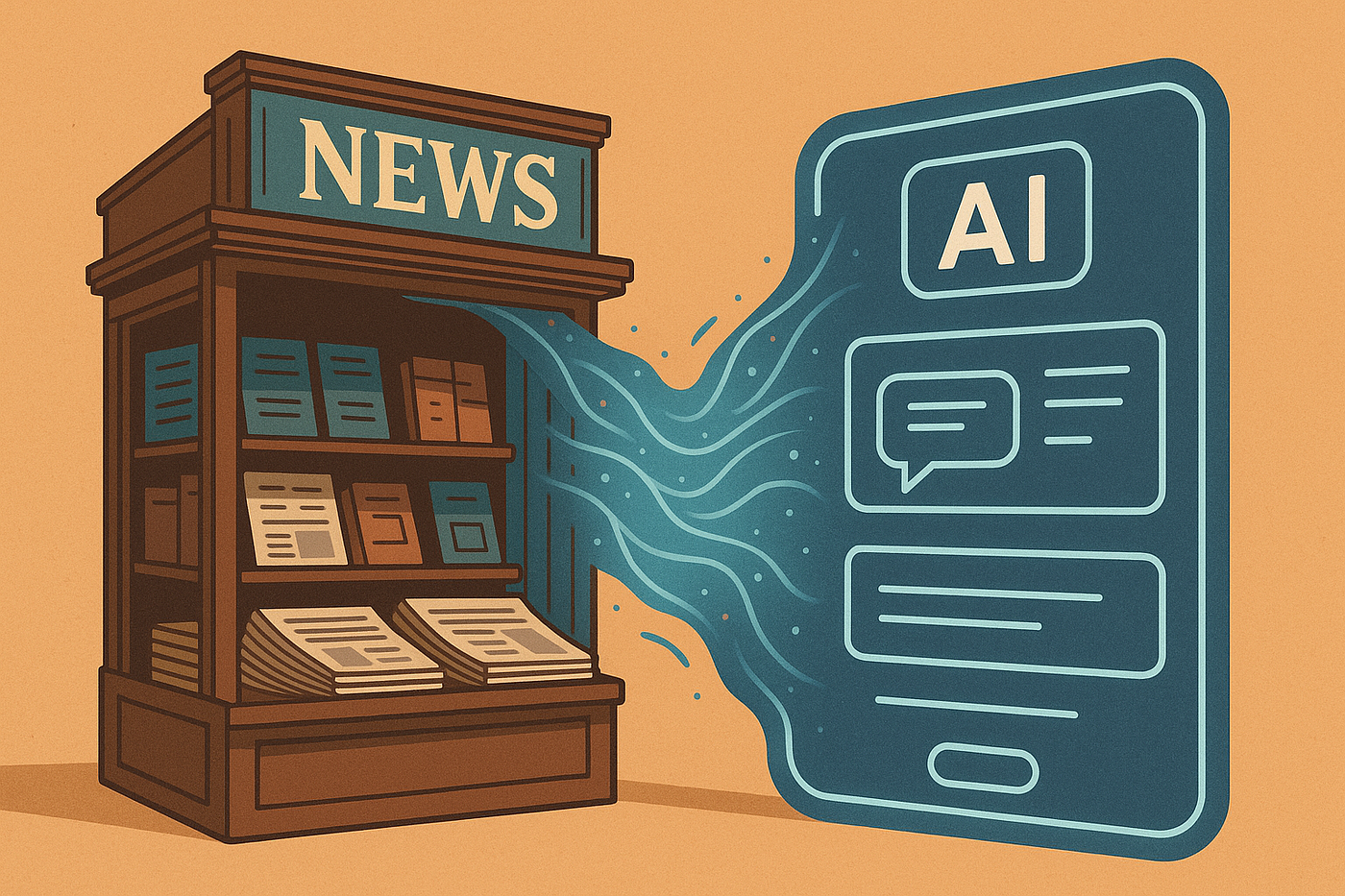
This is not a subtle shift. It’s a tectonic one. The destination is no longer the publisher’s website. The destination is the assistant itself.
The Medium Is the Message — Again
Marshall McLuhan famously declared that “the medium is the message.” His point: the way information is delivered reshapes society more than the content itself. Television didn’t just bring us new shows; it transformed politics, culture, and attention spans.
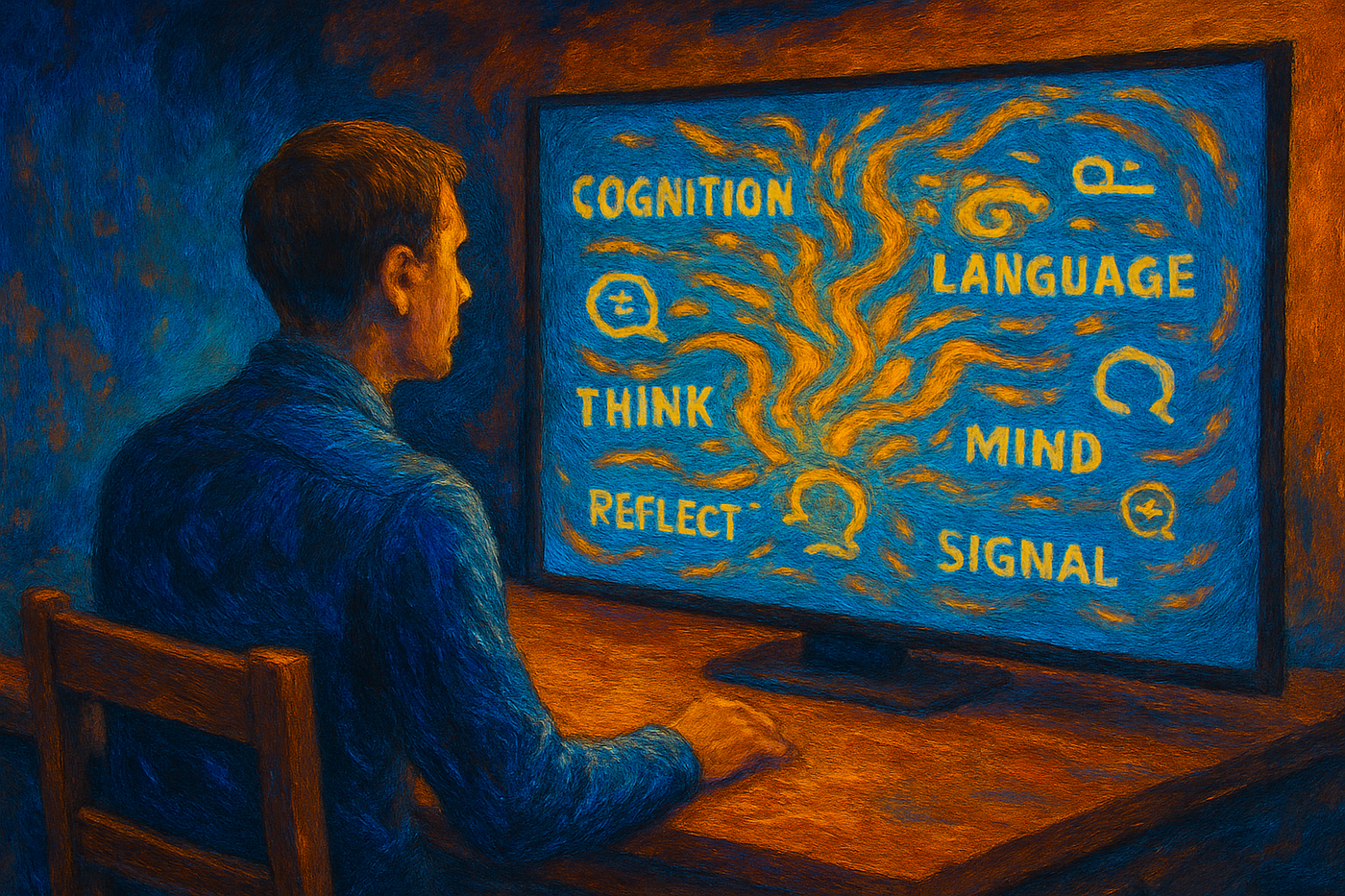
Today, AI assistants are becoming that new medium. The book extended the eye. The radio extended the ear. The smartphone extended our presence. AI assistants extend cognition itself — your second brain at your side.
The article is no longer the form. The dialogue is.
Defensive Walls, Fragile Solutions
Traditional media companies see the writing on the wall — and they’re panicking. Subscriptions, paywalls, licensing schemes, and now Really Simple Licensing (RSL) are all attempts to claw back control. RSL, announced by publishers like Reddit, Medium, and Quora, is an open standard that lets websites declare machine-readable terms for AI crawlers: pay-per-crawl, subscription fees, or “payment required” tags.
It sounds promising on paper. In reality, it’s defensive architecture. AI systems are already skilled at working around these walls. A recent report from Pelcro noted that AI chatbots can even reconstruct paywalled content using public clues, undermining the whole model.
This isn’t unique to RSL. It’s the same cycle we’ve seen before.
Kodak, Napster and the Media’s Kodak Moment
When Apple put a camera in the iPhone, Kodak doubled down on film. The result: collapse. Photography didn’t vanish — it was absorbed as a feature of another medium.
When Napster upended music distribution, record labels fought tooth and nail. The lawsuits slowed the disruption but didn’t stop it. What emerged instead was iTunes, and eventually Spotify — a licensing model aligned with the new medium.
Journalism today is at the same threshold. RSL and paywalls are Kodak film.
Napster-era lawsuits and licensing fights will follow. But eventually, the work of journalism will be integrated into AI-native ecosystems — not as a destination, but as a node inside the assistant.
Journalism as a Hollowing Industry
The profession itself is under strain even before AI disruption peaks. A 2025 Muck Rack survey found that half of journalists are considering quitting, citing burnout and low pay. Local journalism is even worse: one-third of U.S. counties have no full-time local reporter at all.
And the best talent? Many respected journalists have already left the newsroom for more stable and lucrative roles in corporate communications, PR, or think tanks. Journalism as a skill is migrating. Journalism as an industry is hollowing out.
The Split: Resistance vs. Adaptation
Not all publishers are digging trenches. Some are experimenting with licensing deals that integrate directly into AI ecosystems. The New York Times recently struck a deal with Amazon, allowing its content to be used for AI summaries and training. In the UK, ProRata.ai signed agreements with The Guardian, DMG Media, and Sky News to enable revenue sharing.
This is the other side of the split: resistors (paywalls, RSL) vs. adapters (partnerships, syndication). History suggests the adapters will win.
Why Users Won’t Tolerate Friction
The hidden accelerant in this story is user frustration. Readers want seamless answers. They don’t want to be told “this content is unavailable” or hit a dead-end paywall. When AI assistants return patchy results, users complain loudly. That frustration forces AI companies to adapt quickly — either by licensing critical sources, or by routing around barriers entirely.
Just as music fans pirated songs until Spotify arrived, knowledge-seekers will demand smooth experiences until the assistant model stabilizes.
The Medium Is the Assistant
The trajectory is clear: AI assistants are not tools bolted onto the media ecosystem. They are the ecosystem. They are personalized newsstands, interactive encyclopedias, and cognitive mirrors rolled into one.
Traditional journalism won’t vanish. But it will be absorbed as a component of this new medium. In McLuhan’s terms, AI is not “another medium.” It is the environment in which all other media now exist.
The newsstand is no longer on the corner. It’s in your pocket — whispering back when you ask.
메타데이터
- post_id
- 938ad5640ea6
- slug
- the-medium-is-the-assistant-why-ai-engines-are-becoming-the-new-media-platforms-938ad5640ea6
- url
- https://medium.com/@agault/the-medium-is-the-assistant-why-ai-engines-are-becoming-the-new-media-platforms-938ad5640ea6
- canonical_url
- https://medium.com/@agault/the-medium-is-the-assistant-why-ai-engines-are-becoming-the-new-media-platforms-938ad5640ea6
- author_url
- https://medium.com/@agault
- status
- ok
- fetched_at
- 2026-06-10 18:44:10