XREAL Lineup Review: Which AR Glasses Are Actually Worth Buying?
Comparing Air 2, One, and One Pro. We cut through the marketing hype to find the only model that makes sense for your setup.
XREAL Lineup Review: Which AR Glasses Are Actually Worth Buying?
Comparing Air 2, One, and One Pro. We cut through the marketing hype to find the only model that makes sense for your setup.
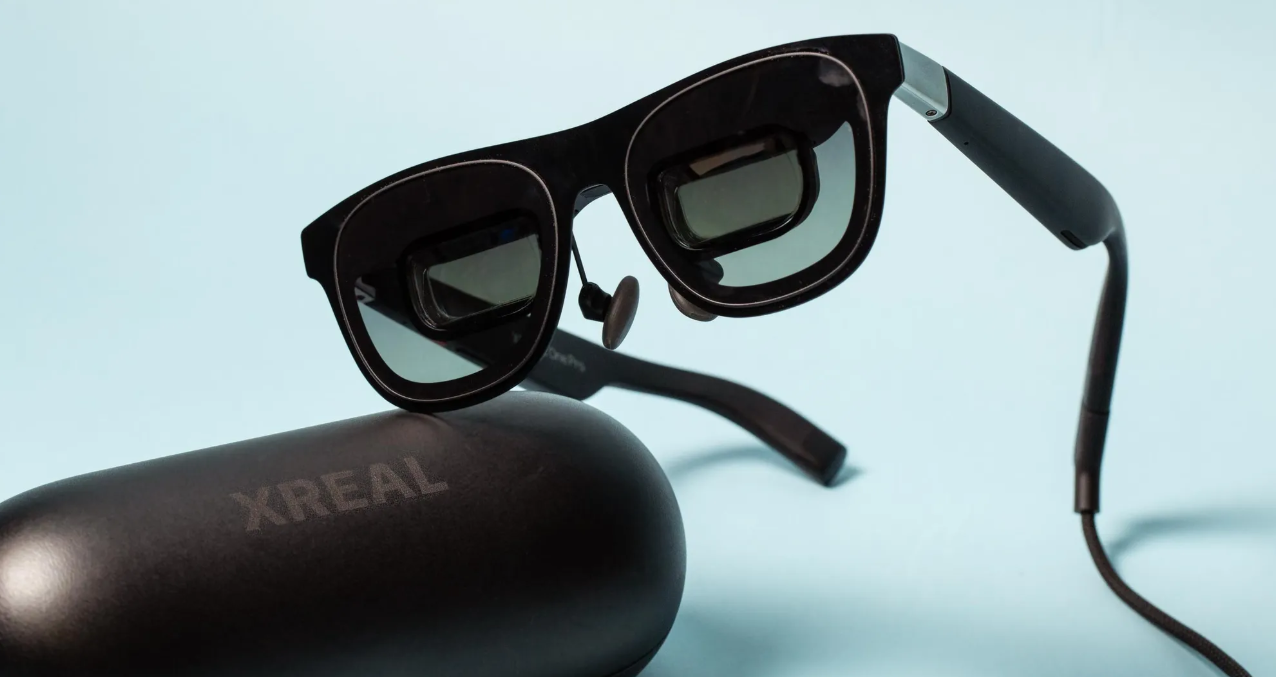
Photo credit: Bloomberg / XREAL One Pro Review
If just a year ago I was a complete skeptic about AR glasses, today I understand even better that this is not a toy or a heavy VR headset. It is about lightness, portability, and something that can completely replace your physical workspace. You could call it a private, autonomous office that you can dive into anywhere in the world. The technology has reached a point where these devices no longer feel like raw beta products, yet the room for growth remains massive. And you know what? It is a genuine productivity tool that changes the rules of the game. Obviously, the COVID-19 pandemic gave this market a huge push, and now the future definitely belongs to this tech.
Today, we are looking at the glasses from XREAL. Let me tell you, these creative folks have thoroughly confused users with their naming schemes, turning the process of choosing a gadget into a real quest with an asterisk.
Let’s break down the main models — XREAL Air 2, XREAL One, and XREAL One Pro — to figure out where you are paying for actual value and where you are just overpaying. In other words, let’s separate marketing traps from reality.
Photo credit: XREAL Official / Tech Engineering Breakdown
XREAL Air 2 — The Gold Standard for Entry-Level AR
I would say this model, priced at $249, is the perfect entry point. Not everyone is ready to drop a fortune just to dive into new tech, as the fear of wasting money is real. Plus, there is no flashy sci-fi design here; on the outside, they look just like regular sunglasses.
Photo credit: XREAL Official
Key technical specifications to highlight:
- Display: Dual 0.55-inch Sony Micro-OLED panels.
- Resolution: Full HD (1920x1080) per eye.
- Refresh Rate: Up to 120Hz (120Hz in 2D mode, 90Hz in 3D).
- Brightness & FOV: Up to 500 nits with a 46-degree Field of View (creates a 130-inch virtual screen from 4 meters away).
- Audio: 2 built-in microphones and 2 stereo speakers using open-ear audio technology. You can read more about this audio concept in my dedicated article: The Open-Ear Audio Trend: Ultimate Comfort or the Biggest Tech Scam of 2026?.
- Ergonomics: Weighs just 72 grams, features a 3-position adjustable temple design, and a well-balanced 1:1 weight distribution.
Photo credit: XREAL Official
Who they are perfect for: Students, AR beginners, and freelancers who work anywhere with a stable internet connection and light. It’s great for anyone who needs a mobile office in any corner of the world to stay independent or manage a business. It’s also awesome for gamers, as you can connect them to almost all major platforms.
Who they are NOT for: Those who work under direct sunlight in bright weather, anyone looking for “pure” true AR (spatial augmented reality), or those who have already experienced Apple Vision Pro or Meta Quest 3S (which you can check out in another breakdown of mine: Don’t Buy the Meta Quest 3S Until You Read This Comparison).
The Verdict: As I said right off the bat, this is the gold standard, the first step. A balanced, simple device in a standard glasses format. It is lightweight, has a solid matrix, good brightness, decent mics, and speakers. It is an interesting solution, and I would highly recommend starting your AR journey here.
Photo credit: XREAL Official
XREAL One — The Present or Already the Future?
Gradual iterations and fixing past mistakes led to this model. This is definitely not just a minor visual refresh; it is essentially a brand-new product. The upgrades are genuinely impressive and worth talking about. The price tag sits around $399.
Photo credit: XREAL Official
Technical aspects:
- Display: Larger 0.68-inch Sony Micro-OLED displays with an expanded 50-degree Field of View. Still Full HD (1920x1080) per eye.
- Performance: Powered by XREAL’s proprietary X1 spatial chip, which locks the screen firmly in space without stuttering, boasting an ultra-low latency of just 3ms.
- Optics: Up to 120Hz refresh rate and a 3-level electrochromic dimming system (allowing you to darken the lenses electronically).
- Audio: A premium audio system developed in collaboration with Bose for a much more immersive, spatial sound.
- Weight: 84 grams.
Ideal option for: Students, freelancers, and people who do most of their work on smartphones. It is highly comfortable for working with text, code, or spreadsheets. It fits gamers perfectly too, being compatible with all modern platforms, including Xbox and PlayStation 5. It is also for people who value simplicity — just plug it in and use it without worrying about what software updates might break next month.
Who it is NOT for: Users whose smartphones lack DisplayPort over USB-C support, or those who require full-fledged mixed reality immersion. Since there are no front-facing cameras to track your hands in space, you would either need to buy additional accessories or look at more expensive enterprise models.
The Verdict: This model takes a huge leap by integrating the proprietary X1 spatial chip directly into the temples of the glasses. Combine that with great sound from Bose and a noticeably better picture, and you get a beautifully balanced option that definitely demands your attention.
Photo credit: XREAL Official
XREAL One Pro — Why It’s the Best Solution on the Market
This is the most expensive model in our review, priced around $599. Most interestingly, it serves as a showcase of the brand’s engineering muscles and technical peak performance.

Photo credit: XREAL Official
Key specifications to note:
- Display: 0.68-inch Sony Micro-OLED displays with a crisp 50-degree Field of View (giving you a massive 154-inch screen experience from 4 meters away).
- Brightness & Speed: A roaring 700 nits of peak brightness, a 120Hz refresh rate, and the same 3-level electrochromic dimming as the regular XREAL One.
- Hardware: Equipped with the same responsive XREAL X1 spatial chip and Bose-tuned audio.
- Weight: 87 grams.
- Ergonomics: When purchasing, you can choose the exact frame size based on your Interpupillary Distance (IPD): Size M (57–66 mm) or Size L (66–75 mm), which drastically reduces eye strain during long sessions.
An ideal solution for: Video editors and traders who benefit greatly from the wide field of view and edge-to-edge sharpness. Fine text and complex charts will no longer cause eye fatigue or make you suffer. It’s also perfect for travelers who need to work in brightly lit rooms or outdoors without worrying about privacy.
Who they are NOT for: Tech enthusiasts who still expect something completely sci-fi beyond what this form factor can offer, such as beta testers or advanced MR developers.
The Verdict: This model fully rewards all the R&D work the company has done over the years. The insane brightness level makes it a top-tier choice for anyone looking to use AR glasses as a primary, professional workspace. If you want to see how this stacks up against the competition, you can check out my previous review on VITURE: Forget Meta: Why VITURE is the True AR Contender in 2026.

Photo credit: XREAL Official
Final Verdict: Which One to Buy?
- XREAL Air 2 — For those who purely need a portable monitor for gaming, YouTube, TikTok, watching movies, and want a minimal set of hassle-free features. It’s lightweight, offers a great picture, and connects to almost everything.
- XREAL One — For freelancers and students who need more spatial stability. This purchase is a guaranteed hit; it represents the ideal balance between price, quality, and the variety of tasks you can handle.
- XREAL One Pro — Not for everyone, and the price tag certainly bites, but it is entirely worth it. It is a future-proof investment for the next 1–2 years. This is a true flagship with an incredibly bright screen, excellent edge sharpness, and killer sound.
What would I choose? Honestly, I would still go with the XREAL Air 2 first just to test the waters with this brand and see how it fits my workflow. Given how rapidly this market is evolving, we are bound to see wild new tech solutions soon. This was my second big piece on AR tech — stay tuned, because it’s only going to get more interesting from here!
If you found this breakdown helpful, don’t forget to follow for more honest tech analysis. We are open to collaboration and partnerships — feel free to reach out to discuss how we can work together.
메타데이터
- post_id
- 939612a9fa46
- slug
- xreal-lineup-review-which-ar-glasses-are-actually-worth-buying-939612a9fa46
- url
- https://medium.com/@llgudjey/xreal-lineup-review-which-ar-glasses-are-actually-worth-buying-939612a9fa46
- canonical_url
- https://medium.com/@llgudjey/xreal-lineup-review-which-ar-glasses-are-actually-worth-buying-939612a9fa46
- author_url
- https://medium.com/@llgudjey
- status
- ok
- fetched_at
- 2026-06-09 15:37:30




