Retirement Doesn’t Retire Your Brain
The neuroscience of why “finally free” feels like static, and the four-step fix
NEUROSCIENCE OF RETIREMENT
Retirement Doesn’t Retire Your Brain
The neuroscience of why “finally free” feels like static, and the four-step fix

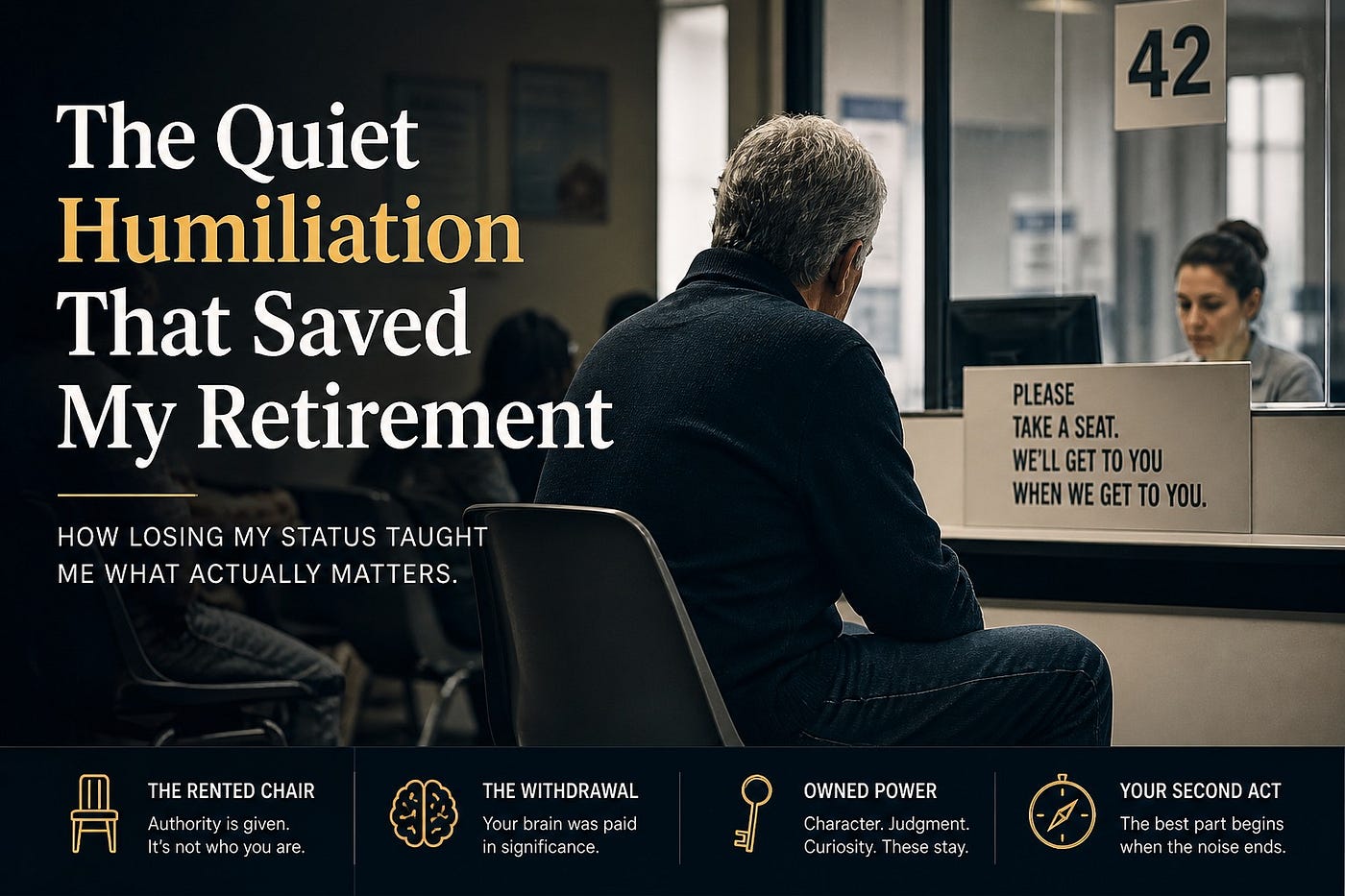
Retirement may end the meetings, deadlines, and titles, but the brain still needs new structure, meaning, and direction. / Author created image using Chat GPT
Six months in, most people hit the same kind of Wednesday.
It’s 10 am. No meeting, no deadline, no one waiting on an email. The freedom you spent years planning for is finally here.
It feels less like relief than static.
That’s not a failure of attitude. Longitudinal research on retirement has found that people’s prior work roles keep shaping their sense of self well after the role itself ends. Role theory treats the loss of the social identity of “worker” as a distinct source of strain, separate from money or health.
Your brain built its entire reward architecture around a career for decades. You can’t decommission that architecture by deciding to.
You have to rebuild it. Deliberately, and on purpose.
1. The Reward Circuitry Doesn’t Know You Quit
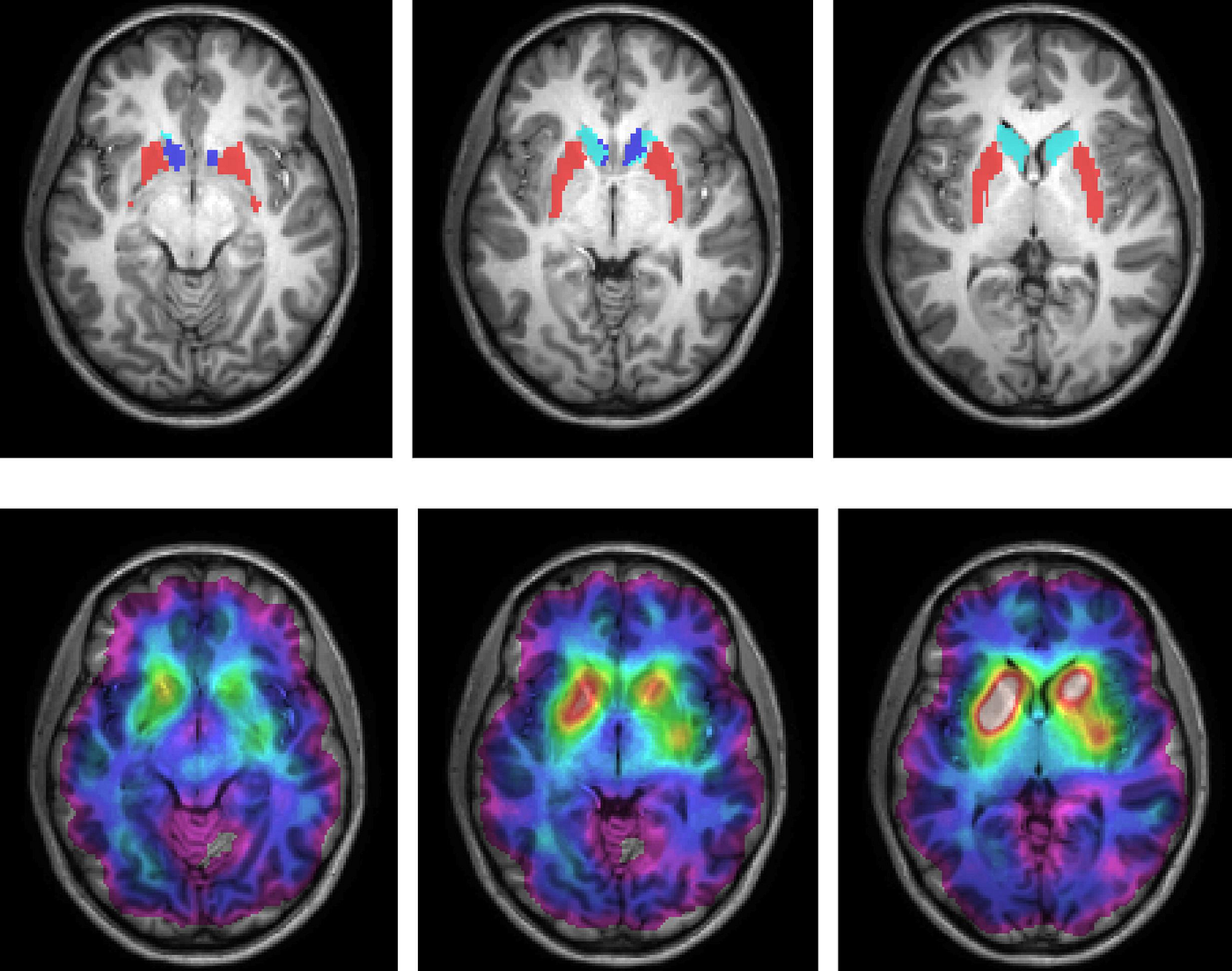
Every deadline hit, crisis solved, or goal achieved delivered a dose of dopamine, the brain’s chemical of anticipation and reward.
Repeated for thirty or forty years, that becomes a deep, efficient loop. Your sense of worth gets biologically wired to external, professional signals of progress.
Meanwhile, the brain’s neuroplasticity, its lifelong capacity to rewire itself, cuts both ways. It builds fast highways for the circuits you use daily, and it prunes the ones you don’t.
If your life ran on professional output, the circuits for unstructured play, contemplation, and open-ended creativity got quietly thinned out.
Retire suddenly, and the dopamine loop just stops, mid-stride. What’s left is an overbuilt highway with nowhere to go, and a set of underused back roads you’re now expected to navigate fluently.
That mismatch, not laziness or lack of purpose, is what produces the restlessness and low-grade grief that so many high achievers feel and rarely admit to.
2. Idle Time Activates the Storyteller in Your Head
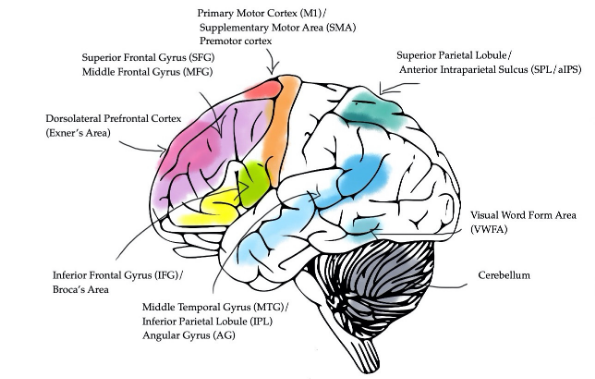
There’s a specific brain network responsible for this discomfort: the Default Mode Network, or DMN.
It switches on whenever you’re not absorbed in an external task. It’s the engine behind daydreaming, memory, imagining the future, and constructing your sense of self, the part of you that narrates who you are.
When you’re deep in focused work, a separate system (the task-positive network) takes over and quiets the DMN. Step away from a demanding career, and the DMN comes roaring back with nothing to check it.
This is also the network that constructs your autobiographical identity through ongoing self-referential processing. That’s exactly why an idle mind after retirement doesn’t just wander; it keeps returning to who you used to be.
Left without a compelling direction, an unchecked DMN defaults to rumination. It looks backward.
It measures your open, unscheduled present against your tightly structured past, and it tends to conclude that the past was better.
This is where the standard advice, fill the calendar with hobbies and travel, quietly fails. It occupies time without giving the DMN anything to update its story with, so the rumination continues underneath the busyness.
You don’t out-argue this by staying occupied. You have to give the brain a new story sturdy enough to replace the old one.
Focused-attention meditation has been shown to reduce DMN activity by 15 to 30% in practitioners, with measurable changes after as little as eight weeks of regular practice.
3. Two Ideas Worth Stealing From Japanese Aesthetics
Two concepts point toward something more durable than a full calendar.
Yutori, spaciousness, unhurried presence, is the direct counterweight to a life optimized for efficiency.
At first, your brain will read open time as a problem to solve and try to fill it. A yutori week doesn’t look empty on a calendar so much as loosely held: two mornings with nothing scheduled before 11 am, a walk with no destination, a meal with no next appointment stacked behind it.
Tolerating that space, rather than immediately paving over it, is what lets the DMN shift from anxious looping into actual creative range.
Shibumi, understated, refined, effortless, is the corrective to a life built on accumulation.
If the first half of adulthood adds titles and possessions, the second can subtract the unnecessary until what’s left is essential. In practice, that might mean one craft pursued with real depth instead of five hobbies pursued at the surface, or a smaller circle of relationships held more closely.
Capacity for life stops being about how much you can pack in, and starts being about how fully you experience what’s already there.
4. Four Ways to Actually Rewire It
Insight alone won’t move neural tissue. Only repeated behavior does.
Build a bridge, not a cliff. Don’t jump straight from a high-output career to open meditation. Pick a demanding, low-stakes skill (writing, a craft, a language, physical training) that gives your brain the focused reward hit it still wants, without tying that reward back to professional identity.
Run a 90/20 rhythm. Ninety minutes of focused, meaningful work each morning, reading, writing, building something, followed by a full twenty-minute disengagement: a walk with no phone, silence, time outside. This satisfies the brain’s craving for structure while training it to tolerate spaciousness as part of the routine, not a threat to it.
Write the new story yourself. Left alone, the DMN will keep narrating your past to you. Counter it on paper, in the present tense, with a specific sentence rather than a vague reflection.
Not “I used to run a department,” but “today I spent two hours learning to restring this guitar, and I noticed I wasn’t checking the clock.”
The second sentence gives the brain new material to build identity from. The first just replays old footage.
Let the metrics change. Success used to be measured externally: title, revenue, rank. Replace it with something you can actually track weekly, on paper or in a note: hours spent in real focus on a skill, one conversation that went deeper than small talk, one thing made or finished.
A vague intention like “find more meaning” loses to old, well-worn metrics every time. A number you write down on Sunday doesn’t.
The Real Work
Losing a career can feel like a door closing.
Looked at through neuroscience, it’s closer to the moment the brain is finally released from decades of optimization for survival and status, and handed the chance to build something else.
An unused space doesn’t stay empty on its own. It fills with whatever’s easiest, usually rumination, unless you fill it with something better first.
Slow down deliberately. Step off the treadmill of constant efficiency. Start laying down new circuitry built on attention, craft, and restraint.
The discomfort fades because there’s finally something else worth attending to.
This is not a smaller life. Built well, it’s a wider one.
Further reading to consider:
[embed]The Echoes That Became You You didn’t choose most of it. You can still choose what stays.medium.com
About the Author
Gary L. Fretwell is a #1 international best-selling author and practitioner of Intentional Living, blending neuroscience with Stoic philosophy to help creators and leaders build a life of lasting significance.
He’s the author of six books on intentional living and retirement, including the #1 international bestseller The Magic of a Moment, Intentional Retirement, Embracing Retirement, and Rewiring the Ring, which explores the cognitive science of tinnitus. His latest, The Identity Ghost, is a blueprint for designing a life of purpose through ancient wisdom and modern neuroscience.
On Medium, Gary founded and edits Illumination: Retirement, Aging & Legacy and Illumination Beyond Identity, and serves as an editor across the broader ILLUMINATION network.
Off the page, he serves as Board President for Prescott Meals on Wheels and mentors MBA students at Western Governors University.
📖 garyfretwell.com · 📬 The Wise Effort on Substack · ✍️ Follow on Medium
메타데이터
- post_id
- 93dd102b53b3
- slug
- retirement-doesnt-retire-your-brain-93dd102b53b3
- url
- https://medium.com/illumination-retirement-aging-legacy/retirement-doesnt-retire-your-brain-93dd102b53b3
- canonical_url
- https://medium.com/illumination-retirement-aging-legacy/retirement-doesnt-retire-your-brain-93dd102b53b3
- author_url
- https://medium.com/@gary_fretwell
- status
- ok
- fetched_at
- 2026-07-17 08:43:13