The Fraudulent Avatar: Trump, Prole Drift, and the Boomer Civilization
Donald Trump is legible. This is the first and most important thing to establish, because it is the thing his critics most consistently…
The Fraudulent Avatar:
Trump, Prole Drift, and the Boomer Civilization
Donald Trump is legible. This is the first and most important thing to establish, because it is the thing his critics most consistently refuse to accept, and their refusal is itself a symptom of the disease he represents. He is not a singular phenomenon, neither heroic nor demonic. He is what emerges at the intersection of a boomer television civilization that abolished the distinction between performance and reality, a credentialed elite that hollowed its own authority while extracting value from working-class culture, a legitimate populist grievance tradition that had been politically homeless for decades, and a media-entertainment complex that needed content and found in him an inexhaustible generator of it. He did not create these conditions. He read them, with the specific and narrow genius of the television personality, which is a real form of intelligence even if it is not the kind credentialed culture knows how to recognize.
To understand Trump fully requires two intellectual frameworks that are rarely brought into conversation: Paul Fussell’s analysis of prole drift, and Christopher Lasch’s far more morally serious account of legitimate populist revolt. Fussell, in his 1983 book Class, observed that American culture was sliding downward toward working-class tastes and sensibilities even as the economy nominally expanded the middle class. He was essentially a snob diagnosing decline from above, sardonic and detached. Lasch was something altogether different. In The True and Only Heaven and The Revolt of the Elites, he took populist resentment seriously as a moral and philosophical tradition rooted in productivist ethics, localism, religious seriousness, and a suspicion of Progress as the ideology of the comfortable. His crucial inversion was that it was not the masses who had abandoned civic virtue but the professional-managerial class who had seceded from common life, into gated communities, credentialed meritocracies, and a culture of therapeutic individualism that had no room for limits, tragedy, or obligation. Fussell and Lasch point at different things. Together they triangulate Trump with uncomfortable precision.
Prole Drift and the Aesthetics of Resentment
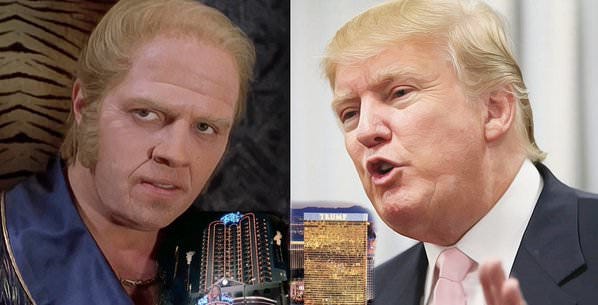
Fussell noted that prole taste runs toward the ostentatious and the literal: gold is better than patina, big is better than refined, visible expense trumps understatement. Trump Tower, Mar-a-Lago, the gold-plated bathroom fixtures represent not upper-class taste, which prizes restraint and inherited elegance, but a magnified and exaggerated version of what a working-class imagination projects onto wealth. Trump did not rise above prole aesthetics through his accumulation of money. He weaponized them. His entire aesthetic vocabulary is the conspicuous consumption of the Gilded Age plutocrat, which his supporters read as authenticity precisely because he does not perform the genteel concealment of wealth that Clinton and Obama mastered. The vulgarity is the honesty, or so it appears.
The rhetoric follows the same grammar. Prole culture, as Fussell described it, is organized around a sense of being looked down upon, combined with compensatory displays of toughness and contempt for those perceived as effete. Trump’s political voice, the nicknames, the boasts, the contempt for expertise, the celebration of raw force, is a near-perfect expression of this emotional logic. The violations of decorum are not failures. They are the message. Each norm transgressed communicates, to those who feel perpetually constrained by norms they had no hand in making, that here is someone who refuses the rules they use to control you. His reported reaction to the current war in Iran, “We’re hot! We’re winning!”, while allies fret about economic catastrophe and the closure of the Strait of Hormuz sends shockwaves through global markets, is the grammar of a brawler, not a statesman. It is visceral and territorial. But it is also a performance his audience recognizes, because the performance mirrors their own fantasy of what it would feel like to answer back.
Lasch and the Legitimate Core
Fussell’s framework, however, is insufficient on its own, because it is purely diagnostic and implicitly condescending. It identifies the aesthetic without taking seriously what animates it. This is where Lasch becomes indispensable, and where the analysis becomes genuinely uncomfortable for the liberal commentariat that has most enthusiastically deployed him.
Lasch would insist, against the entire weight of respectable opinion, that there is a legitimate core to what Trump represents, even though Trump is an almost perfectly illegitimate vehicle for it. The people who voted for him, particularly in the first election, were not simply victims of false consciousness, racism, or stupidity: the three explanations the credentialed class reached for immediately, because all three conveniently located the problem in the deplorable rather than in themselves. They were people who had watched their communities hollowed out by economic policies designed by and for the professional class, sold as inevitable market forces while the designers insulated themselves from the consequences. They had watched their moral frameworks, rooted in religion, family obligation, place, and productive work, systematically mocked by a culture industry controlled by people who had never depended on any of those things. They had watched their political representation captured by a donor class whose interests were orthogonal to theirs. They had watched their epistemic authority, their right to trust their own experience and observations, delegitimized by an expert class that claimed a monopoly on valid knowledge while being serially and consequentially wrong.
This is the genuine Laschian revolt. It is real. It is morally serious in its origins. And Trump is its catastrophically inadequate expression.
The Hollowing of the Credential
Lasch’s indictment of the elite was primary and foundational, not a polite gesture toward balance. The revolt of the elites, his deliberate inversion of Ortega y Gasset’s revolt of the masses, was the original betrayal. The elites seceded first: from common schools, common spaces, common risk, common fate. They pulled up the ladders of social mobility behind them while loudly congratulating themselves on their commitment to equality. The credentialed class’s particular form of hypocrisy is, for Lasch, worse than ordinary corruption because it clothes itself in virtue. The old WASP establishment was at least honest about its exclusivity. It did not pretend that Harvard was a meritocracy or that its members had earned their position through superior moral seriousness. The new professional-managerial class replaced aristocratic frankness with therapeutic self-congratulation. Their privilege was reframed as achievement. Their cultural preferences were reframed as enlightenment. Their contempt for those below them was reframed as concern.
The credential system, supposed to be the meritocracy’s legitimating mechanism, has inflated beyond any relationship to actual competence. A professional class that requires a law degree to do work paralegals could handle, a PhD to think thoughts an educated person with a library card could think, an MBA to manage organizations that common sense once managed: this is a guild system dressed as meritocracy. The credential protects market position; it does not certify wisdom. And it has become self-referential. The Harvard degree now signals primarily that one was admitted to Harvard and behaved appropriately there. It says something about cultural capital, institutional fluency, and social performance. It says decreasingly little about independent thought, moral seriousness, or practical competence.
The expert class’s catastrophic failures in economics, in foreign policy, in public health, in institutional management have been met not with accountability but with credentialed solidarity. The people who were wrong about Iraq, wrong about the financial crisis, wrong about deindustrialization, retained their positions, platforms, and authority claims. The credential protected them from the consequences of being wrong that reality imposes on everyone else. This is what makes the populist epistemology of distrusting experts simultaneously understandable and dangerous. It is understandable because the experts genuinely have failed and genuinely have escaped accountability. It is dangerous because the alternative on offer is not a better epistemology but a different tribe’s prejudices elevated to the status of truth.
The Vulgarization Project
The dimension Lasch identified most prophetically, and which remains most systematically ignored, is that elites have not merely failed to maintain cultural standards but have actively vulgarized working-class culture for profit. This is not passive decline. It is an economic and political project.
The culture industry, controlled by the credentialed class, found that it could extract enormous value from working-class cultural forms by stripping them of their serious content and selling the aesthetic back as lifestyle product. Country music is the obvious example: a tradition rooted in genuine hardship, religious seriousness, and regional identity, systematically converted into a brand signifying performed authenticity, now indistinguishable from any other entertainment product. The same process was applied to blues, to gospel, to hip-hop, to every cultural form that emerged from genuine communal life under pressure. What gets stripped out in each case is exactly what Lasch valued: the confrontation with limits, the moral seriousness, the sense of obligation to something beyond individual preference. What remains is the aesthetic surface, detached from the conditions that gave it meaning and repackaged for consumption.
The elites profit from this twice: economically, through the culture industry, and politically, by ensuring that working-class cultural life remains a zone of consumption rather than genuine civic formation. A working class with a serious, coherent cultural tradition capable of articulating its own interests is politically dangerous. A working class consuming a simulacrum of that tradition, produced and sold by the same class that dispossessed them, is manageable.
The Boomer Sequence
Trump is most fully understood as the terminal point of a boomer presidential sequence, the final working-out of a generation’s particular pathology. The boomers were the first generation to be fully formed by television, not merely exposed to it but cognitively and emotionally shaped by its rhythms from childhood. Their comfortable hypocrisy is not mere moral failure. It is what you get when image and reality have been so thoroughly blurred that the distinction genuinely stops feeling meaningful.
Clinton expressed this as charming and irrepressible appetite: the inability to ever subordinate the self to the office, the cause, or the people. Prodigious talent entirely in service of the self, the triangulation, the inability to be fully honest because image-management was identical with identity. Bush expressed it as the performance of simplicity by a man of enormous inherited privilege, the cowboy hat over the Andover education, the evangelical rebirth narrative, the frat-boy anti-intellectualism performed as populist credential. The comfortable hypocrisy was structural: compassionate conservatism while dismantling the safety net, Christian humility while launching catastrophic wars, plain-speaking while running a sophisticated propaganda operation. Obama expressed the boomer sensibility in its premium mode: the apotheosis of the therapeutic-managerial style, extraordinarily gifted at the language of collective aspiration while being fundamentally a creature of the professional class. The hope-and-change aesthetic was, in retrospect, a lifestyle brand. His presidency was premium in exactly the way that term applies to consumer goods: the same basic product, more tasteful packaging.
Trump completes the sequence by dropping the pretense entirely. He is the boomer id without the superego. The self-interest without the communal language draped over it. The television personality who stopped pretending there was anything behind the television personality. What Neil Postman diagnosed in Amusing Ourselves to Death reaches its logical conclusion: television does not merely transmit politics but restructures what politics can be, selecting for those who can perform sincerity, manage image, and reduce complex positions to emotionally legible moments. Previous boomer presidents maintained at least a notional distinction between their television selves and some underlying substance. Trump abolished that distinction entirely. There is no backstage. The show is the presidency. In this sense he is almost honest, a brutal clarifying honesty that reveals what was always present, the thing that was being managed and concealed by his predecessors’ greater sophistication.
The Inadequacy of the Vehicle
The inadequacy of Trump as a vehicle for legitimate populist revolt is not merely personal, though it is also personal. It is structural. The producerist, morally serious populism Lasch traced requires loyalty to place over abstraction, self-limitation as a civic virtue, accountability to community rather than to the self, and genuine solidarity rooted in shared fate. Trump violates every one of these.
He is not loyal to place but to the Trump brand, a global luxury product. Mar-a-Lago is not a community but a private club for the very class his supporters resent. He is constitutionally incapable of self-limitation. The genuine populist tradition Lasch admired was morally disciplined, understanding that rights come with obligations and that freedom is embedded in responsibility. Trump’s entire being is organized around the removal of limitation. Every norm, every law, every obligation is experienced as an imposition to be escaped. This is not the ethic of the producer. It is the ethic of the most decadent kind of consumer.
Most brutally, he has no actual solidarity with the people whose grievances he channels. His economic policies consistently transferred wealth upward toward the class his supporters nominally oppose. He generated the feeling of solidarity through the theater of transgression while pursuing the interests of his actual class. The war now unfolding, whatever its stated rationale, is driving oil prices to levels that will hurt the working Americans who commute and heat their homes far more than the donor class attending his fundraisers. The bully channels the grievance but cannot resolve it, because resolution would require exactly the patient coalition-building and institutional competence that prole sensibility, shaped and encouraged in its suspicion by decades of elite betrayal, instinctively distrusts.
The Foreclosure
The deepest tragedy, the one Lasch would have felt most acutely, is that Trump’s existence forecloses the genuine populist alternative for a generation. The legitimate grievances he channels are now so thoroughly associated with his person, his aesthetic, his vulgarity, and his cruelty that any serious political movement attempting to address those grievances will spend enormous energy simply distinguishing itself from him. The credentialed class, which never took those grievances seriously in the first place, now possesses a permanent rhetorical weapon: any challenge to elite authority can be dismissed as Trumpism.
Meanwhile the conditions that produced him go entirely unaddressed. The hollowed communities, the phony credentials, the vulgarized culture, the captured politics: none of it changes. The elite draws the lesson that it needs better messaging and more sophisticated candidates. The working class draws the lesson that even their most disruptive political weapon gets captured and turned against them. And the television civilization grinds on, producing the next iteration of the same dynamic in a form we cannot yet recognize.
The populist tradition Lasch was recovering demanded moral seriousness. Trump offers spectacle. The grievance is real. The avatar is a fraud. And the civilization that produced both shows no signs of being able to tell the difference. Lasch died in 1994, just as this was becoming fully visible. He would not have been surprised. He would have been, one imagines, very tired.
메타데이터
- post_id
- 93ea5f7d8024
- slug
- the-fraudulent-avatar-trump-prole-drift-and-the-boomer-civilization-93ea5f7d8024
- url
- https://medium.com/@galaxytablet3470/the-fraudulent-avatar-trump-prole-drift-and-the-boomer-civilization-93ea5f7d8024
- canonical_url
- https://medium.com/@galaxytablet3470/the-fraudulent-avatar-trump-prole-drift-and-the-boomer-civilization-93ea5f7d8024
- author_url
- https://medium.com/@galaxytablet3470
- status
- ok
- fetched_at
- 2026-06-09 15:37:30