The Cheapest Tokens in History, and the Biggest AI Bills
Per-token prices fell about 98 percent in three years. Enterprise AI spend tripled anyway.
The Cheapest Tokens in History, and the Biggest AI Bills
Per-token prices fell about 98 percent in three years. Enterprise AI spend tripled anyway.

Three key takeaways
- Cheaper tokens did not lower AI bills. They removed the friction that used to keep usage in check, and spend climbed even as the unit price collapsed. The paradox is real and it is on your invoice.
- The metric most teams optimized, tokens consumed, rewards activity, not results. A team can lead the usage leaderboard and ship nothing. The metric that survives is cost per resolved task.
- The fix is mostly engineering and management, not a better model. Routing, caching, and batching cut bills 60 to 80 percent. Grading work on cost per finished task does the rest.
Uber burned through its entire 2026 AI coding budget in four months. The response was not to buy more. It was to cap each engineer at $1,500 per month per tool and start asking where the money actually went.
Uber is not an outlier. It is early. Across the industry, the same thing is landing on finance teams at once: the AI bill went up while the price of the thing they were buying went down by almost two orders of magnitude. Meta capped internal token spending after costs crept toward the billions. The conversation in engineering orgs flipped almost overnight, from “use as much AI as you can” to “what is this costing us per unit of work.”
This is the end of tokenmaxxing, and the start of something more useful.
What tokenmaxxing was
For most of 2025, the prevailing belief was that more AI usage equalled more progress. Companies put up internal leaderboards ranking engineers by token consumption. “Tokens per employee” showed up in decks as a sign of adoption and momentum. The implicit theory was simple: the teams burning the most must be the ones moving the fastest.
It was a vanity metric dressed up as a productivity signal. Token consumption measures how much you bought, not how much you shipped. And because the unit price kept falling, the number was easy to grow and felt almost free to chase.
Then the invoices arrived.
The price collapsed and the bill tripled
The paradox is simple to state. Per-token prices fell roughly 98 percent over three years. Over those same three years, the average enterprise AI budget went from about $1.2 million a year to about $7 million. The unit got fifty times cheaper and the total still climbed.

This is not a contradiction once you see what happened. Cheap tokens did not save anyone money. They removed the thing that used to limit usage. When each call was expensive, people rationed. When each call rounded to nothing, the brakes came off, and consumption grew faster than the price dropped.
A 98 percent price cut is a 50x discount. If your usage grows 150x in the same window, your bill triples. That is the whole story, and it is sitting on your invoice right now.
Where the thirty times went
The reason usage exploded is that the unit of work changed underneath everyone.
In 2023, an AI request was a single call. You sent a prompt, you got a completion, you paid for one round trip. In 2026, the equivalent “task” is an orchestrated agent. It calls a model many times, retries when a step fails, fans out into sub-agents, and drags a large context window through every single step. The job looks the same to the user. The token count does not.
A simple 2023 interaction cost about four cents. An orchestrated agentic workflow in 2026 runs about $1.20. That is roughly thirty times more for what a user would call the same task. Nobody sat in a meeting and chose to spend thirty times more. The workflow did it for them, one retry and one bloated context window at a time.
That is the part that makes this dangerous. The cost did not grow where anyone was looking. It grew inside the orchestration, in the retries and the re-reads and the redundant context, none of which shows up as a decision anyone made.
You were measuring the input
The deeper problem is that the industry optimized the wrong number.
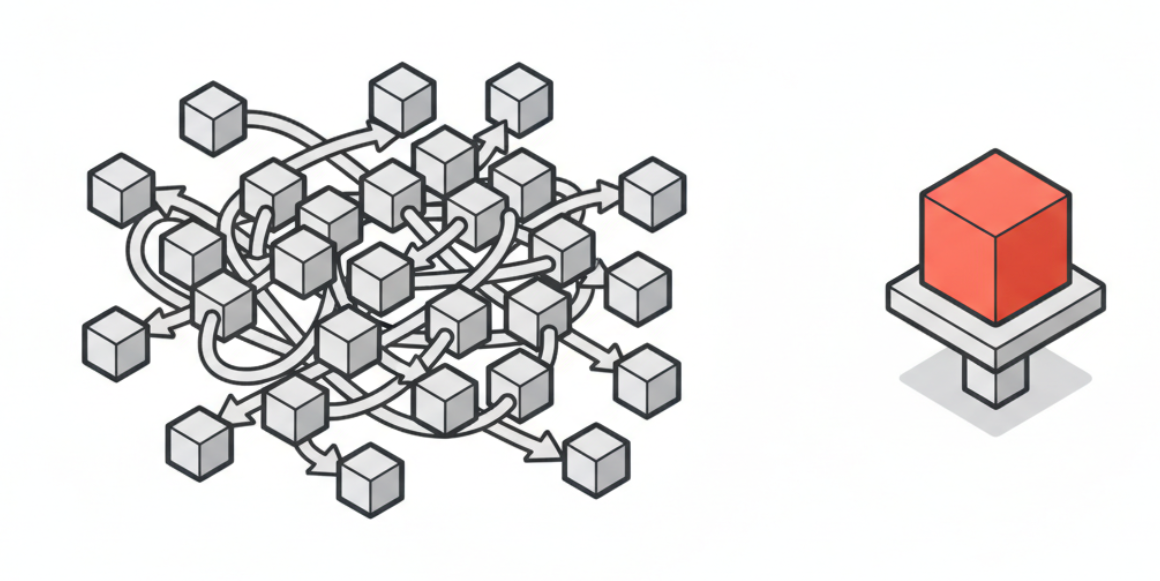
Tokens are an input. They are a cost you pay, like compute or electricity. Measuring your AI program by tokens consumed is like measuring a delivery company by how much diesel it burns. Burning more is not the goal. Getting the package there is.

The metric that survives the reckoning is cost per resolved task. Total spend divided by the number of jobs actually finished. A ticket closed. A pull request merged and not reverted. A support case resolved without a human stepping in. A cheaper model that gets there counts. A pile of tokens that does not, does not.
There is a clean test for any AI metric. Can a team move it without delivering anything? If the answer is yes, it is a vanity metric. A team can top a tokens-consumed leaderboard by writing wasteful prompts. No team can lower its cost per resolved task without either finishing more work or spending less to finish it. That is the difference between a number that flatters you and a number that helps you.
Token discipline is mostly engineering
The encouraging part is that almost none of this requires a better model. The waste is structural, and the levers to remove it are well understood. Teams that apply them report cutting AI bills by 60 to 80 percent with no visible drop in quality.
Three levers do most of the work.
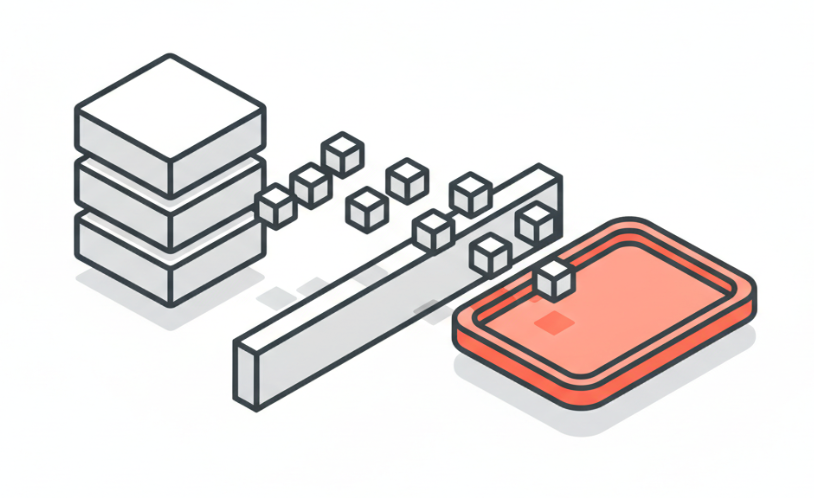
Route. Send easy work to a small, cheap model and reserve the frontier model for the hard cases. Most teams run everything through their most expensive model out of habit. Paying Opus-tier prices for autocomplete-tier work is the single most common line of waste I see.
Cache. The same system prompts, retrieved chunks, and boilerplate context get paid for on every call. Caching what repeats turns a recurring cost into a one-time one. For agentic workflows that re-read the same context dozens of times, this alone is often the largest saving.
Batch. Not every job is urgent. Grouping non-urgent work and running it off-peak, instead of firing one expensive real-time call at a time, smooths both cost and load.
None of these is glamorous. None of them will trend. They are ops and engineering decisions, and that is exactly why they were ignored while everyone was chasing capability. The biggest line item on most AI bills is not the intelligence anyone is paying for. It is waste nobody is watching.
Set the bar, then hold it
The management change is smaller than it sounds, and it maps onto a pattern I use constantly with the teams I work with. The human has two jobs around an agent: set the bar before it runs, and hold the bar after. The middle, the actual doing, is the agent’s.
Setting the bar means deciding, up front, what a finished task is allowed to cost. A cost-per-resolved-task budget per workflow. Which model tier is permitted for which work. When an agent is allowed to escalate to a bigger model, and when it is not.
Holding the bar means watching the number that matters after the fact. Cost per resolved task on a dashboard, not tokens on a leaderboard. An alert when a workflow breaches its budget. The willingness to kill or reroute a workflow that burns its allowance without improving the outcome.
For a manager, the whole shift comes down to swapping one question for another. Stop asking whether the team is using enough AI. Start asking what a finished task costs, and whether that number is falling. The first question rewards consumption. The second rewards engineering. You will get more of whatever you measure, so measure the one you actually want.
The reckoning is a good thing
It is tempting to read all of this as the AI bubble deflating. It is closer to the opposite. The era of treating token consumption as a proxy for value was never going to last, because it was never measuring value. What is replacing it is more honest and more durable: a unit cost, a budget, and a number tied to finished work.
The teams that come out of this ahead are not the ones that spent the most or the least. They are the ones that figured out what a resolved task costs them, drove that number down, and held the line. The cheapest tokens in history were always going to produce someone’s biggest bill. The question worth asking now is not how to spend less on AI. It is what each finished piece of work costs you, and whether you can prove it is going down.
Marco Kotrotsos, specializing in practical AI implementation for organizations ready to close the gap between AI hype and AI value. With 30 years of IT experience now focused purely on AI deployment, he works hands-on with companies to turn AI potential into measurable business outcomes.
This article is published in Autocomplete, a Medium publication about real-world AI for practitioners and decision-makers. We’re always looking for writers. If you’re building with AI and have something worth sharing, reach out.
My free Substack newsletter, also called Autocomplete, can be found here: https://acdigest.substack.com.
My books on Amazon: Claude Code for Everyone Else and From Vibe to Production.
I also take on a small number of mentees one-on-one on MentorCruise.
메타데이터
- post_id
- 93ef859c097b
- slug
- the-cheapest-tokens-in-history-and-the-biggest-ai-bills-93ef859c097b
- url
- https://medium.com/autocomplete-real-world-ai/the-cheapest-tokens-in-history-and-the-biggest-ai-bills-93ef859c097b
- canonical_url
- https://medium.com/autocomplete-real-world-ai/the-cheapest-tokens-in-history-and-the-biggest-ai-bills-93ef859c097b
- author_url
- https://medium.com/@kotrotsos
- status
- ok
- fetched_at
- 2026-07-09 04:10:03