You Can’t Brand Your Way Out of Period Poverty.
The megaphone, the chant, the cardboard sign with capital letters scribbled in Sharpie. At first glance, it all looks like resistance. But…
You Can’t Brand Your Way Out of Period Poverty.
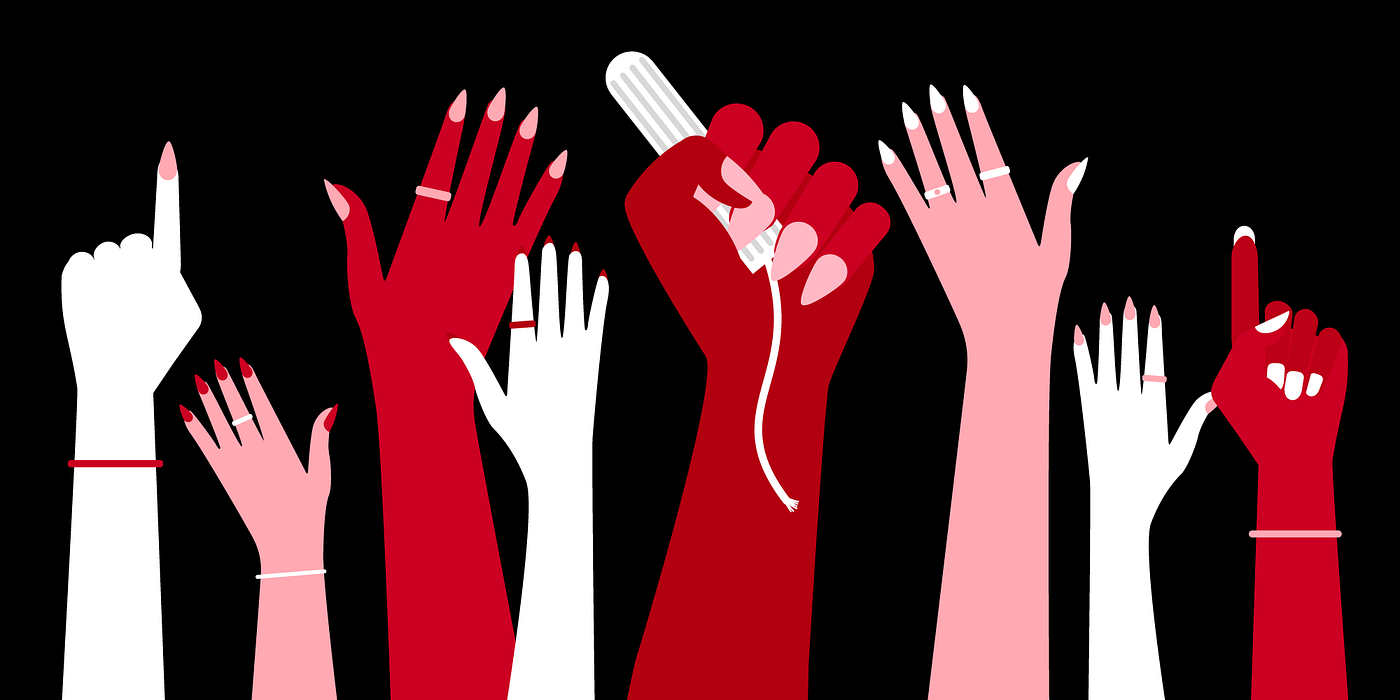
The megaphone, the chant, the cardboard sign with capital letters scribbled in Sharpie. At first glance, it all looks like resistance. But scroll a little further, and it becomes something else entirely: a branded campaign with “resistance” stamped in Times New Roman font or a performative post color-matched to an Instagram grid.
We are living in an age where social movements are being packaged. Across social media, they have taken on a new form. Grainy videos of marches are paired with soft filters and perfectly timed music. Infographics offer 30 seconds of bite-sized justice, made easily digestible for busy feeds and lives. What once existed to disrupt the rhythm now blends seamlessly into the same platforms that shape consumer behavior. In the rush to be seen, even the menstrual equity movement is being sold back to us in the form of pink-themed awareness months, slogans, and sponsored packaging.
However, you cannot market your way out of period poverty.
This commodification of menstrual equity has diluted its urgency, turning this public health crisis into a market rather than a human rights issue. When this occurs, the movement becomes something to look at, repost and scroll past instead of something to listen to, stop for, and contribute towards.
There is a reason for this shift. In the attention economy, everything is optimized for visual impact. Organizations, like for-profit companies, are now competing for the most attention from donors, sympathizers and supporters. It is simply not enough to care — organizations are forced to package compassion into bite-sized social media snippets. This is where increased competition for reach, relevance and reposts comes into play. This is partly driven by necessity as virality can garner support, but the unfortunate side effect is that it can also diminish the broader mission of a social justice movement. Once an issue becomes a product, it must follow the rules of businesses and consumption.
Several movements, such as the one to combat period poverty, have become a branding opportunity for individuals and entire corporations. Corporations capitalize on moments of mass outrage, using the cause to center their branding without truly committing to them. In recent years, purpose-driven marketing has emerged as a corporate strategy to gain Gen Z loyalty and further drive sales. However, activism was never supposed to be convenient. It was never supposed to look good on camera. Because fighting for change is not performance. Fighting for change is the work required to reach a brighter future.
Ultimately, change is the point.
Advocacy should not start and end with an elaborate marketing plan. Advocacy requires courage. It thrives through collaboration. It is most successful when people are willing to stay after the cameras turn off because that is where the real work begins.
It is also important to acknowledge that appealing visuals, social media, or storytelling are not the enemy and can and should be used when appropriate. For instance, Public Inc. x PERIOD.’s #DeckTheStalls campaign showed how creative storytelling, when grounded in organizational values and combined with a giveback opportunity, has the potential to grow the reach of a movement without diluting its cause. It is important to effectively learn how to speak the language of our time. But even as we use the tools, we must remember what our core mission is.
As consumption behavior and social media evolves, so will the way we advocate for issues important to us. If we are serious about making change, we must resist the urge to reduce our mission to easily digestible content and prioritize a strategic and collaborative approach where creative storytelling results in measurable change.
Corporations, I invite you to consider this as you approach non-profit organizations with flashy giveback campaigns. There is a way for everyone to win, but it must go deeper than performance. Partner with and empower local leaders who know their communities best. Make meaningful monetary or product contributions as you leverage your brand to a Gen Z audience increasingly interested in socially responsible purchases. Real change comes from mobilization, investment, and collective effort, which can’t always be captured in a 15-second reel.
Because in the end, the fight for menstrual equity is not something you are supposed to buy into. This movement is not a product. This movement is something we build together.
메타데이터
- post_id
- 9400f8ddbb7c
- slug
- you-cant-brand-your-way-out-of-period-poverty-9400f8ddbb7c
- url
- https://medium.com/periodmovement/you-cant-brand-your-way-out-of-period-poverty-9400f8ddbb7c
- canonical_url
- https://medium.com/periodmovement/you-cant-brand-your-way-out-of-period-poverty-9400f8ddbb7c
- author_url
- https://medium.com/@oorjamunot07
- status
- ok
- fetched_at
- 2026-06-09 14:34:10