Mortgage Loans for Self-Employed Borrowers: What They Need to Know
Self-employment gives professionals more control over their income, schedule, and career direction. However, it can also make home…
Mortgage Loans for Self-Employed Borrowers: What They Need to Know

Self-employment gives professionals more control over their income, schedule, and career direction. However, it can also make home financing feel harder than expected.
A salaried employee can usually prove income with pay stubs and W-2 forms. A business owner, freelancer, independent contractor, or consultant may need to provide bank statements, tax returns, profit and loss statements, and other financial records.
The good news is that **mortgage loans for self-employed** borrowers are widely available. A borrower simply needs the right loan program and a clear way to document income.
Why Self-Employed Borrowers Face More Questions
Mortgage lenders want to confirm that a borrower has stable income and can afford future monthly payments.
For a traditional employee, income is usually predictable. For a self-employed professional, earnings may change from month to month. Business expenses can also reduce the taxable income shown on tax returns.
For example, a business may generate strong revenue. However, legal deductions may make the owner’s adjusted taxable income appear much lower.
Therefore, lenders may review several parts of the financial profile, including:
- Business income history
- Personal and business bank statements
- Credit score
- Current debts
- Available savings
- Business expenses
- Down payment amount
- Industry experience
A strong business can still support mortgage approval. The borrower simply needs to present the income in a way the lender can verify.
Common Requirements for Mortgage Loans for Self-Employed Applicants
Documentation requirements vary by lender and loan type. However, many traditional lenders request two years of personal and business tax returns.
They may also ask for:
- Recent business bank statements
- Personal bank statements
- A year-to-date profit and loss statement
- Business registration documents
- A business license
- 1099 forms
- Client contracts
- Proof of financial reserves
Organized financial records can make the mortgage process much easier.
A borrower should avoid waiting until the final underwriting stage to collect documents. Early preparation can reduce delays and prevent unnecessary stress.

https://dreamhomemortgage.com/prequalification-form/
Can a Borrower Get a Mortgage With One Year of Accounts?
New business owners often search for a **mortgage with 1 years accounts** because they do not yet have a two-year business history.
Some lenders may consider one year of self-employment income when the borrower has previous experience in the same industry. Strong credit, reliable revenue, financial reserves, and a reasonable down payment may also support the application.
However, every lender uses different approval rules.
A borrower with only one year of accounts may have fewer choices than someone with a longer business history. Still, approval may remain possible through the right lender or alternative mortgage program.
This is where working with an experienced mortgage broker for self employed borrowers can become valuable.
Can I Get a Mortgage Without Tax Returns?
Many business owners ask, can i get a mortgage without tax returns?
In some cases, the answer is yes.
Traditional mortgage programs often calculate income through tax returns. However, alternative mortgage programs may allow borrowers to qualify through bank statements or other financial documents.
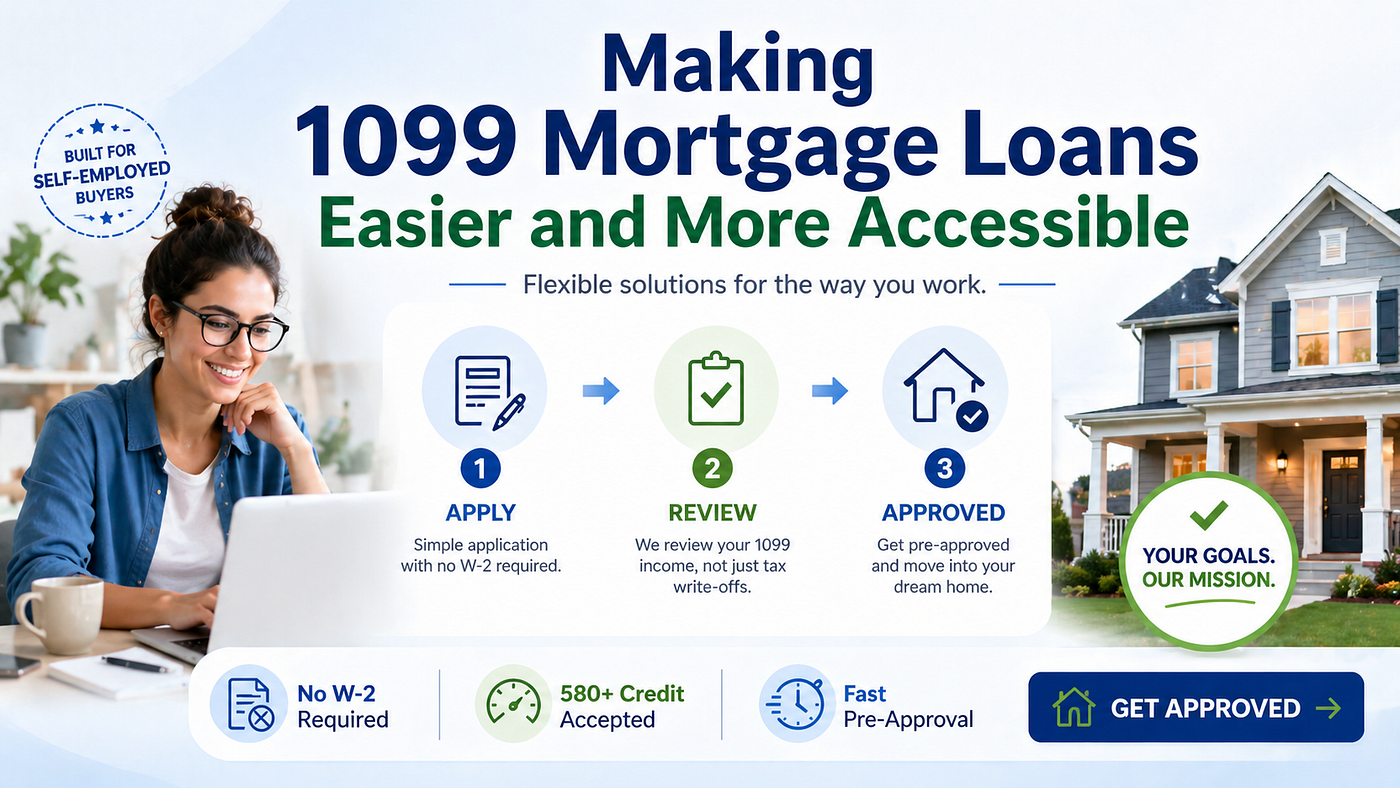
A **mortgage loan without tax returns** may use 12 or 24 months of business or personal bank statements. The lender reviews regular deposits and estimates the income available for mortgage payments.
The borrower may still need to provide:
- Proof of business ownership
- A business license
- An accountant’s letter
- A profit and loss statement
- Strong credit
- A larger down payment
- Several months of mortgage reserves
A no-tax-return mortgage does not mean that the lender ignores income. It means that the lender verifies income through another method.
How Bank Statement Mortgages Work
Bank statement loans are popular among self-employed professionals whose tax returns do not show their full cash flow.
The lender reviews deposits made into personal or business accounts over a set period. Business expenses may then be deducted using an expense factor.
For example, the lender may calculate a percentage of business deposits as usable personal income. The exact calculation depends on the business type and loan program.
These loans can help:
- Business owners
- Freelancers
- Consultants
- Independent contractors
- Real estate professionals
- Commission-based workers
- Online business owners
However, bank statement loans may have different interest rates, fees, down payment requirements, and credit standards.
Therefore, a borrower should compare the full loan cost before choosing a program.
https://dreamhomemortgage.com/purchase-assistant/
Finding Mortgage Lenders That Do Not Require Tax Returns
Borrowers searching for mortgage lenders that do not require tax returns should look beyond the headline promise.
The lender may not request traditional tax returns, but it will still review the borrower’s financial strength.
Most alternative lenders evaluate:
- Deposit consistency
- Business stability
- Credit history
- Property value
- Down payment
- Financial reserves
- Existing monthly obligations
A borrower should ask how the lender calculates income, which deposits qualify, and which business expenses will be deducted.
Clear answers can help prevent surprises later in the process.
Why a Mortgage Broker Can Be Helpful
A mortgage broker self employed applicants work with can compare multiple loan options.
A bank may offer only its own programs. A mortgage broker may have access to conventional loans, government-backed loans, bank statement loans, asset-based programs, and other alternative financing solutions.
The broker can review the borrower’s full financial situation and determine which documentation method may work best.
For example, one borrower may qualify using tax returns. Another may qualify using business deposits. A real estate investor may qualify based on property rental income.
The right strategy depends on the borrower’s income structure and homeownership goals.
Does a Personal Loan Help With Mortgage Qualification?
Some borrowers also search for a personal loan no tax return when they need additional cash.
However, a personal loan and a mortgage serve different purposes.
A personal loan may provide fast access to funds, but it also creates another monthly debt payment. That payment can increase the borrower’s debt-to-income ratio and reduce mortgage affordability.
Therefore, a borrower should avoid opening new credit shortly before applying for a mortgage without first discussing the decision with a mortgage professional.
How Self-Employed Borrowers Can Improve Their Chances
A self-employed borrower can strengthen the application by keeping business and personal finances separate.
They should also:
- Maintain accurate financial records
- Pay bills on time
- Reduce credit card balances
- Avoid unexplained bank deposits
- Build savings for reserves
- Prepare a reasonable down payment
- Keep business income consistent
- Avoid major financial changes before closing
Additionally, the borrower should review credit reports early. Correcting errors before applying may improve the available loan options.
Support From Dream Home Mortgage
**Dream Home Mortgage** helps self-employed borrowers across the USA explore reliable mortgage solutions based on their income structure and financial goals. Its team provides comprehensive support for bank statement loans, traditional mortgages, purchases, refinancing, and other mortgage loans for self-employed applicants.
Final Takeaway
Self-employment does not automatically prevent homeownership.
The borrower may need more documentation, a different income calculation method, or an alternative loan program. However, several financing paths may still be available.
The best mortgage loans for self-employed borrowers depend on credit strength, income consistency, business history, savings, down payment, and property type.
A borrower who prepares early and works with an experienced mortgage professional can avoid common mistakes and identify the right financing path.
Instead of assuming that tax deductions or irregular income will lead to rejection, a self-employed professional can explore loan programs designed around modern business income.
메타데이터
- post_id
- 944e05ebed83
- slug
- mortgage-loans-for-self-employed-borrowers-what-they-need-to-know-944e05ebed83
- url
- https://medium.com/@dreamhomemortgage/mortgage-loans-for-self-employed-borrowers-what-they-need-to-know-944e05ebed83
- canonical_url
- https://medium.com/@dreamhomemortgage/mortgage-loans-for-self-employed-borrowers-what-they-need-to-know-944e05ebed83
- author_url
- https://medium.com/@dreamhomemortgage
- status
- ok
- fetched_at
- 2026-07-14 03:42:49