What HR Teams Should Know Before Relocating Employees Internationally
International employee relocation has become an important part of workforce strategy for businesses expanding into new markets…
What HR Teams Should Know Before Relocating Employees Internationally
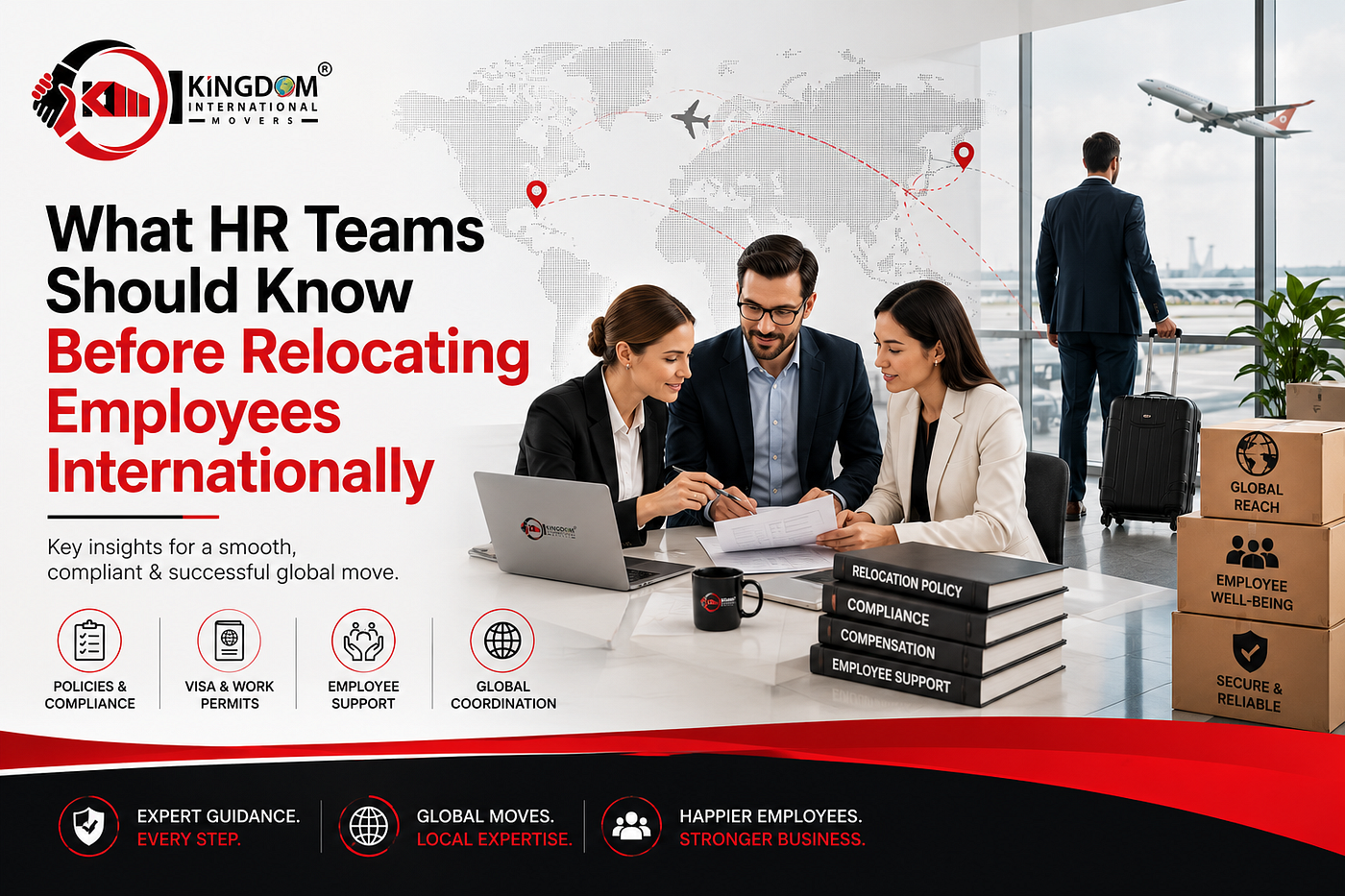
International employee relocation has become an important part of workforce strategy for businesses expanding into new markets, transferring experienced professionals, or filling specialized roles across borders. For HR teams, however, relocating an employee involves considerably more than approving a flight and arranging transportation for household belongings.
An international assignment affects the employee’s career, family, housing, documentation, personal belongings, and ability to settle into a completely new environment. When these elements are poorly coordinated, relocation can become stressful for the employee and administratively demanding for the organization.
A well-structured mobility process helps HR teams reduce uncertainty, manage relocation responsibilities more effectively, and enable employees to focus on their new roles sooner.
For organizations managing international assignments, there are several important considerations before an employee’s relocation begins.
Employee Relocation Should Start With a Clear Policy
One of the first responsibilities for HR is defining what the organization will and will not cover.
Relocation policies can vary significantly depending on seniority, assignment type, destination, family circumstances, and the expected duration of the transfer. Without clear guidelines, employees may be uncertain about which expenses or services are included.
A relocation policy should clearly communicate areas such as moving support, temporary accommodation, shipment allowances, travel arrangements, storage, and any destination assistance offered by the employer.
Clarity at the beginning helps prevent misunderstandings later and gives both the employee and HR team a common framework for managing the relocation.
Understand the Employee’s Individual Situation
No two international relocations are exactly alike.
A professional relocating alone may have very different requirements from an employee moving with a spouse, children, pets, or a complete household. Family circumstances can influence shipment size, housing requirements, school arrangements, travel dates, and overall relocation timelines.
HR teams should therefore avoid treating mobility as a standardized administrative process.
Understanding the employee’s circumstances early allows the organization and its relocation partners to build a more realistic plan. Professional **mobility services in Saudi Arabia** can support this process by coordinating practical relocation requirements around the employee’s assignment and family situation.
A more personalized approach can also help employees feel better prepared for the transition.
Documentation Can Determine the Entire Timeline
International assignments depend heavily on documentation.
Passports, visas, residence permits, employment records, customs paperwork, shipment inventories, and supporting family documents may all be required at different stages of the relocation.
A delay in one document can affect travel arrangements, shipment schedules, accommodation, and the employee’s start date.
For this reason, HR teams should establish clear responsibilities for documentation from the beginning. Employees should understand which documents they must provide, while internal teams and external relocation providers should know which administrative processes they are responsible for managing.
Documentation should also be reviewed before major transportation arrangements are finalized wherever possible.
Household Goods Need Their Own Relocation Plan
Moving an employee’s personal belongings is a significant part of many international assignments.
Depending on the size of the household and destination, belongings may travel by sea freight, air freight, road transportation, or a combination of methods. Shipment volume, timing, customs requirements, and housing readiness all influence the appropriate solution.
Employees should be given enough time to decide which belongings they need immediately and which can arrive later.
For example, essential clothing, work equipment, and important personal items may travel with the employee or through a faster shipment, while furniture and the majority of household goods follow separately.
Working with an experienced **international moving company** allows transportation decisions to be integrated into the wider relocation timeline.
Think Beyond the Employee’s First Day
From an HR perspective, it can be tempting to consider the relocation complete once the employee arrives and begins work.
In reality, arrival is often only the beginning of the adjustment process.
Employees may still be waiting for household goods, adapting to new accommodation, helping children settle into school, or becoming familiar with transportation and everyday services in the destination country.
These practical challenges can affect how quickly an employee becomes comfortable and productive in a new role.
A well-designed corporate relocation program therefore considers the settling-in period rather than focusing solely on physical transportation.
Prepare for Timelines That Do Not Align
International relocations frequently involve timing gaps.
An employee’s work start date may arrive before permanent accommodation is available. Household belongings may be in transit while the employee stays in temporary housing. A family may also travel at a different time from the employee.
HR teams should anticipate these possibilities rather than assuming every stage will happen simultaneously.
Temporary accommodation, storage, phased shipments, and flexible delivery arrangements can provide useful contingency options when schedules change.
Building flexibility into the relocation plan helps prevent a small delay from disrupting the employee’s entire transition.
Communication Is Critical Throughout the Move
Employees relocating internationally often have many questions, particularly when they are moving with their families.
Uncertainty about shipment dates, documentation, housing, customs clearance, or delivery can create unnecessary stress.
Clear communication helps employees understand what is happening and what they need to do next. It also reduces repeated administrative queries for HR teams.
Organizations should establish clear points of contact and provide employees with realistic timelines rather than overly optimistic estimates.
Experienced **relocation services in Saudi Arabia** can support HR teams by coordinating different stages of the relocation and keeping employees informed as their move progresses.
Measure More Than Relocation Cost
Cost control is important, but the lowest-cost relocation program is not necessarily the most effective one.
HR teams should also consider employee experience, administrative workload, assignment readiness, relocation delays, and the amount of disruption caused during the transition.
A poorly managed move may appear less expensive initially but create indirect costs through delayed start dates, lost productivity, employee dissatisfaction, or additional last-minute arrangements.
The objective should be to create a relocation program that balances cost efficiency with reliability and employee support.
Conclusion
International employee relocation sits at the intersection of HR, logistics, compliance, and employee experience. Successful mobility programs recognize that moving an employee involves far more than transporting household belongings between countries.
Clear policies, realistic timelines, accurate documentation, personalized relocation planning, flexible logistics, and consistent communication all contribute to a smoother transition.
For HR teams, the most effective approach is to begin planning early and coordinate each part of the move around both organizational requirements and the employee’s individual circumstances.
When international mobility is managed as part of a broader workforce strategy rather than a one-time administrative task, businesses can support employees more effectively while reducing disruption, improving assignment readiness, and creating a stronger foundation for successful international transfers.
메타데이터
- post_id
- 946deddccdf6
- slug
- what-hr-teams-should-know-before-relocating-employees-internationally-946deddccdf6
- url
- https://medium.com/@kimwwdubai/what-hr-teams-should-know-before-relocating-employees-internationally-946deddccdf6
- canonical_url
- https://medium.com/@kimwwdubai/what-hr-teams-should-know-before-relocating-employees-internationally-946deddccdf6
- author_url
- https://medium.com/@kimwwdubai
- status
- ok
- fetched_at
- 2026-08-07 12:34:30



