Upcoming Metro Routes in Greater Noida
Quick Summary
Upcoming Metro Routes in Greater Noida
Quick Summary
A comprehensive analysis of the upcoming metro routes in Greater Noida, detailing key alignments like the Aqua Line extension to Knowledge Park V and the proposed high-speed corridor to the Noida International Airport. This guide explores station distributions, infrastructure timelines, policy frameworks, and their collective influence on regional real estate dynamics, commercial development, and long-term asset appreciation.
The Evolution of Connectivity in Greater Noida
Greater Noida was originally conceptualized as an orderly, low-density alternative to the congested urban zones of Delhi and neighboring old Noida. The city was planned with wide arterial roads, organized sector-wise divisions, and designated green zones. However, for a significant duration of its early development, the region faced a major limitation: the absence of a high-capacity, reliable mass rapid transit system. Commuters were forced to rely heavily on personal vehicles, local bus services, or erratic intermediate public transport systems. This reliance created long travel times and limited the integration of remote residential sectors with major employment hubs in the National Capital Region (NCR).
The introduction of the Aqua Line by the Noida Metro Rail Corporation (NMRC) marked a turning point in the local transit network. Connecting Sector 51 in Noida to Depot Station in Greater Noida, the Aqua Line established a foundational grid. Yet, large parts of the population residing in rapidly developing sub-markets, such as Greater Noida West, remained underserved. To address this gap, planning authorities designed a series of ambitious expansions. These upcoming routes are set to change the transit landscape by linking isolated sectors directly to key economic zones and transit gateways.
As physical infrastructure continues to catch up with residential expansion, these transit networks are no longer luxury additions. They have become fundamental necessities for a region housing hundreds of thousands of working professionals. The next phase of metro development focuses on resolving the missing links between residential pockets, educational centers, and upcoming international transport nodes.
Detailed Overview of Upcoming Metro Routes
The planned expansion of the metro network in Greater Noida is divided into strategic corridors designed to ease commuting and stimulate economic growth. By targeting high-density residential zones and high-potential commercial corridors, these routes aim to distribute traffic evenly across the NCR road network while reducing carbon footprints.
Aqua Line Extension: Noida Sector 51 to Greater Noida Sector 2
The first phase of the Aqua Line extension is a highly anticipated project designed to link central Noida with the entry points of Greater Noida West. Spanning approximately 9.6 kilometers, this elevated corridor is planned to feature five major stations: Noida Sector 122, Noida Sector 123, Greater Noida Sector 4, Ecotech 12, and Greater Noida Sector 2. This route directly addresses the transit needs of a massive commuter base that has historically faced long bottlenecks at the Parthala Chowk junction.
By placing stations at key residential intersections, this segment will allow daily commuters to bypass congested road corridors entirely. The project has undergone various levels of design optimization to ensure smooth integration with existing transport networks. This includes plans for seamless physical transfers between the Blue Line and the Aqua Line at Sector 51, resolving a major point of friction for cross-city travelers.
Aqua Line Extension: Greater Noida Sector 2 to Knowledge Park V
The second phase of the extension continues from Greater Noida Sector 2 and extends further west to terminate at Knowledge Park V. This segment adds four additional stations, namely Greater Noida Sector 3, Sector 10, Sector 12, and Knowledge Park V. The total length of the combined phases will exceed 15 kilometers, creating a comprehensive transit spine for the entire Noida Extension region.
Knowledge Park V is rapidly developing into a major hub of institutions, data centers, and corporate offices. Connecting this area to the metro grid ensures that students, tech professionals, and administrative staff have affordable and timely access to their destinations. This route is expected to see exceptionally high daily ridership numbers, easing pressure on public bus systems and private cab services.
Metro Link to Noida International Airport (Jewar)
Perhaps the most ambitious infrastructure project in the state, the proposed high-speed metro corridor connecting Greater Noida to the upcoming Noida International Airport in Jewar is a structural milestone. This corridor will start at Knowledge Park IV in Greater Noida and run all the way to the airport terminal, spanning roughly 35.5 kilometers. It is planned as a dual-track express line designed to support high-speed rolling stock, ensuring that passengers can cover the distance in under 25 minutes.
The alignment will feature limited stops, focusing on major industrial sectors along the Yamuna Expressway and key residential centers. This project will serve as a vital link for international business travelers, cargo operators, and local residents, integrating the upcoming airport seamlessly into the broader Delhi NCR transit matrix. It will also link directly with other planned multi-modal transport hubs, including the high-speed rail network and the local express bus corridors.
Real Estate Impact on Key Micro-Markets
Improved public transport corridors are direct drivers of real estate valuation, and the upcoming metro routes in Greater Noida are already reshaping market dynamics. Areas that were previously viewed as distant or inaccessible are experiencing a notable rise in buyer interest. Real estate developers are actively acquiring land parcels near proposed stations, expecting a significant surge in demand once construction begins.
As home buyers look for viable alternatives to the saturated markets of central Delhi and Noida, they are shifting focus toward peripheral areas. Consequently, prospective homebuyers are actively searching for the upcoming premium housing developments that offer both rapid connectivity and long-term asset value growth. This shift has led to steady price appreciation in residential micro-markets along the proposed corridors, particularly in Greater Noida West and the sectors bordering the Yamuna Expressway.
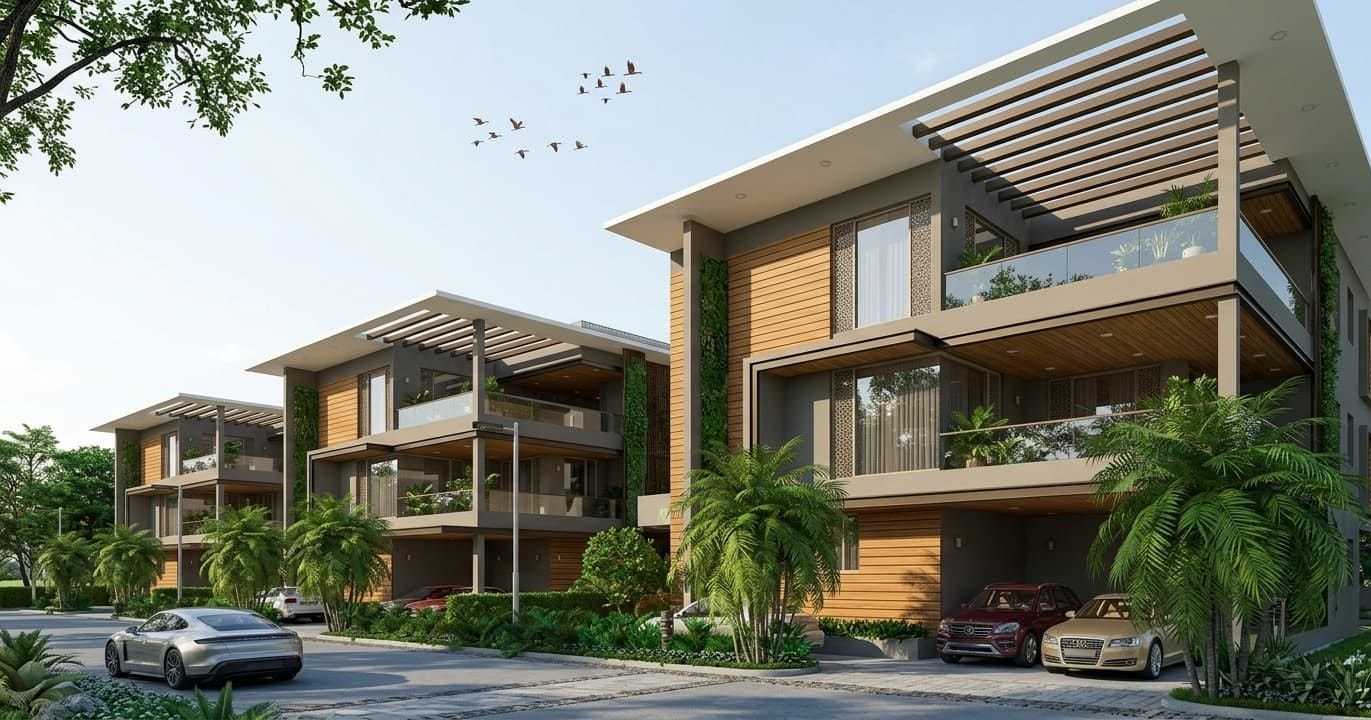
The demand is not limited to mid-range apartments. The promise of hassle-free travel to corporate offices in Noida and Delhi has boosted the high-end residential market as well, particularly within high-end low-density projects like the Shyam Kunj Villas luxury township, where spacious configurations match the growing lifestyle expectations of corporate executives. This blend of accessibility and spacious, modern design makes these peripheral locations increasingly attractive to affluent buyers seeking a balanced urban lifestyle.
Commercial real estate is experiencing a parallel transformation. Retail developers are focusing on retail formats and office spaces near upcoming stations. Mixed-use developments, combining retail outlets, dining spaces, and commercial offices, are being planned around metro hubs to tap into the high commuter footfall. This trend is expected to create decentralized commercial districts, reducing the need for residents to travel long distances for retail and leisure activities.
Transit-Oriented Development (TOD) and Lifestyle Shifts
The concept of Transit-Oriented Development (TOD) is central to the urban planning philosophy guiding these upcoming metro corridors. TOD focuses on high-density, mixed-use development within walking distance of rapid transit stations. Instead of sprawling residential sectors requiring long car trips, the focus is on creating compact, self-contained communities where work, shopping, and leisure are clustered around transit nodes.
This shift in planning directly impacts the lifestyle choices of local residents. Reducing reliance on personal cars not only lowers daily commute stress but also leads to a cleaner regional environment. Families can enjoy pedestrian-friendly spaces, public plazas, and integrated green areas built around the stations. Those seeking upscale residential solutions are prioritizing projects like the ultra-luxury homes in Noida and its immediate fringes, which combine rapid transit access with private, secure living spaces.
An objective assessment of transit-driven development, as frequently recorded by industry analytical portals like Heritage Prime, indicates that areas adopting TOD policies experience lower traffic congestion, lower carbon emissions, and enhanced commercial viability. The resulting demand curve shows a distinct preference for properties located within a 1.5-kilometer radius of active or planned metro stations. This preference is driving developers to incorporate high-street retail, daycare facilities, and coworking centers directly into their residential master plans.
Furthermore, the social demographic of Greater Noida is evolving. The region is seeing an influx of young tech professionals, academic researchers, and corporate executives who prioritize time-efficiency and environmental sustainability. For this group of buyers, a home near a rapid transit line is an essential lifestyle upgrade that ensures easy access to cultural and social hubs in Delhi, Noida, and Gurgaon without the hassle of long, exhausting road journeys.
Regulatory Approvals and Project Funding Mechanisms
Executing large-scale transit networks requires complex regulatory coordination and robust financial planning. The upcoming metro routes in Greater Noida involve multiple government entities, including the central government, the Uttar Pradesh state administration, the Noida Metro Rail Corporation (NMRC), and local development authorities like the Greater Noida Industrial Development Authority (GNIDA) and the Yamuna Expressway Industrial Development Authority (YEIDA).
Funding for these extensions relies on a shared-equity model, where the central and state governments split the cost, supplemented by loans from international development banks. To ensure financial sustainability, planners are exploring innovative revenue generation strategies, such as commercializing space inside stations, selling naming rights, and implementing transit-oriented land monetization policies.
Investors and institutional developers are reviewing the governing frameworks and the legal terms and service conditions that govern land acquisitions, joint development agreements, and municipal clearances along these transit corridors. Clear and transparent policies are vital for keeping construction timelines on track and protecting private capital. As approvals move through the final stages of central cabinet review, developers are gearing up to execute their construction plans, setting the stage for the next phase of urban growth in Greater Noida.
Frequently Asked Questions
Which upcoming metro route in Greater Noida will connect directly to the Jewar Airport?
The planned high-speed metro corridor starting from Knowledge Park IV will connect directly to the Noida International Airport in Jewar. This route is designed to run parallel to the Yamuna Expressway, offering a fast transit option for travelers and logistics operators heading to the new aviation hub.
How will the Aqua Line extension benefit residents of Greater Noida West?
The Aqua Line extension will link Noida Sector 51 to Greater Noida Sector 2 and eventually to Knowledge Park V. This link will provide a reliable mass transit route for thousands of daily commuters in Greater Noida West, bypassing congested road junctions like Parthala Chowk and shortening travel times to central Noida and Delhi.
What is the expected timeline for the completion of the Noida Sector 51 to Knowledge Park V metro route?
The extension is being developed in phases. The first segment, connecting Sector 51 to Sector 2, is awaiting final central cabinet approvals. Once physical construction begins, it is expected to take about 24 to 30 months to complete, with the subsequent phase to Knowledge Park V following closely behind.
How does the development of these transit routes impact regional real estate prices?
Historically, infrastructure developments of this scale trigger steady capital appreciation in nearby sectors. Real estate prices along the proposed alignments have already seen upward movement, with properties close to planned stations enjoying a premium valuation due to anticipated commuter demand and rental potential.
메타데이터
- post_id
- 9494cde27b8c
- slug
- upcoming-metro-routes-in-greater-noida-9494cde27b8c
- url
- https://medium.com/@heritageprimencr/upcoming-metro-routes-in-greater-noida-9494cde27b8c
- canonical_url
- https://medium.com/@heritageprimencr/upcoming-metro-routes-in-greater-noida-9494cde27b8c
- author_url
- https://medium.com/@heritageprimencr
- status
- ok
- fetched_at
- 2026-08-25 17:16:15