The Temple Within:
A Master Reflection on Light, Labor, and Legacy
The Temple Within:
A Master Reflection on Light, Labor, and Legacy
By: Arbab Naseebullah Kasi
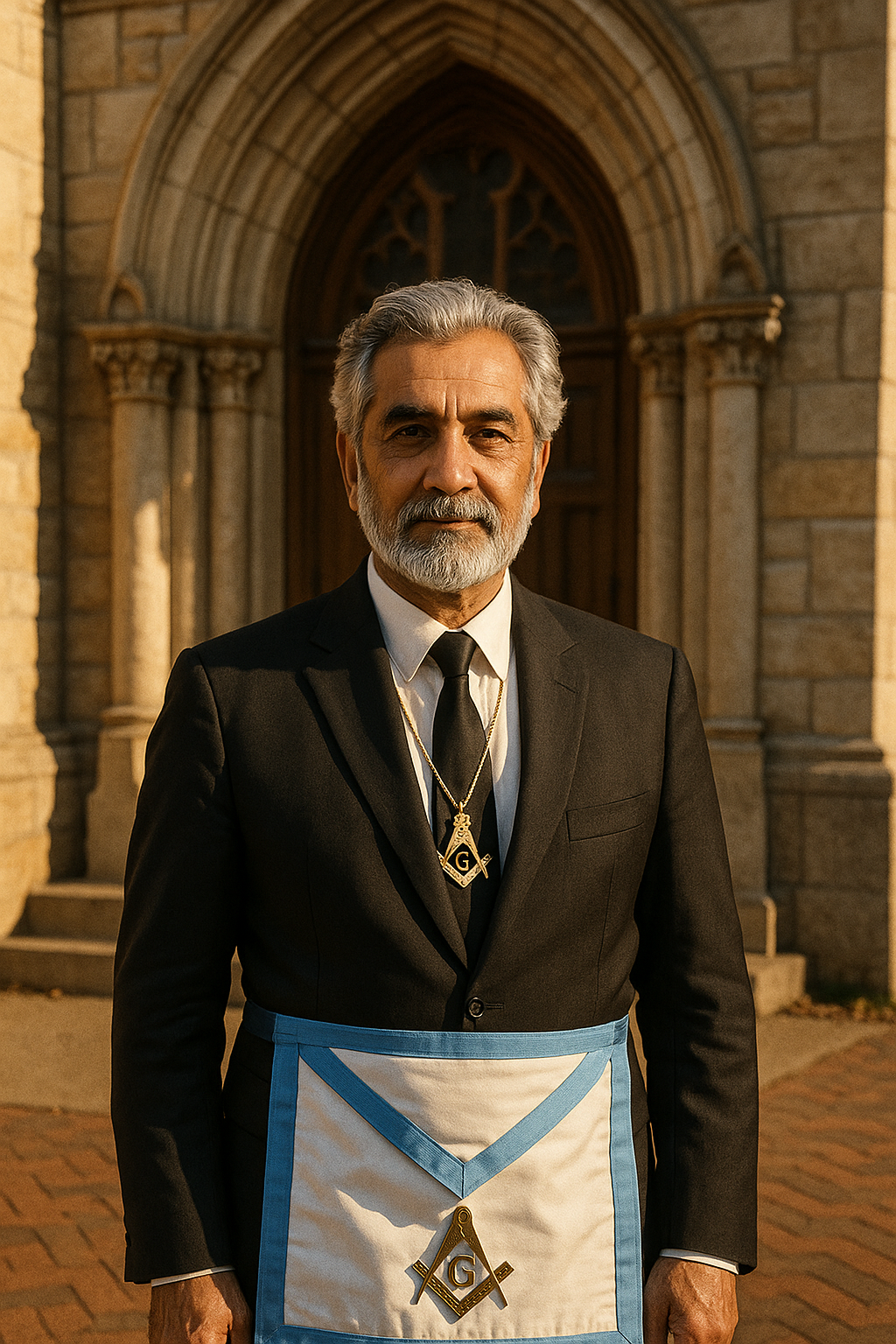
In every silent stone, a sacred architect listens.
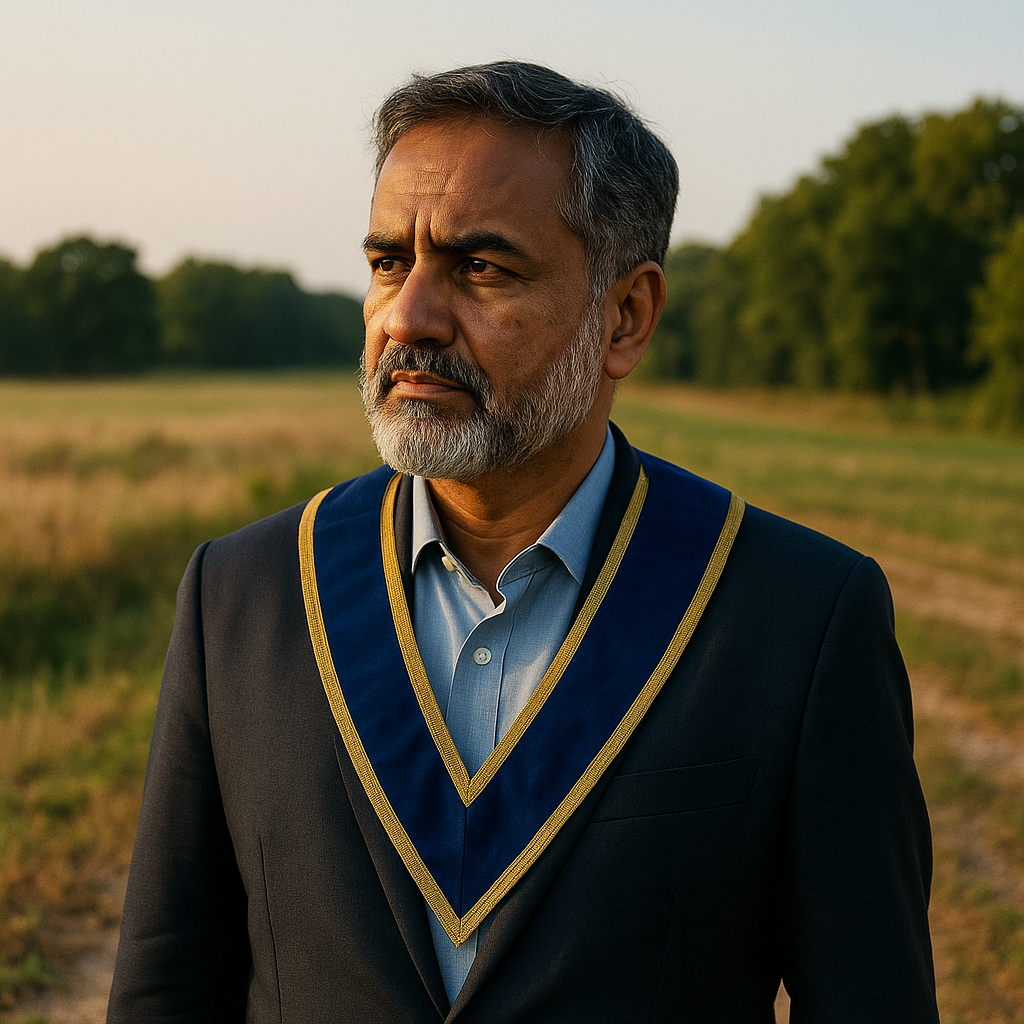
There are moments in life when history doesn’t feel like the past it feels like a mirror. Reading Wayne A. Huss’s The Master Builders: Volume II (1874–1986) was one such moment for me. It didn’t just speak of Masonic Grand Masters or lodges it whispered truths about how we build lives, communities, and a world grounded in purpose and love. This reflection is my offering. Not as a scholar or leader, but as a human being deeply moved by stories of service, sacrifice, and silent strength.
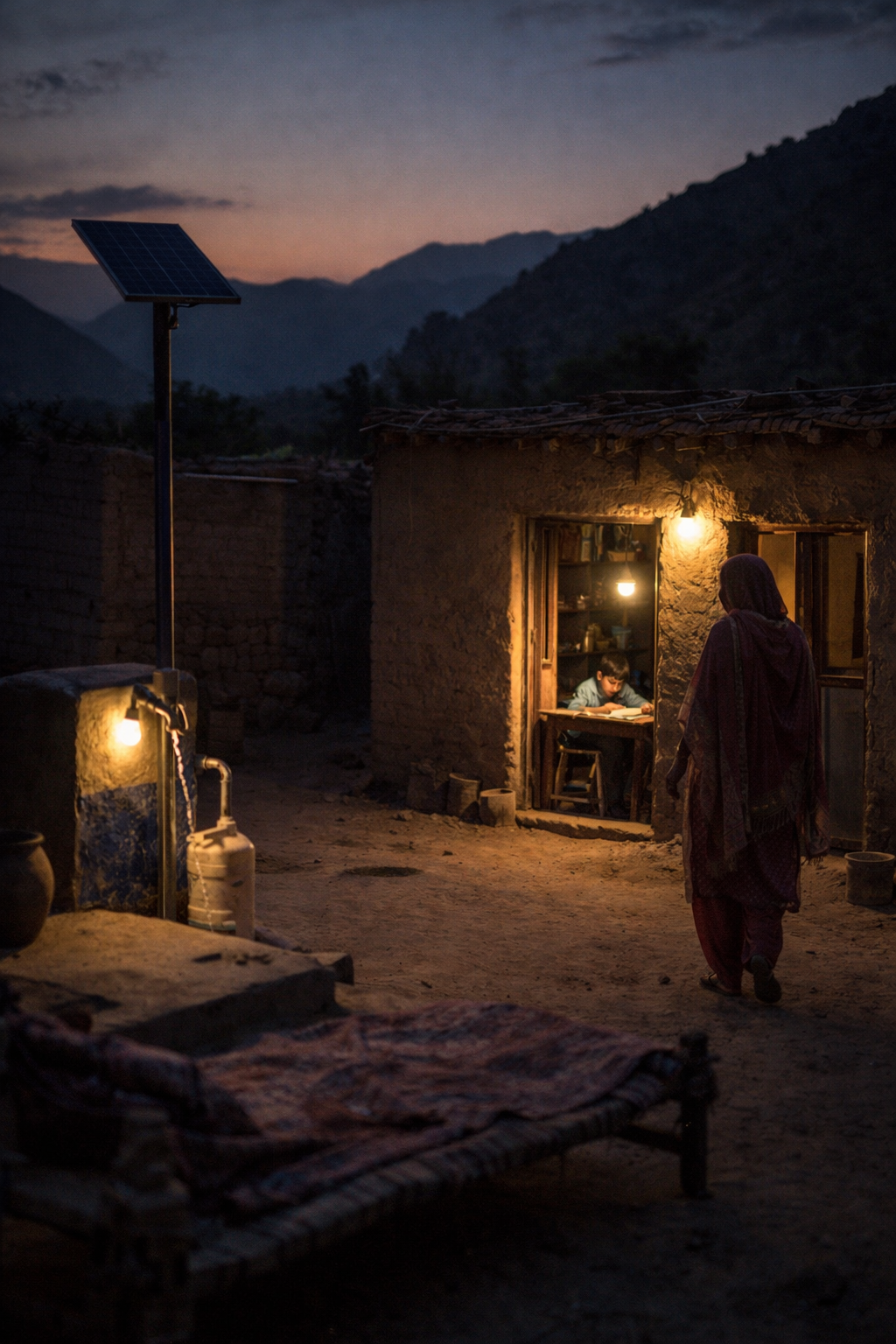
I come from Quetta, a city where traditions breathe through every dusty street and silence often speaks louder than noise. Long before I entered the Lodge, I learned that reverence lives in the way we serve our elders tea, the way we pause before speaking, the way we offer our time without being asked. These silent acts of service are, in essence, Masonic. Reading The Master Builders made me realize that what we build in silence can echo for generations. Huss does not simply list dates or names he paints a living portrait of the Grand Lodge of Pennsylvania over 112 years. He invites us to meet the men who didn’t chase fame but became immortal through kindness, dedication, and vision. Their greatness wasn’t loud. It was steady, grounded, and full of Light. These Brothers were architects of legacy. They were educators of the soul, builders of bonds, and carriers of light into dark corners. They crafted not just institutions but enduring relationships that rippled outward. Their impact was measured not by applause but by quiet transformation. I believe this is the true essence of Masonic life.
One of the most inspiring stories in the book is the creation of the Masonic Homes at Elizabethtown. What started as small acts of charity offering food, helping a widow evolved into an entire village of compassion. Huss walks us through decades of planning, fundraising, and building, until these homes became sanctuaries for the aged, the orphaned, and the vulnerable. This moved me deeply. I saw my own work in it the founding of Feel Worldwide Foundation Inc., where we strive to offer education, food, and dignity to underserved communities. What The Master Builders taught me is that real charity is not about giving leftovers. It’s about building structures of love that last. Huss writes, “Charity scaled is charity sustained.” That line stays with me, guiding every project I lead. The Elizabethtown project stands not only as an act of compassion but also as a monument to perseverance and unity. It reminds us that collective goodness, when anchored in purpose, can manifest into institutions that change lives for generations. That is the mission I strive to echo in every initiative I pursue sustainable service that honors dignity.
As Senior Master of Ceremonies at Cumberland Valley Lodge №315, I have performed rituals hundreds of times. But after reading this book, each movement, each silence, each symbol became richer. These are not just traditions they are living threads, handed to us by men who stood firm in wars, who carried on through global depressions, who kept the Light alive through every storm. Huss tells us of Grand Masters who didn’t seek attention. They focused on serving with humility, on preserving the integrity of Freemasonry, and on making every Brother feel seen and valued. That is the kind of leader I strive to be not loud, but luminous. Not powerful, but present. Through Huss’s vivid depiction of ritual life, I came to understand more deeply that every ceremony is a dialogue with the past and a promise to the future. The symbolic tools, the measured steps, the spoken obligations these are sacred blueprints not just for Lodge work, but for life.
One part of the book that filled me with awe was the role of Masonic historians like Julius Sachse and Clifford MacCalla. They were not just writing history they were protecting memory. They helped prove that Pennsylvania was the cradle of American Freemasonry. Their work wasn’t just scholarly it was sacred. Because if we forget where we come from, we forget who we are. This reminds me why I often begin my international student programs with storytelling. Whether you’re from Balochistan or Boston, your past is not baggage it is a map. And in Freemasonry, our past is filled with builders, dreamers, and guardians of Light. The courage and clarity it took to document every Brother, every moment, and every decision the depth of their commitment inspired me to reflect more intentionally on how we record our journeys. Their diligence preserved the soul of our Brotherhood. Their example reminds me that every act of documentation is an act of devotion.
The Master Builders is not just about buildings. It is about people. Lodge Secretaries who stayed up late writing letters. Brethren who visited sick members. Grand Lodge leaders who guided without ever needing applause. These are the true Master Builders. One story that brought tears to my eyes was how the fraternity stood together during World War I and World War II. Lodges helped families, raised funds, and offered spiritual support when the world was falling apart. That’s the kind of unity the world needs today. Freemasonry shows us that even when everything else breaks down, Brotherhood can still stand tall. Such stories shine light on how the Lodge is not a place it’s a pulse. It beats through every act of kindness, every word of encouragement, every quiet prayer. That is where I want my life’s work to dwell not only in documents and titles, but in moments of true connection.
The book also shows the courage it takes to evolve without losing your roots. For example, Huss discusses the long-held physical perfection rule for Masonic applicants. Over time, leaders reflected, debated, and chose compassion over rigidity. That took strength. It reminded me that every institution be it a Lodge or a university must occasionally look in the mirror and ask, “Are we still serving with justice? With mercy? With truth?” Growth doesn’t mean abandoning tradition. It means living its spirit more fully. That chapter inspired me to lead more empathetically. Whether mentoring a struggling student or proposing new ideas in organizational meetings, I now ask, “Are we protecting the Light or just preserving a shell?” True leadership knows when to preserve and when to evolve.
Freemasonry, for me, is global. Whether guiding youth through cultural exchanges or leading humanitarian relief for Afghan families, I see Masonic principles at work. Integrity. Service. Respect. The Master Builders reminds us that these values are not limited by language or nationality. They are universal. The Lodges laid cornerstones for public buildings. They welcomed the community. They served without asking for credit. Today, we must do the same not just through rituals, but through real actions. In classrooms. In refugee camps. In our families. Brotherhood transcends geography. It speaks in every dialect of decency. Whether in a rural village or an urban center, the handshake of fellowship, the nod of respect, the act of service all reflect the Masonic heart.
Legacy is not a statue. It is a seed. Huss’s book closes just before my own birth year, 1982. And yet, every page felt like it was speaking to me. Because the true legacy of Freemasonry is not in what it built it’s in who it made. Now, I ask myself every day: “What temple am I building today?” A kind conversation. A lesson taught with love. A meal shared. These are bricks. Laid with care. Bound with reverence. I hope the life I live becomes a blueprint for others. That my efforts ripple forward, not just in remembered words but in renewed works. This, to me, is the truest temple: one that lives on in those we uplift. Dear reader Brother, Sister, Seeker if this reflection touches you, let it be your call to build. Don’t wait. Don’t doubt your light. A single act of kindness, a single word of encouragement, can become someone else’s foundation. The temple is not yet finished. It never will be. That’s the beauty of it. We are all builders. We are all apprentices. We are all called to leave the world better than we found it. So I will keep building. With hands open. With heart full. With Light.
메타데이터
- post_id
- 94c89df6b452
- slug
- the-temple-within-94c89df6b452
- url
- https://medium.com/freemasonlight/the-temple-within-94c89df6b452
- canonical_url
- https://medium.com/freemasonlight/the-temple-within-94c89df6b452
- author_url
- https://medium.com/@arbabnaseeb
- status
- ok
- fetched_at
- 2026-08-12 10:11:50