The curious newness: a fast-track course in making dreams come true
Here’s a gentle guide for anyone who’s ever woken up to a strange, floating “something” hovering over their plans — and wondered how to…
The curious newness: a fast-track course in making dreams come true
Here’s a gentle guide for anyone who’s ever woken up to a strange, floating “something” hovering over their plans — and wondered how to follow it without losing their mind.

A lot of research has already been done — and hundreds of posts have been written — on how to set and achieve goals so you don’t end up in the 80–90% of people who abandon theirs just a few days after making them. SMART, GROW, Kaizen, the 1%-a-day rule — all of these are great models, as long as we have (and know how to set) measurable and clearly defined goals.
But today I’d like to talk about working with the kinds of goals that can’t be measured so easily. For example: when we’re trying to solve a logical problem, when we’re discovering something new (the whole discovery phase of literally anything), or when we’re experimenting and have no idea what the outcome will be — or how long any of it will take.
And to make things even more complicated (and therefore hopefully more useful), let’s toss one more variable into the chaos: the commitments we make to ourselves. It’s these quiet agreements — the ones we tuck into the margins of our days — that are the hardest to follow through on (and aren’t they also the most important?). I’m talking about those moments when we’re trying to do something big, something vague in shape and timing, something that comes straight from the heart, while overhead all the other obligations circle menacingly: cooking dinner, changing a diaper, a team meeting, helping a friend.
Chaos? Maybe. But let’s try to tame it. I’m not going to give you rigid templates you’ll only bump into and cut yourself on. Instead, we’ll talk about flexible guidelines that can help you find YOUR rhythm. I’ll also show you some of my own solutions — the ones that helped me write a PhD thesis, publish a book, get my business rolling, and make sports a non-negotiable part of my life. So brew a cup of tea, put on early Madonna, and get ready to search for your rhythm — the one that will actually help you make your dreams come true.
This whole course is divided into three mutually reinforcing parts. You’ll find guidance on examining feasibility, creating a plan, and revisiting that plan along the way. Each chapter includes an explanation, supporting prompts, and practical examples. I hope the learning feels good, brings a few moments of insight, and that the method itself becomes a gentle and effective companion in making your dreams real.
We can’t control the unknown, but we can control how we respond to it.
We wake up in the morning, lift our gaze, and right there — hovering just above the floor — is a strange, undefined shape. Some sort of curious newness. Its form, color, and size shift every few seconds. We’re a little scared — after all, nothing like this has ever appeared in our bedroom before. And a little fascinated: is that soft fur on top warm or cold? We could try to ignore it; no one else seems to see it, so maybe we’re just imagining things. But days pass, and this shape keeps floating behind our shoulders, gliding lazily. And whenever we turn around, it changes form again.
This is exactly how I often perceive my creative tasks — fluid, sometimes fascinating, sometimes intimidating. Sometimes they’re born in my mind, sometimes they land in my inbox from my team lead, and sometimes they are brought to me by a client who needs help defining their radiant idea. And sometimes they just show up while I’m running in the mountains. The source doesn’t really matter. What matters is this not-yet-defined form and how we choose to respond to it.
In creative work (engineering, writing, design, music), goals and visions are extremely difficult to define at the very beginning. Trying to define them too early — without a phase of experimentation — can only wound the creative process and turn our fluffy, glowing vision into a crawling little monster. It’s the experimenting that allows us to befriend the unknown and find a path toward a clear vision.
And notice how often we get questions like: How long will it take? How much will it cost? Sometimes I feel like “the world,” with such questions — unintentionally and with the best intentions — shoots itself in the foot. But maybe that’s a topic for another essay.
What matters here, and what I hope comes through clearly, is this: we cannot control the unknown, but we can control how we respond to it. And our responses — and our reality — can be examined, measured, and shaped into a form that fits us. As Jon Kabat-Zinn expressed it beautifully: “You can’t stop the waves, but you can learn to surf.”
Examine the reality of what’s possible
Our curious newness is still undefined, but we know we want to examine the reality and the circumstances around it so we can check whether we have the resources to take it on. Earlier, we called this our response to the unknown. Below are a few areas worth exploring.
1. Examine the existing landscape
We ask ourselves: in the current reality of our work, life, and responsibilities — is there space for a new challenge? And if there isn’t, how can we reorganize something, or what can we let go of, in order to create that space?
To give ourselves an honest answer and ultimately make a decision based on data (and I’m deliberately not calling it a “good” or “bad” decision — I don’t like those judgments, because we have no access to an alternative reality where we could test and compare every possible path; A/B tests simply don’t exist in real life), we first need to gather that data. And that’s where the first exercise comes in.
Exercise 1: Take an honest look at your calendar
Start by mapping out your weekly calendar, including every single activity that fills your life. Every means truly everything — scrolling Instagram reels, eating lunch, learning a new language (or a new dance), or chatting with coworkers.
Next, think about the categories that will be most useful for you. They may reflect the needs those activities fulfill or simply their nature. For example: Meetings, Work Chores (like reading emails), Recovery, Creative Work, etc.
Once you have your categories, assign all your activities to them. Then try to answer two questions for each item: why do you do it, and what priority does it have?
A small note: if after two intense hours — say, running a workshop, analyzing a logical problem, or training — you schedule time for recovery (because otherwise something else may fall apart), that recovery should also have a high priority. It’s an integral part of your effectiveness.
Once everything is ready, take a look at your calendar and reflect on the following questions:
- Am I the one controlling my calendar, or is someone else? Can I change that?
- Do I have my time divided into larger blocks that allow me to calmly tackle bigger tasks, or do I jump between tiny activities all day and end up unsure what I even worked on?
- Do I like the way I spend my days? Does it bring me satisfaction, or does it create anxiety?
- Do I feel good about the way my reality looks?
Let’s leave it here for now. We’ll return to your calendar later — when we start organizing it so it becomes a tool for carrying out your goals, visions, and dreams, rather than an executioner of your everyday life, leaving behind a stack of empty coffee cups on your desk.
2. Collecting data and estimating consciously
The fact that you ran 5 km in 25 minutes five years ago doesn’t mean you’ll do it just as easily now — especially if you haven’t been training regularly. The fact that you wrote great short stories ten years ago doesn’t mean you’ll effortlessly write a post today if writing hasn’t been part of your daily life for years. Or the opposite may be true — maybe you have been practicing every day.
Of course, we can let life unfold on its own, but we can also approach it consciously — by observing, examining, and gathering data that will help us plan better. Because this is probably not the first time a curious newness has shown up in our lives.
We may have met it before, just in a different shape: when doing research, writing an essay, solving a logical problem, analyzing data, running a workshop, designing a logo, or composing a song.
And even though these tasks differed in form, the way we responded to them — and the way we carried them out — might be consistent, measurable, and, most importantly, possible to capture in a pattern. To discover that, we need to examine how we function and what we need. Ideally, observing our everyday life becomes a habit — because that’s the key to conscious planning.
Exercise 2: Take an honest look at your creative process
Try to build a habit of collecting data about the actions you take. You can use Excel or any tool with a simple table. Write down:
- Tasks — the name and a short description.
- Task components — everything that goes into completing it: preparation, the work itself, gathering insights, and recovery.
- Time — how long each of these steps takes.
The task components are the key element. I often see situations where people estimate time only based on the act of doing the task, forgetting about analysis, preparation, documentation, or recovery.
To estimate tasks accurately, we need to be aware of all their parts and the real time they require — including recovery, which is often essential for continuing the work effectively. In creative processes, this data is crucial, because it may be the only consistent variable we can rely on.
Based on the data you gather, you can calculate how long your flow phase typically lasts: how long you can focus effectively, how much time you need for preparation, and how much for recovery. We’ll need these numbers later, when we start building the template for your plan.
3. The partnership between vision and goal
Recently, I’ve witnessed several conversations and workshops where “mentors” asked their “participants” to present their goals. And when someone answered with something like “a healthy body” or “building a better world,” the mentors reacted with horror: “That can’t be a goal! It’s not measurable, not specific! How will you know you’ve achieved it?!”
I often see beautiful visions dismissed simply because they don’t fit the template of measurable goals. But the problem isn’t the vision itself — it’s the difficulty of distinguishing a vision from a goal and building a partnership between the two.
Yes, “a healthy body” on its own doesn’t match the common definition of a goal — it can’t be directly measured. But this is exactly our curious newness. A vision, though often demonized or rejected because it doesn’t fit the goal-centric approach, has enormous potential. It can be a compass that points us in the right direction and the driving force that helps us stay on course and keep going, even if the road is dotted with failures. Goals, on the other hand, are the concrete steps that allow us to bring that direction to life.
How to work with a vision?
- Allow yourself to have one. Over time, the vision will begin to clarify, and measurable goals will start flowing from it naturally.
- Don’t expect the vision to become a goal. A vision serves a different purpose. A good vision is rooted in our deepest values and motivates us to take on challenges, persevere, and follow through on the intermediate goals along the way.
- Build your vision as an ongoing process. A vision that assumes continuous growth and has no fixed end state holds incredible potential. A vision rooted in deep values can become not only your personal source of strength, but also an inspiration for others — and a foundation for building a supportive community.
Example: For many years, I was afraid of losing the people I loved. It was my curious newness — something that accompanied me for a long time. One day, I gathered the courage to face that fear. During my research, I discovered that I wasn’t alone — many people struggled with the same thing. And in me, a need awakened: a desire to shift how our culture perceives death and grief.
That curious newness became my vision. A vision that guided my actions for many years: I wrote a book, joined the Institute of Good Death, organized exhibitions and webinars, gave interviews. The vision became the steering wheel that led me toward concrete, measurable goals.
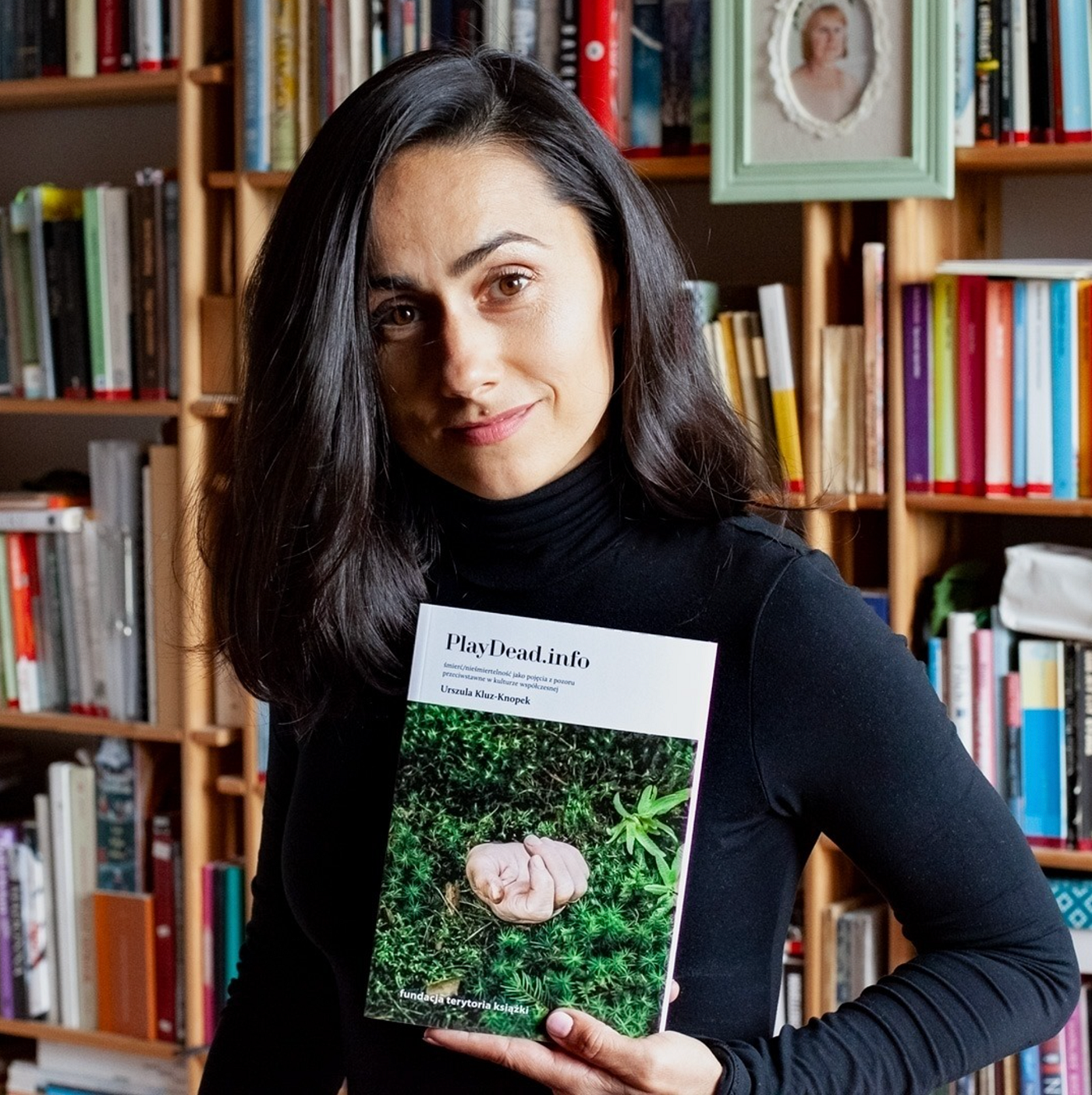
Yup, that’s me with my book (from little fear to life-changing research).
Exercise 3: Build a partnership between vision and goal
Write your vision down in a way that helps you see which values lie at its core and which values it can generate — for you, your business, your loved ones, your community, and even the planet. Pick the areas that matter most to you.
This way your vision has a chance to endure and to motivate, rather than merely meet pragmatic needs. Only after that should you start defining specific goals — step by step.
4. The creative toolbox
Failures are a natural part of the creative and experimental process. They can be divided into two groups:
- Those that come from trying something that simply didn’t work. These are my favorite failures! Because even though they can sting, they give us valuable data and knowledge.
- Those that come from not knowing — or not being aware of — our own creative process. These are harder to swallow and burn a little on the way down. They show up when we try to work against ourselves — without understanding our cycles, needs, or natural ways of functioning. The good news: we can prepare for these and reduce how often they happen.
And this is where the creative journal enters the stage, dressed in all white. A toolbox that helps create comfortable conditions for your creative process — so it can grow healthy and plump, and handle slowdowns or blocks like the best first-aid kit you could imagine.
Exercise 4: Build your creative toolbox
Start by preparing a place where you’ll collect your observations. It can be a notebook, a Miro board, an Excel sheet — anything you like and can keep within reach.
Whenever you feel a sense of flow, notice a creative spark, or — on the contrary — hit a slowdown, write those moments down and try to look at them through the following lenses:
Natural productivity cycles: Instead of asking, “How long will this take?” start asking, “When do I have the most energy for creative thinking?” This will help you understand when you work best — and stop beating yourself up when something goes a little worse.
- Micro (daily): At what times of day do you feel most creative? Is it mornings, late afternoons, or evenings? How long do those creative blocks usually last
- Meso (weekly): Are there specific days of the week when you have more energy, motivation, or time for creative work? Maybe Mondays are heavy, but Wednesdays are your flow days?
- Macro (seasonal): How do seasonal changes, work cycles, or other rhythms affect your creativity? Women can pay attention to the days in their menstrual cycle that support or hinder deeper thinking. Maybe spring boosts your creativity, while winter asks for more recovery?
Physiological conditions: Do you think better on an empty stomach, after a good breakfast, or maybe after a cup of coffee? How do hunger, lack of sleep, or fatigue affect your creative process?
Recovery: passive and active: Consider which type of recovery is most effective for you. It might be running, a walk in the forest, painting, dancing in the kitchen to the rhythm of bubbling pasta. Anything that allows your body and mind to work together. For some people, it’s cloud-watching, meditation, or simply allowing themselves to do nothing (the so-called “mind-wandering”). It’s that moment when your thoughts move freely, and you feel yourself returning to yourself.
Inspiration: What sparks your brain into creative thinking? A favorite podcast that always gives you a new angle? A playlist that makes you wiggle your butt a little and gets you into the right mood? An inspiring researcher, artist, or director? Or maybe your dog — whose happy tail wagging reminds you to enjoy the moment.
Rituals: Do you have any behaviors that open or close your creative process? Pay attention to them — sometimes we have unconscious behavioral habits that trigger creativity. It might be closing your laptop at the end of the day, washing your cup, the taste of morning coffee, or your favorite song you start your day with.
Helpers: Beings — and I intentionally don’t say “people” — who can support you during creative blocks or slowdowns. A helper might be: a yellow rubber duck (a scientifically confirmed method from the programming world, where you explain your problem out loud to, for example, a rubber duck. It’s a technique based on principles of think-aloud reasoning, helping you identify the problem and see it from a distance), a chat with a teammate, a mentor, or a friend. Sometimes all it takes is one good question or someone looking at your challenge from a different angle for everything to start making sense.
Environment: Look around: is the place you’re in supportive for you? I mean the texture of the table under your hands, the softness of the hoodie you’re wearing, the light, the sounds, the chaos or order on your desk. Does all of this help you focus, or does it distract you?
The toolbox you’re creating is not just a collection of notes — it’s a set of tools that will help you plan your work and handle the challenges that arise.
Examples:
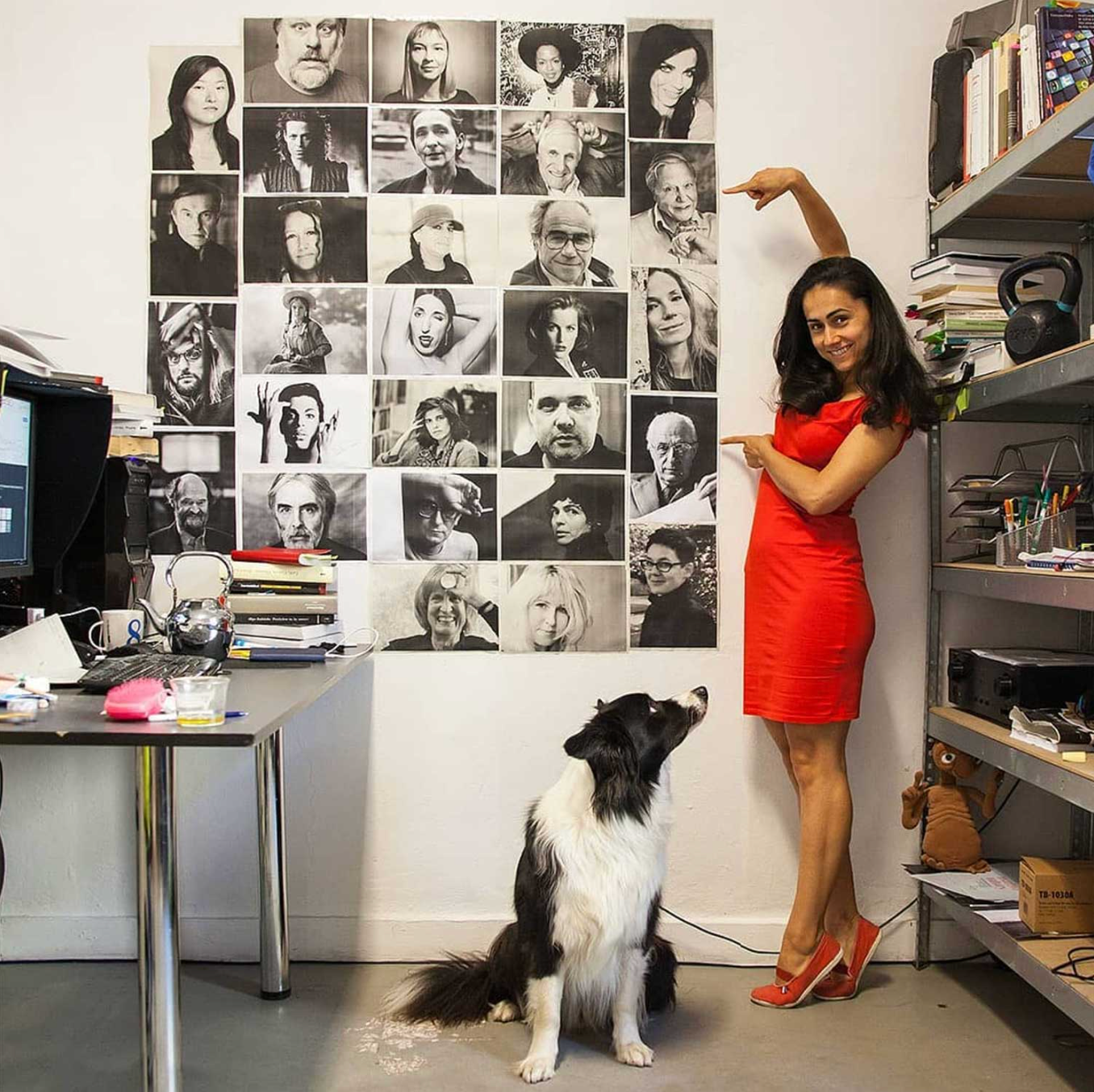
- This is my “wall of glory,” which I created while working on the research for my PhD. It held the faces of researchers, artists, and friends who were a huge source of inspiration for me during that time.
- Here’s an example of how I dealt with a logical block while working on the structure of different data types and their processing. I was exhausted from repeatedly integrating screens in Figma, so I decided to change the context and use whatever I had on hand. A delivery of pet food had just arrived, so I started arranging the treats on the table — each one representing a type of data — and assigning them to the appropriate places in the system. (This idea resonates with a beautiful essay on Medium about choosing role models that actually match the stage of life we’re in — not the ones we’re told to admire. “As I Age, I’m Looking for Role Models for How to Do It Well” captures this shift perfectly.)
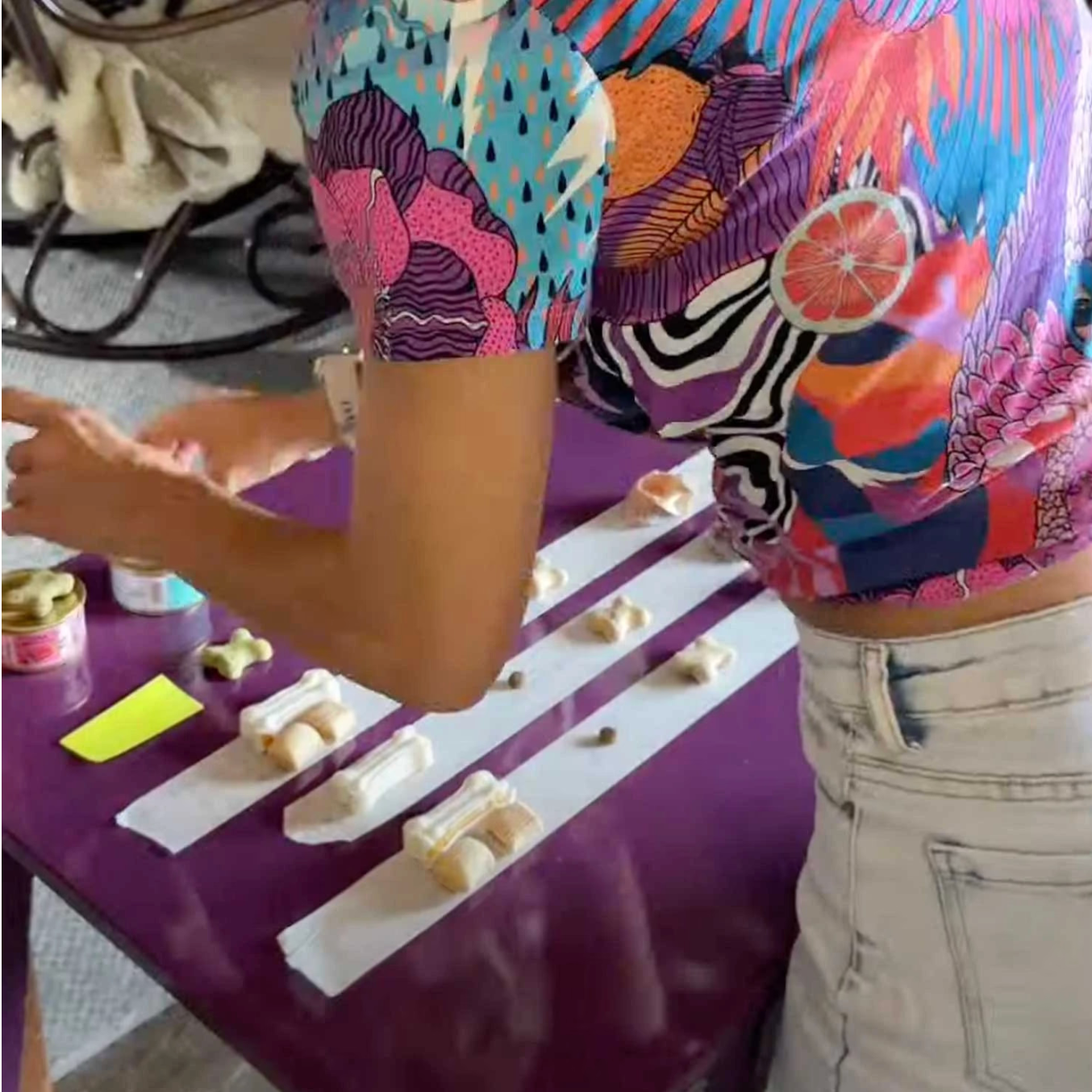
It aligns with what Scott Myers writes in “Writing and the Creative Life: Routine or Ritual?” — that creativity rarely emerges from structure alone, but from the rituals that help us transition into a focused, intentional state.
Build the plan
Before we start laying out a detailed plan and focusing on specifics, let’s take a step back and look at everything from a high-level perspective. The goal is to view the problem holistically — to see all its aspects and interconnections before we begin making decisions about the details. This way of looking helps us grasp the full picture instead of zooming in on fragments too early.
To begin, let’s gather what we already have:
- Your calendar with a breakdown of your current life: tasks divided into categories and priorities.
- Your creative flow duration: you now know how long you can focus effectively, and how much time you need for preparation and recovery.
- Your conditions and rituals: you’re aware of when and where you work best, and which rituals help you enter and exit the flow state.
- Your block-handling toolkit: the tools that help you navigate slowdowns and creative blocks.
- Your vision: the foundation that will guide your prioritization and help you avoid pursuing goals that don’t align with your values or needs.
Our daily energy is not linear — it follows biological patterns. If someone wants a deeper dive into how circadian rhythms shape our focus, creativity and recovery, this article explains it beautifully: *Harnessing Your Circadian Rhythm* by Sigma Man.
1. The action template
To avoid the trap of getting lost in details (like scheduling specific tasks into specific hours without a bigger plan), let’s start by creating a flexible master plan — an action template divided into blocks that we’ll later fill with concrete tasks.
Exercise 1: Create the template
Start by analyzing your calendar and try to identify:
- What to remove: Are there tasks with low priority, things that don’t support your goals, or meetings you don’t actually need to attend (it’s enough to read the notes)?
- What to reduce: Is there a category that dominates and prevents other areas from having space? Or are there things you could delegate — or that aren’t even your responsibility, but you keep doing them out of habit?
- What to group and timebox: Do you have tasks that distract you because you do them at random moments? For example, constantly reacting to email notifications or social media messages — maybe it’s worth setting two half-hour slots a day for that kind of “busywork and small errands”?
Create an ideal version of your weekly template
- Plan time for creative tasks: focus time You already know how long your optimal work blocks are and which part of the day is best for them. Place them in those spots.
- Plan time for weekly planning and closing the week Add half-hour slots on Monday morning and Friday afternoon. If your work is dynamic and things often change, you can introduce a short daily update.
- **Distribute the rest of your time:
- Open time:** space for smaller tasks that might show up during the week. This is time for quick fixes, unplanned meetings, or small errands.
- Regular meetings and recurring tasks: Add fixed blocks for the activities that are part of your routine.
Your ideal template should meet three conditions: it should match your rhythm, respond to your professional and personal needs, and be realistic and achievable (!).
Example:
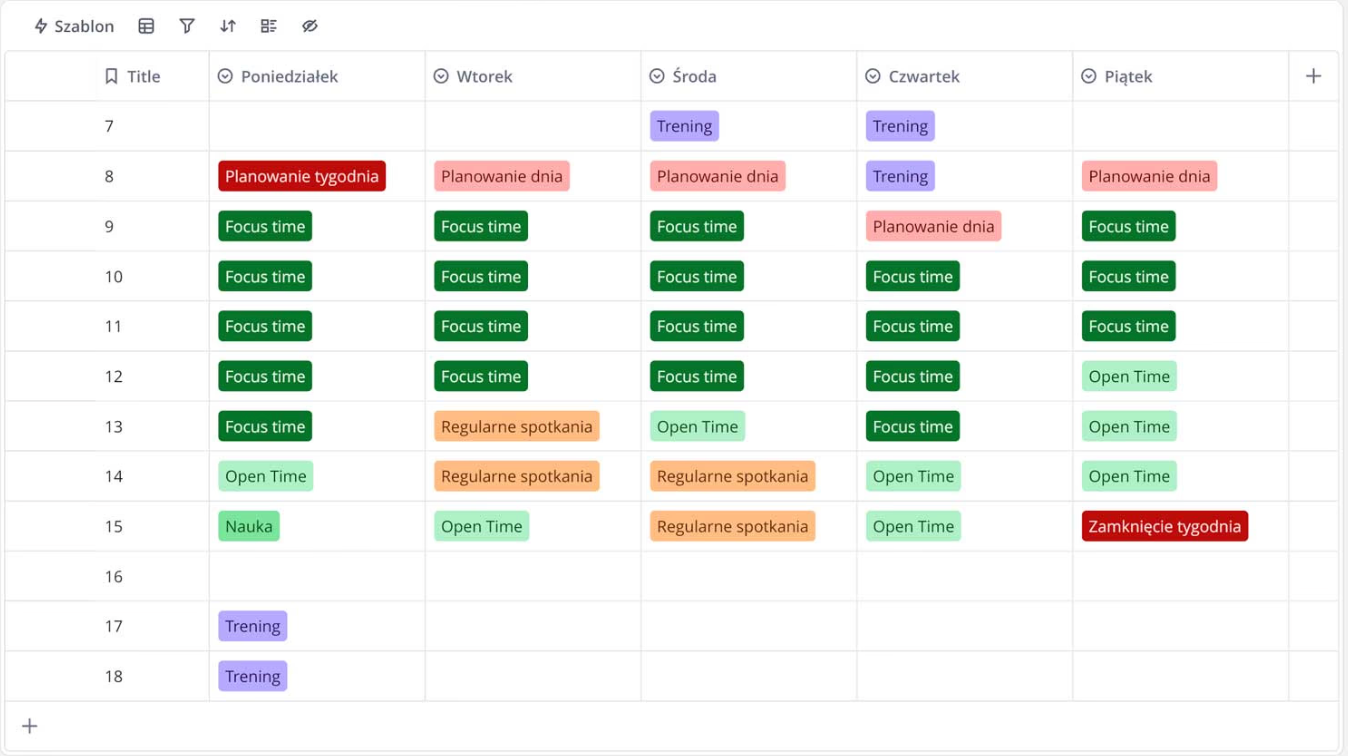
“Planowanie tygodnia” (Weekly Planning), “Zamknięcie tygodnia” (Weekly Wrap-up), “Focus time” , “Open Time,” “Regularne spotkania” (Regular Meetings), “Nauka” (Learning), “Trening” (Sport).
The template above shows my current yearly setup. Yours may look completely different — and that’s absolutely fine. You’ll notice that my calendar includes quite a lot of creative work time, or focus time. My daily work requires it, and it’s the most important block of my day. In your case, it doesn’t have to take up as much space.
During focus time, I turn off all notifications: emails, calls, social media, Teams messages — everything.
Each day also includes a block called daily planning — the moment I reply to messages, review my weekly plan (checking where I am, whether I’m on track, and whether I need to adapt to external changes), and take care of small tasks. It takes about half an hour a day — never more. I always start with the most urgent things; the less urgent ones can wait until tomorrow.
Next, there’s open time — space in my calendar where colleagues can schedule meetings, or where I handle smaller, less demanding tasks.
I also have regular meetings — the ones I can’t (and don’t want to) give up.
You’ll also notice training sessions in my calendar. Yours doesn’t need them at all. For me, movement is a key part of regeneration and restoring mental energy. I often align tasks with training blocks — for example, after my aerobic base run in the forest on Wednesdays, my brain is so well oxygenated that I think incredibly clearly. That’s why I usually schedule my most challenging tasks for Wednesdays.
2. The Macro (and Meso) Plan
We already have our ideal template, but before we start filling it with specific (or delightfully unspecific) tasks, let’s pause for a moment. At the beginning of this course, I mentioned rhythms on a larger scale: seasonal, yearly, monthly. You probably have goals or curious newness that need more than a week to truly unfold, right?
Maybe you’re working on a product whose creation is divided into quarterly cycles. Maybe you’re writing a book, chapter by chapter. Maybe you’re running scientific research that stretches across a long timeline.
No matter whether we’re talking about measurable goals or a curious newness, what matters is looking at them as a whole. It’s that whole that should light the way — not only at the beginning but throughout the entire process. Let me explain why.
As a head of product design, product owner, founder of a design studio, and mentor — regardless of the project’s size — I often see the same pattern. We begin with a vision, an overarching goal that sits somewhere in the distance. We start with research, exploration, definition — the entire discovery phase. We feel good about it. We get to work.
And then something happens. We start executing concrete, intermediate goals, and the overarching one begins to blur. We zoom in so closely on details — sometimes polishing them far too perfectly — that we forget they’re just fragments of a much larger whole. And it’s the whole that truly matters, not the detail perfected in every corner.
Sometimes we drift off course. We stay anchored in a port for far too long because something shiny caught our attention. And in some cases, that’s completely fine — the world is dynamic, and changes in plans are the only constant. But here’s the thing: flexibility is a tremendous advantage, but only when it’s anchored in awareness. It’s about confronting changes with the original goal, not drifting without direction.
This skill — the ability to consciously adjust the course while still holding on to the overarching vision — is becoming one of the key elements of effective action in a fast-changing world.
I’m talking about those moments when the vision (or the overarching goal) stops being a compass and becomes a useless trinket hidden in a chest below deck. Once that happens, we start drifting aimlessly, and our work loses meaning and direction. That’s why it’s so important that, while executing micro-tasks, we keep the macro goal in sight and consciously react to the shifting circumstances.
Exercise 2: Create a macro-scale plan (+meso for larger goals and visions)
One thing I really want to recommend is regularly checking back in with your overarching goal or vision. You can make it a formal part of your process — a little checkbox to tick off (and yes, I’ll probably write a separate post on how to build an effective design process for large digital products).
Or — which works just as well — you can choose a visual form that’s always within reach or within sight. It could be your desktop wallpaper, a bookmark in your notebook, a sticky note pinned to your computer, or even a physical board hanging in your workspace.
What matters is that this page or note actually lays out your goals and divides them into categories. For example:
- Goals related to your professional work.
- Personal goals — the ones that are the easiest to abandon when life gets busy.
The format is entirely up to you. What matters is effectiveness, and that it fits your needs and your reality. It should include different types of goals arranged in a clear hierarchy or at least clearly prioritized within their groups. A well-defined hierarchy of goals works like a filter that helps you choose between what’s urgent and what’s genuinely important.
Example:
Let me show you an example that has worked really well for me for many years. I keep a paper planner — for about ten years now I’ve been buying the exact same model, the one where you can see the whole week laid out at once. It gives me a clear view of all my micro-tasks, which makes managing day-to-day responsibilities much easier.
On top of that, I add a little “hook” section by hand — basically a set of pages covering the entire month. I make it myself using thicker paper and tape. This way my planner is divided into twelve sections that I can flip through quickly. This setup makes long-term planning much easier and helps me find information much faster.
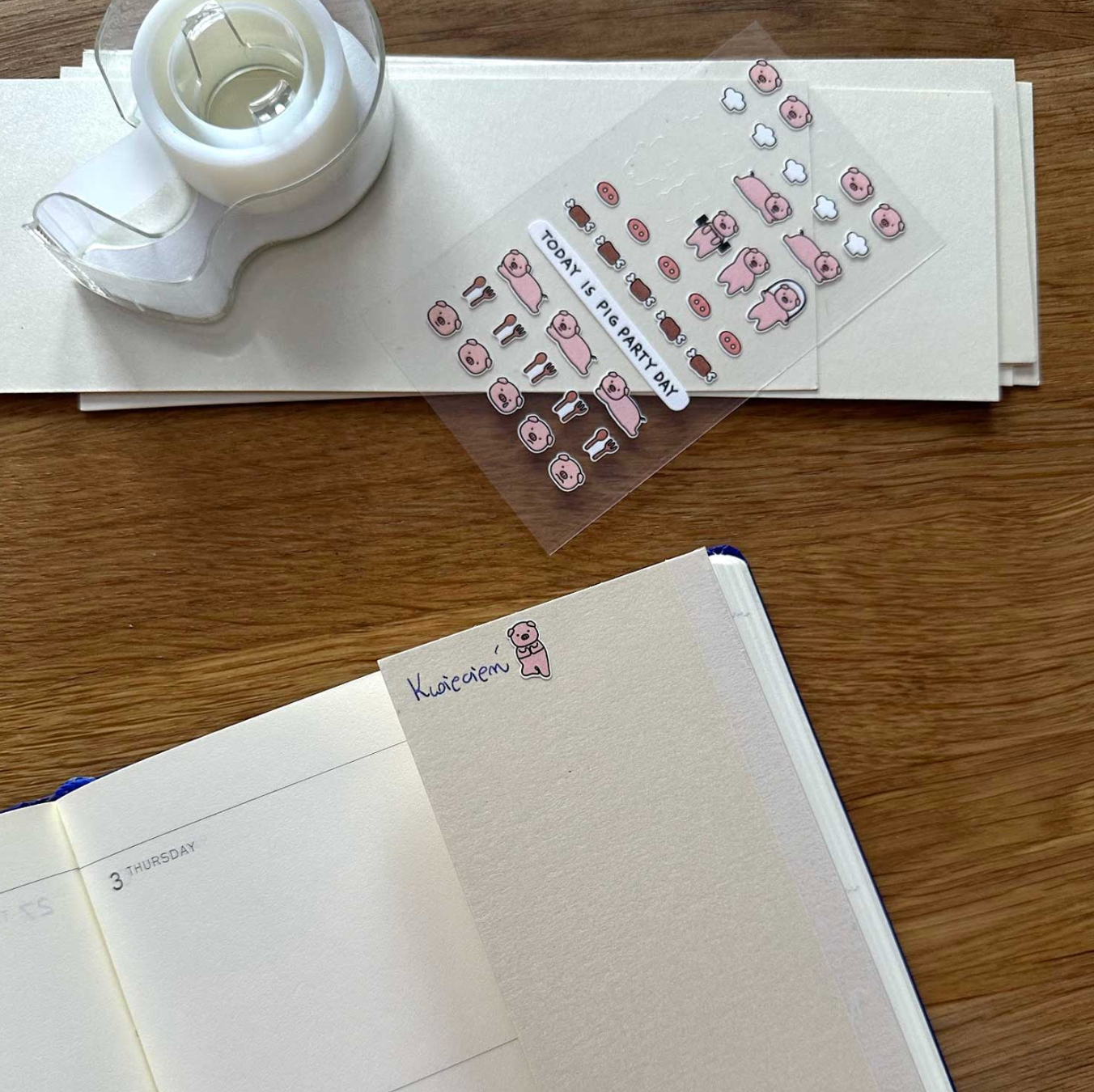
On this little “hook” section, I break down my larger-scale goals into three groups:
- Commercial professional goals: Directly related to my full-time job
- Non-commercial professional goals: For example: UX mentoring fora non- profit organisation, running my blog, developing a new workshop method.
- Home/personal goals: Projects related to private life, like designing a bathroom for renovation or planning a longer trip.
Why does it work?
- It connects the micro and the macro — you see your daily tasks and your bigger goals at the same time.
- It’s simple, inexpensive, and flexible — you can adapt it whenever you need to.
- It helps balance different areas of life and categories of visions and goals.
3. A micro-scale plan
Take your ideal template and your list of macro-level goals and visions. Your ideal template works as a routine — one that helps you navigate unpredictable situations and all the curious newness we’ve talked about earlier. This routine, created while building your template, is meant to:
- build focus and coherence,
- reduce uncertainty,
- regulate emotions.
Introducing this routine teaches your brain (and your team, if you’re working in a group) that certain activities happen at certain times of the day and week. Even if you can’t control unpredictable situations, you can control the circumstances in which they unfold. The key to success is repetition and rhythm — they help you stay in charge of your calendar instead of letting your calendar take charge of you.
Exercise 3: Create your micro-scale plan
Building a micro-scale plan requires having a regular planning slot — a dedicated chunk of time. It can be Monday morning, the end of the week, or any moment that naturally fits into your rhythm (for example, in the programming world it might be the end of a two-week sprint). During that time, take a close look at your macro (+meso) goals and break them down into smaller, concrete tasks.
Once you have your tasks, assign two variables to each. The first one is priority. Divide your tasks into:
- Must-have — necessary and non-negotiable,
- Nice-to-have — great if they happen; they give that extra sense of satisfaction and help you end the week with a 5-star feeling.
The second variable is the level of focus or uncertainty required to complete the task. With these two criteria, it becomes much easier to match tasks to the right time blocks in your template.
Must-have tasks that require deep focus or carry a higher level of uncertainty should go into your previously defined focus time blocks. Those that are must-have but lighter, more routine, or less cognitively demanding belong in open time. This kind of distribution helps you stay focused and avoid the constant context switching that makes work so much harder than it needs to be.
Keep three things in mind:
- Keep the proportions: Let your must-have tasks take up no more than 70% of your plan. The remaining 30% should be a buffer for unexpected situations and those nice-to-have tasks.
- Include time reserves: Remember that your time blocks should cover the entire work process — preparation, recovery, and context switching — not just the “tangible” part of the task. This helps you avoid burnout and stay effective in the long run.
- Don’t demand measurability from your curious newness. Give your vision space to unfold. Set aside a dedicated time unit for thinking, exploring, researching, and letting your thoughts wander freely — without expecting concrete results. The crystallisation of a vision takes time and resources. What matters is that this time is clearly defined (so it doesn’t spill over into other tasks) and scheduled in your calendar — both in your macro and micro plan — so it becomes a steady part of your work rhythm.
And finally — don’t forget about time for learning and growth. This is what keeps you fresh and helps you progress professionally. Make space for learning new tools, taking courses, reading industry literature, or simply switching context to refresh your thinking. Take care to become a senior with broad experience and high effectiveness — not a “senior by inertia,” repeating the same actions the same way for years.
Remember: time is the only resource you can’t make more of.
Verify and track progress
We can create the best plan in the world, but we only learn whether it works once we test it. That’s why regular checking and tracking your progress are so important — these two habits, practiced consistently, are what determine success.
Tracking progress
There are many tools that help monitor the realisation of goals — especially those that are measurable, actionable, and well-defined. You can use more advanced platforms like Jira, Asana, or Trello, where task statuses are clearly marked, or simple to-do lists where you just tick off completed tasks.
But despite the abundance of tools, I’d like to focus on our curious newness — something that is not yet a vision or a goal, but has the potential to become one. What matters here is making sure that, even at this early stage, we’re actually working on it. In this case, progress tracking isn’t about standard checkboxes. It’s about consciously observing the process and marking that we are dedicating time to it.
Only then can we make sure our idea keeps growing steadily, slowly transforming into a vision — and later into a concrete, measurable goal.
Exercise 1: Tracking your curious newness
Let’s assume that for measurable goals we use some kind of finite scale. For example: paying your phone bill. Here the scale is simple — 0 means “not paid,” 1 means “paid.” But a bigger project, like writing “The curious newness: a fast-track course in making dreams come true” needs more steps: 1. outlining the plan, 2–5. writing the individual chapters, 6. editing the text, 7. preparing illustrations, 8. publishing, 9. promotion. We can place this scale in our macro plan and tick off each step. Simple, right?
But what about our immeasurable curious newness? We can’t measure it yet or break it down, because we don’t fully know what it is. Here, a different method works better — simply marking the process.
In your micro plans, you already have dedicated blocks of time reserved for your curious newness. In your macro plan, you can mark those moments however you like — for example, with a small dot that shows you dedicated time to that topic. You can also keep short notes on what you managed to figure out or explore.
This method lets you track progress on something that’s still unmeasurable — until it becomes clearer and eventually measurable. When that moment comes, you can break it down into smaller, concrete goals and place it on your scale.
In theory it may sound complicated, but the example will show you just how simple it is in practice.
Example:
In the photo below, you can see an example from writing this course. At first, there were a few situations where I noticed a repeating pattern — in my surroundings, in conversations with people who were telling me things, inviting me to collaborate, and so on.
Then the curious newness appeared — the thought that I might be dealing with some kind of pattern or a more widespread problem. At that moment, I still didn’t know what I would do with it, but I already added it to my list under the label “planning.”
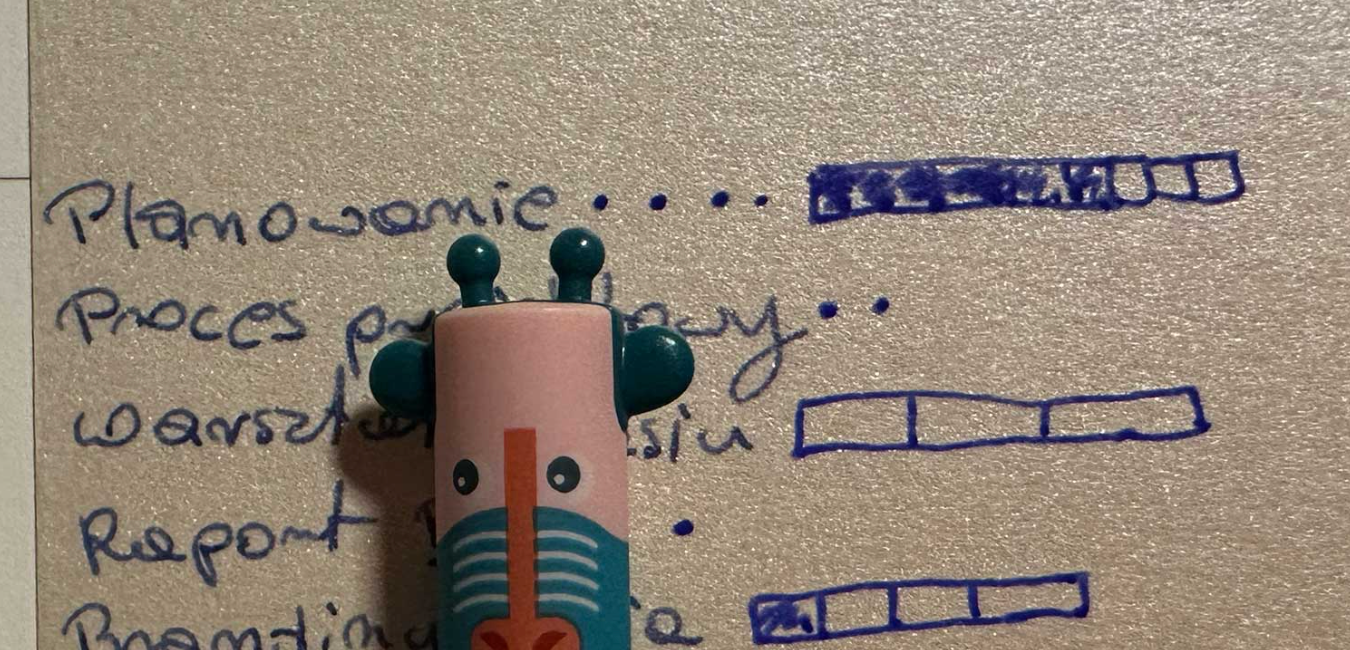
The four dots in my plan mark the time I consciously spent thinking about what to do next. It was time for thinking, researching, and exploring. Only when I decided that this would become a course — with theory, exercises, and examples — did I transform the curious newness into a measurable goal and a concrete path toward achieving it.
Retrospective
Remember the “end of the week” slot in the ideal template? That’s the moment dedicated to a micro-scale retrospective. A macro-scale retrospective happens after you finish a bigger work cycle. If you work in monthly bursts like I do, it’s worth planning your macro retro at the end of the month.
The process in both scales — micro and macro — looks very similar. The main goal is to pause and reflect on how you feel about what you’ve managed to do recently. Do you feel calm and satisfied with your actions, or do you sense that something still needs attention?
A retrospective is a moment for reflection, but also for learning. If you notice that something feels off or isn’t working the way you expected, you can adjust your plan before the problem grows. And if something is working exceptionally well, it’s worth pausing to understand why — and how you might transfer that effectiveness into other areas.
That’s why regular retros help you act consciously and effectively, instead of running on autopilot.
Exercise 2: Check what works and what doesn’t
There are plenty of exercises you can use to see whether your plan is effective — and how you feel while following it. Because yes, it may happen that you complete everything you planned… but can barely remember your own name. And that’s exactly the kind of situation we want to avoid.
This is where various retrospective tools come in handy, such as:
- “What went well and what went wrong?”
- “What should I start, stop, and continue doing?”
- “What annoyed me, what made me happy, what made me sad?”
- “What did I like, what did I learn, what was missing?”
All these methods follow a simple pattern: you write your reflections into the appropriate columns based on the plan you’re reviewing. What matters most is choosing the approach that feels natural and intuitive to you.
The goal of a retrospective is to catch everything that either supports or blocks the realisation of your — let’s finally name it — dreams! Once you know what works and what doesn’t, you can reflect on the reasons behind it. And this is where the magic begins.
A basic retro is the absolute minimum. But if you add “why?” and dive deeper into your motivations and the conditions you’re working in, you’ll get far more value. You’ll become more aware of your actions, and your future plans will get better and better.
When you know the what and the why, prepare a short action list — concrete steps or conclusions that will help you plan the upcoming week.
Example:
I think especially clearly after running, so I put my hardest task on Wednesday morning after my training. On Thursday I usually feel tired after an intense Wednesday, so I focus on simpler tasks. And on Friday — I’m back at full power.
A Closing Word
Oto propozycja tłumaczenia, starająca się zachować ciepły, prosty i motywujący ton polskiego oryginału:
💌 Tłumaczenie
Dear ones, you’ve reached the end! This wasn’t just reading — it was gathering strength, courage, and inspiration to fulfill your dreams.
I wrote this text because I believe that each and every one of you has that spark inside — sometimes overwhelmed by daily duties and the pressure of conformity. What is beautiful and pure sometimes needs space and time to crystallize.
I sincerely hope this method will become your gentle companion — a support on the path to realizing your dreams, plans, and visions.
Finally, I wanted to thank you very much and congratulate you — for your time, your commitment, and for taking this first step. I’m cheering for you with all my heart and truly believe that everything important to you is within reach.
If you use the knowledge I’ve shared here — please write to me! Your messages are a massive boost of wind in my sails and the best reward for this work.
And if you find this course valuable — please share it! Maybe it will reach more dreamers who need this impulse to start taking action.
Fulfill your dreams, and may the curious newness become the beginning of the most beautiful stories. 🖤
메타데이터
- post_id
- 94d1922353eb
- slug
- the-curious-newness-a-fast-track-course-in-making-dreams-come-true-94d1922353eb
- url
- https://medium.com/design-bootcamp/the-curious-newness-a-fast-track-course-in-making-dreams-come-true-94d1922353eb
- canonical_url
- https://medium.com/design-bootcamp/the-curious-newness-a-fast-track-course-in-making-dreams-come-true-94d1922353eb
- author_url
- https://medium.com/@ulakluz
- status
- ok
- fetched_at
- 2026-06-16 19:09:56